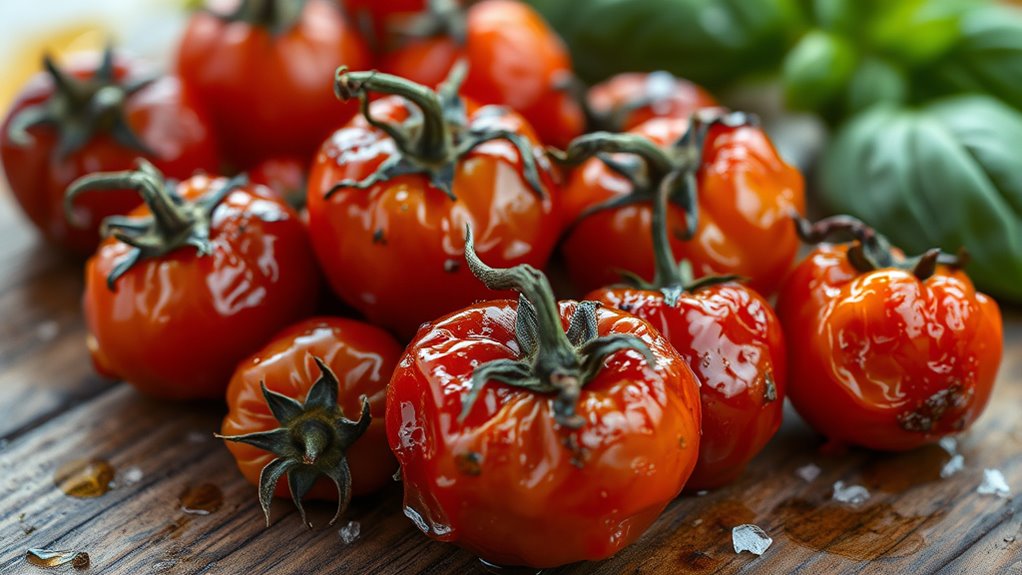

To make perfect slow-roasted tomatoes for pasta, select ripe, flavorful varieties like heirlooms or plum tomatoes. Slice them evenly and roast at 275–300°F until they’re soft and caramelized, which concentrates their natural sweetness. Use these rich, tender tomatoes tossed into your cooked pasta with garlic, olive oil, and herbs. For best results, store leftovers properly. Keep exploring how different techniques and varieties can elevate your pasta dishes even further.

Get kitchen gear delivered free with Prime
- Fast, free delivery on millions of items
- Prime Video, Amazon Music and more included
- Member-only deals all year
Key Takeaways
- Select fully ripe heirloom or plum tomatoes with dense flesh for rich flavor and roasting durability.
- Roast tomatoes slowly at 275°F to 300°F for even caramelization and flavor concentration.
- Slice tomatoes evenly and remove excess moisture to prevent sogginess in pasta dishes.
- Store leftovers in airtight containers or freeze for future use, preserving flavor and freshness.
- Toss roasted tomatoes with cooked pasta, garlic, olive oil, and herbs for a flavorful, concentrated tomato sauce.
slow-roasted tomato set for pasta
As an affiliate, we earn on qualifying purchases.
As an affiliate, we earn on qualifying purchases.
Selecting the Perfect Tomatoes
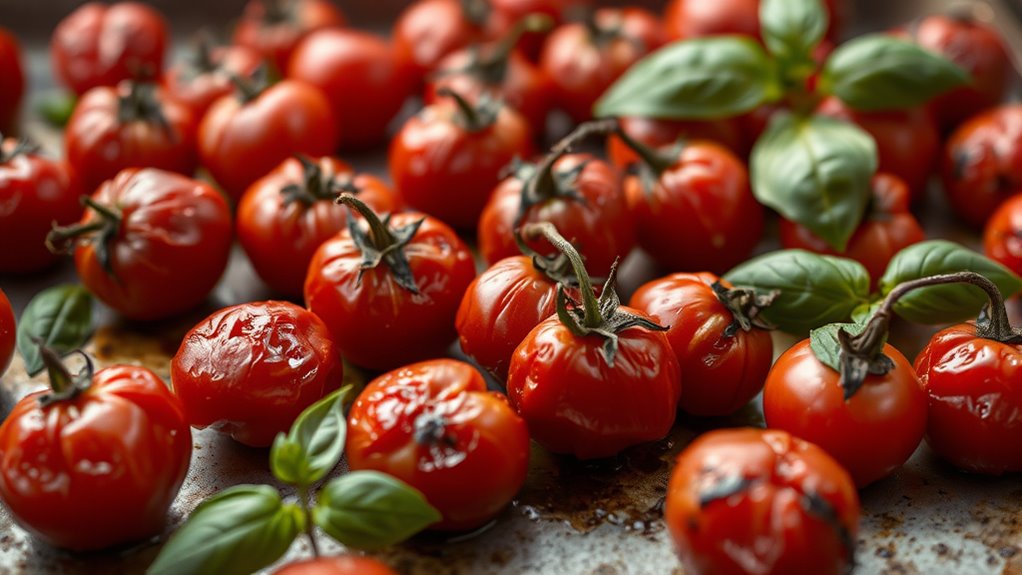
Choosing the right tomatoes is essential for achieving flavorful slow-roasted results. Start by selecting tomato varieties known for their rich, sweet flavor, like heirlooms or plum tomatoes. These varieties have dense flesh that holds up well during roasting and develop deep, concentrated flavors. Ripening techniques matter too; pick tomatoes when they’re fully ripe—bright in color and slightly soft to the touch. If you harvest tomatoes too early, they won’t have developed their full flavor, resulting in less flavorful results. Conversely, overripe tomatoes can become mushy and lose their structure. Look for firm, vibrant tomatoes that have ripened naturally on the vine. Proper selection and ripening ensure your slow-roasted tomatoes will be bursting with flavor.
Preparing the Tomatoes for Roasting
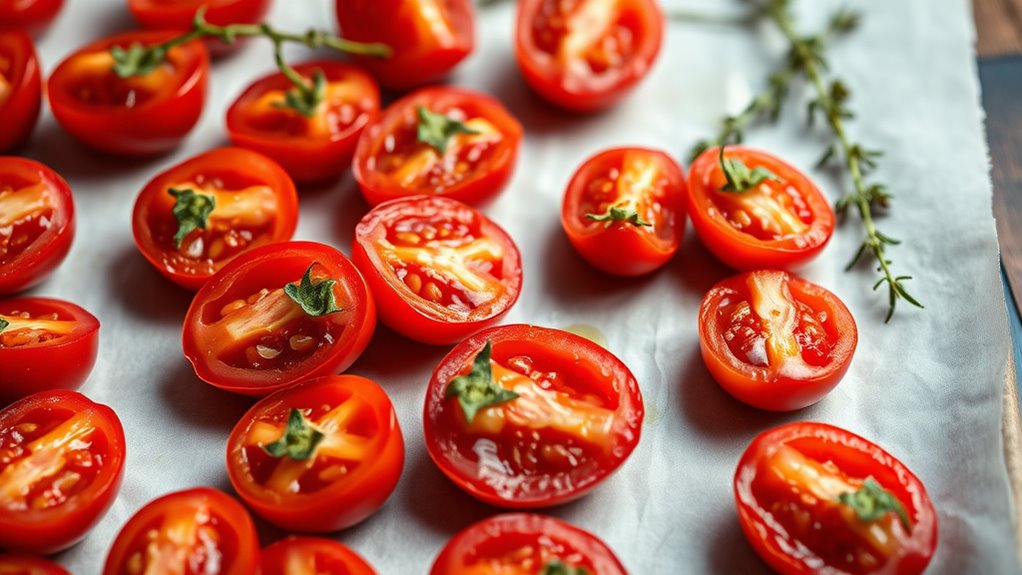
Before roasting, it’s important to prepare your tomatoes properly to guarantee they cook evenly and develop rich flavor. Start by inspecting your tomatoes for ripeness; fully ripened tomatoes have better flavor enhancement. If they’re underripe, allow them to ripen further before roasting. Next, wash the tomatoes thoroughly and remove stems. For even cooking, slice them in half or quarters, depending on size. Removing excess moisture and seeds can prevent sogginess and concentrate flavor. Use the following table to decide on preparation based on ripeness:
| Ripening Stage | Preparation Method | Purpose |
|---|---|---|
| Under-ripe | Let ripen fully | Improve flavor and sweetness |
| Ripe | Slice and prepare | Enhance roasting efficiency |
| Overripe | Use promptly | Prevent spoilage |
| Slightly underripe | Slightly ripen | Balance flavor and texture |
| Fully ripe | Ready to roast | Maximize flavor enhancement |
Additionally, considering the sound vibrations involved in the process can subtly influence the aroma release and overall flavor development during roasting.
The Ideal Roasting Process
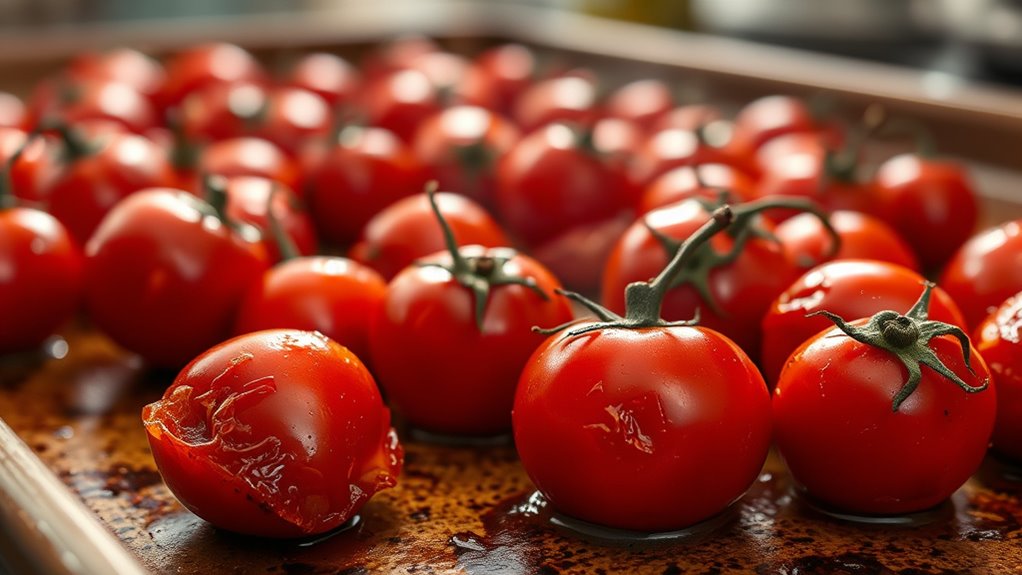
To achieve perfectly roasted tomatoes, you should cook them slowly at a low temperature, allowing their natural sweetness and concentrated flavors to develop fully. The type of tomato variety you choose impacts the roasting process; heirlooms and plum tomatoes hold up best during slow roasting, offering rich flavor and firm texture. Set your oven to a roasting temperature between 275°F and 300°F. This gentle heat ensures the tomatoes soften evenly without burning or drying out. Spread the tomatoes in a single layer on a baking sheet, ensuring good air circulation. Keep an eye on them, as oven temperatures can vary. The goal is to slowly evaporate moisture while intensifying their natural sugars, resulting in deeply flavorful, caramelized tomatoes perfect for adding to pasta. Incorporating professional equipment can also improve the consistency and quality of your roasted tomatoes.
Incorporating Slow-Roasted Tomatoes Into Pasta

Once your slow-roasted tomatoes are ready, they become a flavorful centerpiece for pasta dishes. Their rich, concentrated flavor elevates any recipe, especially when you choose the right tomato varieties and roasting techniques. You can use heirloom, cherry, or roma tomatoes for different textures and tastes. Roasting techniques like low-temperature, slow roasting bring out natural sweetness and deepen flavor. Incorporate these tomatoes into your pasta by tossing them with freshly cooked pasta, garlic, olive oil, and herbs. Their concentrated flavor infuses the dish, creating a delightful balance of acidity and sweetness. Using diverse tomato varieties can further enhance the complexity and depth of your dish. Use the table below to explore tomato varieties and roasting techniques for perfect incorporation.
| Tomato Varieties | Roasting Techniques | Flavor Profile |
|---|---|---|
| Heirloom | Slow at 250°F | Complex, sweet |
| Cherry | Low and slow | Sweet, intense |
| Roma | Even roasting | Rich, tangy |
| Vine-ripened | High heat briefly | Bright, fresh |
| Plum | Gentle, long roast | Deep, savory |
Tips for Storing and Using Leftovers

Storing leftovers properly guarantees your slow-roasted tomatoes stay flavorful and safe to use later. To maximize food preservation, transfer the tomatoes to an airtight container or resealable jar. Keep them in the refrigerator for up to five days, ensuring they stay fresh and retain their flavor enhancement. For longer storage, consider freezing the tomatoes; spread them on a baking sheet to freeze individually before transferring to a freezer-safe bag. When you’re ready to use leftovers, thaw them in the fridge or add directly to your dish if cooking. Proper storage prevents spoilage and helps maintain their rich, concentrated taste. Additionally, understanding shelf life of preserved juices can help you better plan your tomato leftovers for optimal freshness. By handling leftovers carefully, you preserve the tomatoes’ robust flavor and make your pasta dishes even more delicious.
Frequently Asked Questions
Can I Use Cherry Tomatoes Instead of Large Tomatoes?
Yes, you can use cherry tomatoes as a substitution, but keep in mind that roasting times will differ. Cherry tomatoes are smaller, so they roast faster and may become more caramelized or even burst open. You might need to reduce the roasting time slightly to prevent overcooking. Keep an eye on them and adjust the timing as needed. The flavor will be sweet and concentrated, perfect for your pasta.
How Long Can I Store Slow-Roasted Tomatoes Safely?
Did you know that properly stored, roasted tomatoes can last up to a week in the fridge? You should typically store slow-roasted tomatoes for about 4 to 7 days to guarantee safety. Keep an eye out for spoilage signs like mold, an off smell, or a slimy texture. If any of these appear, it’s best to discard them. Proper storage duration helps prevent foodborne illnesses and maintains their flavor.
What Are Some Alternative Seasonings for Roasted Tomatoes?
When exploring alternative seasonings for roasted tomatoes, you can experiment with various herb combinations and spice variations. Try adding basil, oregano, or thyme for a classic herb mix. For a different twist, incorporate smoked paprika, chili flakes, or cumin to introduce warmth and depth. Feel free to mix and match herbs and spices to suit your taste, creating unique flavor profiles that enhance your dishes.
Is It Necessary to Peel the Tomatoes Before Roasting?
You don’t need to peel the tomatoes before roasting. A simple peeling technique involves scoring the skin, blanching in boiling water for about 30 seconds, then transferring to ice water. This skin removal process makes peeling easy and quick. If you prefer a smoother texture or dislike skins in your dish, peeling is a good idea. Otherwise, roasting with skins on adds flavor and nutrients without extra prep.
Can I Freeze Roasted Tomatoes for Later Use?
Freezing roasted tomatoes is like saving a summer sunset for cloudy days—you keep the flavor alive. You can definitely freeze them using proper freezing techniques, such as storing in airtight containers or freezer bags, to prevent freezer burn. For preservation tips, consider removing excess liquid and labeling for easy use later. This way, you’ll have flavorful roasted tomatoes ready to enhance your dishes whenever you desire.
Conclusion
By mastering the art of slow-roasting tomatoes, you unveil a world of rich, concentrated flavors that elevate your pasta to new heights. Remember, each step is a brushstroke in creating a culinary masterpiece—without it, the dish is incomplete. So, don’t rush the process; patience transforms simple ingredients into something extraordinary. Embrace the journey, and let those slow-roasted tomatoes become the shining star—proof that great things truly come to those who wait.
Halloween Picks
halloween
As an affiliate, we earn on qualifying purchases.