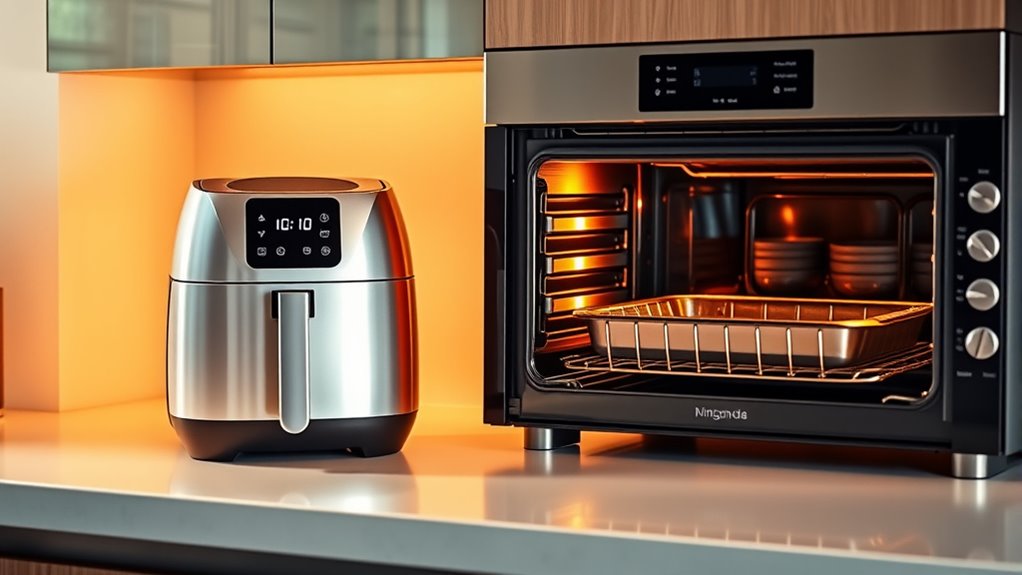

Air fryers use less energy than conventional ovens because they heat up quickly, cook faster, and often operate at lower wattage—typically around 900 to 1500 watts—compared to oven ranges of 2000 to 5000 watts. Their compact size and efficient heat transfer reduce overall power consumption, making them more eco-friendly and cost-effective. To see how these differences impact your kitchen and energy bills, explore further insights on efficient cooking practices.

Get kitchen gear delivered free with Prime
- Fast, free delivery on millions of items
- Prime Video, Amazon Music and more included
- Member-only deals all year
Key Takeaways
- Air fryers consume less energy due to shorter cooking times and lower wattage, typically between 900-1500W.
- Conventional ovens use more power (2000-5000W) and longer cooking durations, increasing overall energy consumption.
- Proper insulation and cooking in batches improve energy efficiency for both appliances.
- Air fryers heat food faster with rapid air circulation, reducing electricity use compared to traditional ovens.
- Using energy-efficient settings and avoiding unnecessary preheating further minimizes energy consumption for both devices.
As an affiliate, we earn on qualifying purchases.
Understanding Energy Consumption in Kitchen Appliances

Understanding how much energy your kitchen appliances use is essential for making cost-effective and eco-friendly choices. When evaluating appliances like air fryers and ovens, consider their energy consumption levels and how they impact your utility bills. Appliance durability plays a vital role, as more durable models tend to maintain energy efficiency over time, saving you money and reducing waste. Additionally, user safety is paramount; appliances with proper insulation, safety features, and stable designs help prevent accidents and ensure safe operation. Recognizing the significance of energy efficiency ratings can guide you toward selecting appliances that consume less power while delivering optimal performance. By paying attention to these factors, you can select appliances that are not only energy-efficient but also reliable and safe to use. Knowing these details empowers you to make smarter decisions that benefit both your wallet and the environment.
How Air Fryers Operate and Their Energy Efficiency

Air fryers operate by rapidly circulating hot air around food, creating a crispy exterior similar to frying but with considerably less oil. This efficient method uses a heating element and a powerful fan, making them quick to heat and cook. To maximize energy efficiency, you should:
- Keep the air fryer clean to ensure ideal airflow and heat transfer.
- Regularly check and perform air fryer maintenance to prevent overheating.
- Use the right amount of food—overfilling can hinder airflow and increase cooking time.
- Compare oven insulation to see how well heat is retained, which affects energy use during longer cook times.
- Additionally, tuning your appliances can help optimize energy consumption by improving their operational efficiency.
Because air fryers have better oven insulation and faster heat-up times, they typically consume less energy than traditional ovens, especially for small batches.
Conventional Ovens: Heating Methods and Power Use

Conventional ovens use different types of heating elements, like electric coils or gas flames, which impact how much energy they consume. Their power use varies depending on the model and settings you choose, affecting overall efficiency. Understanding these factors helps you compare their energy consumption more accurately. Additionally, advancements in automation technologies are increasingly being integrated into modern appliances to optimize energy usage and improve performance.
Heating Element Types
Have you ever wondered how different heating elements impact a conventional oven’s energy consumption? The type of heating element plays a key role. For example:
- Heating coil elements use resistive heat to warm the oven efficiently.
- Infrared elements emit radiant heat directly, heating food faster and often more efficiently.
- Some ovens combine both heating coils and infrared elements for versatility.
- Infrared elements tend to consume less energy because they heat objects directly, reducing heat loss.
- Incorporating proper insulation can further improve energy efficiency by minimizing heat escape during operation.
Choosing the right heating element affects not only cooking speed but also energy use. Heating coils are common, but infrared elements offer quicker, targeted heat. Your choice can make a noticeable difference in your oven’s overall power efficiency.
Power Consumption Levels
Since the heating method determines how much energy your oven consumes, understanding their power levels is essential for efficient cooking. Conventional ovens typically use heating elements that draw significant power, often between 2,000 to 5,000 watts, depending on the model. This high power consumption supports various cooking techniques, from baking to roasting, but can also impact appliance durability over time. The continuous operation of these elements means energy use remains steady during extended cooking sessions. While they may consume more power initially, their ability to handle a wide range of cooking methods contributes to versatile kitchen performance. Knowing your oven’s power levels helps you plan energy use better, ensuring you balance performance with efficiency.
Energy Efficiency Factors
The efficiency of a conventional oven largely depends on its heating method, which directly influences power use. Different heating elements, like electric coils or gas burners, impact energy consumption and cooking safety. To optimize efficiency, consider these factors:
- Regular appliance maintenance ensures even heat distribution and energy savings.
- Proper insulation reduces heat loss, lowering power needs.
- Using the oven’s convection feature can cut cooking time and energy use.
- Keeping door seals intact prevents heat escape, improving efficiency and safety.
- The type of self watering plant pots used can also influence indoor humidity levels and energy consumption, especially when maintaining optimal plant health indoors.
Comparing Power Ratings and Typical Usage Times

To understand how energy use differs between an air fryer and a conventional oven, it’s essential to compare their power ratings and typical usage times. Power ratings indicate how much energy each appliance consumes during operation, with air fryers usually ranging from 900 to 1500 watts, while ovens often use 2000 to 5000 watts. However, usage times also play a significant role. Air fryers typically cook faster due to their smaller size and rapid heat transfer, often taking 15-30 minutes for a meal. Conventional ovens, on the other hand, may take 30-60 minutes or more. By examining both power ratings and usage times, you can better estimate the energy each appliance consumes for similar tasks, helping you make more energy-efficient choices. Additionally, understanding energy efficiency features can influence overall consumption and savings.
Impact of Cooking Duration on Energy Consumption
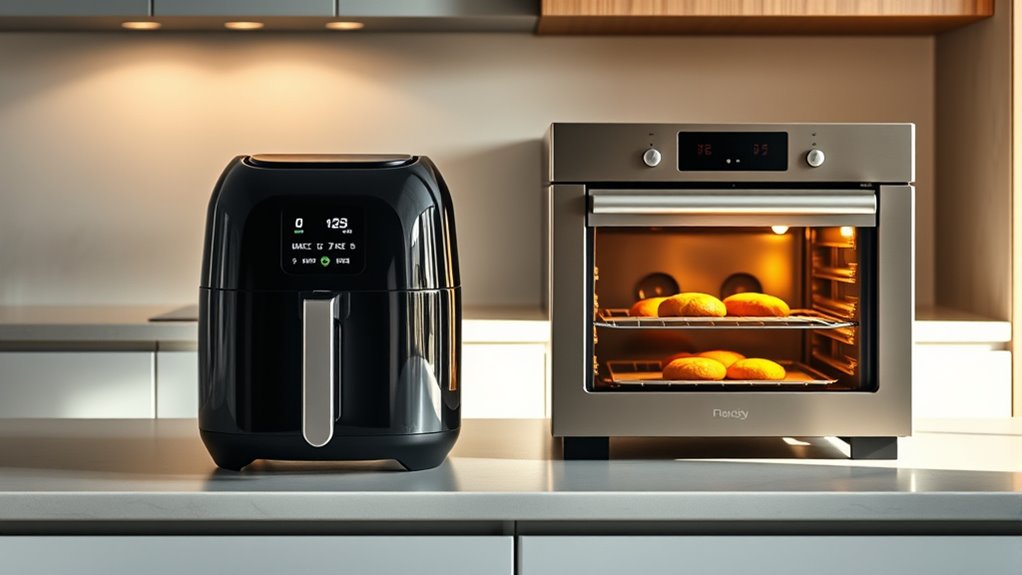
Cooking duration directly impacts the total energy you use, even when appliances have similar power ratings. The longer you operate an appliance, the more energy it consumes, regardless of its efficiency. To minimize energy use, consider these points:
- Shorter cooking times reduce overall energy consumption.
- Efficient appliances heat up quickly, cutting down cooking duration.
- Preheating unnecessarily extends cooking time and wastes energy.
- Maintaining proper appliance operation ensures peak efficiency during use.
- Being aware of energy-efficient practices can further help reduce overall consumption.
Effect of Food Size and Quantity on Appliance Efficiency
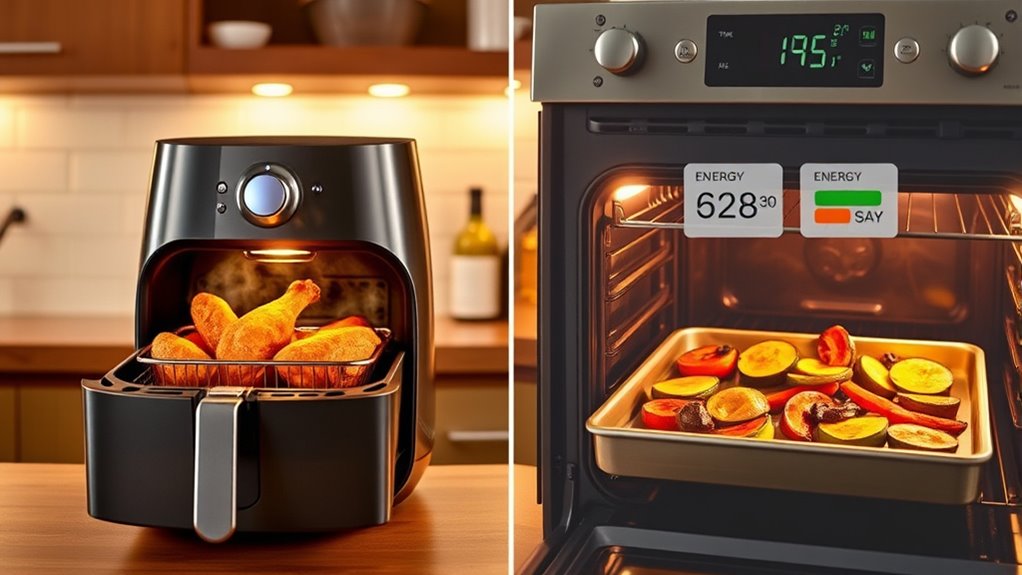
The size of your food and how much you cook can considerably affect how efficiently your appliance uses energy. Larger or more quantities may take longer to cook, increasing energy consumption, while smaller portions heat faster. Understanding these factors helps you choose the right appliance and optimize your energy efficiency. Additionally, considering the food’s composition, such as raw versus cooked ingredients, can influence cooking time and energy usage.
Food Size Impact
When you increase the size or quantity of food in an appliance, it can substantially affect its energy efficiency. Larger or denser food takes longer to cook, impacting cooking time and overall energy use. The appliance size also plays a role—bigger appliances often handle larger portions more efficiently. Keep these points in mind:
- Larger food items require longer cooking times, increasing energy consumption.
- Overloading the appliance can reduce airflow, leading to uneven cooking and longer cycles.
- Smaller foods heat faster, saving energy but may need more frequent batches.
- The size of the appliance influences heat distribution and energy efficiency for different food quantities.
- Proper food preparation and portioning can help optimize appliance performance and energy use effectively.
Quantity Efficiency Effects
Increasing the amount or size of food you cook directly impacts an appliance’s efficiency, often requiring longer operating times and more energy. Larger quantities can strain the appliance, potentially affecting its durability over time if it’s frequently pushed beyond recommended limits. This may also influence your warranty coverage, as overloading could void parts of the warranty if it leads to damage. For air fryers and conventional ovens, cooking more food at once may mean increased energy consumption, but it can also improve overall efficiency if you’re preparing for multiple servings. To safeguard your appliance and maximize efficiency, follow manufacturer guidelines on food quantity. Proper use helps ensure your appliance remains durable, and your warranty coverage stays intact in case repairs are needed. Additionally, understanding kitchen essentials can help you optimize appliance use and maintain overall efficiency.
Cost Analysis: Energy Bills and Operating Expenses
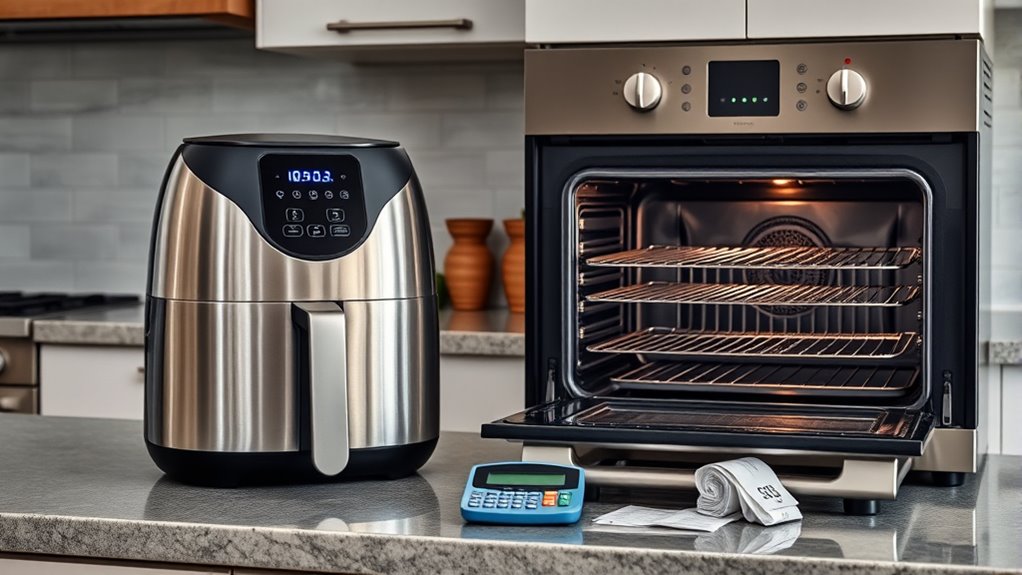
Have you ever wondered how much each cooking method costs relative to energy bills? An energy cost comparison shows that air fryers generally use less energy than conventional ovens. This is due to their higher appliance efficiency and faster cooking times. Keep these points in mind:
Air fryers save energy compared to traditional ovens through efficiency and speed.
- Air fryers often have lower wattage, reducing overall energy consumption.
- Shorter cooking durations cut down on electricity use.
- The compact size means less energy is needed to heat the appliance.
- Conventional ovens may have higher standby energy even when idle.
Environmental Implications of Using Air Fryers vs. Ovens
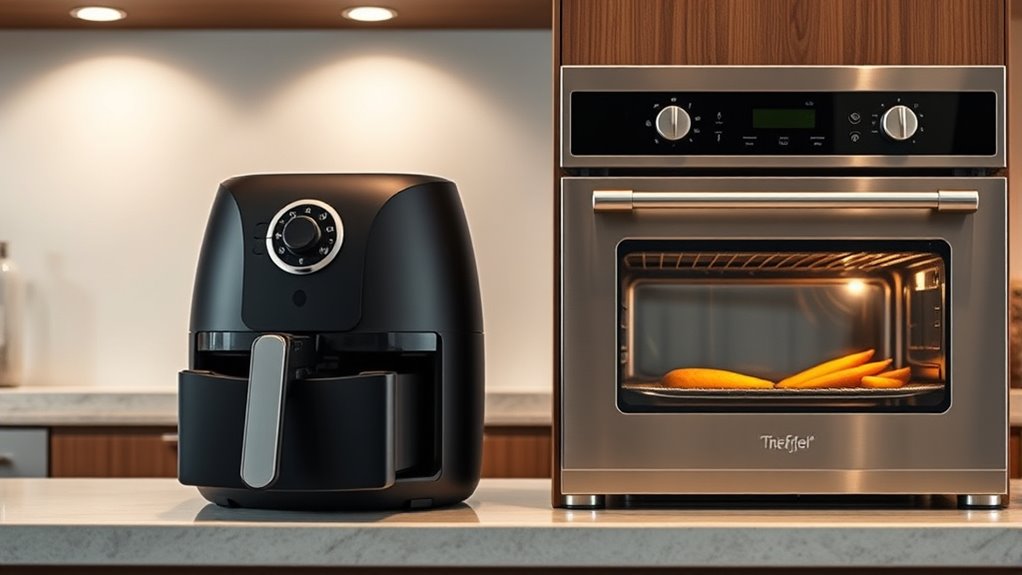
While both air fryers and conventional ovens impact the environment, air fryers generally have a lower ecological footprint due to their energy efficiency and smaller size. Using an air fryer can reduce your overall carbon footprint because it heats up faster and uses less energy per cooking session. When powered by renewable energy sources, this impact diminishes even more, making air fryers a greener choice. Conventional ovens tend to consume more electricity, contributing to higher greenhouse gas emissions if the electricity comes from fossil fuels. By choosing an air fryer, you’re supporting more sustainable cooking practices and helping to lower your environmental impact. Overall, the smaller energy demand of air fryers makes them a more eco-friendly option, especially as renewable energy becomes more accessible.
Tips for Reducing Energy Use in Cooking
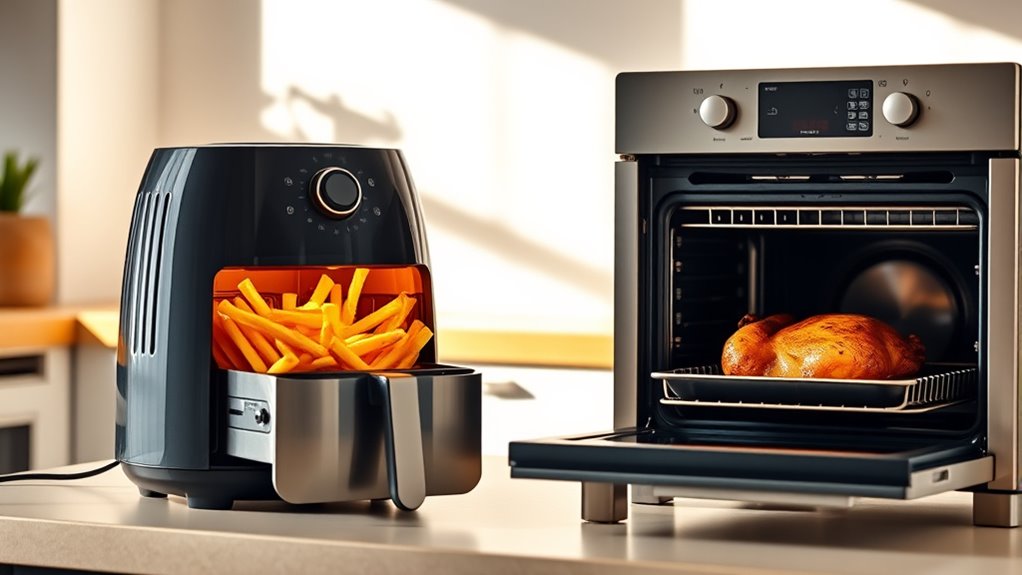
To cut down on energy use while cooking, start by choosing properly sized cookware for your appliances. You can also save energy by cooking in larger batches whenever possible. Finally, select energy-efficient settings on your oven or air fryer to optimize your cooking process.
Use Proper Cookware Size
Using the right size cookware can substantially cut down energy consumption during cooking. Ensuring cookware compatibility with your appliance means using pots and pans that match the heat source, preventing energy waste. When selecting cookware, consider these tips:
- Use appropriately sized pots and pans to avoid heating excess space.
- Match cookware base size to your stove or oven burners for even heating.
- Opt for flat-bottomed cookware for better heat transfer.
- Think about storage considerations—smaller cookware saves space and reduces clutter.
Maximize Batch Cooking
Maximizing batch cooking allows you to prepare multiple meals at once, substantially reducing overall energy consumption. In a smart kitchen, leverage your appliances efficiently by cooking larger quantities in one session instead of multiple small ones. This approach minimizes the energy used for preheating and operating appliances repeatedly. To keep your energy savings consistent, perform regular appliance maintenance, such as cleaning heating elements and checking seals, ensuring your oven or air fryer runs efficiently. Planning ahead helps you make the most of each cooking session, reducing standby energy waste. Batch cooking not only saves time but also curbs unnecessary energy use by maximizing appliance capacity. Incorporating these habits into your routine makes your kitchen more energy-efficient and cost-effective.
Opt for Energy-Efficient Settings
Choosing the right energy-efficient settings on your appliances can substantially cut your overall energy use during cooking. To do this effectively, consider these tips:
- Use the lowest effective temperature for your recipe to save energy and maintain cooking safety.
- Select the appropriate cooking mode or preset to avoid unnecessary energy consumption.
- Keep your appliance well-maintained—clean filters and vents improve efficiency and ensure safe operation.
- Avoid opening the oven or air fryer during cooking, as it releases heat and wastes energy.
Adjusting settings not only reduces energy use but also promotes better appliance maintenance, extending lifespan. Always follow manufacturer guidelines for safe operation, ensuring your appliance performs efficiently and safely.
Making the Right Choice for Your Kitchen and Eco Goals
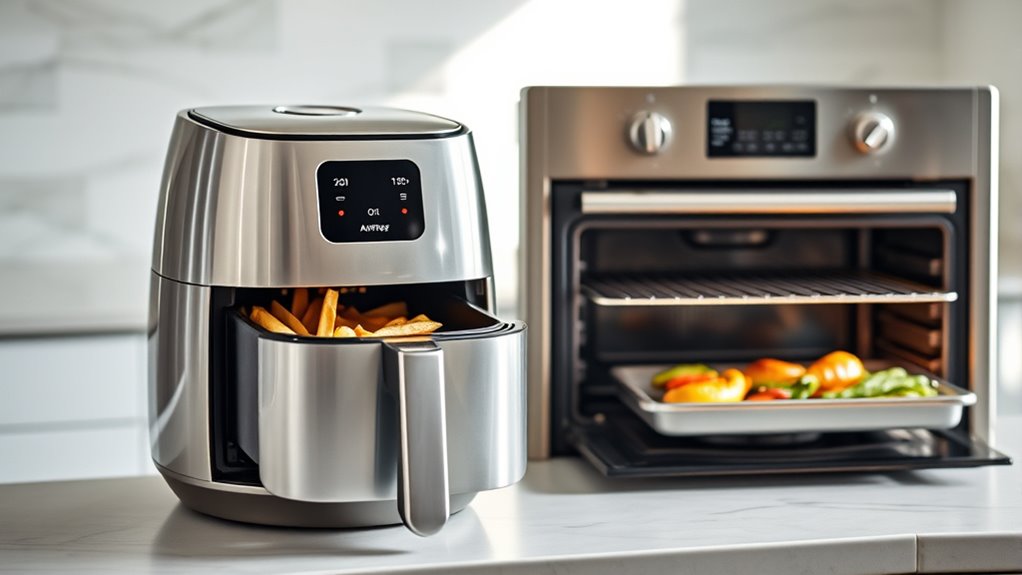
When deciding between an air fryer and a conventional oven, it’s important to contemplate not just your cooking preferences but also your environmental goals. Consider appliance durability—choosing a device built to last reduces waste and supports sustainability. Additionally, think about kitchen safety; air fryers often have features like auto-shutoff, minimizing fire risks, while ovens require careful handling. Your choice should align with your eco-minded goals, such as energy efficiency and reducing carbon footprint. If you prioritize quick cooking and lower energy consumption, an air fryer may be better. However, if you need to prepare larger meals regularly, a conventional oven might suit your needs while still maintaining safety and durability. Balancing these factors helps you make an informed decision that benefits both your kitchen and the environment.
Frequently Asked Questions
Which Appliance Heats up Faster for Quick Meals?
When you’re in a rush, you’ll notice that an air fryer heats up faster for quick meals. Its compact design allows for quicker cooking speed because it heats up quickly and retains heat efficiently. Unlike traditional ovens, which take longer to preheat and lose heat more easily, the air fryer’s rapid heat-up time helps you start cooking sooner, making it ideal for fast, convenient meals.
How Does Preheating Time Affect Energy Use?
Think of preheating like starting a race: the longer you wait before running, the more energy you use. When you preheat, you consume preheat energy, which adds to overall energy use. If you turn off standby power when not in use, you save even more. So, minimizing preheat time and reducing standby power helps you cut energy costs, making your cooking more efficient and eco-friendly.
Are Air Fryers More Energy-Efficient for Small Meals?
You’ll find that air fryers are more energy-efficient for small meals because they heat up quickly and cook faster, leading to energy savings. Plus, their smaller size reduces overall energy consumption. Using an air fryer can also extend appliance longevity by minimizing wear and tear from prolonged use. So, for quick, small meals, an air fryer helps you save energy and keeps your appliance in good shape longer.
Does Using Multiple Racks in an Oven Impact Energy Consumption?
Using multiple racks in your oven can impact energy consumption by affecting rack utilization and heat distribution. When you load more racks, the oven works harder to evenly heat all levels, potentially increasing energy use. Proper rack placement ensures better heat distribution, which can help you cook efficiently. So, while it might use a bit more energy, optimizing rack utilization and heat flow can save you time and energy in the long run.
Can Energy-Efficient Settings Significantly Lower Overall Costs?
Ever wondered if energy-efficient settings can truly cut your costs? By applying energy saving tips, you can markedly reduce your overall expenses. These settings optimize power use, making your appliance run smarter, not harder. For a clear cost comparison, consider how adjusting your oven’s temperature or using an air fryer instead of a conventional oven can lower energy consumption. Small changes lead to big savings over time.
Conclusion
By choosing the right appliance, you save energy, cut costs, and reduce your environmental impact. Whether you prefer the quick efficiency of an air fryer or the traditional versatility of a conventional oven, your decision shapes your energy use, influences your expenses, and supports your eco goals. Make mindful choices, compare your options, and enjoy cooking smarter, greener, and more efficiently every day. Your kitchen, your budget, and the planet will thank you.
Fall Picks
fall essentials
As an affiliate, we earn on qualifying purchases.