
To stay within dorm appliance limits, check your college’s rules on allowed devices and power restrictions. Use approved, low-wattage appliances like mini fridges, microwaves, and small fans, and avoid high-wattage items like space heaters and electric grills. Always inspect cords and plugs for damage and use surge protectors responsibly. Turn off devices when not in use to prevent overloads. For more tips on keeping your space safe and compliant, keep exploring below.
Key Takeaways
- Use only approved, UL-listed appliances like mini fridges, microwaves, and laptops; avoid unverified devices.
- Avoid high-wattage appliances such as space heaters, toasters, and electric grills to prevent overloads.
- Limit the number of devices plugged into a single outlet using surge protectors or power strips.
- Turn off and unplug appliances when not in use to reduce electrical load and hazards.
- Consult campus policies or resident advisors before using new or questionable appliances.
Understanding Dorm Appliance Regulations

Understanding dorm appliance regulations is essential to prevent trouble and guarantee your safety. Many dorms have strict rules about device customization; you should avoid modifying appliances or using unsafe DIY fixes. Before bringing any device, perform an appliance inspection to ensure it’s in good working condition and meets safety standards. Check cords, plugs, and vents for damage, and confirm that the appliance doesn’t draw excessive power. Remember, unauthorized modifications or faulty devices can cause fires or damage communal wiring. Familiarize yourself with your dorm’s specific policies on appliance use, and always follow manufacturer instructions. Proper electrical safety practices are critical to avoid hazards and ensure compliance with dorm regulations. By inspecting your appliances and keeping them unaltered, you protect yourself and your roommates from potential hazards and stay compliant with dorm regulations.
Common Appliances Allowed in Dorm Rooms
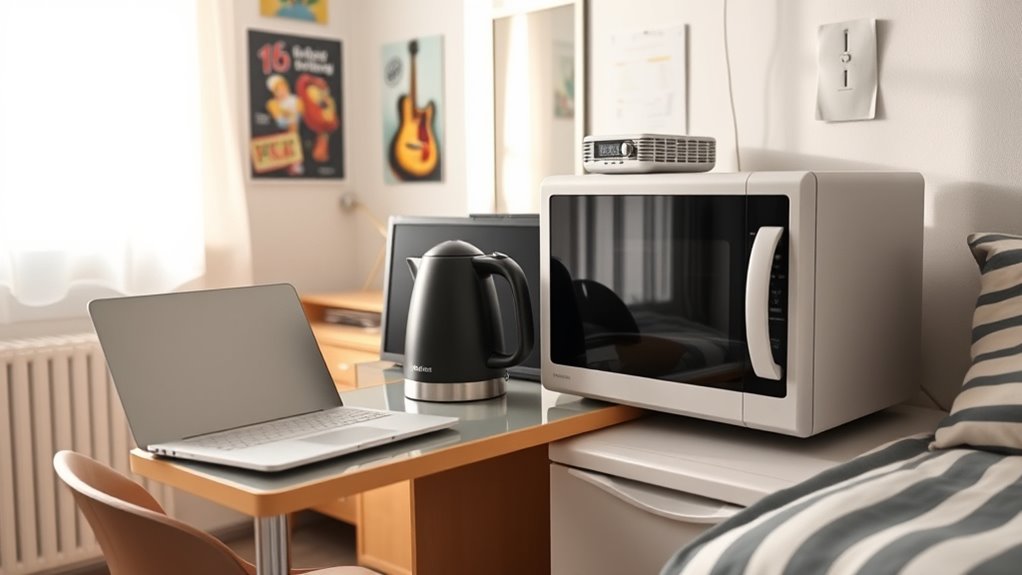
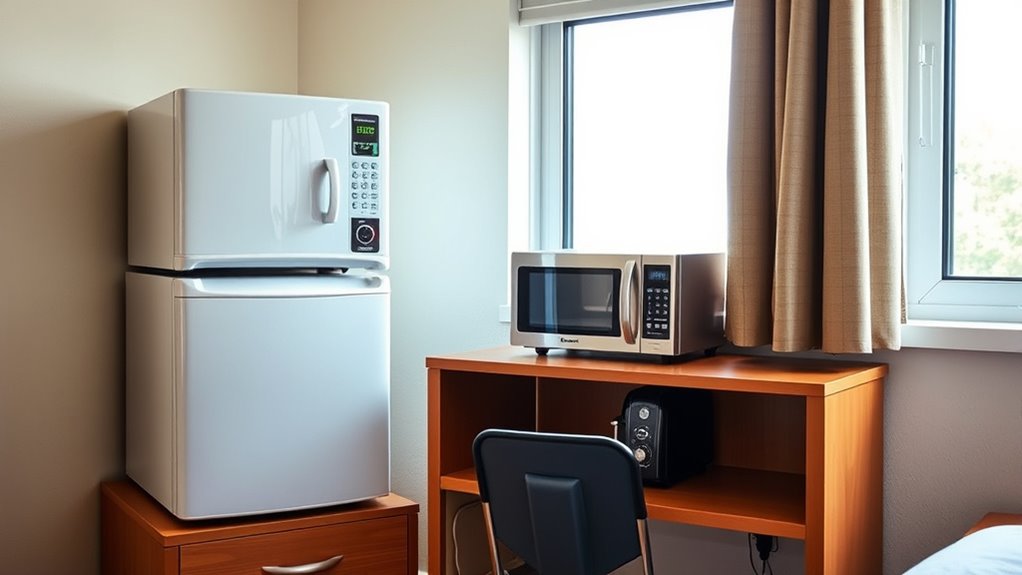
Many dorms permit a range of essential appliances that help you stay comfortable and productive. These common appliances include items that are generally safe and easy to maintain, provided you follow microwave safety guidelines and appliance maintenance tips. Such devices often include:
- Mini fridge for storing snacks and drinks
- Microwave for quick meals and reheating
- Laptop or desktop computer for studying
- Desk lamp for proper lighting
- Fan to keep your room cool during warm months
Always ensure your appliances are in good condition and properly maintained. Follow manufacturer instructions, clean regularly, and avoid overloading outlets. Using appliances responsibly reduces fire hazards and keeps your dorm safe. Remember, adhering to appliance safety standards is vital for a smooth college experience. Proper maintenance practices help prolong appliance lifespan and ensure safety.
Reasons Behind Appliance Restrictions

You might wonder why many appliances are restricted in dorms. These rules help prevent fires, protect the building’s electrical system, and make sure campus safety. Understanding these reasons can help you follow the rules and keep everyone safe.
Fire Hazard Prevention
Have you ever wondered why certain appliances are banned in college dorms? It’s mainly to promote fire safety and prevent dangerous fires. Dorms restrict appliances that pose fire hazards, such as:
- Space heaters that can overheat or tip over
- Toasters with exposed heating elements
- Candles or open flames
- Halogen lamps that get very hot
- Electric grills that might short-circuit
These restrictions help reduce the risk of accidental fires caused by overheating, electrical malfunctions, or unattended flames. Fire safety is a top priority in dorms, so appliance restrictions are designed to protect everyone. By following these rules, you help create a safer living environment and avoid potential fire emergencies. Implementing space-saving solutions can also help optimize your dorm space while adhering to safety guidelines.
Electrical System Capacity
To keep dorms safe from fire hazards, restrictions on appliances also consider the capacity of the building’s electrical system. Dorm rooms typically have limited circuits designed to handle a specific amount of power. When you use too many high-wattage appliances or overload circuits, it can cause a circuit overload, which increases the risk of overheating and fire. Additionally, a power surge resulting from overloading can damage your devices and the electrical system itself. To prevent these dangers, dorm rules limit the number and types of appliances you can use. Staying within these limits helps ensure the electrical system functions safely and efficiently, protecting everyone in the dorm community from potential electrical fires or damage. Automation technology is also being implemented to monitor and manage electrical loads, further enhancing safety measures.
Campus Safety Protocols
Campus safety protocols enforce appliance restrictions to reduce the risk of fires and electrical accidents. These rules help prevent overloaded circuits and guarantee safe dorm room organization. Proper appliance maintenance is vital; damaged cords or faulty devices can cause hazards. Limiting high-wattage appliances minimizes the chance of electrical overloads. By following these protocols, you contribute to a safer living environment for everyone. Additionally, being aware of support hours can help you get assistance promptly if issues arise with your appliances or electrical systems.
Key reasons include:
- Preventing electrical fires
- Avoiding circuit overloads
- Ensuring appliances are well-maintained
- Promoting organized dorm spaces
- Reducing accidental electrical shocks
Sticking to appliance restrictions encourages better dorm room organization, making it easier to monitor appliance use and maintain safety standards. It’s a simple but essential step to keep your living space secure.
Tips for Choosing Safe and Approved Devices
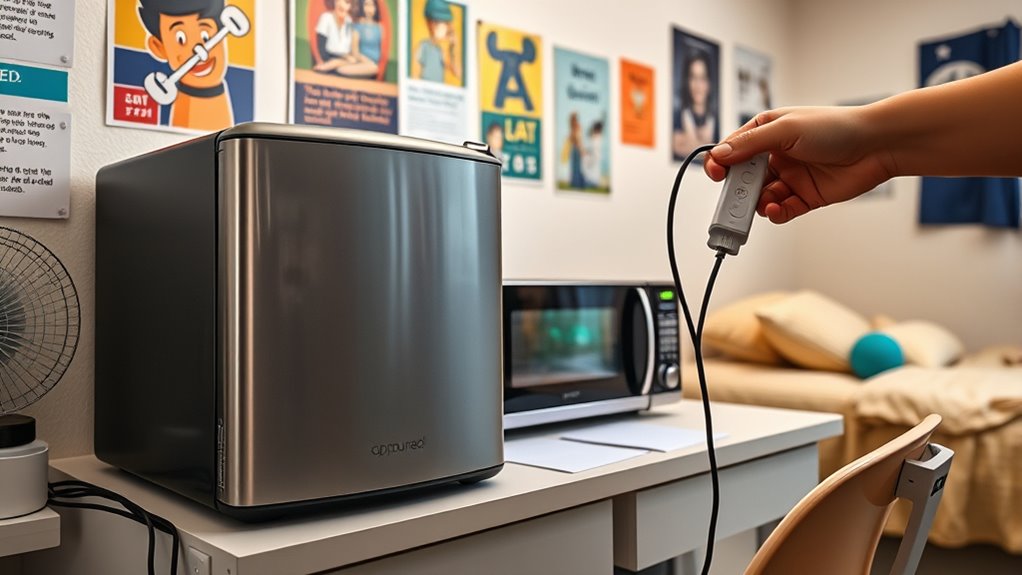
When selecting devices for your dorm, prioritizing safety and approval is vital to avoid potential hazards and guarantee compliance with school policies. Always choose appliances that are labeled as UL-listed or recognized by your institution. These certifications ensure the device has been tested for safety standards. Avoid using generic or unmarked products, which may pose fire risks or electrical issues. Remember, proper appliance maintenance is key to student safety; keep devices clean, inspect cords regularly, and unplug them when not in use. Read manufacturer instructions carefully to guarantee correct operation. Additionally, choosing energy-efficient devices can help reduce operational costs and ensure sustainable use. By sticking to approved devices and maintaining them properly, you reduce hazards and create a safer living environment, helping you avoid violations and ensuring your dorm stays a secure space.
Managing Power Usage and Preventing Overloads

Managing your power usage is essential to prevent overloads that can trip circuit breakers or cause electrical fires. To do this, practice energy conservation and stay mindful of your appliance maintenance. Keep track of how many devices you plug in at once, and avoid overloading outlets. Regularly inspect appliances for damage or faulty wiring, which can increase fire risk. Using safety precautions like proper wiring and appliance checks can further enhance electrical safety.
Some tips to help manage your power use include:
- Use power strips with surge protectors for multiple devices
- Turn off appliances when not in use
- Avoid running high-wattage appliances simultaneously
- Unplug chargers and electronics when fully charged
- Schedule regular maintenance checks on your devices
Following these practices helps maintain safe electrical systems and conserves energy, reducing the risk of overloads.
What to Do if You’re Unsure About an Appliance
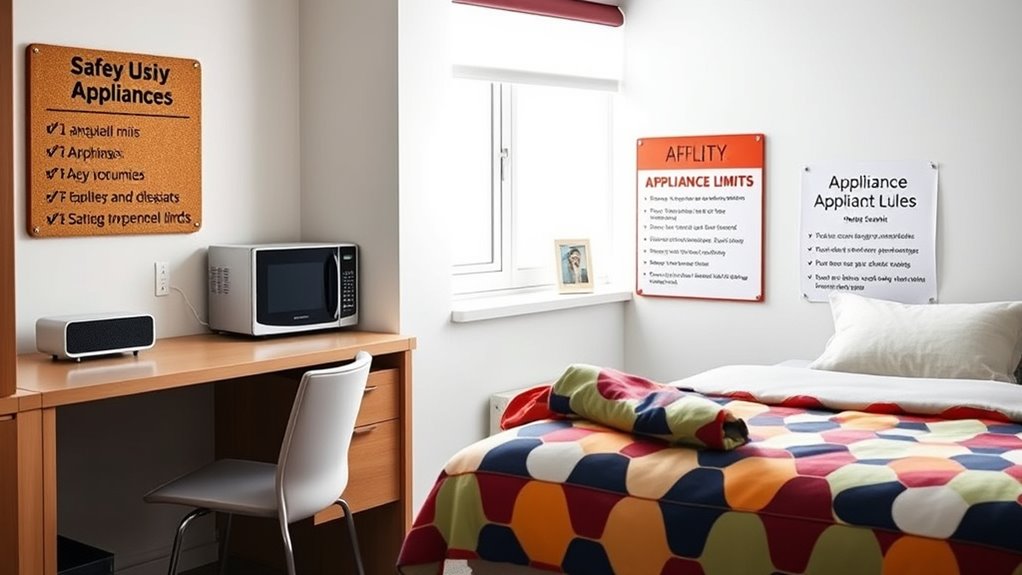
If you’re ever unsure about an appliance’s safety or proper use, it’s better to pause before plugging it in. Doing some quick appliance troubleshooting can prevent accidents or overloads. Check the appliance’s labels, user manual, or manufacturer’s website for safety guidelines. If you’re uncertain about its compatibility with your dorm’s outlets or if it exceeds power limits, consider alternative device options. For example, if a high-wattage heater seems risky, opt for a smaller fan or a space heater approved for dorm use. When in doubt, ask your resident advisor or campus facilities staff—they can confirm whether an appliance is safe and allowed. Remember, when safety is uncertain, it’s best to avoid using the appliance until you’re confident it won’t cause issues. Additionally, understanding the self watering plant pots can help you care for your dorm plants responsibly without overwatering or underwatering.
Frequently Asked Questions
Can I Bring a Mini-Fridge From Home?
You can bring a mini-fridge from home, but you should check your dorm’s electrical capacity and appliance energy consumption limits first. Many dorms have restrictions on the size and power of appliances to prevent overloads. Choose a compact, energy-efficient mini-fridge that fits within your dorm’s electrical capacity. Always verify with your college’s policies to guarantee your appliance complies and won’t cause issues or violate rules.
Are Toasters Permitted in Dorm Rooms?
Is a toaster your ticket to breakfast bliss? While it might seem harmless, appliance safety and dorm appliance limits are essential. Many colleges permit toasters, but you must check your dorm’s specific rules. Overloading power outlets or exceeding appliance limits can cause hazards. Always verify with your housing policies first, ensuring you stay within approved appliance safety standards. This way, you enjoy your favorite snacks without risking safety or violating rules.
How Do I Know if My Appliance Is Safe?
To know if your appliance is safe, check for proper electrical safety features and an appliance certification label, like UL or ETL. These certifications indicate your device meets safety standards. Always read the manufacturer’s instructions, inspect cords for damage, and avoid overloading outlets. If you’re unsure, ask your dorm’s housing staff or a qualified electrician. Staying vigilant about electrical safety helps prevent accidents and keeps your dorm room safe.
What Are the Penalties for Violating Dorm Appliance Rules?
Think of it as playing with fire—if you violate dorm appliance rules, you risk more than just a slap on the wrist. Penalties can include fines, losing access to certain appliances, or even housing discipline. Ignoring rules can turn your room into a fire hazard or cause appliance damage, both of which could lead to costly repairs or safety issues. Stay within limits to avoid these trouble spots.
Can I Use Extension Cords or Power Strips?
You can use extension cords and power strips, but you need to follow extension cord safety and power strip regulations. Make sure the cords are heavy-duty and rated for indoor use, and avoid daisy-chaining multiple power strips. Always check your dorm’s specific rules, as some places restrict or prohibit certain types. Using them responsibly helps prevent electrical hazards and keeps you within the dorm’s safety guidelines.
Conclusion
Think of your dorm room as a tiny spaceship maneuvering the busy universe of campus life. By sticking to approved appliances and managing your power wisely, you’re steering clear of blackouts and mishaps. When in doubt, consult the mission control—your dorm’s rules. With this approach, you’ll keep your journey smooth, safe, and worry-free, allowing you to explore new horizons without ever losing connection to the safety net that keeps your voyage on course.