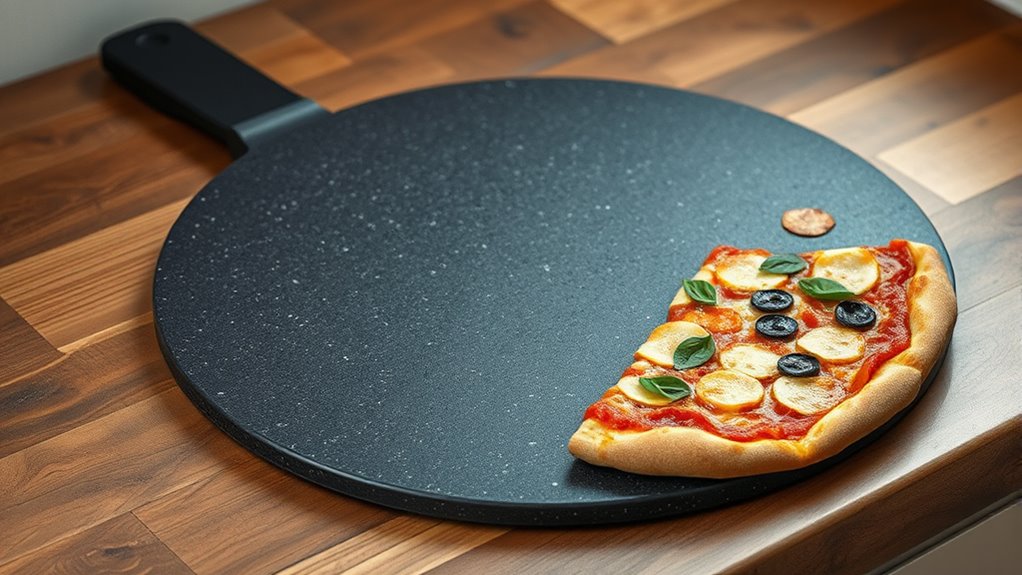

Yes, a pizza stone can fit in your oven if you measure your space carefully and choose the right size. Most home ovens accommodate stones between 8 and 16 inches, but you need to take into account interior width, depth, and height. Proper placement on a preheated rack and ensuring clearance for ventilation help optimize results. Want tips on fitting larger stones or choosing alternative surfaces? Keep exploring to get the best pizza-baking setup.
Key Takeaways
- Measure your oven’s interior dimensions to determine the maximum size pizza stone that can fit safely.
- Standard pizza stones range from 8 to 16 inches, but size must match your oven’s clearance and shape.
- Larger stones may require custom sizing or supports to ensure they fit without blocking vents or door closure.
- Use preheated racks or supports to position the stone properly, ensuring even heat transfer and optimal baking results.
- Consider alternative baking surfaces like pans or silicone mats if standard stones don’t fit your oven space.
Understanding Your Oven’s Dimensions and Limitations
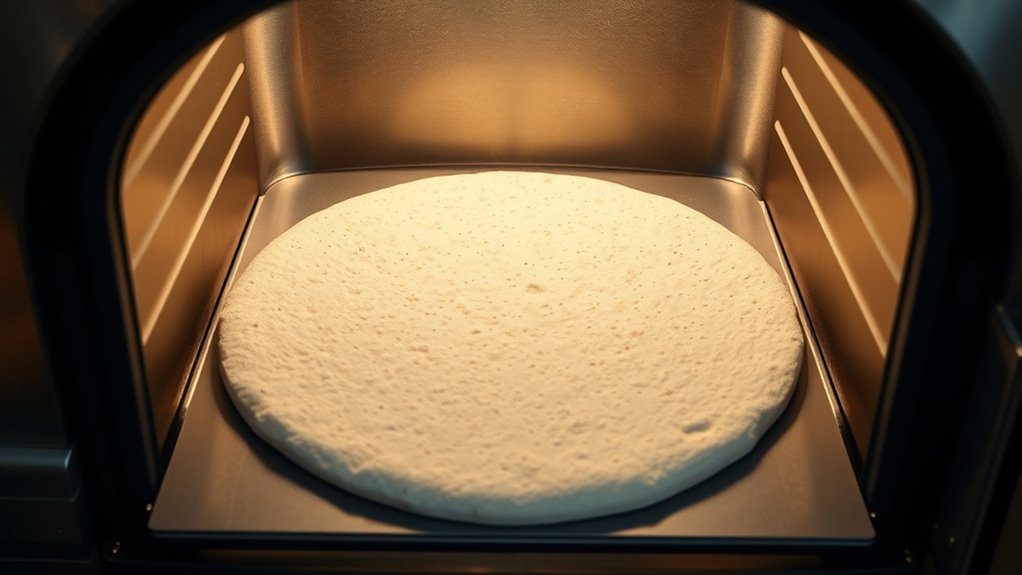
To choose a pizza stone that fits well, you first need to comprehend your oven’s dimensions and limitations. Knowing the interior space helps prevent overcrowding and ensures safe oven operation. Prioritize oven safety by selecting a stone that won’t block vents or interfere with door closure. Measure the width, depth, and height of your oven’s interior to identify the maximum size your stone can be. Keep in mind that larger stones may require more careful temperature regulation, as they can cause uneven heat distribution. Smaller stones heat more evenly and are easier to manage within oven limits. Additionally, understanding your oven’s ventilation system is crucial to prevent overheating and ensure proper airflow. By understanding these constraints, you’ll ensure your pizza stone fits securely, promotes safe baking, and maintains proper temperature control for perfect results.
Common Sizes of Pizza Stones and Their Fitment
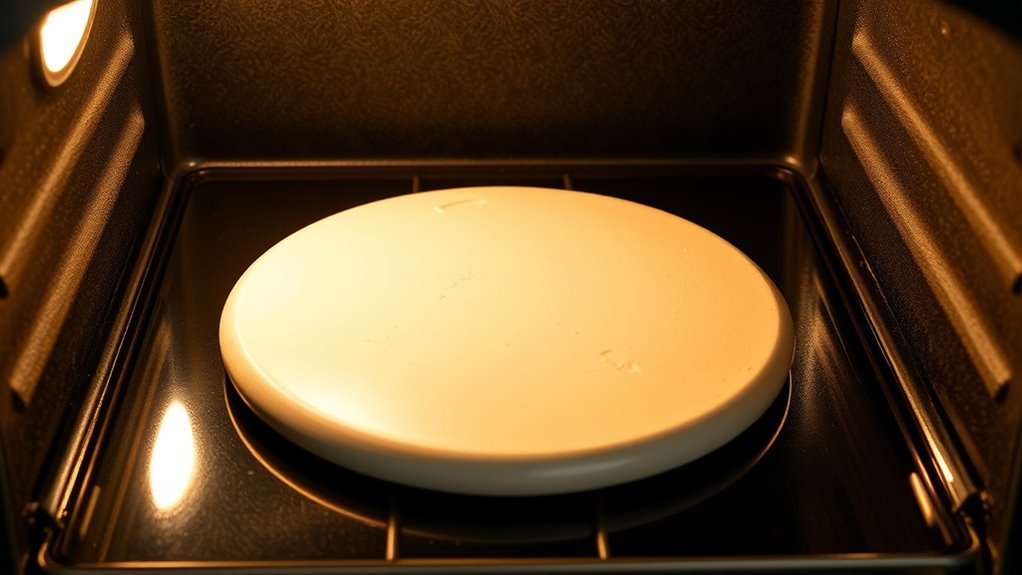
Pizza stones come in a variety of standard sizes designed to fit most home ovens. Knowing these sizes helps guarantee a good fit, which impacts pizza durability and ease of stone cleaning. Common sizes include small, medium, large, extra-large, and rectangular options. Selecting the right size is crucial for optimal heat transfer and ease of use. Small stones (8-10 inches) fit easily in compact ovens but may limit pizza size. Medium stones (12 inches) are versatile and popular for home use. Large stones (14 inches) accommodate bigger pizzas but require ample oven space. Extra-large stones (16 inches or more) are suitable for larger ovens or pizza parties. Rectangular stones are ideal for baking rectangular or multiple pizzas simultaneously. Choosing the right size ensures proper fitment, excellent heat transfer, and easier maintenance, preserving your stone’s durability over time.
Measuring Your Oven and Selecting the Right Stone
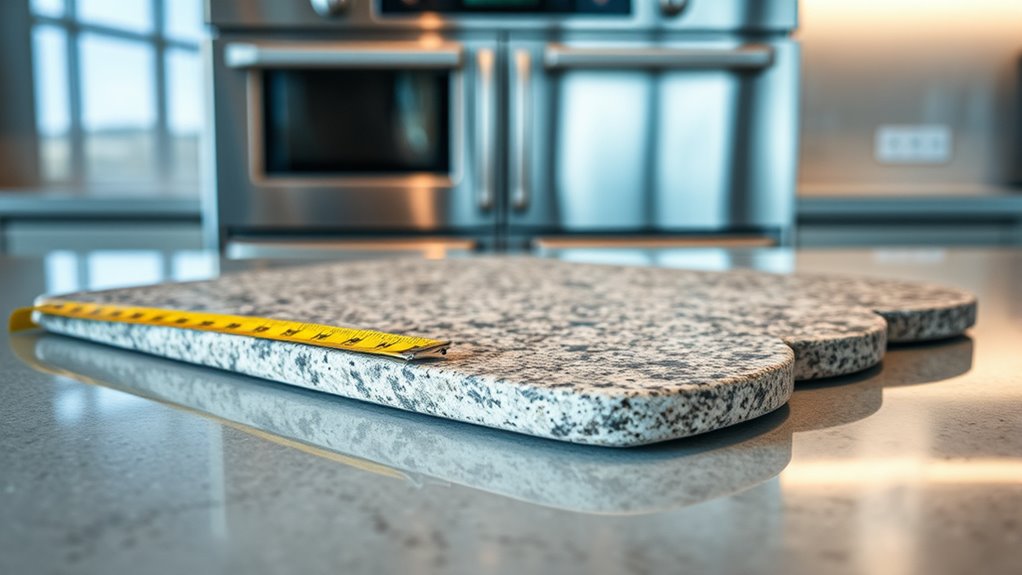
Start by measuring your oven’s interior dimensions to know the available space. Then, determine how much clearance you’ll need around the stone for safe use and heat circulation. Additionally, consider the size of self-watering plant pots to ensure your pizza stone fits comfortably without overcrowding your oven. Finally, choose a pizza stone that matches your oven’s size while allowing for this clearance.
Measure Oven Interior Dimensions
Before choosing a pizza stone, you need to know the exact dimensions of your oven’s interior. Measure the width, depth, and height carefully to make sure your stone fits comfortably. Use a tape measure for accuracy, and jot down these measurements. Keep in mind that the stone material influences pizza durability, so selecting the right type is essential. When measuring, consider the oven’s shape and any obstructions like racks or vents. A larger stone can improve heat distribution, but it must fit without blocking airflow or door closure. To help, here are key points to consider:
- Measure the maximum width and depth
- Account for clearance space around the stone
- Check for irregular shapes or corners
- Consider oven door opening space
- Note the height limitations for placement
- Be aware of performance metrics that can influence your oven’s efficiency and your pizza baking results.
These steps ensure you pick a stone that fits perfectly and performs well.
Determine Clearance Space Needed
To make certain your pizza stone fits properly, you need to determine the necessary clearance space around it. Start by measuring your oven’s interior dimensions and consider the pizza thickness you plan to cook. Your stone should be slightly smaller than the oven’s width and depth, allowing room for air circulation and heat transfer. Keep in mind that different stone materials, like cordierite or ceramic, may have slight size variations or expand when heated. Allow at least 1-2 inches of clearance on all sides to prevent the stone from touching oven walls or racks. Proper clearance ensures even cooking, prevents damage, and makes handling easier. Accurately measuring and accounting for pizza thickness helps you select a stone size that fits comfortably within your oven’s space. Additionally, understanding thermal expansion properties of your chosen material can help prevent cracking or warping during heating.
Match Stone Size to Oven
Measuring your oven accurately is essential to choosing the right-sized pizza stone. Start by gauging the interior dimensions, considering the oven’s insulation and wall thickness. A well-matched stone ensures even heat transfer and prevents overhang. Keep these tips in mind:
- Measure the oven’s width, depth, and height precisely
- Account for oven insulation that might affect space
- Consider the pizza stone’s thickness for better heat retention
- Leave clearance space for air circulation
- Match the stone size to your oven’s maximum safe dimensions
- Remember that heat transfer efficiency can be affected by the size and fit of your pizza stone within the oven, making proper measurement crucial for optimal baking performance.
Tips for Fitting Larger Stones or Custom Solutions

If you’re working with larger pizza stones or custom-sized options, fitting them securely can be a challenge, but with the right approach, it’s manageable. First, verify your oven can accommodate the stone without compromising airflow or safety. To protect pizza stone durability, avoid sudden temperature changes that could cause cracking. Consider using heat-resistant silicone pads or custom-fit supports to stabilize larger stones. When cleaning pizza stones, handle them carefully to prevent damage, especially if they’re custom-cut. Proper placement prevents shifting during baking, ensuring even heat distribution. If needed, use a heat-resistant adhesive designed for high temperatures for additional stability. Remember, a secure fit not only improves baking results but also extends your pizza stone’s lifespan.
Alternative Options When a Standard Stone Won’t Fit
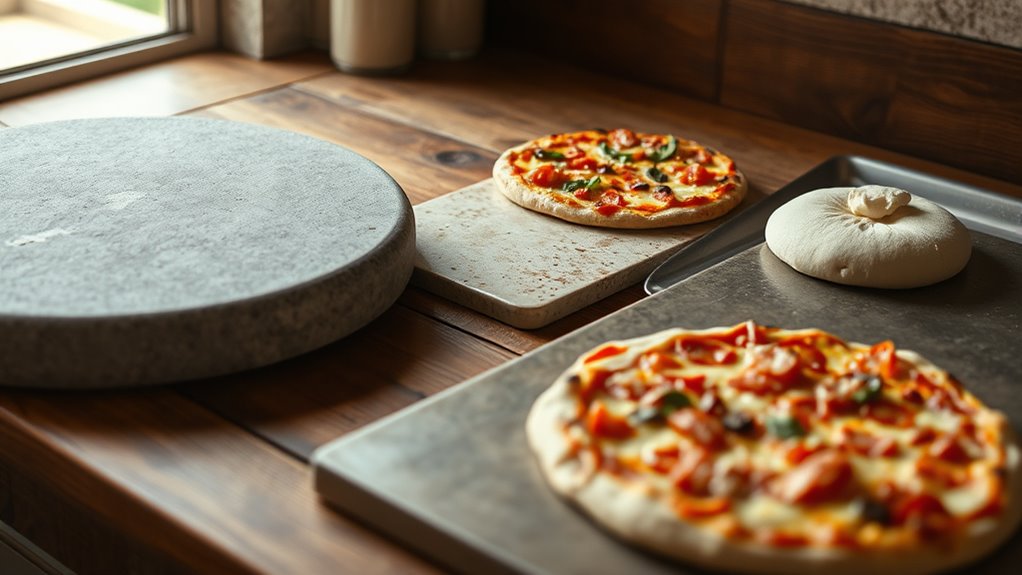
When a standard pizza stone doesn’t fit your oven, consider using custom-sized pans or baking boards that match your space. Flexible cooking surfaces, like silicone mats or perforated trays, can also help achieve great results without the perfect fit. These alternatives give you more options to bake delicious pizza even with size limitations. Additionally, employing multi-functional furniture or vertical storage solutions can help optimize your kitchen space for better organization and accessibility.
Custom-sized Pans and Boards
Sometimes, standard pizza stones aren’t the right fit for your oven or baking space, but that doesn’t mean you’re out of options. Custom-sized pans and boards can be a practical alternative, allowing you to tailor your setup for ideal pizza prep. These options can fit awkward spaces or irregular oven shapes better than traditional stones. Plus, they’re easy to clean and maintain, contributing to better oven maintenance overall. When choosing custom solutions, consider materials like cast iron, steel, or high-quality baking pans. They distribute heat evenly and can withstand high temperatures. To maximize results, guarantee your custom-sized pan supports your baking needs and fits comfortably within your oven. Oven configurations can also influence which size or shape of pan works best for your setup. These alternatives help you achieve crisp crusts without sacrificing convenience or quality during pizza prep.
Flexible Cooking Surfaces
Even when a standard pizza stone doesn’t fit your oven, there are flexible cooking surfaces that can serve as effective alternatives. Silicone baking mats or perforated baking sheets are great options, offering flexibility in size and shape. These surfaces help maintain dough elasticity, allowing you to stretch and shape your dough easily. They also promote even heat transfer, ensuring consistent topping distribution and a well-cooked crust. Plus, they’re easy to clean and store, making them practical choices for occasional or frequent use. While they may not replicate the traditional stone’s heat retention, these flexible surfaces still produce a crispy crust and evenly cooked toppings. When a standard stone isn’t an option, these alternatives keep your pizza-making versatile and achievable.
Enhancing Your Pizza Baking With Proper Placement and Use
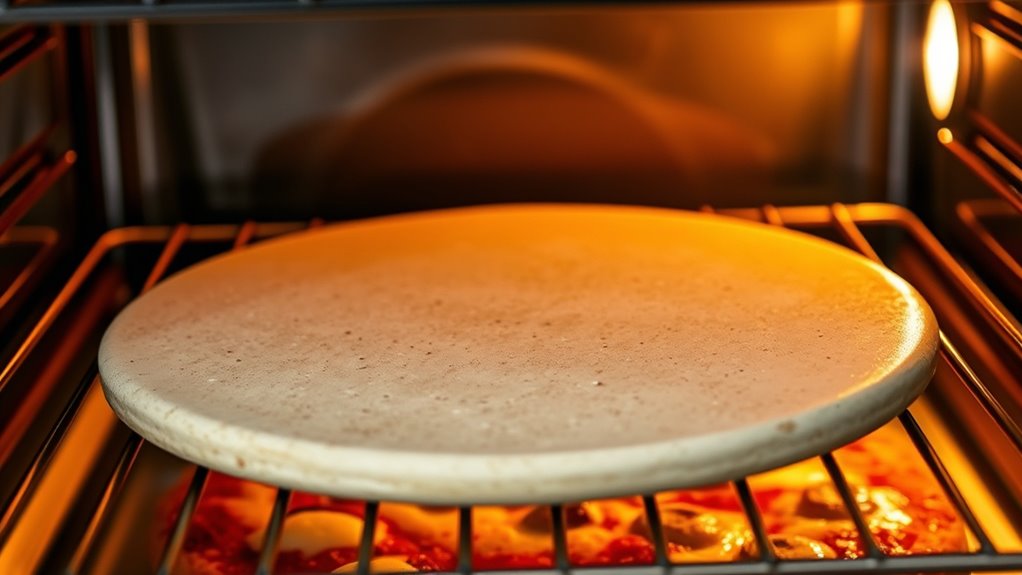
Proper placement of your pizza stone is vital for achieving the best crust and even cooking. Position it on a preheated rack to ensure consistent heat transfer. To optimize your results, consider these tips:
- Place the stone on the middle rack for balanced heat distribution.
- Adjust dough thickness to control baking time and crust crispiness.
- Spread toppings evenly to prevent sogginess and promote uniform baking.
- Use a pizza peel or flipping tool for easy transfer without disturbing the dough.
- Preheat the stone thoroughly—at least 30 minutes—to avoid temperature shocks.
- Ensuring proper light and heat exposure during baking can significantly improve the crust’s texture and flavor.
Frequently Asked Questions
Can a Pizza Stone Be Trimmed to Fit My Oven?
You can trim a pizza stone for better oven space optimization, but it’s not always recommended for pizza stone customization. If you decide to do it, use a saw carefully to avoid cracks. Keep in mind, uneven edges may affect cooking performance. Measure your oven space accurately first, and consider buying a stone that already fits your oven for the best results and safety.
Are There Flexible or Adjustable Pizza Stones Available?
You might think flexible or adjustable pizza stones don’t exist, but they do! While traditional stones are rigid, some brands offer flexible materials or adjustable options, making it easier to fit various oven sizes. These innovative designs help you customize your baking surface without trimming or risking damage. So, if you want versatility and convenience, look for pizza stones made with flexible materials or adjustable features.
How Does Oven Rack Position Affect Pizza Stone Fit?
Your oven rack position substantially impacts your pizza stone fit. By making positioning adjustments, you can guarantee the stone sits securely and evenly. Moving the rack higher or lower allows you to optimize heat transfer and prevent overcrowding. Always check that the stone fits comfortably without wobbling or touching the oven walls, and adjust the rack accordingly for the best baking results. Proper positioning enhances your pizza-making experience.
Can a Pizza Stone Be Used on a Grill if It Doesn’t Fit?
You can definitely use a pizza stone on a grill if it doesn’t fit, but opt for alternative materials like ceramic or cordierite that withstand high heat. Portable options, such as pizza stones designed for grilling, are great for flexibility. Just verify your stone is grill-safe, and use a heat-resistant surface or stand to prevent damage. This way, you can enjoy crispy pizza anywhere, even with unconventional stone sizes.
What Are the Risks of Forcing a Large Stone Into a Small Oven?
Ever wondered what happens if you force a large stone into a small oven? You risk compromising oven safety, as the intense heat may cause the stone to crack or break. Forcing it in can also damage the oven itself. Isn’t it smarter to use a properly sized stone? This helps prevent cracks, ensures even cooking, and keeps both your oven and your pizza safe from unnecessary damage.
Conclusion
Now that you know how to measure your oven and choose the right pizza stone, you’re ready to elevate your pizza game. Remember, a perfectly fitted stone isn’t just a tiny detail—it can transform your oven into a culinary powerhouse. Don’t let a stubborn size limit hold you back; with some clever solutions, you’ll be baking crispy, restaurant-quality pies that could outshine even the best pizzerias. Happy baking!