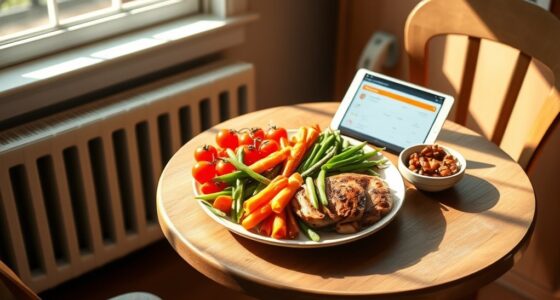
To cook full meals without propane, you can use portable electric appliances like induction cooktops, microwaves, and convection ovens that are compact and energy-efficient. Solar-powered options such as solar ovens and battery-driven devices can also help you cook off-grid. Outdoor electric grills, campfire setups, and no-cook meal ideas like salads or wraps make meal prep easier and safer. Keep your power managed wisely and explore various creative meals—there’s plenty more to discover for propane-free living.
Key Takeaways
- Use outdoor electric grills, induction cooktops, and solar ovens to prepare full meals without relying on propane.
- Incorporate portable, energy-efficient appliances like microwave and convection ovens for quick, propane-free indoor cooking.
- Leverage solar-powered devices and solar panels to run appliances sustainably, reducing dependence on traditional energy sources.
- Plan meals strategically with batch cooking, smart scheduling, and minimal appliance use to conserve power and streamline prep.
- Opt for no-cook or outdoor meal options like salads, wraps, and campfire cooking to simplify and avoid propane altogether.
Exploring Electric Cooking Options for RVs

Electric cooking options are becoming increasingly popular for RV enthusiasts seeking convenient and efficient meal preparation on the road. While traditional gas grills and outdoor fireplaces are common for outdoor cooking, electric alternatives offer a clean, easy-to-use solution. You can enjoy grilling without the hassle of propane tanks or open flames, making it safer and more environmentally friendly. Electric grills can be set up quickly and provide consistent heat, perfect for outdoor gatherings. Outdoor fireplaces, when electric, add ambiance without smoke or soot, enhancing your outdoor space. These options allow you to cook delicious meals outside without the fuss of gas, giving you more time to relax and enjoy your surroundings. Electric outdoor cooking tools are a practical upgrade for modern RV living. Smart technology features in some electric grills further improve cooking precision and convenience.
Utilizing Portable Induction Cooktops

Since space is often limited in an RV, portable induction cooktops offer a versatile and efficient cooking solution. They’re perfect for preparing full meals indoors or in tight spaces. You can easily set one up on a countertop or table, freeing up room for other activities. When it’s time for outdoor fun, these cooktops are great for campfire cooking or outdoor grilling, allowing you to cook without propane. Plus, they heat quickly and respond instantly to temperature adjustments. Here are some ways to maximize their use:
- Use for quick meal prep during travel stops.
- Pair with outdoor grilling for a complete outdoor cooking station.
- Switch seamlessly between indoor cooking and outdoor setups for variety.
Additionally, induction technology ensures energy efficiency and safety, making these cooktops a reliable choice for various cooking scenarios.
This flexibility makes portable induction cooktops an essential tool for RV living.
Embracing Solar-Powered Appliances for Meal Prep
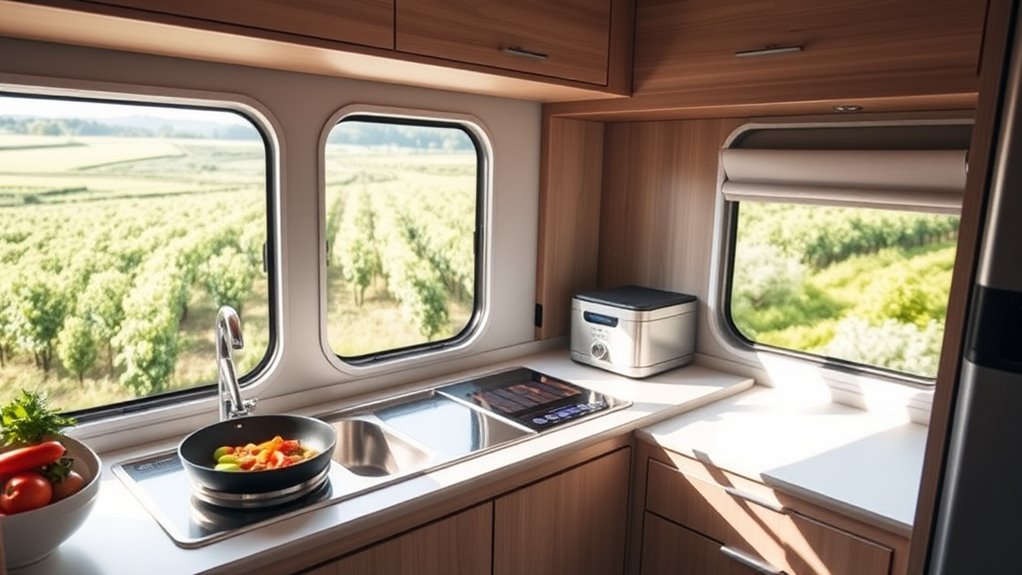
Solar-powered appliances can substantially boost your meal prep efficiency by reducing reliance on traditional energy sources. With solar ovens, you can cook meals even when off-grid, saving time and energy. Embracing these tools offers clear benefits, making your RV living more sustainable and convenient. To complement this, designing a cozy farmhouse bedroom ambiance can create a warm and inviting environment during your travels, blending comfort with practicality.
Solar Oven Efficiency
Harnessing the sun’s energy with a solar oven can be an efficient way to prepare meals while living on the road. To optimize solar oven efficiency, you need to focus on maximizing sunlight exposure. Here are key tips:
- Position your solar oven during peak sunlight hours, usually between 10 a.m. and 2 p.m.
- Keep the oven’s reflective surfaces clean to boost sunlight absorption.
- Use a sturdy, adjustable stand to follow the sun’s position for consistent heat.
- Incorporate sustainable living principles by choosing energy-efficient cooking methods that reduce your carbon footprint.
Solar-Powered Appliances Benefits
Embracing solar-powered appliances for meal prep allows you to enjoy quiet, eco-friendly cooking on the road. These appliances use renewable energy, reducing your reliance on propane and lowering emissions. Solar-powered appliances are highly energy efficient, meaning they make the most of sunlight to operate effectively. With features like solar refrigerators, induction cooktops, and portable solar ovens, you can prepare full meals without noisy generators or fumes. They’re easy to install and maintain, providing a sustainable solution for RV living. Plus, solar energy saves you money over time by cutting down electricity costs. Many visionary quotes emphasize the importance of innovative thinking and sustainability, inspiring you to adopt more environmentally conscious solutions. Overall, switching to solar-powered appliances enhances your independence, protects the environment, and simplifies your RV lifestyle—making your outdoor adventures more enjoyable and hassle-free.
Mastering Microwave and Convection Oven Techniques

Have you ever wondered how to make the most of your microwave and convection oven while living in an RV? Mastering these appliances can save time and energy, especially without propane. Start by prioritizing microwave safety—use microwave-safe containers, avoid metal, and vent lids to prevent accidents. For convection baking techniques, preheat your oven and utilize proper cookware to ensure even heat distribution. Here are three tips to optimize performance:
- Use microwave cover to prevent splatters and retain moisture.
- Arrange food evenly for uniform cooking.
- Preheat your convection oven for better baking results.
- Incorporate advanced control systems that help monitor temperature and humidity, ensuring consistent quality in your RV kitchen.
Implementing No-Propane Outdoor Cooking Methods
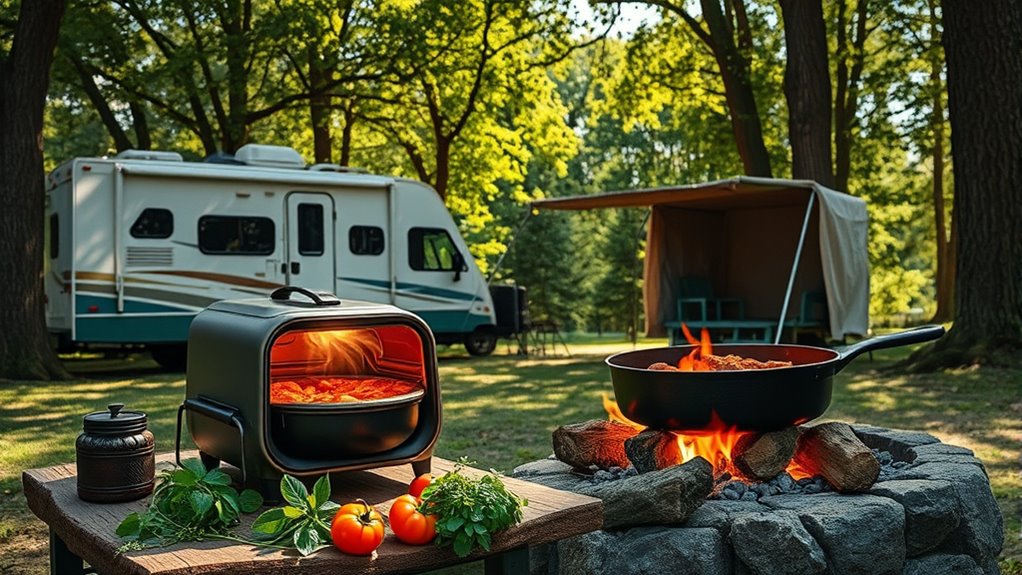
Living in an RV often means limited resources and the need for efficient, propane-free outdoor cooking options. A gas grill with an open flame can be your best friend here. It allows you to cook full meals without depending on propane, making your outdoor cooking more sustainable and cost-effective. You can sear steaks, grill vegetables, or even cook breakfast foods directly over the open flame, mimicking traditional outdoor grilling. Just make certain you have a stable surface and proper ventilation. Safety is key—keep a fire extinguisher nearby and never leave the open flame unattended. Additionally, understanding personality traits can help you navigate the challenges of RV living more effectively. With a reliable gas grill, you can enjoy delicious, cooked-to-perfection meals outside, all while minimizing your reliance on propane and maximizing your RV living experience.
Choosing Compact and Versatile Electric Appliances

When selecting electric appliances for your RV, prioritize models that are compact, lightweight, and multi-functional. This guarantees you save space while maintaining cooking versatility. Look for appliances like an electric grill that can replace your gas grill, offering outdoor grilling without propane. A versatile induction cooktop can handle everything from boiling to sautéing, reducing the need for multiple devices. Compact electric ovens or toaster ovens allow baking or roasting without bulky equipment. For campfire cooking alternatives, electric appliances provide a clean, safe option that eliminates the need for open flames. Choosing multi-purpose devices helps streamline your setup and keeps your RV organized. Additionally, energy efficiency is an important factor to consider to ensure longer battery life and reduce power consumption during your travels.
Tips for Efficiently Managing Power Resources
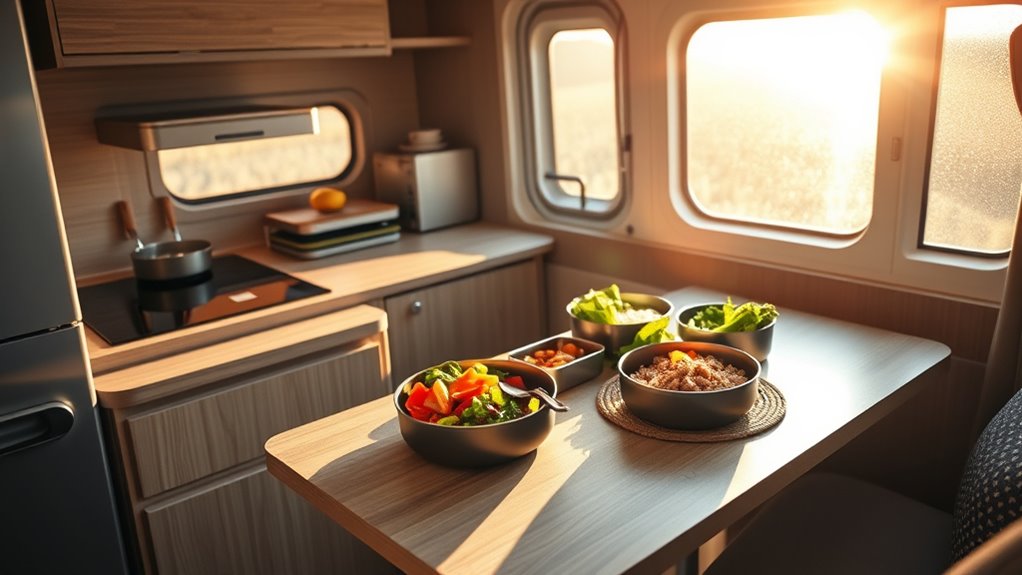
To make the most of your power resources, focus on conserving energy whenever possible. Using portable power devices can help you avoid unnecessary drain, while scheduling cooking times ensures you don’t overload your system. Small changes like these can considerably extend your power supply on the road. Additionally, being mindful of your juice consumption can help prevent unexpected power shortages during your travels.
Prioritize Energy Conservation
Wondering how to make your RV power last longer on the road? Prioritizing energy conservation helps you stretch your resources. Use gas grills and outdoor burners for cooking instead of your RV’s electric stove, saving valuable power. Limit the use of high-energy appliances and turn off devices when not in use. Keep windows and vents open during cooking to reduce the need for electric fans or exhaust fans. Additionally, switch to LED lights, which consume less energy. Incorporating sustainable materials into your RV accessories can also reduce overall energy consumption and environmental impact.
Use Portable Power Devices
Are you making the most of your portable power devices to extend your RV’s energy supply? Using portable power banks, solar panels, or inverter systems can help you run essential appliances like your gas stove or propane grill more efficiently. For cooking, opt for electric appliances over gas stoves when possible, as they use less energy. Keep your devices charged and maintain a steady power flow to avoid dips that can interrupt cooking. When using a propane grill, rely on portable power to light or operate digital controls, reducing your reliance on traditional sources. Planning your cooking to maximize the use of these devices ensures you conserve power and avoid running out mid-meal. Efficient management of portable power devices keeps your RV running smoothly and your meals on track.
Schedule Cooking Times
Ever considered how scheduling your cooking times can save your RV’s power? Planning your meal prep around off-peak hours or when your power sources are least strained helps conserve energy. To maximize efficiency, try these strategies:
- Prepare multiple meals during one power session—batch cooking reduces the frequency of appliance use.
- Store ingredients properly so you can quickly assemble meals, avoiding unnecessary prep time and power drain.
- Use your RV’s built-in timers or smart plugs to run appliances during ideal times, ensuring you don’t waste power on unnecessary cooking.
Creative Meal Ideas for Propane-Free RV Living
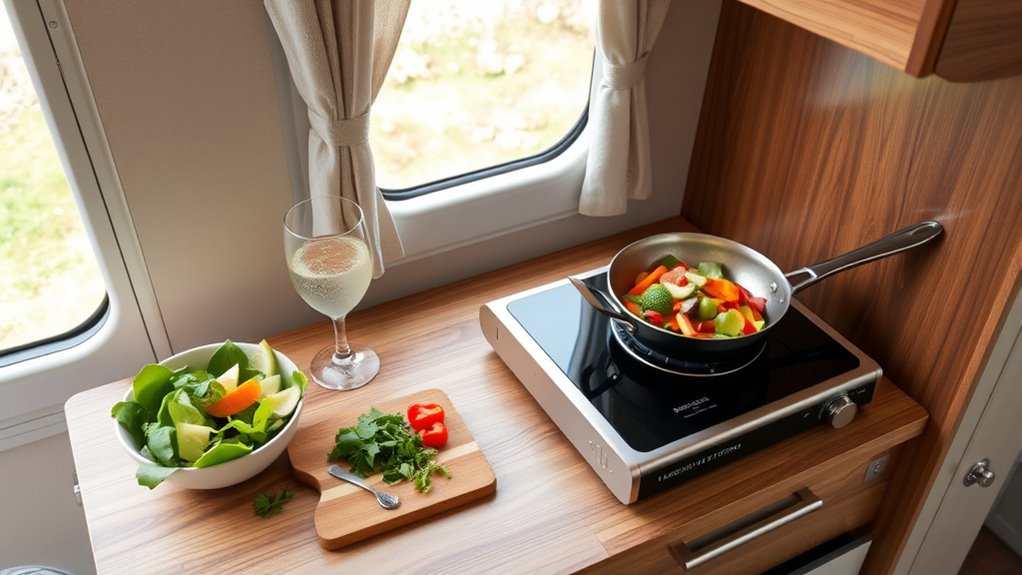
Living without propane in your RV might seem challenging at first, but it opens up exciting opportunities to get creative with your meals. You can embrace campfire cooking, using portable grills or open flames to prepare delicious dishes. No cook meals become a practical solution; think hearty wraps, salads, or fresh fruit and cheese platters that require minimal prep. Consider using a solar oven or a portable induction cooktop powered by batteries for versatile cooking options. Cold soups, sandwiches, and overnight oats are easy, satisfying options that don’t need heat. With a little planning, you’ll discover that outdoor cooking and no cook meals keep your RV living simple, fun, and sustainable—even without propane.
Frequently Asked Questions
How Do I Cook Large Meals Without Propane in My RV?
To cook large meals without propane, you can leverage solar power and induction cooking. Solar panels provide renewable energy during the day, which you can store in batteries for evening use. Induction cooktops are energy-efficient and heat up quickly, making them ideal for preparing big meals. With this setup, you can cook full meals comfortably without relying on propane, ensuring a safe and eco-friendly RV cooking experience.
What Safety Precautions Are Needed With Electric Cooking Appliances?
Your safety’s more important than a mountain of pancakes! When using electric cooking appliances, always prioritize electrical safety—avoid overloading circuits, keep appliances away from water, and unplug when not in use. Regular appliance maintenance guarantees they work efficiently and safely, preventing potential hazards. Be cautious with cords, inspect for damage, and never ignore signs of electrical issues. Following these precautions keeps your cooking adventures safe and enjoyable!
Can I Cook Outdoors Without Any Propane or Traditional Fuel?
Yes, you can cook outdoors without propane or traditional fuel by using solar cooking or open fire cooking. With solar cookers, you harness sunlight to prepare meals, making it eco-friendly and safe. Open fire cooking offers a classic, versatile method, but make certain you follow local fire regulations and keep safety in mind. Both options let you enjoy full meals outdoors while avoiding reliance on propane or other fuels.
How Long Can I Run Electric Appliances on a Rv’s Battery?
You wonder how long you can run electric appliances on your RV’s battery. It depends on your battery capacity and your power management skills. Smaller batteries might last only a few hours, while larger ones can stretch out longer. To prevent depleting your battery, manage power wisely by turning off unused devices and using energy-efficient appliances. Regularly monitor your battery’s charge to avoid unexpected power loss during your trip.
Are There Any Cost Benefits to Going Propane-Free With RV Cooking?
Going propane-free with RV cooking can offer notable cost savings and increased fuel independence. You won’t rely on propane refills, which can be pricey and sometimes hard to find. Instead, using electric appliances means lower ongoing costs, especially if you generate your own power or have access to affordable electricity. This approach can reduce your overall expenses and give you more control over your energy sources, making your RV life more economical and self-sufficient.
Conclusion
As you discover how seamless electric cooking can be, it’s funny how your favorite camping mug coincidentally matches your new induction cooktop. With a little planning, you’ll find yourself effortlessly preparing full meals without propane, and maybe even saving a few bucks along the way. Embracing these innovations turns RV living into a surprising adventure—one where simplicity and convenience go hand in hand, making every trip feel a little more like home.