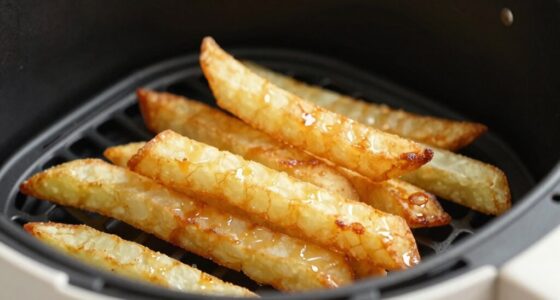
When using an air fryer, a light coating of oil makes foods crispy and flavorful. Usually, about 1-2 teaspoons per batch is enough—just spray or brush to guarantee even coverage. Choose oils with high smoke points like vegetable, canola, or avocado for best results. Olive oil works well at lower temperatures but should be used sparingly. Keep experimenting with different oils, and you’ll discover tips to perfect your crispy, healthier favorites.
Key Takeaways
- Use about 1-2 teaspoons of oil per batch for a light, even coating.
- Prefer vegetable, canola, or avocado oils for high smoke point and neutral flavor.
- Spray or brush oil onto food to avoid excess and promote crispiness.
- Olive oil can be used sparingly; extra virgin is best at lower temperatures.
- Consider oil alternatives like cooking spray or broth to reduce fat while maintaining texture.
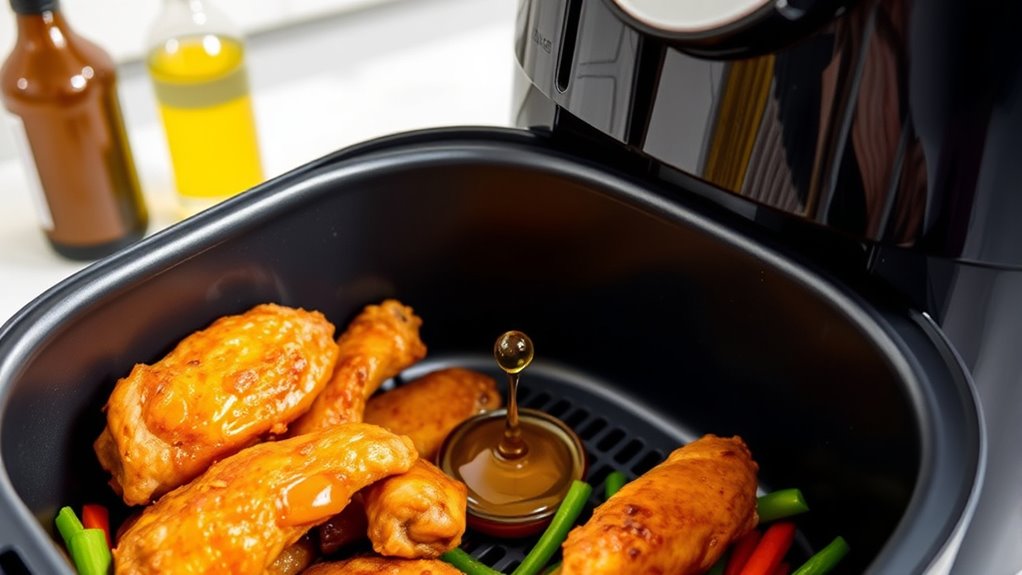
Using oil in an air fryer can enhance the flavor and help achieve a crispy texture, but it’s important to use it wisely. When you add oil, it interacts with the food’s surface, promoting oil absorption that results in a golden, crunchy exterior. However, too much oil can lead to excess oil absorption, making your dishes greasy and defeating the health benefits of air frying. To strike the right balance, a light coating—about one to two teaspoons per batch—is usually sufficient. You don’t need to drown your food in oil; just a thin layer helps produce that desirable crispiness while keeping calories in check.
Choosing the right type of oil is vital. Many cooks prefer vegetable oil, canola, or avocado oil because of their high smoke points and neutral flavors. These oils can withstand the high heat of air frying without burning or imparting unwanted flavors. If you’re looking for a healthier option, consider using oils rich in monounsaturated fats, like olive oil, but keep in mind that olive oil has a lower smoke point, so use it sparingly or opt for extra virgin varieties at lower temperatures. When you use oil, it’s best to apply it with a spray or brush to ensure an even, minimal coating. This way, you minimize oil absorption while still achieving that crispy finish.
If you’re concerned about oil absorption or want to cut calories even further, there are plenty of oil alternatives you can explore. For example, using cooking spray made from healthier oils allows you to coat foods evenly without applying excess. Additionally, some people use broth or water sprays to help foods crisp up without any added fat. These alternatives work well for vegetables or lean proteins and can reduce the overall oil content of your meal. Keep in mind, though, that these substitutes may not deliver the same flavor or texture as traditional oils, but they can still produce satisfying results.
Ultimately, the key is moderation. Using just enough oil to lightly coat your ingredients helps you enjoy a crispy texture without overdoing it. Incorporate the right type of oil based on your flavor preferences and cooking temperature, and don’t hesitate to experiment with oil alternatives when you’re aiming to reduce fat intake. Additionally, understanding the benefits of wood-burning can inspire you to adopt more sustainable and cost-effective heating practices in your home. With a careful approach, you’ll maximize the benefits of your air fryer and enjoy delicious, healthier meals every time.

Mantova Air Fryer Spray 450F Smoke Point – All-Natural High-Heat Cooking Oil – Perfect for Air Fryers, Roasting, Grilling, Baking, and Sautéing-High Smoke Point, Non-Aerosol Spray, Easy to Use and Mess-Free – Made in Italy – (Pack of 1)
- All-Natural Ingredients: Pure oil, no additives or artificial flavors
- High Smoke Point: Withstands up to 450°F for high-heat cooking
- Versatile Use: Suitable for air frying, roasting, grilling, baking
As an affiliate, we earn on qualifying purchases.
As an affiliate, we earn on qualifying purchases.
Frequently Asked Questions
Can I Use Aerosol Cooking Sprays in My Air Fryer?
You can use aerosol spray in your air fryer, but be cautious. Aerosol sprays often contain propellants and additives that can leave oil residue on the basket and heating element. Over time, this buildup may affect performance or cause smoke. To avoid this, opt for a pump-style oil spray or brush on oil directly. This way, you maintain your air fryer’s efficiency and prevent unnecessary residue buildup.
Is It Necessary to Preheat the Air Fryer Before Adding Oil?
You don’t have to preheat your air fryer before adding oil—it’s like waiting for the perfect moment that might never come! Preheating benefits include even cooking and browning, but it doesn’t drastically impact oil absorption rates. If you’re in a rush, skip it; your food will still turn out delicious. For best results, preheat for a few minutes to reveal that crispy perfection, but it’s not a must-have!
How Do Different Oils Affect Cooking Times and Results?
Different oils can impact your cooking times and results by affecting oil smoke and flavor enhancement. For example, olive oil may cause more smoke and add a rich flavor, while avocado oil has a higher smoke point, reducing smoke and allowing for longer cooking. Using the right oil guarantees your food cooks evenly, maintains flavor, and minimizes smoke, giving you perfect results every time.
Can I Reuse Oil Used in Air Frying?
Reusing oil is like recycling a treasure chest—you can do it, but with care. You should monitor oil freshness and strain out food particles to prevent off-flavors and smoke. Oil recycling is safe for a few uses if stored properly in a sealed container and kept in a cool, dark place. However, avoid reusing oil if it smells rancid or has turned dark, as it can affect your food and health.
What Are the Health Risks of Using Too Much Oil?
Using too much oil can increase your health concerns, such as higher cholesterol and risk of heart disease. Excess oil consumption adds unnecessary calories and fat, which may lead to weight gain and other health issues over time. To stay healthier, limit your oil intake and opt for healthier oils like olive or avocado. Moderation is key to balancing flavor and health when using oil in your air fryer.
Conclusion
So, next time you reach for oil, remember it’s all about balance—just like the perfect fry. Whether it’s a light spray or a teaspoon, using oil wisely can make your dishes crispy and delicious. Funny enough, I found that a little oil often turns simple ingredients into a flavorful surprise—almost like a coincidence that good food needs just a tiny boost. Trust your instincts, and enjoy your perfectly cooked air fryer creations!