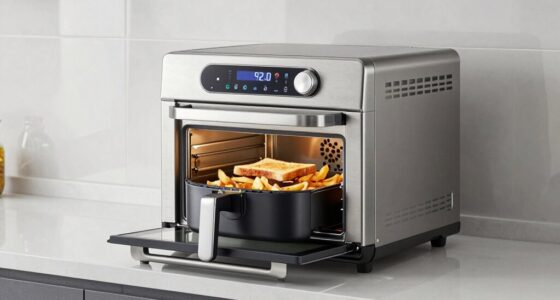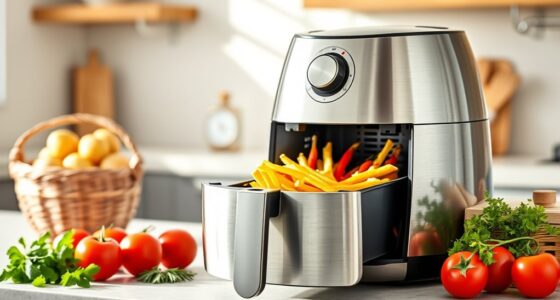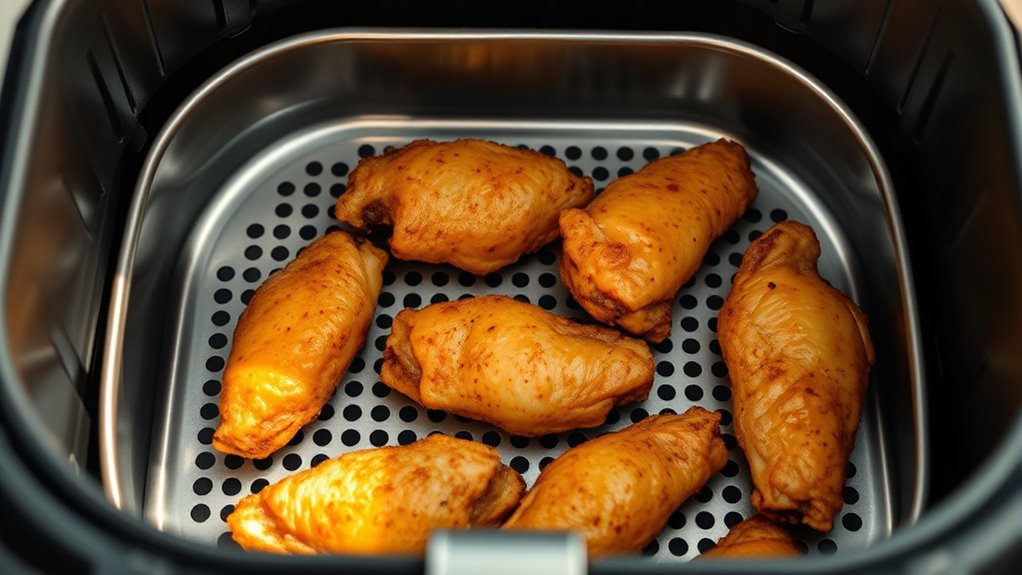

To learn your air fryer’s hot spots, start by observing how your food cooks over several uses. Notice which areas tend to overcook or burn and which stay undercooked. Try repositioning or flipping your food mid-cycle, and avoid overcrowding the basket. Experiment with different items, noting adjustments you make. With patience and attention, you’ll identify your appliance’s heat zones. Keep exploring these tips to master even cooking results every time.
Listen free for 30 days with Audible
Thousands of audiobooks and originals — cancel anytime.
As an affiliate, we earn on qualifying purchases.
Key Takeaways
- Observe cooking patterns over multiple uses to identify areas that cook faster or burn.
- Rotate or flip food midway to see if hot spots are causing uneven results.
- Experiment with different food arrangements and note which zones heat more intensely.
- Use elevated racks or place food in a single layer to improve airflow and reduce hot spots.
- Research your specific air fryer model’s design to understand its heat distribution tendencies.
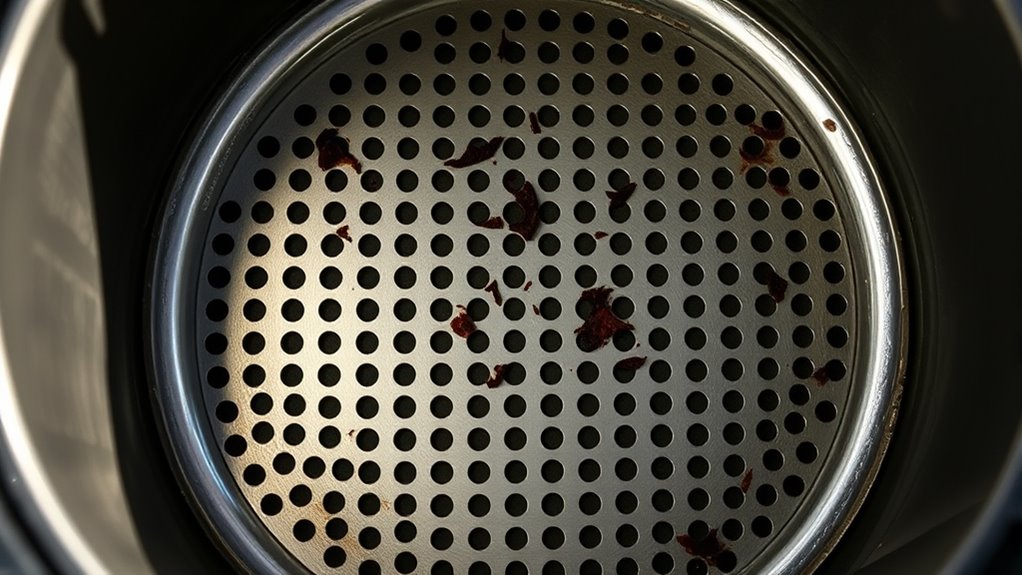
Air fryers are popular for their quick and even cooking, but many users notice that certain areas inside the basket tend to cook faster than others. These uneven cooking patterns are often caused by what’s known as air fryer hot spots. When you encounter hot spots, some parts of your food might be overcooked or burnt, while others remain underdone. Understanding and troubleshooting uneven cooking is key to getting the most out of your appliance.
The first step is to recognize where these hot spots tend to form. Most air fryers have areas that receive more direct airflow, usually near the heating element or the fan. These zones heat up more quickly and distribute heat unevenly across the basket. When you’re cooking, keep an eye on the basket’s position and how your food is arranged. If certain parts consistently cook faster, it’s probably due to these hot spots.
Hot spots in air fryers often form near the heating element or fan, causing uneven cooking.
To troubleshoot uneven cooking, start by adjusting your cooking technique. Shake or flip your food midway through the cooking process. This helps distribute heat more evenly, especially if you notice hot spots near the edges or in particular sections of the basket. Also, avoid overcrowding the basket, as piling food on top of each other can block airflow and intensify hot spots. Arranging food in a single, even layer allows hot air to circulate freely, promoting uniform cooking.
Another effective way to handle air fryer hot spots is to rotate the basket during cooking. If your model allows, turn the basket 180 degrees halfway through the cooking cycle. This simple step can help balance out heat distribution and minimize the effects of hot spots. Some users find that investing in a silicone or metal rack can improve air circulation by elevating food, preventing contact with hot spots on the basket’s surface.
Lastly, it’s important to understand your specific air fryer’s quirks. Not all models heat evenly right out of the box. Experiment with different foods and cooking times to learn where hot spots are located. Keep notes of adjustments you make—like flipping, rotating, or rearranging food—and observe how these changes improve your results. Troubleshooting uneven cooking isn’t always instant, but with patience, you’ll develop a better sense of your air fryer’s hot spots and how to mitigate their effects. Mastering this ensures your meals come out consistently tasty and perfectly cooked every time.
Additionally, researching air fryer hot spots and understanding your appliance’s design can help you better identify and prevent uneven cooking.
As an affiliate, we earn on qualifying purchases.
Frequently Asked Questions
How Can I Identify Hot Spots in My Specific Air Fryer Model?
You can identify hot spots in your air fryer by doing an air fryer calibration test. Place small, evenly spaced items like bread slices or potato cubes inside and run a short cook cycle. Observe which areas cook faster or darker to spot hot spots. To prevent hot spots, regularly calibrate your air fryer and avoid overcrowding, ensuring even heat distribution for consistent cooking results.
Do Hot Spots Affect Cooking Times or Temperatures?
Hot spots can definitely affect your cooking times or temperatures, making some areas cook faster than others. Think of your air fryer as a car engine—without proper calibration, some cylinders might overperform. To guarantee even cooking, you should perform hot spot mitigation by rearranging food and calibrating your device regularly. This way, you’ll get consistent results and avoid undercooked or overcooked spots, saving you time and effort.
Can Hot Spots Cause Uneven Browning or Burning?
Hot spots can cause uneven browning or burning in your air fryer because they create uneven heat distribution. When hot spots are present, some areas cook faster and get darker or burn, while others remain undercooked, affecting cooking consistency. To prevent this, regularly shake or turn your food and monitor cooking progress. Understanding your air fryer’s hot spots helps you achieve evenly browned, perfectly cooked results every time.
Are There Specific Foods More Affected by Hot Spots?
Certain foods, like delicate pastries, unevenly cooked vegetables, and thin meats, are more affected by hot spots. You’ll notice these hot spots impact food texture, causing some parts to be crispier or soggy, and flavor consistency, leading to uneven tastes. To achieve even results, you should monitor these foods closely, shake or turn them frequently, and adjust your cooking time or temperature. This way, you keep your dishes evenly cooked and delicious.
How Often Should I Check for Hot Spots During Cooking?
You should check for hot spots during your first few uses of your air fryer, ideally after 10-15 minutes of cooking. Use an oven-safe cooking thermometer and place it in different areas to gauge heat distribution. Regularly calibrate your air fryer to guarantee even cooking, and recheck hot spots if you notice uneven results. This proactive approach helps you maintain consistent, delicious meals every time.
Conclusion
Knowing your air fryer’s hot spots can boost your cooking game and help you achieve perfectly crispy results every time. Did you know that uneven heat distribution can cause up to 30% of your food to cook unevenly? By understanding where those hot spots are, you’ll prevent overcooking or undercooking your dishes. So, take a moment to test your air fryer — it’s a small step that makes a big difference in your delicious creations!
Fall yard work Picks
leaf blowers
As an affiliate, we earn on qualifying purchases.