
To reduce acrylamide formation, keep frying oil below 170°C and use a thermometer to monitor temperature. Opt for baking at moderate temperatures around 180°C and avoid over-browning. Pre-soak potato slices in water to leach out sugars and amino acids, which fuel the Maillard reaction. Choose low-sugar ingredients and aim for lightly golden foods rather than dark and burnt. Continue exploring ways to cook smarter for safer, healthier dishes.

Get kitchen gear delivered free with Prime
- Fast, free delivery on millions of items
- Prime Video, Amazon Music and more included
- Member-only deals all year
Key Takeaways
- Keep cooking temperatures below 170°C (338°F) and avoid over-browning to minimize acrylamide formation.
- Soak potato slices in water for 15-30 minutes to leach out sugars that contribute to acrylamide.
- Opt for baking or pan-frying at moderate temperatures around 180°C (356°F) instead of deep-frying at high heat.
- Select potatoes with lower sugar content and peel them to reduce precursors for acrylamide formation.
- Remove foods from heat once they are lightly golden, avoiding dark browning or charring.
Acrylamide is a chemical that forms in certain foods during high-temperature cooking processes like frying, baking, and roasting. It’s primarily produced when foods rich in carbohydrates, such as potatoes and bread, are cooked at temperatures above 120°C (248°F). The key process behind acrylamide formation is the Maillard reaction, which occurs when amino acids and sugars react under heat, giving browned foods their appealing flavor and color. Unfortunately, this same reaction can lead to the creation of acrylamide, particularly when frying temperatures are too high.
To reduce acrylamide formation, you should pay close attention to frying temperature. Keeping your oil temperature below 170°C (338°F) can substantially limit the Maillard reaction’s progression toward acrylamide development. Using a thermometer to monitor and control the heat ensures you don’t inadvertently push the temperature into the danger zone. Lower frying temperatures extend cooking times but result in less acrylamide, so you’ll need to balance cooking efficiency with safety.
Keeping frying oil below 170°C reduces acrylamide formation and promotes safer cooking.
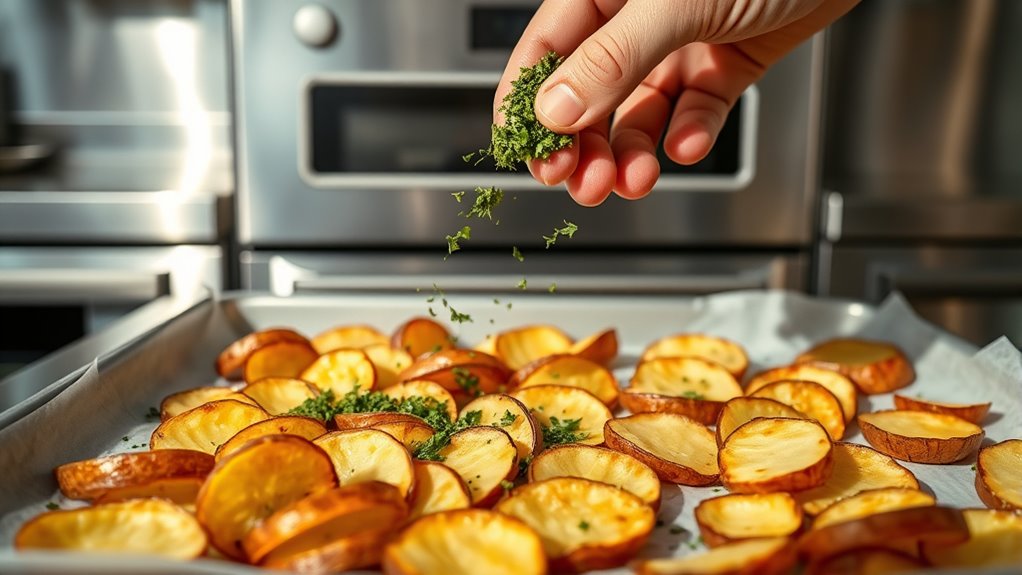
Another smart technique is to modify your cooking methods. Instead of deep-frying, try pan-frying or baking, which generally require lower temperatures and produce less acrylamide. When baking, aim for moderate oven temperatures, around 180°C (356°F), and avoid over-browning. Lightly golden foods contain less acrylamide than deeply browned or charred ones. You can also pre-soak potato slices in water for 15-30 minutes before frying or baking. This step leaches out some sugars and amino acids, reducing the substrate availability for the Maillard reaction and consequently lowering acrylamide levels.
Additionally, choosing the right ingredients can make a difference. Opt for varieties of potatoes with lower sugar content, as excess sugars enhance acrylamide formation during high-temperature cooking. Rinsing or peeling potatoes can also help, as the outer layers tend to accumulate more acrylamide-forming precursors. When baking bread or other baked goods, avoid over-browning by removing them from the oven once they reach a light golden color rather than waiting for deep browning, which indicates higher acrylamide levels.
digital cooking thermometer for frying
As an affiliate, we earn on qualifying purchases.
As an affiliate, we earn on qualifying purchases.
Frequently Asked Questions
Can Acrylamide Formation Occur at Low Cooking Temperatures?
Yes, acrylamide can form at low temperatures, but the risk is much lower compared to high-temperature cooking. When you cook foods at low temperatures, typically below 120°C (248°F), the chemical reactions that produce acrylamide are less likely to occur. However, if you cook foods for prolonged periods or at slightly higher temperatures, there’s still a small chance of acrylamide formation. To minimize this, stick to lower temperatures and avoid excessive browning.
Are There Natural Ingredients That Inhibit Acrylamide During Cooking?
Yes, natural ingredients like rosemary, turmeric, and green tea contain natural inhibitors that can help reduce acrylamide formation during cooking. You can incorporate these ingredients into your recipes, and their interactions with starches and sugars may inhibit acrylamide formation. Using such natural inhibitors is a smart way to lower acrylamide levels, especially when combined with proper cooking techniques, ensuring safer and healthier meals.
How Does Storage of Raw Ingredients Influence Acrylamide Levels?
Think of raw ingredients as time travelers—how you store them shapes their potential. Proper storage conditions preserve ingredient freshness, reducing the likelihood of acrylamide formation during cooking. When you keep potatoes and grains in cool, dark, airtight containers, you slow down chemical changes that lead to acrylamide. Conversely, poor storage accelerates spoilage, increasing risks. So, by maintaining ideal storage conditions, you help keep your food safer and healthier.
Do Different Cooking Oils Affect Acrylamide Formation?
Different cooking oils can influence acrylamide formation because of their composition and oil stability. Selecting oils with high smoke points and good stability, like avocado or refined sunflower oil, helps prevent breakdown during frying, reducing acrylamide levels. Conversely, less stable oils may degrade and promote acrylamide formation. So, choosing the right cooking oil is essential for minimizing acrylamide when preparing fried or roasted foods.
Can Consumer Kitchen Appliances Be Optimized to Reduce Acrylamide?
Did you know that properly calibrated appliances can lower acrylamide formation by up to 30%? You can optimize your kitchen appliances by regularly calibrating them for accurate temperature control and using user safety features like automatic shut-off. This helps prevent excessively high temperatures that promote acrylamide creation. By making these adjustments, you guarantee safer cooking, reduce harmful compounds, and enjoy healthier meals with minimal effort.
Conclusion
By applying smart techniques, you can effectively reduce acrylamide formation in your cooking. These methods act as your secret weapon, helping you turn the tide against unwanted compounds. Remember, knowledge is power, and with the right steps, you can keep your food safer without sacrificing flavor. Don’t let acrylamide catch you off guard; stay vigilant and proactive. With these strategies, you’ll be cooking smarter, not harder, and turning the tables in your favor.
Halloween Picks
halloween
As an affiliate, we earn on qualifying purchases.