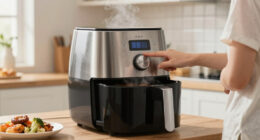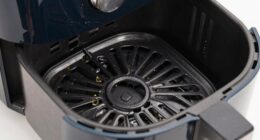

To minimize cleanup, you can use liners or parchment paper to catch drips and crumbs, making cleanup quick and easy. Spraying the basket with a non-stick coating prevents food from sticking, reducing scrubbing afterward. Leaving the basket bare requires more effort but avoids waste. Combining these methods with proper cooking techniques can make cleaning even simpler. Keep exploring to discover tips that will keep your air fryer spotless and hassle-free.
Key Takeaways
- Using liners or parchment paper prevents food from sticking and reduces residue, making cleanup quicker and easier.
- Spraying with high-heat non-stick coatings minimizes food adhesion and simplifies post-cooking cleaning.
- Leaving the basket bare requires thorough cleaning but avoids waste and works well with proper cooking techniques.
- Combining liners or sprays with effective cooking methods can significantly reduce cleanup effort overall.
- Choosing the best method depends on food type and personal preferences for convenience and environmental considerations.
Cleaning up after a project or meal can be a time-consuming hassle, but with a few smart strategies, you can minimize the effort required. When it comes to using your air fryer, one of the biggest questions is whether to line it, spray it, or leave the basket bare. Your choice can considerably impact cleanup time and ease, so understanding your options and how they relate to air fryer accessories and cooking techniques is key.
If you want to cut down on scrubbing, using a liner or parchment paper designed for air fryers can be a game-changer. These accessories create a barrier between your food and the basket, catching drips and crumbs that would otherwise stick to the surface. When you use these liners, you simply remove and discard them after cooking, leaving behind a clean basket. This approach is especially useful for sticky or greasy foods, which can be tough to clean off once cooled. Plus, many air fryer accessories are specifically made to fit comfortably inside the basket, making it easy to place and remove liners without hassle. Just ensure you’re using liners compatible with your model to avoid interfering with airflow or cooking techniques.
Spraying the basket with a light coat of non-stick spray before cooking is another method to make cleanup easier. This technique helps prevent food from sticking directly to the basket, reducing residue and making post-cooking cleaning faster. When you employ this method, it’s best to use a spray that’s suitable for high-heat cooking, ensuring that you’re not introducing unnecessary chemicals or flavors. Remember, though, that over-spraying can still lead to a buildup of residue over time, so it’s wise to combine this with regular cleaning of your air fryer accessories. Additionally, selecting non-stick coatings that are durable and safe can prolong the lifespan of your basket and improve overall performance.
Leaving the basket bare is the simplest approach but requires more elbow grease afterward. However, if you’re mindful of your cooking techniques—like shaking the basket during cooking or turning food regularly—you can prevent sticking and reduce mess. Using appropriate cooking techniques, such as adjusting temperature and cook time, also minimizes splatters and drips. Cleaning the bare basket might take a little more effort, but it can be less wasteful if you prefer not to use liners or sprays. Regular maintenance, like soaking the basket in warm, soapy water, can make cleanup faster and easier.
In the end, choosing between lining, spraying, or leaving your air fryer bare depends on your preferences and the types of foods you cook. Combining these strategies with proper cooking techniques can help you keep your air fryer cleaner, save time, and enjoy more hassle-free meals.

Emeril Lagasse Extra Large French Door Air Fryer Toaster Oven Combo, 24 Cooking Functions and Digital Controls, 7 Accessories Included, Stainless Steel Finish, 26QT Capacity
A VERSATILE AIR FRYER AND MULTI-COOKER COMBO: Elevates practically any meal, from air frying quick after-school snacks to...
As an affiliate, we earn on qualifying purchases.
Frequently Asked Questions
Which Dishwasher Method Is Most Energy-Efficient?
You’ll find that using a bare basket method is the most energy-efficient, as it minimizes water consumption and maximizes detergent efficiency. With fewer parts to clean and less water needed for rinsing, this approach reduces overall energy use. By choosing this method, you help preserve resources, cut down on cleaning time, and ensure your dishwasher operates more sustainably, making it an eco-friendly choice for efficient energy use.
How Does Cleaning Ease Vary Between Options?
Imagine your dishwasher as a diligent artist, and cleaning ease as the brush strokes. Using a line, spray, or bare basket affects dishwasher effectiveness and cleaning time. Lines often require less effort, like a steady hand guiding paint smoothly. Spray options may need extra rinsing, increasing cleaning time. Bare baskets are straightforward but might demand more pre-rinsing. Choose what fits your routine, balancing effectiveness with less cleanup hassle.
Are Certain Dishes Better Suited for Specific Methods?
Certain dishes are better suited for specific methods to optimize cleaning. For example, heavily soiled pots and pans benefit from a spray or bare basket to guarantee thorough residue removal efficiency without pre-wash, saving time. Delicate dishes or those with light residue may only need a line method, reducing pre-wash necessity. Choosing the right method depends on the dish’s level of soiling and material, making cleaning more effective and less labor-intensive.
What Are the Long-Term Maintenance Costs?
You’ll find that the cost comparison for long-term maintenance varies depending on your chosen method, with spray systems often incurring higher upkeep due to nozzle replacements and cleaning. Bare baskets typically have lower ongoing costs but may require more frequent manual cleaning. Consider the environmental impact too—spray systems tend to use more water and chemicals, potentially increasing long-term expenses and ecological footprint. Balancing these factors helps you choose the most cost-effective and eco-friendly option.
Does the Method Affect Dishwasher Lifespan?
Think of your dishwasher as a trusty steed; the cleaning method you choose can either bolster its durability or wear it down. Using a bare basket or spray method tends to be gentler, reducing strain and extending lifespan. Conversely, lining the basket might cause clogs or blockages, impacting dishwasher durability over time. Your cleaning method directly influences your appliance’s longevity and overall performance.

Cosori 9-in-1 TurboBlaze Air Fryer 6 Qt, PFAS-Free Ceramic Coating, 90°–450°F, Precise Heating for Even Results, Air Fry, Roast, Bake, Broil, Dry, Frozen, Proof, Reheat, Keep Warm, 120V, Dark Gray
𝘼𝙞𝙧 𝙁𝙧𝙮𝙚𝙧 𝙐𝙥𝙜𝙧𝙖𝙙𝙚: Innovative TurboBlaze Technology delivers a powerful 3600 rpm fan speed and temperatures up to 450℉,...
As an affiliate, we earn on qualifying purchases.
Conclusion
Choosing between line, spray, or bare basket ultimately boils down to balance. While a lined basket offers ease of cleanup, it can hide messes, making maintenance less obvious. A spray method might reduce initial effort but leaves lingering residues, requiring ongoing attention. Going bare simplifies cleaning upfront but demands more frequent scrubbing. Sometimes, the simplest solution—like a bare basket—becomes the most efficient, proving that minimalism isn’t just about less; it’s about smarter, cleaner choices.

Ninja Air Fryer, 10QT DoubleStack XL 2-Basket, Compact Design, Cooks 5lb Whole Chicken, Feeds Up to 8 People, 6-in-1 Air Fryer, Roast, Bake & More, Easy to Clean, Dishwasher Safe Parts, Grey, SL401
SPACE SAVING DESIGN: Ninja’s stacked design lets you cook double the food in nearly half the space and...
As an affiliate, we earn on qualifying purchases.

Nutrichef 5.8 Quart Air Fryer | 8-1 Preset Cook Modes | Transparent Fry Bowl for Best Cooking Results | Cook Shrimp, Steak, Fries, Wings, Chicken & More | Precise Temperature Control & Time | Grey
PRECISE COOKING RESULTS - Cook and air fry Shrimp, Steak, Fries, Wings, Fish, Chicken, and Defrost Cooking Presets....
As an affiliate, we earn on qualifying purchases.