Stainless steel interiors offer durability, even heat distribution, and excellent temperature control, making them great for searing and high-heat cooking. Nonstick surfaces make cleanup easier and are perfect for delicate foods like eggs or pancakes. While stainless steel can handle versatile cooking methods, nonstick pans excel in quick, low-fat cooking. If you want to understand how each works for your style, explore the differences further to choose what suits you best.

Get kitchen gear delivered free with Prime
- Fast, free delivery on millions of items
- Prime Video, Amazon Music and more included
- Member-only deals all year
Key Takeaways
- Stainless steel interiors offer superior heat retention and even distribution for precise cooking.
- Nonstick interiors facilitate easy cleaning and are ideal for delicate foods like eggs and pancakes.
- Stainless steel is more durable and suitable for high-heat cooking and oven use.
- Nonstick surfaces prevent sticking but require gentle cleaning to avoid coating damage.
- The choice depends on cooking style: stainless steel for versatile, high-heat tasks, nonstick for easy, low-fat cooking.
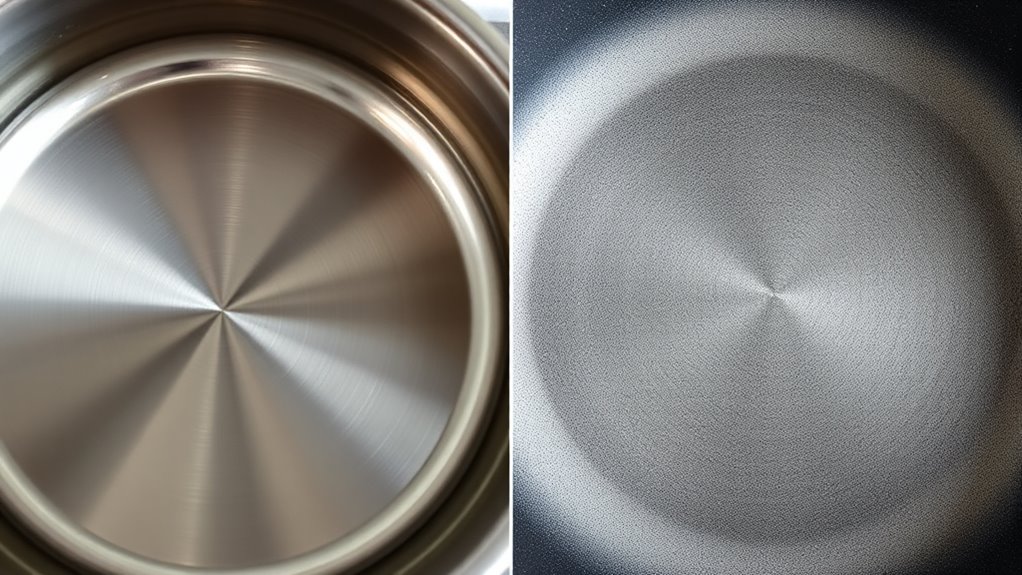
Choosing between stainless steel and nonstick interiors depends on your cooking style and preferences. Both materials have their advantages and drawbacks, so understanding how they behave in the kitchen can help you make the right choice. One key factor to consider is how each type handles cleaning techniques. Stainless steel surfaces can be more challenging to clean because food tends to stick if not cooked properly or if the pan isn’t preheated correctly. However, with the right approach, such as soaking and scrubbing with non-abrasive pads, maintaining a stainless steel interior becomes manageable. Nonstick surfaces, on the other hand, require gentle cleaning to preserve the coating, often needing only warm soapy water and soft sponges. Avoiding abrasive scrubbers is crucial because harsh tools can scratch or damage the nonstick coating, reducing its effectiveness over time. Additionally, vetted cleaning methods can help prolong the lifespan of both types of cookware.
Another important aspect to think about is heat retention. Stainless steel cookware is known for excellent heat retention and even distribution, which allows for precise temperature control. When you’re searing, sautéing, or simmering, stainless steel pans heat up quickly and hold that heat well, giving you consistent results. This heat retention is especially beneficial when cooking foods that require steady, high temperatures or slow cooking that benefits from gentle, sustained heat. Nonstick pans typically don’t retain heat as efficiently as stainless steel. They heat up quickly but tend to lose heat faster once removed from the stove, which can make maintaining a steady temperature more difficult. If you often cook dishes that need precise heat management, stainless steel might suit your needs better.
Stainless steel offers superior heat retention and even distribution for precise cooking results.
Choosing between these two types also influences your cooking techniques. Stainless steel pans are versatile and can handle high heat, making them suitable for browning and frying. They also work well in oven cooking, expanding your culinary options. Nonstick surfaces excel in low-fat cooking and are great for delicate foods like eggs and pancakes, where sticking is a concern. However, they aren’t typically oven-safe at high temperatures, limiting some cooking methods.
In the end, your decision hinges on how much importance you place on ease of cleaning versus heat retention and versatility. If you prefer quick, easy cleanup and primarily cook delicate items, nonstick might be your best choice. But if you value durability, even heat distribution, and the ability to tackle various cooking techniques, stainless steel is likely the better fit. Understanding these nuances helps you choose cookware that aligns with your cooking style and keeps your kitchen routines smooth and satisfying.
As an affiliate, we earn on qualifying purchases.
Frequently Asked Questions
How Do Stainless Steel and Nonstick Interiors Compare in Cleaning Ease?
You’ll find stainless steel interiors easier to clean and maintain since they resist stains and don’t require special cleaning agents. Nonstick surfaces, on the other hand, make food release simple but need gentle cleaning to protect the coating. Stain resistance is better with stainless steel, reducing scrubbing time, while nonstick requires careful maintenance to prevent damage. Overall, stainless steel offers easier cleaning maintenance, especially for stubborn stains.
Which Interior Material Is More Durable Long-Term?
Think of interior material resilience as a sturdy bridge supporting your cooking adventures. Stainless steel interiors typically offer better interior longevity, standing strong against scratches, dents, and high heat. They’re more durable long-term because they resist corrosion and maintain their appearance over time. Nonstick interiors, while easier to clean, tend to wear out faster, losing their nonstick coating and compromising durability. Choose stainless steel for lasting resilience and dependable performance.
Are There Health Concerns With Nonstick Coatings?
You should know that nonstick coatings can raise health safety concerns due to potential chemical leaching when they overheat or get scratched. Some nonstick pans contain chemicals like PFOA, which may be harmful if ingested over time. To minimize risks, avoid cooking at very high temperatures and replace scratched or worn nonstick pans. Always follow manufacturer guidelines to guarantee safe use and reduce exposure to chemical leaching.
Can Stainless Steel Interiors Be Used on Induction Cooktops?
Think of your cookware as a perfect dance partner—stainless steel interiors are fully compatible with induction cooktops, making them your reliable partner for great cooking. They excel in induction compatibility and offer excellent cooking performance, especially for searing and browning. You can confidently use stainless steel on induction stoves, knowing it delivers consistent heat and durability, helping you create culinary masterpieces with ease.
How Do Heat Distribution Properties Differ Between the Two?
You’ll notice that stainless steel interiors have better heat transfer due to higher thermal conductivity, providing more even heat distribution across the surface. Nonstick interiors, on the other hand, often have lower thermal conductivity, which can lead to hot spots and uneven cooking. This means with stainless steel, you get more consistent results, while nonstick surfaces might require more attention to prevent uneven heating.
Conclusion
Choosing between stainless steel and nonstick interiors is like selecting your ideal cooking canvas. Imagine shimmering stainless steel, gleaming and resilient, ready to handle the heat and sear with confidence. Or picture a smooth nonstick surface, effortlessly slipping your favorite eggs and pancakes onto your plate. Both have their charm—stainless steel’s durability or nonstick’s ease. Whichever you pick, your kitchen becomes a stage where delicious memories are made, one perfectly cooked meal at a time.
Halloween Picks
halloween
As an affiliate, we earn on qualifying purchases.