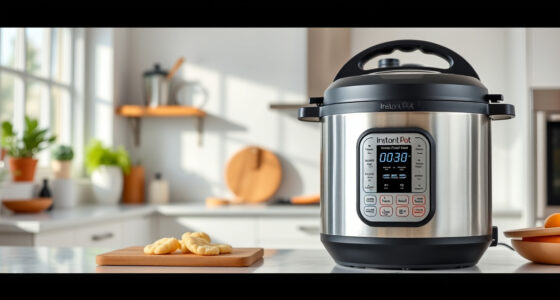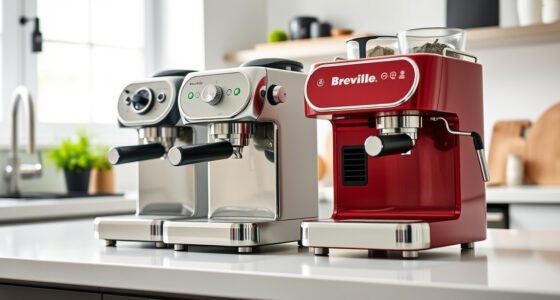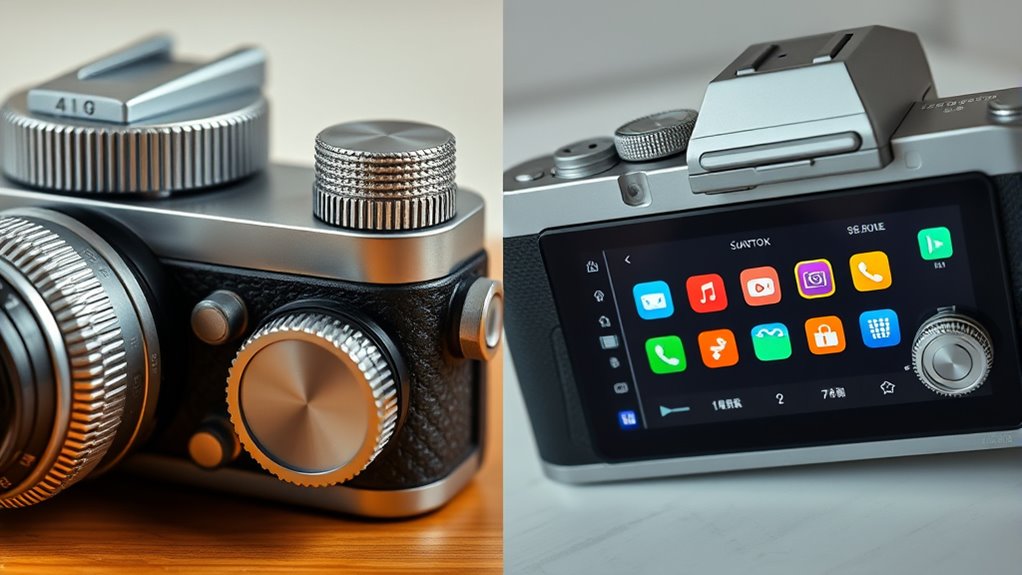

Manual dials give you a tactile, straightforward way to control devices, making adjustments easy and intuitive without needing to look closely. They offer quick, broad changes with physical feedback, which can boost confidence but might lack precise fine-tuning. Digital controls, on the other hand, provide pinpoint accuracy and precise adjustments through displays or input, often with less physical effort. To find out how to choose the best for your needs, explore the details that follow.
Key Takeaways
- Manual dials offer tactile feedback that simplifies quick adjustments, enhancing ease of use for everyday control.
- Digital controls allow for precise parameter setting, ideal for applications requiring high accuracy.
- Turning a physical dial reduces finger strain and provides intuitive operation compared to digital buttons.
- Digital interfaces enable exact adjustments via displays, minimizing guesswork and increasing precision.
- Manual dials are better suited for broad, less detailed changes, while digital controls excel in fine-tuning tasks.
When choosing between manual dials and digital controls, understanding their differences can help you make a more informed decision. The first aspect to consider is how each option aligns with your ergonomics considerations. Manual dials often offer a tactile, intuitive experience, allowing you to turn a knob or rotate a dial with ease. This can reduce strain on your fingers and wrist, especially when adjustments are frequent or require fine tuning. The physical feedback from a dial can also help you gauge settings quickly without looking, making it more ergonomic for users who prefer a more natural interaction. Conversely, digital controls tend to require less physical effort, as pressing buttons or tapping a touchscreen can be easier for those with limited hand strength or dexterity. Digital interfaces often feature larger, well-spaced controls that minimize accidental presses, further enhancing ergonomic comfort.
Manual dials offer tactile control and quick feedback, while digital controls require less effort and enhance accessibility.
Aesthetic appeal plays a significant role in your choice as well. Manual dials tend to have a classic, timeless look that can complement vintage or traditional designs. Their physical presence often adds a tactile charm, giving a sense of craftsmanship and durability. This can be especially appealing if you value a more tangible, mechanical aesthetic in your appliances or devices. On the other hand, digital controls lend a sleek, modern appearance that can seamlessly blend into contemporary environments. The minimalist design and smooth surfaces of digital interfaces often contribute to a streamlined look, which many find visually appealing. Plus, digital controls can be integrated into smart systems, offering advanced features and customization that elevate the overall aesthetic sophistication.
Your decision should also weigh ease of use and precision. Manual dials excel in providing quick, straightforward adjustments, especially when you need to make broad or less precise changes. The physical turn of a dial offers a natural sense of control, which many users find reassuring. However, fine-tuning can sometimes be challenging with dials, especially if the increments are not clearly marked. Digital controls shine when it comes to precision. They allow for exact setting adjustments through digital displays or input, reducing guesswork and increasing accuracy. This is particularly advantageous in appliances or systems where exact parameters are critical, such as thermostats or audio equipment.
Ultimately, your choice hinges on balancing ergonomics considerations, aesthetic appeal, ease of use, and the level of precision you require. Both manual dials and digital controls have their strengths, so consider how each aligns with your preferences and daily routines.
As an affiliate, we earn on qualifying purchases.
Frequently Asked Questions
Which Control Type Is More Durable Over Time?
You’ll find manual dials tend to be more durable over time because they handle mechanical wear better and are often built with corrosion-resistant materials. Digital controls, while precise, can be more vulnerable to electronic failures and corrosion of internal components. If you want longevity and resilience against harsh conditions, manual dials usually outperform digital controls, making them a reliable choice for long-term use.
Are Manual Dials More Energy-Efficient Than Digital Controls?
Imagine adjusting your thermostat with a manual dial, turning it precisely to save energy. Manual dials tend to be more energy-efficient because they require minimal power to operate, often running on just the mechanical components. Digital controls, however, rely on electronic circuitry, which consumes more power even when idle. So, if you’re aiming for better power efficiency and lower energy consumption, manual dials usually have the edge.
Can Digital Controls Be Easily Repaired or Replaced?
Yes, digital controls are generally easier to repair or replace. You can often find digital repair tutorials online, making troubleshooting manageable. When it comes to control replacement, many devices allow you to swap out digital modules or panels without extensive effort. This convenience means you spend less time on repairs and more on enjoying your device. Just make certain you follow safety guidelines and consult the manufacturer’s instructions for the best results.
How Do Manual Dials Affect User Experience for Seniors?
Manual dials enhance your experience as a senior by offering ergonomic design and tactile feedback, making adjustments easier and more intuitive. You can feel the dial’s position without looking, reducing confusion and frustration. This tactile sensation helps you operate appliances confidently, especially if you have limited dexterity or vision. Overall, manual dials provide a more accessible and satisfying user experience, giving you better control and independence in everyday tasks.
Are There Safety Concerns With Digital Control Systems?
Yes, digital control systems can pose safety concerns due to cybersecurity risks and data privacy issues. You might worry about hackers gaining access or sensitive information being compromised. To protect yourself, make certain the system has strong security features, like encryption and regular updates. Stay informed about potential vulnerabilities, and always use secure connections. This way, you can enjoy the convenience of digital controls while minimizing safety and privacy concerns.
Conclusion
Ultimately, whether you prefer the gentle touch of manual dials or the sleek efficiency of digital controls, both have their charm. Think of manual dials as a vintage whisper, offering a tactile connection you might miss elsewhere. Digital controls, on the other hand, bring a modern finesse, making adjustments feel effortless. Whichever you choose, embracing the subtle nuances can turn everyday tasks into a delightful experience—just a small step toward smarter, more intuitive convenience.