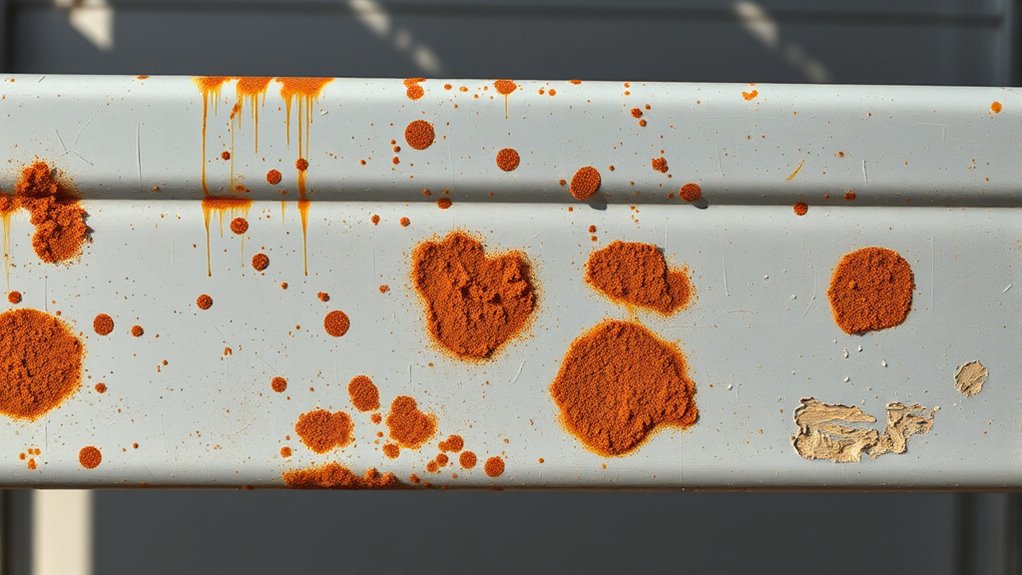

Rust spots on racks or baskets happen when moisture and oxygen contact metal surfaces over time, especially in humid areas or when water touches the metal. To care for them, start by cleaning with a baking soda paste or vinegar, then dry thoroughly. Applying a protective oil can help prevent future corrosion. Keeping your items dry and inspecting regularly can extend their lifespan—if you’re curious about more tips, there’s plenty to explore.
Key Takeaways
- Rust forms on racks and baskets due to moisture exposure and oxygen contact, especially in humid environments.
- Prompt cleaning with baking soda paste or vinegar can remove early rust spots effectively.
- Thoroughly dry items after cleaning and moisture exposure to prevent further rust development.
- Applying protective oils like mineral oil or silicone spray creates a moisture barrier, reducing rust risk.
- Regular inspection and maintenance help identify rust early and extend the lifespan of racks and baskets.
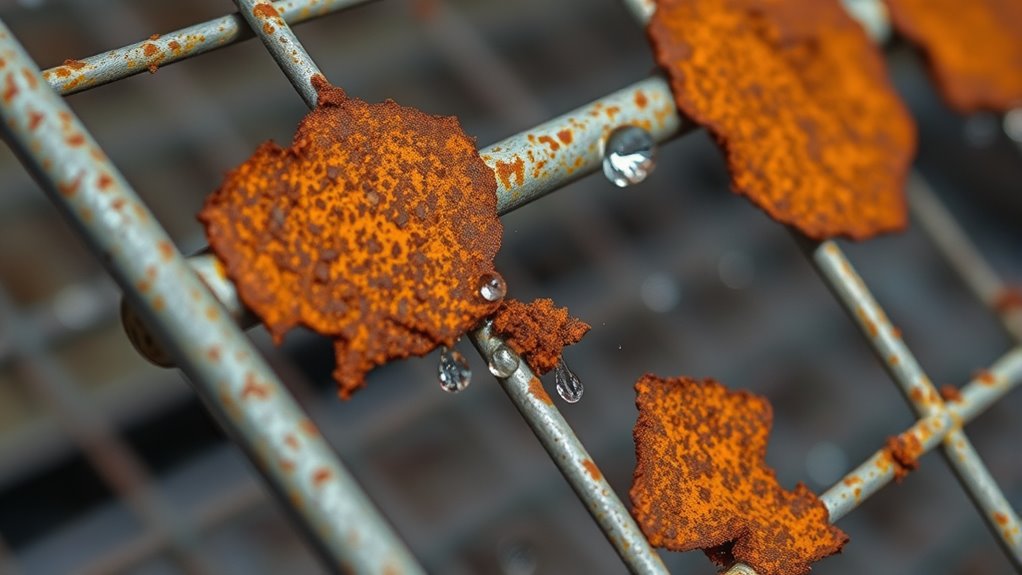
Rust spots on racks or baskets can quickly become a frustrating problem, especially when they start to stain or weaken the metal. When you notice these spots, it’s essential to act promptly to prevent further damage. The good news is, with proper cleaning techniques and preventive measures, you can keep your racks and baskets looking new and extend their lifespan. First, understanding what causes rust helps you implement effective strategies. Rust forms when iron or steel is exposed to moisture and oxygen over time, creating a corrosive reaction. This is especially common in environments with high humidity or frequent contact with water, like kitchens, garages, or outdoor storage areas.
To tackle existing rust spots, start with cleaning techniques that are gentle yet effective. Use a mixture of baking soda and water to create a paste, then apply it directly to the rusted areas. Let it sit for a few minutes, then scrub gently with a soft-bristled brush or a non-abrasive pad. For tougher spots, you can use white vinegar or lemon juice, which contain acids that help break down rust. Apply the vinegar or lemon juice directly on the spots and let it sit for around 10-15 minutes before scrubbing. Rinse thoroughly with water and dry completely to prevent moisture from lingering. For stubborn rust, commercial rust removers are available but always follow the manufacturer’s instructions carefully to avoid damaging the metal. Additionally, understanding how rust develops can help you prevent future occurrences more effectively.
Preventive measures are just as important as cleaning techniques. To keep rust at bay, regularly dry your racks and baskets after exposure to water or moisture. Consider applying a light coat of protective oil, such as mineral oil or a silicone-based spray, which creates a moisture barrier and inhibits rust formation. If your racks or baskets are used outdoors, ensure they are made from rust-resistant materials like stainless steel or coated metal. Additionally, avoid leaving wet or damp items on metal surfaces for extended periods. Store your baskets in a dry, well-ventilated area, and periodically inspect them for early signs of rust so you can address issues before they escalate.
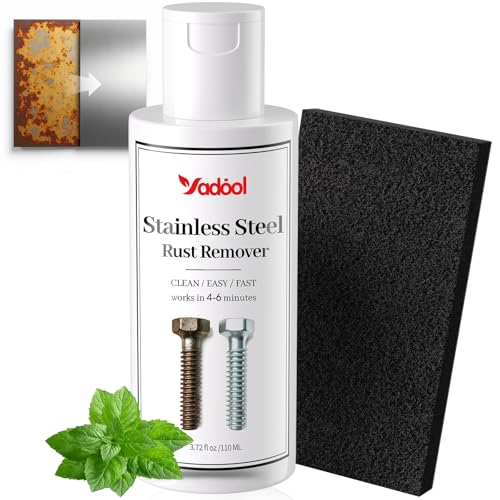
Stainless Steel Rust Stain Remover & Cleaner, Rust Spot Stain Remover for Stainless Steel Appliances and Furniture – Ideal for Grill, Fridge, Knife or Pan & more- 3.72 Fl Oz
- Quick Rust Removal: Removes rust and rust spots quickly
- Streak-Free Shine: Restores glossy, streak-free surface
- Effortless Application: Simple to use, no scrubbing needed
As an affiliate, we earn on qualifying purchases.
As an affiliate, we earn on qualifying purchases.
Frequently Asked Questions
Can Rust Spots Spread to Other Kitchen Items?
Yes, rust spots can spread to other kitchen items if you don’t address them quickly. Rust spread occurs when moisture and oxygen interact with metal surfaces, causing corrosion to extend. To prevent this, keep your racks and baskets dry, clean them regularly, and apply protective coatings. Prevention tips like using rust-resistant materials and promptly fixing any chips or scratches help stop rust from spreading and damaging other items.
Are There Rust-Resistant Rack or Basket Materials?
Your kitchen deserves superhero materials that resist rust! Luckily, stainless steel and powder coating are your best bets. Stainless steel is highly durable and corrosion-resistant, making it ideal for racks and baskets. Powder coating creates a tough, protective layer that shields against rust and scratches. By choosing these rust-resistant materials, you can keep your kitchen gear looking pristine and extend its lifespan, saving you time and money.
How Long Does It Take for Rust to Form?
Rust formation can start within days or weeks if your rack or basket is exposed to moisture. The oxidation process begins as water reacts with iron or steel, creating rust. Factors like humidity, exposure to water, and material type influence how quickly rust develops. To delay rust formation, keep your racks dry and clean, especially in humid environments. Regular maintenance helps prevent accelerated oxidation and prolongs the lifespan of your storage solutions.
Can Rust Spots Be Removed Without Damaging the Finish?
Think of removing rust as delicate surgery—careful and precise. You can often lift rust spots without damaging the finish by gently scrubbing with a soft cloth and a gentle rust remover. Use a light touch to preserve the finish, like a painter tracing fine details. Patience is key; avoid harsh abrasives that can scratch or strip. With care, you’ll restore your rack or basket’s shine without sacrificing its original beauty.
Is It Safe to Use Rusted Racks or Baskets for Food Storage?
It’s not safe to use rusted racks or baskets for food storage because rust can contaminate your food and pose health risks. Rust spots indicate compromised material durability, which can lead to further deterioration. For food safety, replace rusted items with non-porous, rust-resistant materials like stainless steel or plastic. Always prioritize clean, sturdy storage solutions to prevent contamination and ensure your food stays safe.
Conclusion
To keep your racks or baskets rust-free, regular cleaning and proper drying are essential. Applying protective coatings can also help prevent future spots. Remember, prevention is better than cure—taking small steps now saves you trouble later. By staying attentive and proactive, you’ll extend the life of your storage solutions and maintain their appearance. After all, a stitch in time saves nine, so don’t wait until rust takes over—act today for lasting results.