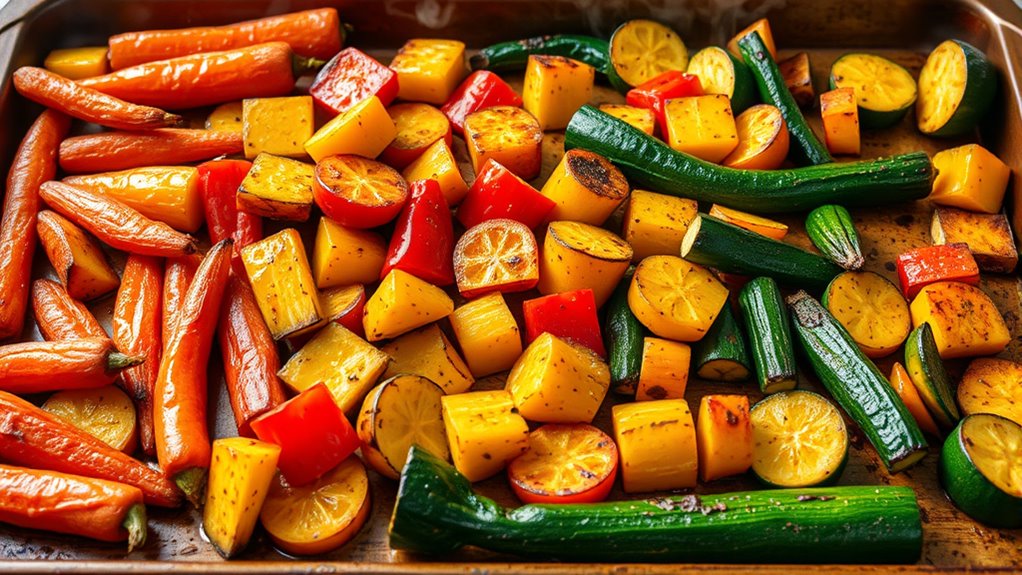

To maximize caramelization when roasting vegetables, choose firm, dense produce like carrots, potatoes, or cauliflower, and spread them in a single layer on a preheated oven at 400-425°F. Toss them well with olive oil, salt, pepper, and your favorite herbs or spices, and avoid overcrowding the pan. Turn them halfway through for even browning. Mastering these techniques will help you reveal rich, caramelized flavors—discover more tips to perfect your roast.
Key Takeaways
- Choose dense, fresh vegetables like carrots, potatoes, or Brussels sprouts for better caramelization.
- Toss vegetables with ample olive oil and seasonings to ensure even coating and flavor development.
- Roast at high temperatures (400-425°F) with vegetables spread in a single layer for optimal browning.
- Flip or stir vegetables halfway through roasting to promote uniform caramelization.
- Monitor closely in the final minutes to prevent burning and achieve a rich, golden-brown color.
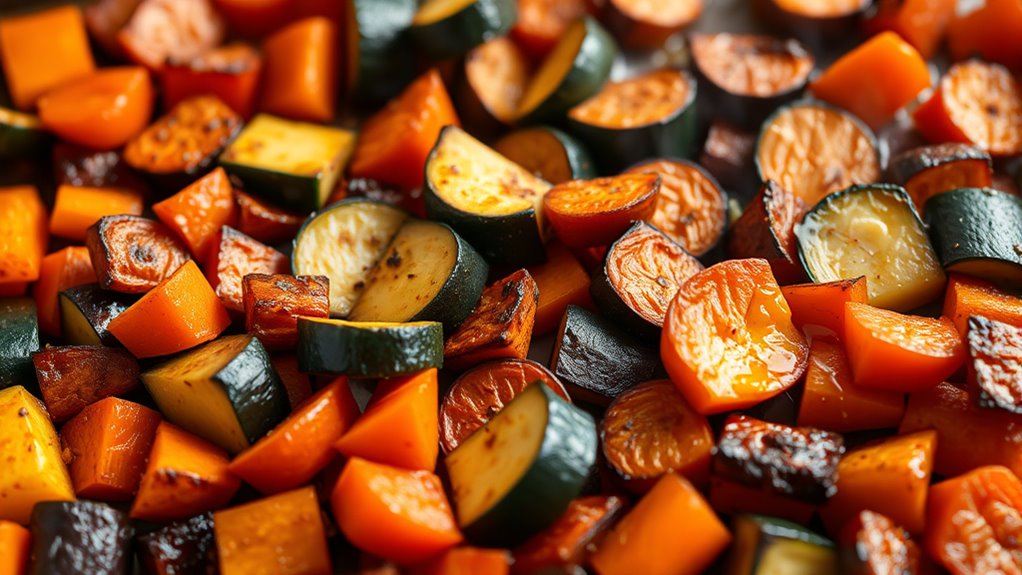
Roasting vegetables is a simple way to bring out their natural flavors and create delicious, caramelized dishes. To achieve this, you need to master some essential techniques, starting with choosing the right vegetables. Opt for vegetables that are firm and dense, like carrots, potatoes, Brussels sprouts, cauliflower, and sweet potatoes. These vegetables contain enough natural sugars and moisture to develop that rich, caramelized exterior. Avoid overly watery or delicate produce like zucchini or leafy greens, as they tend to become mushy or burn easily during roasting. When selecting your vegetables, look for fresh, vibrant specimens without blemishes or soft spots—freshness directly impacts how well they caramelize. Incorporating natural materials such as wood or stone in your kitchen tools can also influence even heat distribution, aiding in perfect caramelization.
Once you’ve selected the right vegetables, the next step involves seasoning techniques that elevate their flavor profiles. Proper seasoning isn’t just about salt; it’s about creating a balanced flavor that enhances natural sweetness. Start by tossing your vegetables with a generous amount of olive oil—this helps in even heat distribution and promotes caramelization. Use your hands or a sturdy spoon to ensure every piece is coated thoroughly. Then, season with salt and pepper, but don’t stop there. Add herbs like thyme, rosemary, or oregano for aromatic depth, and consider spices such as paprika, cumin, or chili flakes for an extra flavor kick. For a touch of sweetness, sprinkle a bit of brown sugar or honey, which will caramelize beautifully in the oven. Remember, seasoning techniques are flexible—taste and adjust as you go, keeping in mind that the oven’s heat will intensify flavors during roasting.
As you prepare to roast, spread your vegetables in a single layer on a baking sheet. Overcrowding causes steaming rather than roasting, which inhibits caramelization. Give each piece enough space to ensure direct contact with the hot surface—this promotes browning and crispiness. Preheat your oven to a high temperature, around 400-425°F (200-220°C). This high heat is vital for maximizing caramelization. During roasting, flip or stir the vegetables halfway through cooking to ensure even browning. Keep an eye on them in the final minutes—caramelization can happen quickly, and you want that perfect golden-brown color without burning. Using proper lighting techniques can also help monitor the progress and achieve ideal results.
oven roasting vegetables baking sheet
As an affiliate, we earn on qualifying purchases.
As an affiliate, we earn on qualifying purchases.
Frequently Asked Questions
Can I Roast Frozen Vegetables for Caramelization?
You can roast frozen vegetables for caramelization, but be aware of frozen veggie considerations. They tend to release more moisture, which makes caramelization challenging. To get better results, thaw and pat them dry before roasting, and use a high oven temperature. Spread the veggies out in a single layer, and avoid overcrowding the pan. This way, you’ll achieve better browning and a more caramelized flavor.
What Is the Ideal Oven Temperature for Maximum Caramelization?
You should set your oven temperature to around 425°F (220°C) for caramelization maximization. This high heat encourages the natural sugars in vegetables to caramelize, giving you that rich, golden-brown flavor. Make certain your vegetables are spread out evenly on the baking sheet to prevent steaming and promote even browning. Keep an eye on them as they roast, and stir midway if needed, to ensure perfect caramelization.
How Does Vegetable Size Affect Caramelization?
You’ll notice that smaller vegetables, about 1-inch pieces, caramelize better because they cook evenly and develop that rich flavor. Larger pieces may stay undercooked inside while burning outside. To optimize, use proper cutting techniques and store vegetables properly to keep them fresh. An interesting stat: uniformly sized pieces improve caramelization by over 50%. So, cut your veggies evenly and store them correctly to guarantee maximum flavor when roasting.
Should I Use Oil or a Dry Roast Method?
You should use olive oil when roasting vegetables to enhance flavor and promote caramelization. Brushing or tossing them in a small amount of olive oil helps vegetables brown evenly and develop a sweet, rich taste. If you prefer a dry roast method, skip the oil and just spread the vegetables on the baking sheet, but keep in mind they may not caramelize as deeply. Both methods work, so choose based on your desired flavor and texture.
How Do Different Vegetable Types Influence Caramelization?
Different vegetable types influence caramelization based on their moisture content and natural sugars. Vegetables with lower moisture, like carrots and parsnips, caramelize more easily and develop richer flavors. Conversely, high-moisture vegetables such as zucchini or bell peppers may need longer roasting or higher heat to accomplish deep caramelization. To enhance flavor, cut vegetables evenly and guarantee they’re dry before roasting, allowing natural sugars to caramelize beautifully.
Conclusion
Roasting vegetables is like unveiling a secret treasure chest of flavor, revealing their natural sweetness with each caramelized bite. By following these simple steps, you’ll turn ordinary produce into a symphony of rich, roasted goodness. Remember, patience is key—give them enough time and space, and watch as they transform from humble vegetables into irresistible, golden delights. Embrace the process, and let your kitchen become a stage for delicious alchemy.