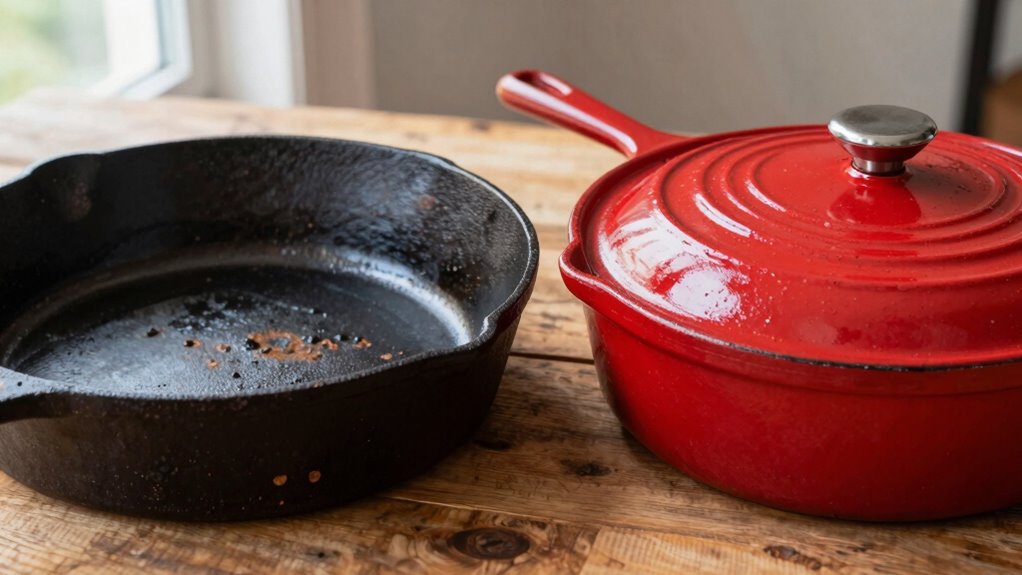
When caring for cast iron, you need to season it regularly, avoid soap, and dry it thoroughly to prevent rust. Enameled cast iron, on the other hand, doesn’t require seasoning and should be cleaned with non-abrasive tools to avoid damaging its glaze. Both types shouldn’t experience sudden temperature changes, but enameled needs gentle handling to prevent chipping. Keep learning how proper maintenance differs so your cookware stays in top shape longer.
Key Takeaways
- Cast iron requires seasoning and oiling to maintain a non-stick surface and prevent rust, while enameled cast iron doesn’t need seasoning.
- Enameled cookware is more delicate; avoid metal utensils and sudden temperature changes to prevent chipping or cracking.
- Both types should be cleaned with gentle tools; avoid soap on cast iron to preserve seasoning and use non-abrasive cleaners on enameled surfaces.
- Proper drying and storage are crucial for both to prevent rust; use paper towels for enameled and oil for cast iron after cleaning.
- Re-season cast iron when dull or rust appears; enameled cookware generally only needs gentle cleaning and careful handling.

BLACKSTONE 4146 Griddle Seasoning and Cast Iron Conditioner, 15.3oz
- Purpose: Seasoning and protecting cast iron and griddles
- Formula: 2-in-1 conditioning and protection
- Compatibility: Suitable for griddles and cast iron pans
As an affiliate, we earn on qualifying purchases.
As an affiliate, we earn on qualifying purchases.
What’s the Difference Between Cast Iron and Enameled Cast Iron?
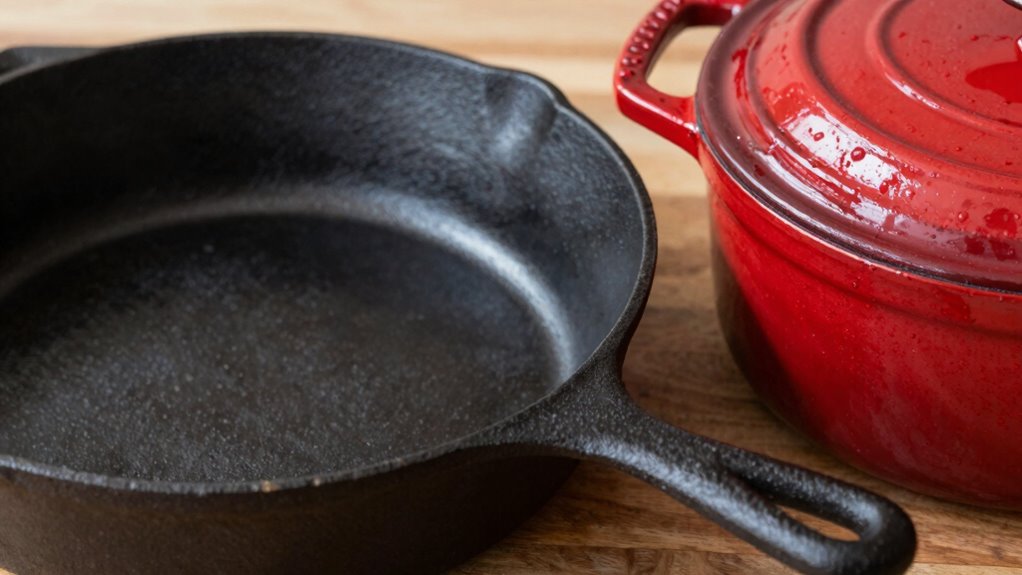
While cast iron and enameled cast iron both offer excellent heat retention and durability, they differ remarkably in their construction and maintenance. Your seasoning differences are significant; cast iron requires regular seasoning to build a natural, non-stick surface, which also enhances its material longevity. Enameled cast iron, on the other hand, has a smooth glass coating that doesn’t need seasoning and resists rust. This coating makes it easier to clean and maintain, but it can chip or crack over time, affecting longevity. The core material in both is cast iron, but the enameled version’s coating adds a layer of protection. Understanding these differences helps you choose the right cookware based on your cooking style and maintenance preferences. Additionally, color accuracy in cookware surfaces can influence visual inspection and maintenance routines, ensuring your cookware remains in prime condition.
How to Properly Clean and Care for Your Cast Iron Cookware
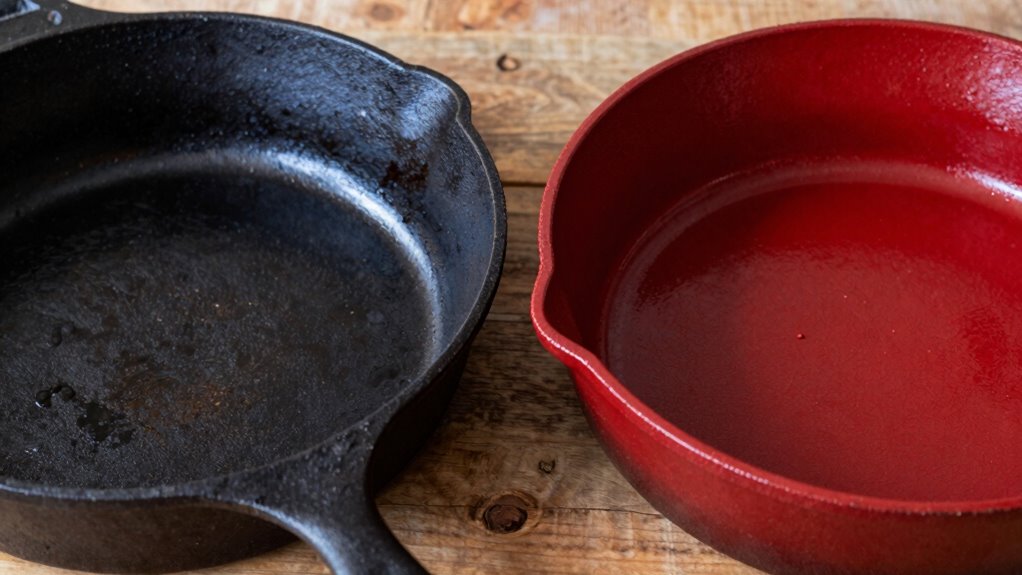
Properly cleaning and caring for your cast iron cookware is essential to maintain its non-stick surface and overall durability. After each use, rinse with hot water and avoid soap, which can strip your seasoning. Use a stiff brush or coarse salt to remove stuck-on food, then dry thoroughly to prevent rust removal. To restore or enhance your seasoning, apply a thin layer of oil and heat the pan gently. Regular seasoning techniques build up a natural non-stick coating and protect against rust. If rust does appear, scrub it off with steel wool or a rust remover, then re-season your pan to restore its protective layer. Proper care ensures your cast iron remains in excellent condition, delivering consistent performance for years to come. Additionally, monitoring air quality considerations such as humidity levels can help prevent rust formation and prolong the lifespan of your cookware.
Tips for Caring for Enameled Cast Iron
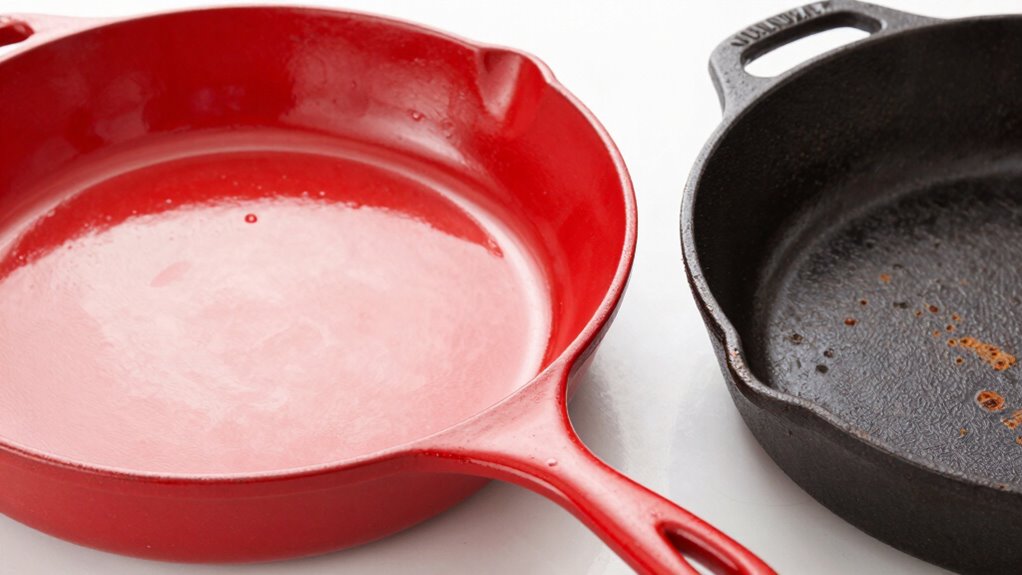
Enameled cast iron requires gentle handling to keep its glossy surface intact and prevent damage. To care for it, avoid metal utensils that can scratch the enamel, and use soft sponges for cleaning. Proper seasoning techniques aren’t necessary, but applying a light coat of oil after cleaning helps maintain the surface. When storing, ensure the cookware is completely dry to prevent moisture buildup; consider placing a paper towel inside to absorb humidity. Here are some tips:
Handle enameled cast iron gently, avoid metal tools, and keep dry for lasting beauty.
- Use non-abrasive cleaning tools
- Avoid thermal shocks by not plunging hot cookware into cold water
- Store in a dry, well-ventilated area
- Prevent scratches by stacking with soft cloths or paper towels
- Regularly inspect for chips or cracks and handle carefully
Following these tips preserves the enamel’s beauty and longevity.
Common Mistakes That Damage Cast Iron and Enameled Cookware
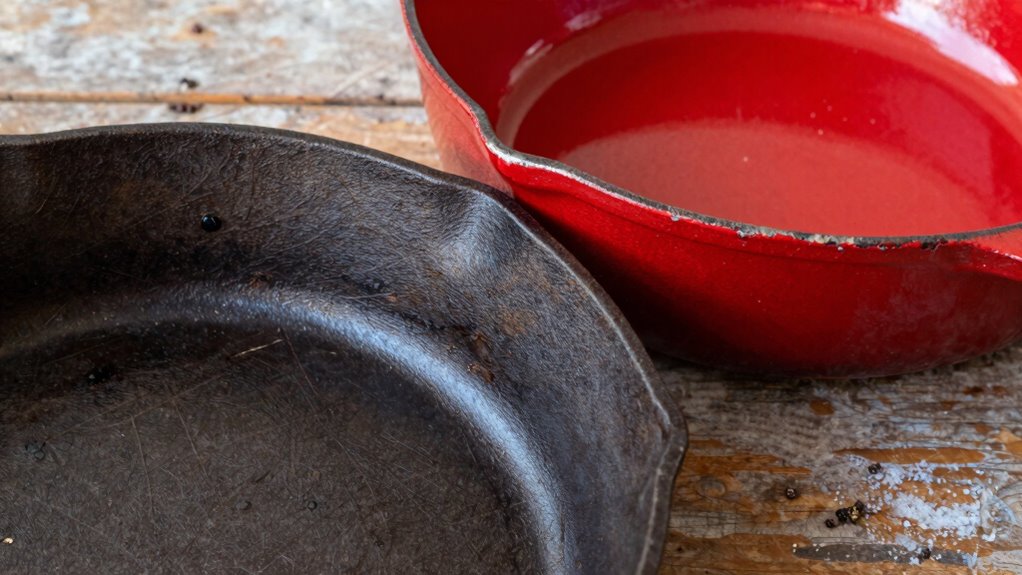
One of the most common mistakes that can damage cast iron and enameled cookware is exposing them to sudden temperature changes. Rapid heating or cooling can cause cracking or warping, especially in enameled pieces. Another mistake is poor seasoning, where neglecting to properly season your cast iron leads to rust and sticking. Additionally, abrasive cleaning tools like steel wool or harsh scrubbers can scratch the seasoning layer on cast iron or damage the enamel surface, reducing their lifespan. Using soap on unseasoned cast iron can strip away the seasoning, while on enameled cookware, it can weaken the glaze. Avoid these mistakes to keep your cookware in top shape—be gentle, control temperature shifts, and follow proper cleaning practices.
When and How to Re-Season or Repair Your Cookware for Longevity
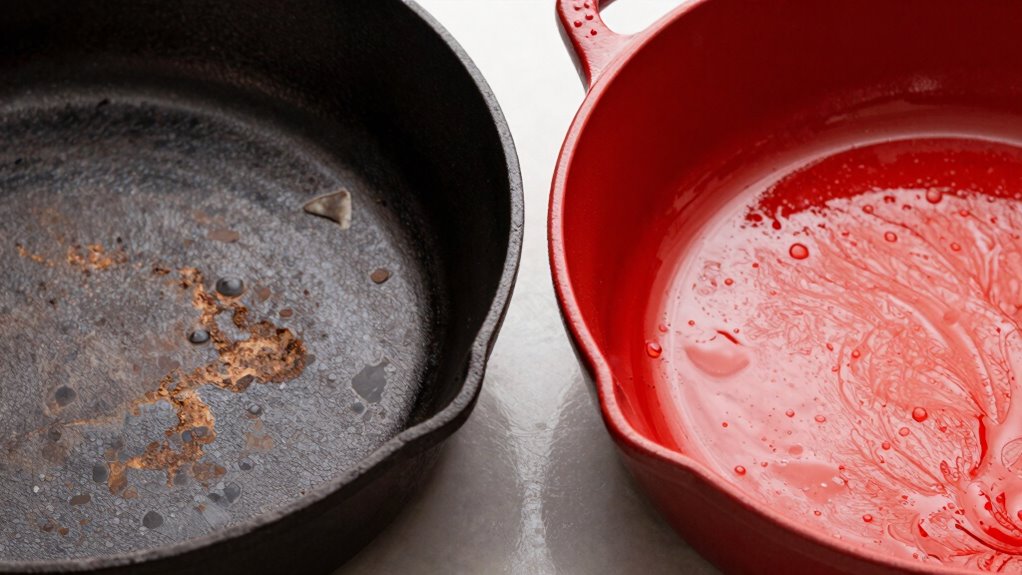
Knowing when and how to re-season or repair your cookware is essential for extending its lifespan. If your cast iron or enameled piece shows signs of rust, dullness, or sticking, it’s time to act. To re-season, start with proper seasoning techniques like cleaning, applying oil, and baking at high heat. For repairs, use simple methods such as sanding rust spots or patching chips carefully. Additionally, understanding Free Floating concepts can help you optimize your backyard setup to create a more functional and enjoyable cooking environment.
Knowing when to re-season or repair extends your cookware’s lifespan effectively.
- Clean thoroughly before reseasoning
- Use high-smoke-point oils for seasoning
- Bake at 450°F to build a durable coating
- Sand rust or damaged areas gently
- Consider professional repair for severe damage
Frequently Asked Questions
Can I Use Metal Utensils on Enameled Cast Iron?
You can use metal utensils on enameled cast iron, but it’s not recommended for metal utensil compatibility. Metal tools risk enamel chip prevention, which helps maintain your cookware’s appearance and performance. Stick to wooden, silicone, or plastic utensils whenever possible, especially if you want to avoid scratches or damage. Using softer utensils preserves the glaze, ensuring your enameled cast iron lasts longer and stays in good condition.
Is Dishwasher Cleaning Safe for Cast Iron Cookware?
You shouldn’t put cast iron cookware in the dishwasher because of the risks it poses. Dishwasher cleaning can strip the seasoning and cause rust, damaging your pan. Instead, opt for hand washing with hot water and a brush, then dry thoroughly. Use cleaning alternatives like coarse salt scrubs for stubborn spots. Taking these steps preserves your cast iron’s quality and longevity, keeping it in great shape for years.
How Do I Prevent Chipping of the Enamel Coating?
To prevent chipping of the enamel coating, you should handle your cast iron enamel carefully, avoiding metal utensils and sudden temperature changes. Use gentle cleaning methods, like soft sponges, and avoid abrasive cleaners. Proper cast iron enamel care also includes avoiding stacking heavy items on top and not using the pan as a cutting surface. These steps help maintain your cookware’s enamel integrity and prevent enamel chip issues over time.
What Are the Signs That Cast Iron Needs Re-Seasoning?
You’ll know your cast iron needs re-seasoning if food starts sticking more than usual, or if the surface looks dull, dry, or shows signs of rust. Regular seasoning maintenance helps keep your skillet non-stick and prevents rust. If you notice rust spots, clean them thoroughly and re-season promptly. Proper seasoning guarantees your cast iron remains in great condition, providing excellent heat retention and easy food release for years.
Are There Specific Storage Tips for Enameled Versus Unenameled Cast Iron?
Think of your cast iron as a good friend—respect it with proper storage. For enameled, keep it in a dry, cool place away from sudden temperature changes to prevent chipping. Unenameled cast iron requires seasoning maintenance; store it in a dry environment with a paper towel or cloth inside to absorb moisture. Both need a stable storage environment to avoid rust and preserve their longevity.
Conclusion
Whether you’re seasoning your cast iron, cleaning your enameled piece, or repairing for longevity, remember that proper care makes all the difference. Protect your cookware, preserve its performance, and enjoy its versatility. Clean with care, handle with patience, and re-season when needed. Embrace these habits, and your cookware will serve you well, season after season. Because with the right care, your cast iron and enameled cookware will last, perform, and impress—time and time again.