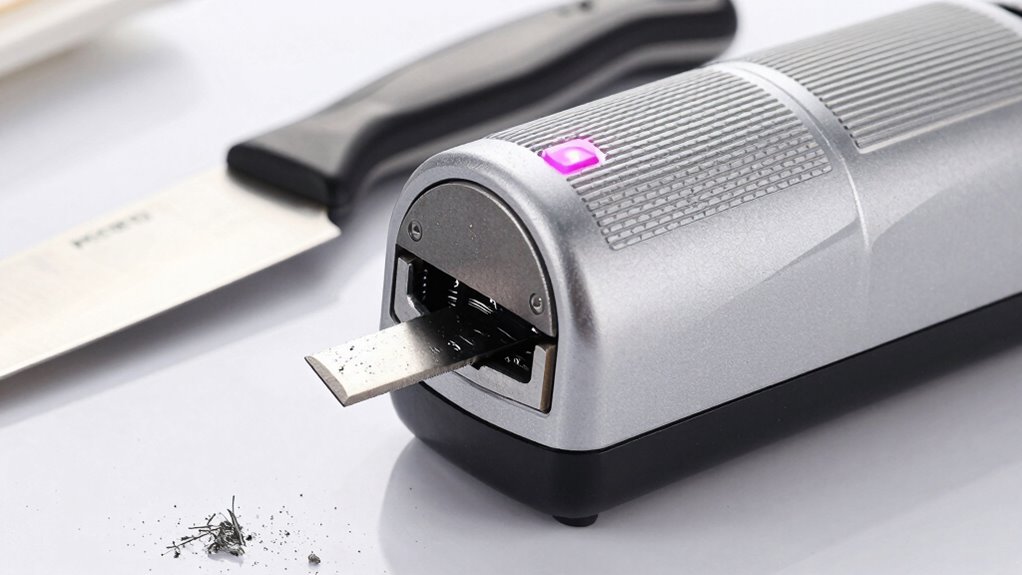

To avoid grinding away your blade, always follow the manufacturer’s instructions and use gentle, controlled pressure. Keep your knife at the recommended angle—usually between 15-20°—and avoid pressing too hard, which can damage the steel. Regularly check for signs of over-sharpening or damage, and inspect your sharpener for worn parts. By using proper technique and taking care of your tools, you can extend your blade’s life and performance—learn more tips to keep your blades in top shape.
Key Takeaways
- Maintain the correct sharpening angle (15–20°) and avoid steep or shallow angles to prevent blade damage.
- Use gentle, controlled pressure rather than forceful grinding to preserve blade integrity.
- Follow manufacturer instructions for settings and techniques specific to your sharpener and blade type.
- Regularly inspect the blade for chips or uneven edges to prevent over-sharpening or damage.
- Keep the sharpening wheels clean and replace worn parts to ensure safe, effective sharpening and avoid unnecessary wear.
electric knife sharpener with angle guide
As an affiliate, we earn on qualifying purchases.
As an affiliate, we earn on qualifying purchases.
Why Proper Use of an Electric Knife Sharpener Matters

Using an electric knife sharpener correctly is essential because it directly impacts the sharpness and longevity of your knives. The blade material plays a significant role; harder steels may require different sharpening angles or settings. Proper technique guarantees you don’t remove unnecessary material or cause damage. Regular electric sharpener maintenance, like cleaning the sharpening slots and checking the abrasive surfaces, helps keep it functioning effectively. When you use the sharpener correctly, you preserve the integrity of your blades, preventing uneven wear or dulling. Misuse can lead to chips or dull edges, especially with delicate or high-quality blades. Understanding how to operate your sharpener properly and maintaining it ensures your knives stay sharp longer, providing better performance and safety in your kitchen. Additionally, being aware of modern kitchen technology can offer insights into choosing the best sharpener models that incorporate advanced features for safer and more precise sharpening. Proper sharpener selection based on your needs can prevent many common mistakes and extend the life of your blades. Incorporating smart kitchen tools with features like automated sharpening settings can further enhance your maintenance routine and ensure consistent results. Regularly consulting manufacturer instructions helps avoid common errors and optimizes your sharpening process. Recognizing the importance of professional guidance can also help you improve your technique and prolong your knives’ lifespan.
Common Mistakes That Damage Your Knife During Electric Sharpening
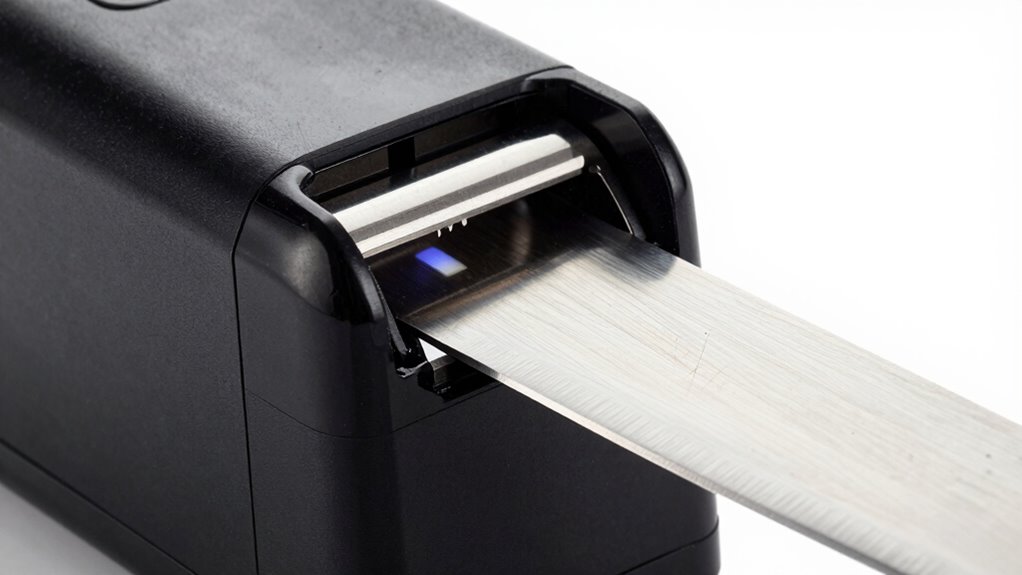
Applying too much pressure while sharpening can quickly dull or damage your knife. Similarly, holding the blade at the wrong angle risks uneven sharpening and weakens the edge. To protect your knife, always use gentle strokes and maintain the correct angle throughout the process. Incorporating proper technique and understanding electric power generation principles can help you achieve a sharper, longer-lasting edge. Additionally, being aware of air purifier maintenance dos and don’ts can prevent equipment damage and ensure optimal performance during your sharpening routine.
Excessive Pressure Risks
Excessive pressure during electric sharpening can quickly turn a simple task into a costly mistake. Applying too much force accelerates blade wear and damages the steel, reducing your knife’s lifespan. When you press too hard, the sharpener’s abrasive surfaces remove more material than necessary, creating uneven edges and dulling the blade faster. To avoid this, focus on maintaining consistent pressure and let the sharpener do the work. Proper pressure control guarantees you remove only the dull outer layer without sacrificing the integrity of the blade. Remember, gentle, steady pressure yields better results and preserves your knife’s sharpness longer. Additionally, understanding projector contrast ratio helps in recognizing how image quality can be affected in home cinema setups. Being aware of blade hardness can further assist in choosing the appropriate sharpening technique for your knife. Overcoming the temptation to press hard is key to maintaining a well-functioning, long-lasting blade, and practicing controlled pressure can also enhance your sharpening technique for optimal results.
Incorrect Angle Alignment
One of the most common mistakes that can damage your knife during electric sharpening is failing to maintain the correct angle. Incorrect angle alignment ruins the blade’s edge and reduces sharpening precision. If you set the blade angle too steep or too shallow, you risk uneven sharpening or removing too much material. To avoid this, always follow your sharpener’s recommended angle and stay consistent throughout the process. Here’s a quick guide:
| Blade Angle | Effect on Sharpness | Tip for Accuracy |
|---|---|---|
| Too steep | Rapid material loss | Use a guide or jig |
| Too shallow | Dull edge | Practice consistent angle |
| Correct | Sharp, durable edge | Maintain steady motion |
Proper alignment ensures a precise, long-lasting edge.
How to Choose the Best Electric Sharpener for Your Needs
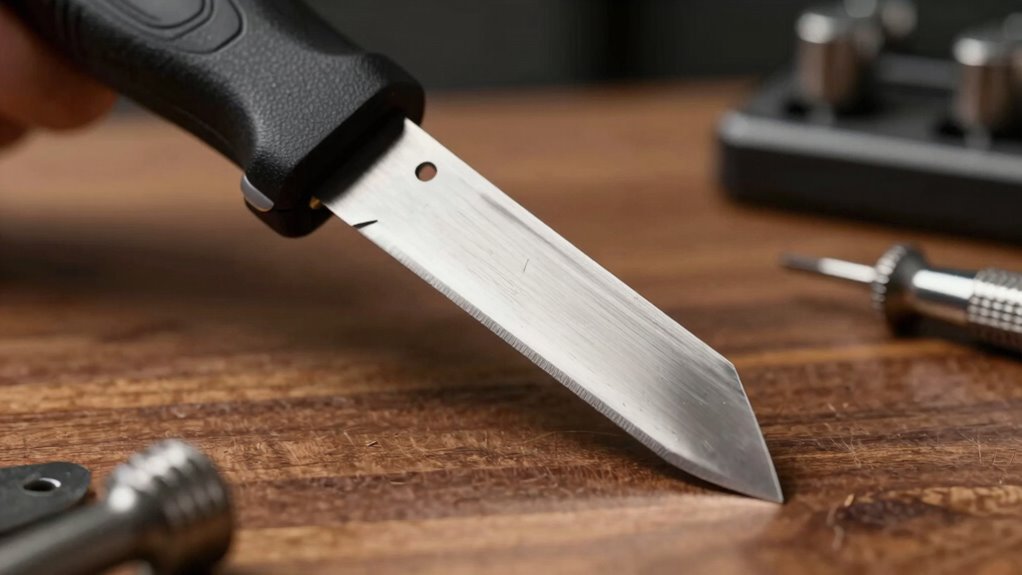
Choosing the right electric knife sharpener depends on understanding your specific needs and the types of knives you want to maintain. Consider your blade material—high-carbon steel, ceramic, or stainless steel—as each requires different sharpening approaches. For frequent use, select a model with adjustable grit settings to match your sharpening frequency, preventing unnecessary wear. If you have delicate or specialty blades, look for sharpeners with gentle, controlled sharpening options. If you mainly maintain kitchen knives, a versatile sharpener with multiple stages can save time and effort. Budget and ease of use also matter; some models offer automatic features, while others require manual control. By evaluating your blade types and how often you sharpen, you’ll find the perfect electric sharpener to keep your knives in top shape. Additionally, understanding blade materials can help you select a sharpener that minimizes damage and extends the lifespan of your knives. Knowing the sharpening process can also guide you in choosing a model that aligns with your skill level and maintenance routine. To ensure optimal results, consider user reviews and expert recommendations to select a reliable and effective sharpener. Moreover, paying attention to safety features can prevent accidents during sharpening sessions. Being aware of common mistakes in sharpening can also help you avoid damaging your blades and ensure a longer-lasting edge.
The Correct Techniques for Safe and Effective Knife Sharpening
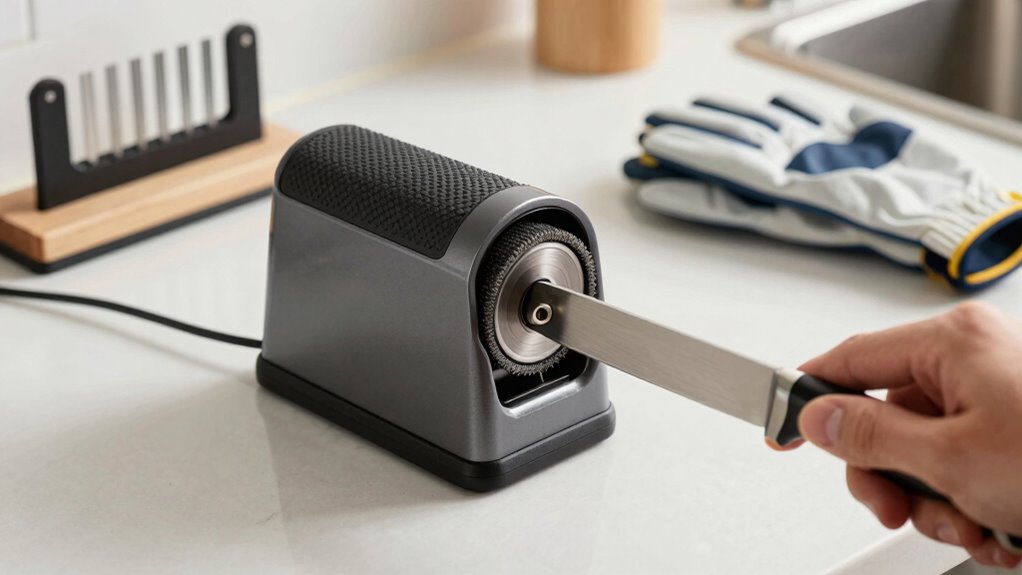
To sharpen your knife safely and effectively, you need to maintain the proper angle throughout the process. Applying too much pressure can damage the blade, so use light, controlled strokes. Always follow the manufacturer’s guidelines to guarantee you’re using the sharpener correctly and avoiding mistakes. Additionally, understanding proper sharpening techniques can help extend the life of your knife and prevent unnecessary wear. Being aware of care and maintenance practices for your blades can also contribute to their longevity and performance, and incorporating at-home care routines can further optimize your results. Recognizing blade material properties is key to selecting the right sharpening method and avoiding damage to different types of blades. Knowing how vintage tools differ from modern ones can also impact your approach and results.
Maintain Proper Angle
Maintaining the correct angle is essential for safe and effective knife sharpening, as it directly impacts the sharpness and longevity of your blade. Your blade angle determines how much metal is removed and how sharp the edge becomes. To guarantee proper sharpening technique, keep the blade at the manufacturer’s recommended angle—typically between 15 to 20 degrees. Use a consistent angle throughout each pass, avoiding variations that can dull or damage the edge. A steady, controlled motion helps achieve a precise blade angle, resulting in a sharper, more durable edge. Remember, rushing or guessing the angle can lead to uneven sharpening or unnecessary blade wear. Focusing on Proper technique is crucial for preventing damage and ensuring a professional-quality finish. Additionally, understanding the correct sharpening methods can help you maintain your knife’s performance and safety over time. Paying attention to blade maintenance basics can also extend the lifespan of your knives and improve your overall sharpening results. Incorporating these proper techniques ensures that you achieve a safe, effective, and long-lasting edge on your knives. Proper blade angle control is a fundamental aspect that influences the success of your sharpening efforts.
Use Light Pressure
Applying light pressure while sharpening guarantees you don’t remove too much metal or damage the blade. Pressing too hard can alter the blade angle and cause uneven wear, reducing sharpness and lifespan. Instead, let the sharpener’s abrasive surfaces do the work by maintaining a consistent blade angle and steady sharpening speed. Gentle pressure ensures a smoother, more precise edge without risking over-grinding. Keeping the pressure light also helps you maintain control, preventing slips or accidental damage. Focus on a steady, controlled motion, letting the sharpener’s abrasives do their job efficiently. Remember, patience and finesse are key—applying too much force can lead to costly mistakes. Proper technique with light pressure results in a sharper, longer-lasting blade and safer sharpening process. Consistent technique is essential for achieving the best results and prolonging your knife’s lifespan.
Follow Manufacturer Guidelines
Following the manufacturer’s guidelines is essential for safe and effective knife sharpening because each sharpener is designed with specific angles, settings, and techniques in mind. Your blade material influences how you should sharpen; for example, softer steels require gentler touch, while harder materials need precise angles. Always adhere to recommended sharpening frequency to prevent unnecessary wear or damage. Over-sharpening can grind away too much of your blade, reducing its lifespan and performance. Consistently following the instructions guarantees you maintain the correct sharpening angle and avoid over-grinding. Using the right settings and techniques for your particular knife and sharpener helps preserve the integrity of your blade and guarantees a sharp, safe edge every time.
How to Spot Over-Sharpening and Blade Damage
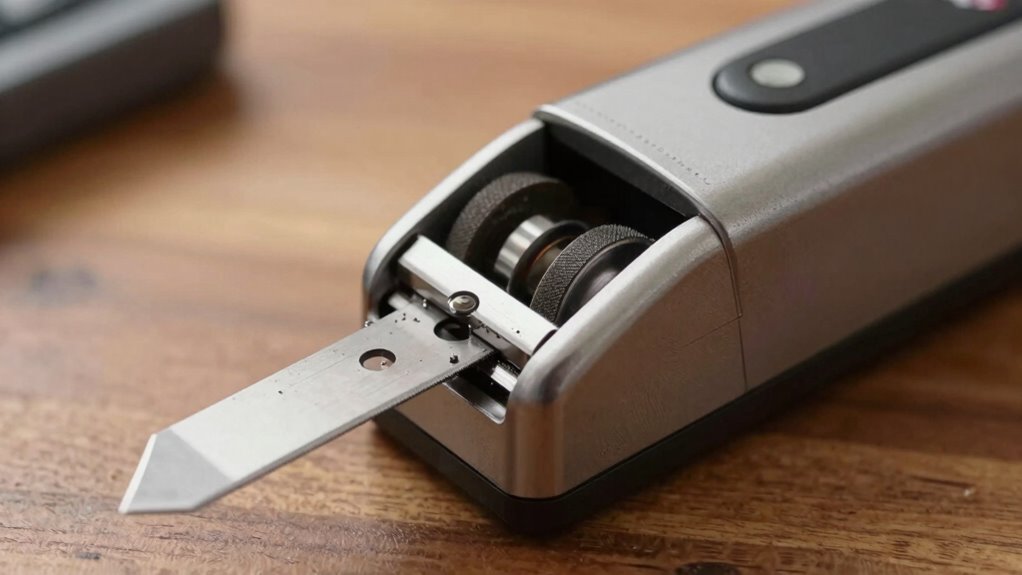
Over-sharpening your knife can be more damaging than you might realize, often leading to blade dullness or even permanent harm. Look for signs like blade chipping, which occurs when the edge becomes fractured or flaky, indicating excessive wear. Edge misalignment is another telltale sign; if the blade no longer cuts evenly or feels uneven during use, it’s a sign that over-sharpening or improper technique has compromised the edge. Also, observe if the knife feels loose or wobbly in the sharpener, which can cause uneven grinding and damage. Consistently check your blade’s condition, and if you notice these issues, it’s time to stop sharpening. Proper maintenance and cautious sharpening help prevent blade damage and extend your knife’s lifespan.
Tips for Maintaining Your Electric Sharpener and Avoiding Errors

Regular maintenance of your electric sharpener helps prevent common mistakes and keeps it functioning effectively. To guarantee optimal blade maintenance, clean the sharpening wheels regularly to remove debris and metal shavings that can dull the mechanism. Check the sharpening angle and adjust it if your sharpener allows, preventing uneven wear. Maintain a consistent sharpening frequency based on how often you use your knives—over-sharpening can weaken blades, so avoid unnecessary cycles. Always follow the manufacturer’s instructions for use and care. Avoid applying excessive pressure during sharpening, as this can damage the blade or the device. Regularly inspect your sharpener for signs of wear or damage and replace worn parts promptly. Proper blade maintenance and consistent sharpening routines help extend your knife’s life and improve performance.
What to Do If Your Knife Gets Damaged or Becomes Too Sharp?
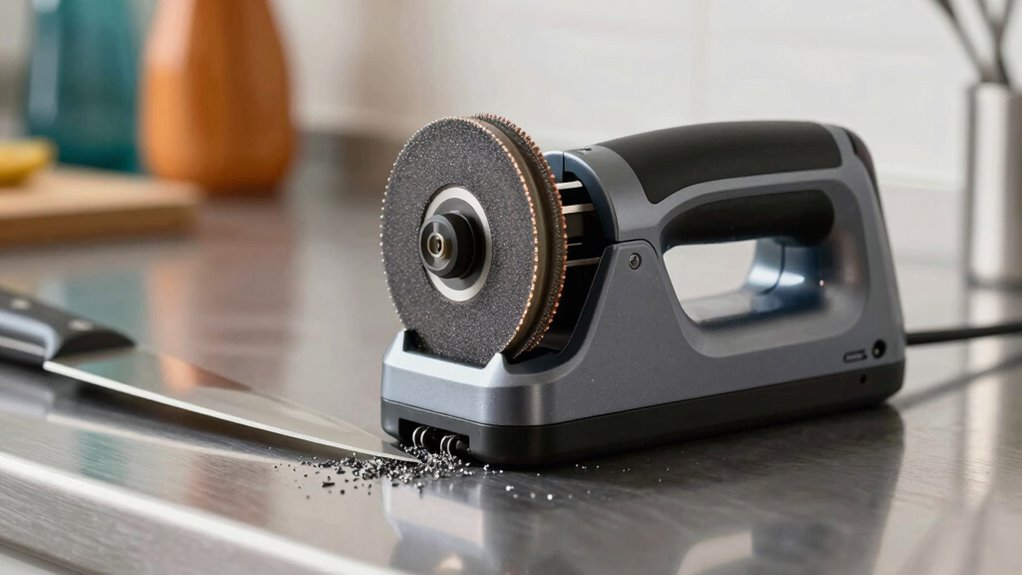
If your knife becomes too sharp or sustains damage, it’s important to address the issue promptly to maintain safe and effective use. For minor damage, consider blade repair options like honing or professional sharpening services to restore the edge without over-grinding. If the damage is severe, replacing the blade might be necessary, especially for fixed blades. When your knife is excessively sharp, it can be dangerous, so carefully handling and reducing the edge’s sharpness with controlled sharpening or stopping use temporarily can help prevent accidents. Remember, using sharpening alternatives such as honing rods or ceramic rods can help maintain your blade’s integrity without excessive grinding. Always prioritize safety and proper maintenance to extend your knife’s lifespan and ensure ideal performance.
Tips to Keep Your Knife Sharp and Extend Its Lifespan
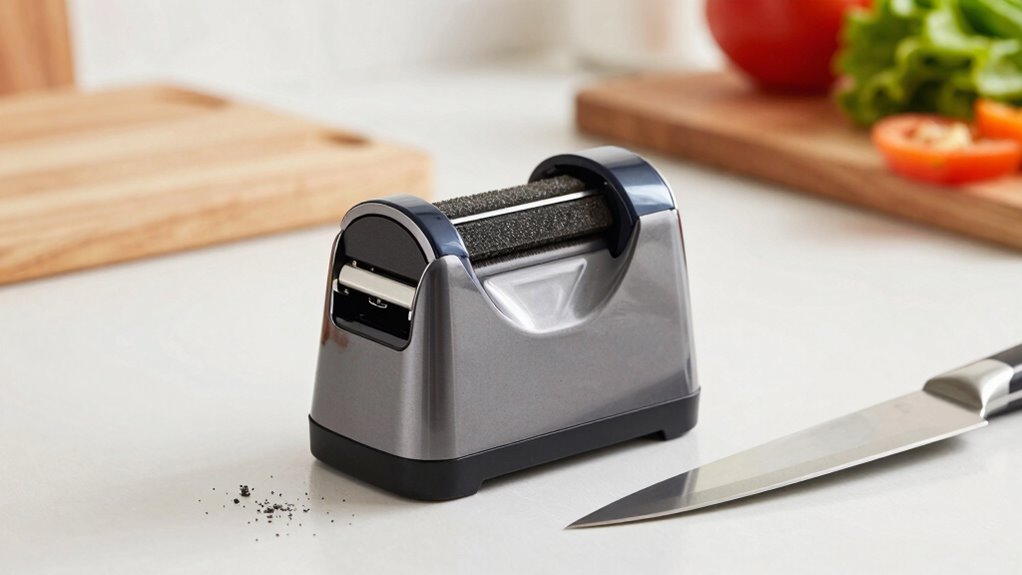
Keeping your knife sharp and extending its lifespan starts with proper handling and maintenance. To achieve this, regularly sharpen your blade at the recommended sharpening frequency to prevent dullness. Incorporate blade polishing to smooth out tiny imperfections and maintain a clean edge. Proper storage, such as using a knife block or magnetic strip, protects the blade from damage. Additionally, use a honing steel between sharpenings to realign the edge. Here’s a visual to help you understand the process:
| Step | Action | Result |
|---|---|---|
| Sharpening | Use an electric sharpener as needed | Restores sharpness efficiently |
| Blade Polishing | Buff with a polishing stone or cloth | Smooths and refines edge |
| Storage | Keep in a safe, protective place | Prevents damage and dulling |
Consistent care keeps your knife sharp longer and improves its performance.
Frequently Asked Questions About Electric Knife Sharpeners and Blade Care
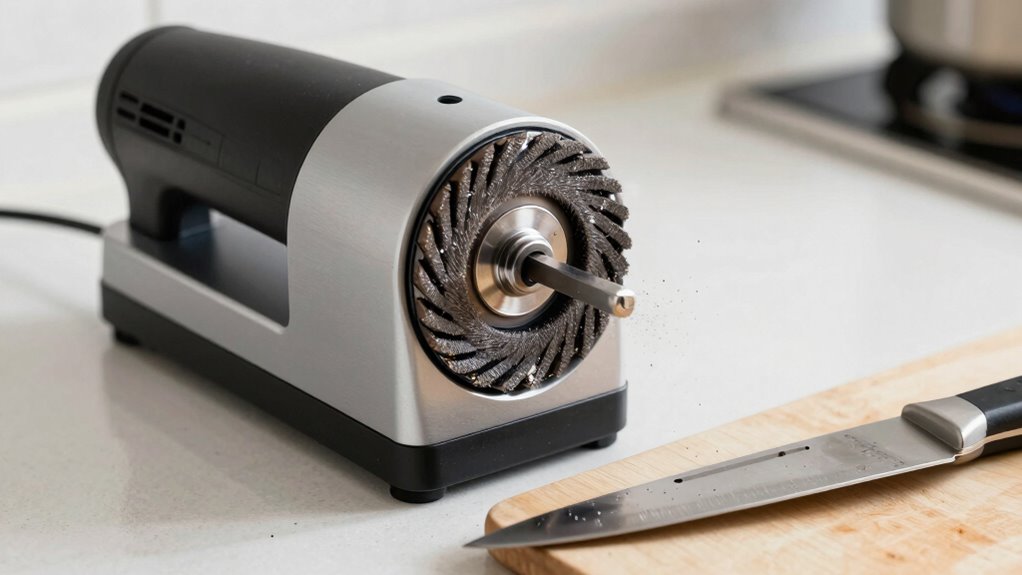
Electric knife sharpeners offer a quick and convenient way to maintain sharp blades, but many users have questions about their proper use and care. One common concern is how often to sharpen your knife; sharpening too frequently can harm blade durability, while infrequent sharpening may reduce cutting efficiency. Generally, sharpening frequency depends on how often you use your knife and the type of food you cut. To preserve blade durability, avoid over-sharpening and follow the manufacturer’s recommendations. It’s also helpful to understand that proper care—including regular cleaning and using the correct sharpening angle—can extend your blade’s lifespan. If you notice a dull edge despite regular sharpening, it may be time to evaluate your technique or consider professional maintenance.
Frequently Asked Questions
Can Using Too Much Pressure Damage My Knife During Sharpening?
Yes, using too much pressure during sharpening can damage your knife. Excessive pressure causes uneven pressure application, which can grind away more metal than necessary and weaken the blade. Always apply gentle, consistent pressure, letting the sharpener do the work. This approach helps prevent blade damage and ensures a sharp, durable edge without compromising your knife’s integrity. Remember, less pressure often results in better, safer sharpening.
How Often Should I Sharpen My Knife With an Electric Sharpener?
Think of your knife like a garden needing regular care. For ideal sharpness, follow the frequency guidelines—generally, sharpen your knife every 3 to 6 months, depending on use. If you slice daily or cut tough foods, you might need sharpening more often. Keep an eye on its performance and remember, too frequent sharpening can wear your blade faster, so stick to recommended sharpening intervals to keep it in prime condition.
Are There Specific Blades That Shouldn’t Be Sharpened With Electric Devices?
You shouldn’t sharpen specialized blades or serrated knives with electric devices. These blades often have unique edge designs that require manual sharpening to avoid damage. Electric sharpeners can grind down or ruin the serrated edges, reducing their effectiveness. Always check the manufacturer’s instructions, and if in doubt, opt for manual sharpening or professional service to keep your specialized and serrated knives in top condition.
What Safety Precautions Should I Take When Operating an Electric Sharpener?
You should never operate an electric sharpener without wearing safety gear like gloves and safety goggles—think of it as guarding your fingers from a lightning strike! Always read the manual to avoid electrical hazards, like shocks or fires. Keep the area dry, unplug the device when not in use, and verify your hands are dry before handling. Staying cautious helps prevent accidents and keeps your sharpening safe and effective.
How Do I Clean and Store My Electric Knife Sharpener Properly?
To clean your electric knife sharpener, unplug it first and use a dry brush or compressed air to remove debris from the sharpening slots. For thorough cleaning, lightly dampen a cloth with rubbing alcohol and wipe the exterior. Store your sharpener in a dry, cool place, ideally in a drawer or cabinet, and keep it covered to prevent dust accumulation. Proper cleaning techniques and storage tips extend your device’s lifespan and guarantee safe operation.
Conclusion
Remember, treating your knife with care and patience helps it stay sharp longer. Avoid rushing the process or applying too much pressure, and you’ll gently guide it to its best potential. With a little attention and the right techniques, your blade will thank you by performing beautifully for years to come. Think of proper sharpening as a quiet conversation—honoring your knife’s natural grace, ensuring it remains your trusted kitchen companion without unnecessary wear.