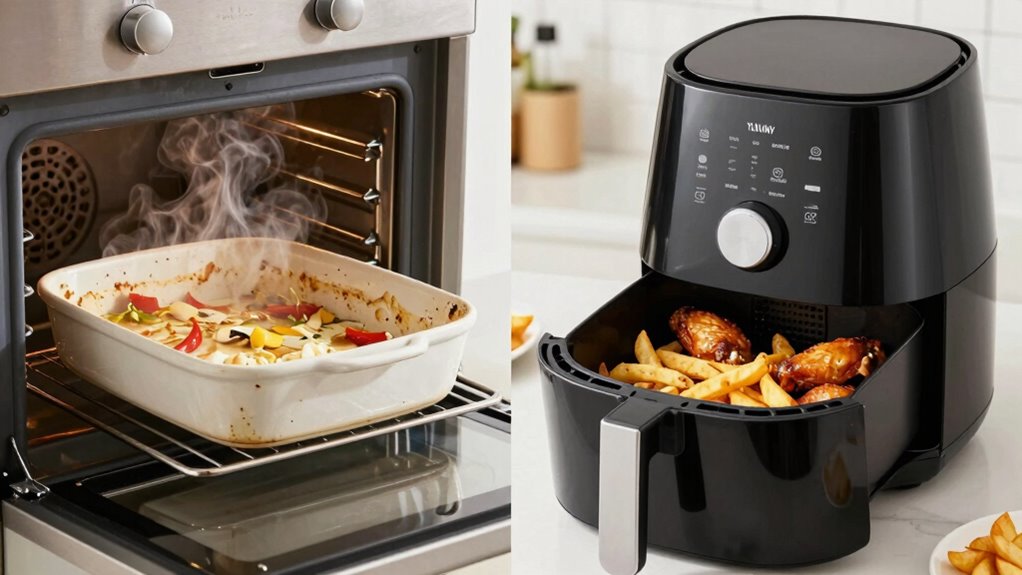

When you switch from oven reheating to air frying, you quickly learn that it’s faster and more efficient, with better crispiness and less sogginess. You start to adjust your timing and temperatures for ideal results and realize how air circulation leads to even heating. As you experiment with accessories and techniques, your understanding of heat transfer and airflow deepens. Keep exploring and you’ll discover even more ways to improve your kitchen skills.
Key Takeaways
- Air frying offers faster, more even reheating with superior crispiness compared to traditional oven methods.
- Adjustments in cooking time and temperature are essential for optimal results with air fryers.
- Using accessories like racks and pans expands the versatility beyond simple reheating.
- Proper maintenance and cleaning of the air fryer prolongs its efficiency and lifespan.
- Reheating techniques shift from oven-focused to emphasizing airflow, heat transfer, and precise timing.
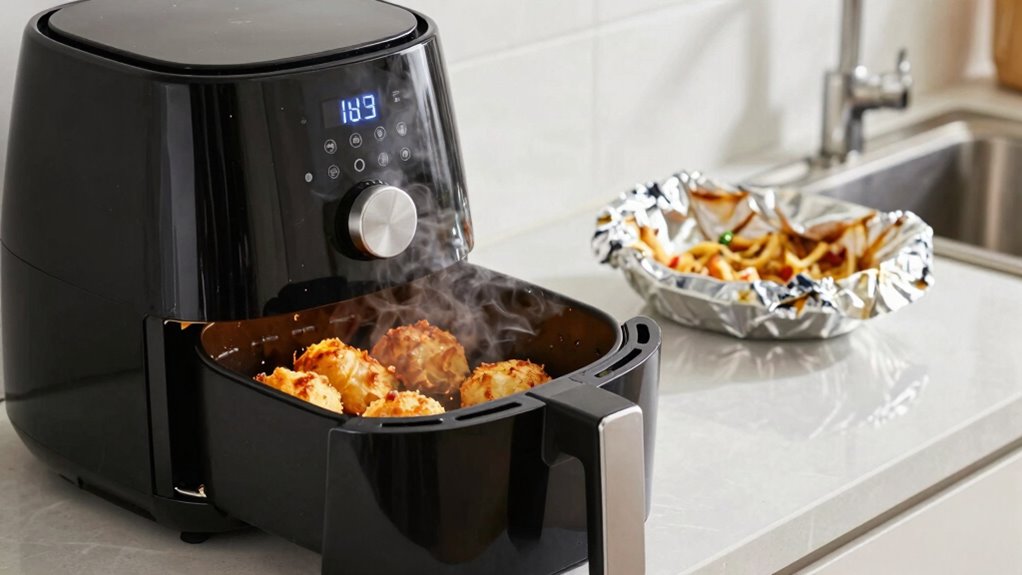
Switching from oven reheating to air frying can feel like a learning curve at first, but it’s a change worth embracing. You’ll quickly discover that air frying isn’t just a faster method; it’s a different way of approaching cooking techniques and using kitchen equipment. When you make this switch, your understanding of how heat interacts with food improves, and you start to see the benefits of a more efficient, versatile appliance. Air fryers use rapid air circulation to crisp up foods in a way that traditional ovens often can’t match, which means you’ll need to adapt your expectations and techniques.
Switching to air frying enhances your skills, making cooking faster, crispier, and more efficient with versatile techniques.
One of the first things you notice is how air frying simplifies the process. Unlike oven reheating, which can sometimes lead to uneven warmth or soggy leftovers, air frying gives you quick, evenly heated results. You learn to recognize that the cooking time is generally shorter because of the high heat and circulating air. This means you’ll need to adjust your timing and temperature settings, and it’s a learning process that improves your overall cooking skills. You understand that air fryers excel at crisping, so you start to rethink how you reheat fried foods, snacks, and even leftovers that were once only suited for the oven.
In terms of kitchen equipment, you find that air fryers are surprisingly user-friendly and compact, making them a valuable addition to your kitchen arsenal. They often have pre-set functions that take the guesswork out of cooking, but you soon realize how important it is to familiarize yourself with manual controls for customized results. You begin to experiment with different accessories, like baking pans or grill racks, expanding your repertoire of cooking techniques. This new equipment encourages you to explore beyond reheating, encouraging you to bake, roast, or even dehydrate foods, which broadens your culinary capabilities. You also learn how crucial air circulation is in achieving optimal cooking results, which deepens your understanding of cooking science. Additionally, understanding kitchen appliance fundamentals helps you optimize your usage and maintenance routines, extending the life of your equipment. Moreover, gaining a basic knowledge of heat transfer methods enhances your ability to troubleshoot and perfect your recipes.
As you adapt, you also learn to clean and maintain your air fryer properly, which is a different routine from oven cleanup. The non-stick surfaces and removable baskets make this easier, and you soon recognize that good maintenance extends the life of your kitchen equipment. You also become more aware of the importance of cooking science in mastering different techniques, which enhances your overall culinary knowledge. Overall, switching to air frying shifts your perspective on how to approach food preparation. You become more conscious of how heat, airflow, and timing work together, transforming your kitchen habits and elevating your cooking techniques. This change not only makes your meals quicker and more delicious but also deepens your understanding of how to make the most of your kitchen equipment.
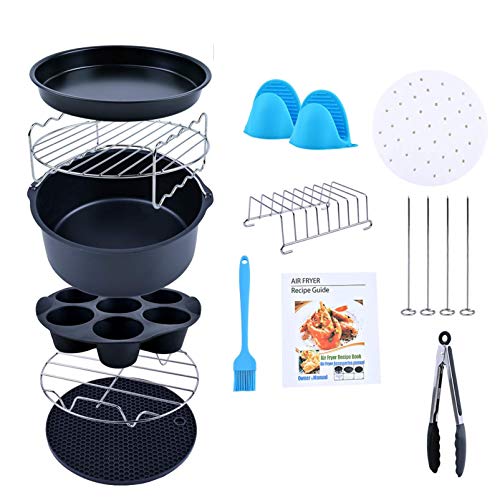
Air Fryer Accessories, Set of 12 Fit for 5.3Qt and Larger Air Fryer with Cake & Pizza Pan, Metal Holder, Skewer Rack & Skewers, etc, Nonstick Coating, Dishwasher Safe
- Complete 12-Piece Accessories Set: Includes pans, racks, skewers, and tools
- Healthy Cooking with Less Oil: Promotes nutritious, low-oil meals
- Versatile for Multiple Appliances: Compatible with oven, microwave, and instant pot
As an affiliate, we earn on qualifying purchases.
As an affiliate, we earn on qualifying purchases.
Frequently Asked Questions
How Does Air Frying Affect Food Texture Compared to Oven Reheating?
When you switch to air frying, it gives your food a crispy exterior while keeping the inside moist. Unlike oven reheating, which can make food soggy or dry out, air frying circulates hot air evenly, sealing in moisture and creating a satisfying crunch. This method enhances texture, making leftovers taste fresher and more appealing, and you’ll notice a significant improvement in the overall eating experience.
Are There Specific Foods That Don’t Reheat Well in an Air Fryer?
Think of some foods as delicate butterflies that don’t thrive when hurried; they don’t reheat well in an air fryer. Foods with high food moisture, like casseroles or dishes with gravy, tend to dry out or heat unevenly, losing their original texture. The quick reheating speed can make these items become tough or rubbery, so for best results, stick to more solid, less moist foods or reheat them slowly in the oven instead.
What Are the Common Mistakes Beginners Make With Air Frying?
When starting with an air fryer, you might make mistakes like overcrowding the basket, which prevents proper airflow and results in uneven cooking. Forgetting to use the right air fryer accessories can hinder your results, and neglecting cleaning tips leads to buildup and odors. Always preheat your air fryer, leave space around food, and clean the basket regularly for peak performance. These simple tips help you avoid common beginner mistakes.
How Does Energy Consumption Compare Between Oven Reheating and Air Frying?
Switching from oven reheating to air frying is like upgrading from a tricycle to a race car—you’ll notice a difference in energy efficiency. Air fryers generally use less power, leading to lower power consumption, because they heat up faster and cook food more quickly. This makes them more energy-efficient, saving you electricity and money in the long run. So, your kitchen’s energy bill might just thank you.
Can Air Frying Replace Traditional Oven Baking for Certain Dishes?
Yes, air frying can replace traditional oven baking for certain dishes, especially when you’re seeking faster cooking times and energy efficiency. It’s a great oven alternative for crispy snacks, small baked goods, and reheating leftovers. However, it offers limited baking versatility compared to a traditional oven, which is better suited for larger, more complex baked dishes. So, while air frying is convenient, it may not fully replace all oven-baked recipes.
Conclusion
Switching from oven reheating to air frying transforms your kitchen routine. You’ll enjoy quicker meals, crispier textures, and less cleanup—all in one appliance. As you embrace the air fryer’s efficiency, you’ll see your cooking become more streamlined, your snacks more satisfying, and your kitchen less cluttered. With each use, you’ll feel the freedom of faster, healthier, and tastier results—turning everyday reheating into an effortless, delicious experience you look forward to.