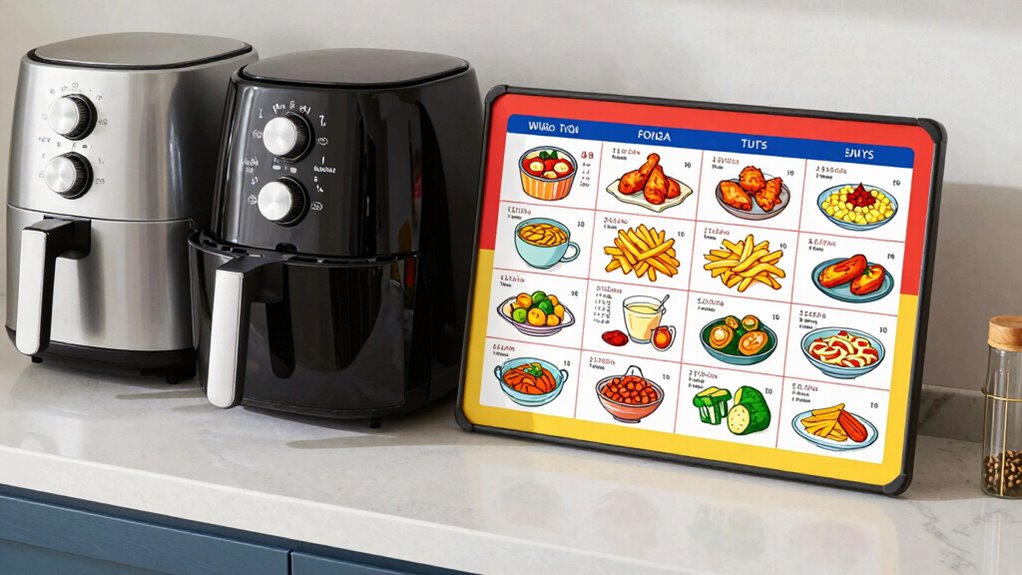
To build a simple air fryer timing chart, start by noting common foods like fries, chicken wings, and vegetables, along with their recommended temperatures and times. Experiment by following these guidelines, making small adjustments based on your results to improve accuracy. Record the best times and note any specific food needs. Regularly clean and maintain your air fryer to keep it safe and efficient. Keep exploring further tips to perfect your chart and cooking skills.
Key Takeaways
- Identify common foods and note their recommended temperatures and cooking times from manufacturer guidelines.
- Experiment with starting times, adjusting based on results to find optimal cooking durations.
- Record and refine timing adjustments for each food type to create personalized, effective cooking references.
- Include safety tips like avoiding overcrowding, preheating, and cleaning to ensure safe and consistent results.
- Regularly test and update the chart for different brands or model features to maintain accuracy and safety.
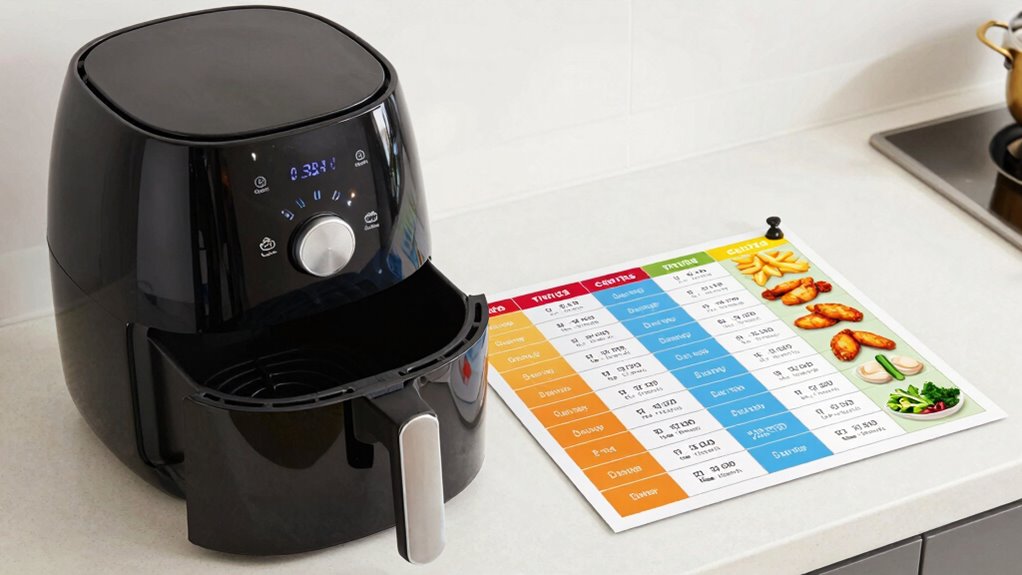
Creating a custom air fryer timing chart can save you time and guarantee perfectly cooked meals every time. When you’re starting to build your chart, it’s vital to consider air fryer safety. This means understanding how to handle your appliance properly, avoiding common mistakes such as overcrowding the basket or not preheating the device. Overloading can block proper air circulation, leading to uneven cooking or longer cook times, which can be frustrating and potentially unsafe if food isn’t cooked thoroughly. Preheating your air fryer ensures consistent results and reduces the risk of undercooked food, which could cause foodborne illnesses.
Creating a customized air fryer chart improves safety and ensures perfectly cooked, delicious meals every time.
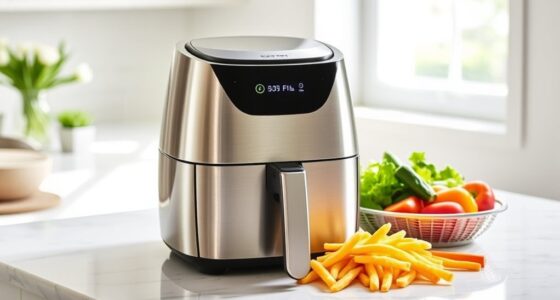
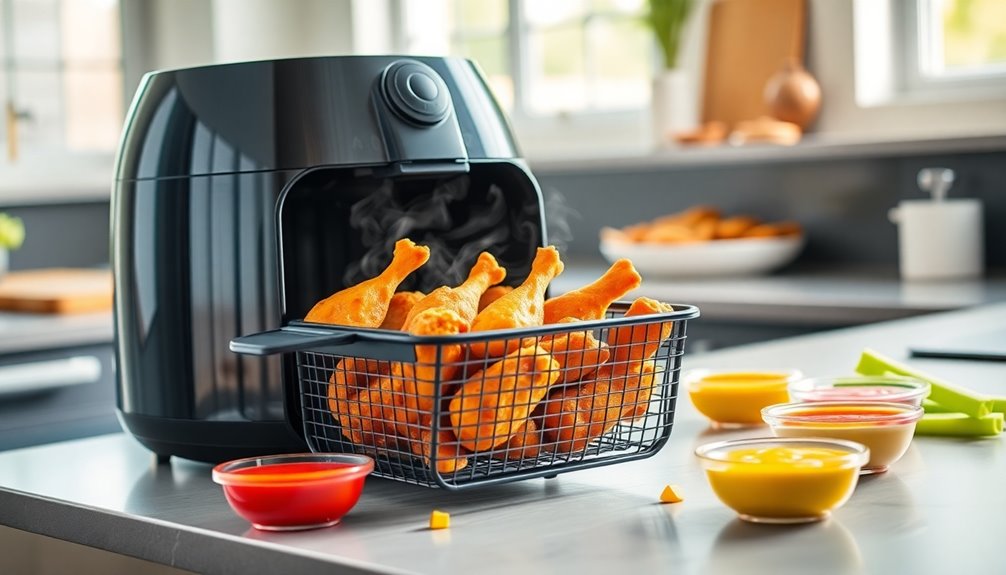
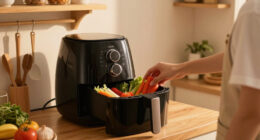
To develop your timing chart, begin by identifying the most common foods you cook—frozen fries, chicken wings, vegetables, or fish fillets. For each item, note the typical cooking temperature and time from the manufacturer’s guidelines, but don’t rely solely on those. Your air fryer might vary slightly, so experiment by starting with the recommended time and adjusting based on your results. Keep track of the adjustments you make; this will help you refine the timing for future use. Remember, even small changes can make a big difference in achieving crispy, tender results.
Pay attention to common mistakes that can affect your cooking process. For instance, opening the air fryer too often during cooking can cause temperature drops, leading to unevenly cooked food. To prevent this, try to check your food only near the end of the cooking process. Also, avoid using sprays or oils that can accumulate and create smoke or even damage the appliance over time. Instead, lightly brush or spray food with oil before placing it in the basket. Properly cleaning your air fryer after each use also maintains safety and performance, preventing buildup that could be a fire hazard. Additionally, understanding air fryer safety guidelines can help you use your appliance more effectively and avoid potential hazards. Being aware of proper cleaning and maintenance practices is equally important for safe operation. Regular maintenance not only extends the life of your appliance but also ensures it operates safely and efficiently. Incorporating tips on safe cooking practices can further enhance your experience and keep your kitchen environment secure.
As you build and refine your chart, include notes about specific foods that need more or less time, as well as any adjustments for different brands or models of air fryers. Test each item carefully, and record your success to create a personalized guide. This process can also be enhanced by understanding the different air fryer brands and how their features might influence cooking times. Having a well-thought-out timing chart also promotes air fryer safety by helping you avoid overcooking or undercooking, which can sometimes cause smoke or even fires if food gets too charred or greasy. Ultimately, a customized timing chart becomes your go-to reference, making your cooking more efficient, safer, and more delicious every time.
As an affiliate, we earn on qualifying purchases.
Frequently Asked Questions
Can I Customize the Timing Chart for Different Brands?
Yes, you can customize your air fryer timing chart for different brands. Brand variations often mean different cooking times and temperature settings, so it’s smart to note these differences. Use customization tips like starting with recommended times, then adjusting based on your experience. Keep a record of your adjustments for each brand, making future cooking more precise. This way, your timing chart becomes tailored to your specific air fryer models.
How Often Should I Update My Air Fryer Timing Chart?
Coincidentally, you should update your air fryer timing chart whenever you notice discrepancies in cooking results. Regular chart maintenance guarantees timing accuracy, helping you get perfect dishes every time. As you experiment with new recipes or different foods, tweak your timings accordingly. Typically, review and update your chart every few months or after significant use to keep it reliable. Consistent updates keep your kitchen running smoothly and your meals consistently delicious.
Is It Necessary to Record Temperature Settings Too?
Yes, recording temperature settings is necessary to maintain temperature accuracy, which directly impacts cooking consistency. When you note the temperature alongside the timing, you can better replicate perfect results each time. It helps you identify any discrepancies in your air fryer’s performance over time and adjust accordingly. Keeping detailed records of both time and temperature guarantees your dishes turn out just right, every single time.
What Is the Best Way to Test New Recipes on the Chart?
To test new recipes on your chart, focus on recipe experimentation by adjusting cooking times and temperatures based on previous results. Keep detailed notes on each trial to track cooking consistency, noting how changes affect texture and flavor. Start with recommended settings, then tweak gradually. Repeat the process until you achieve reliable results, ensuring your chart becomes a trusted guide for perfect outcomes every time you cook.
Can I Include Frozen Foods in My Timing Chart?
Yes, you can include frozen foods in your timing chart. Just remember, frozen foods usually need longer cooking times, so you’ll want to make timing adjustments accordingly. Start with the recommended times for fresh items and add a few extra minutes as needed. Keep an eye on your food during cooking to prevent over- or under-cooking, and adjust the times based on your specific air fryer model.
Conclusion
By creating your own air fryer timing chart, you’ll reveal a secret ingredient to effortlessly delicious meals. It’s like having a trusted recipe whisperer right in your kitchen, guiding you to perfect crunch and tenderness every time. With just a little planning, you’ll find cooking becomes smoother and more enjoyable — almost like magic. So, start charting your favorites today and enjoy the sweet harmony of perfectly cooked dishes at your fingertips.