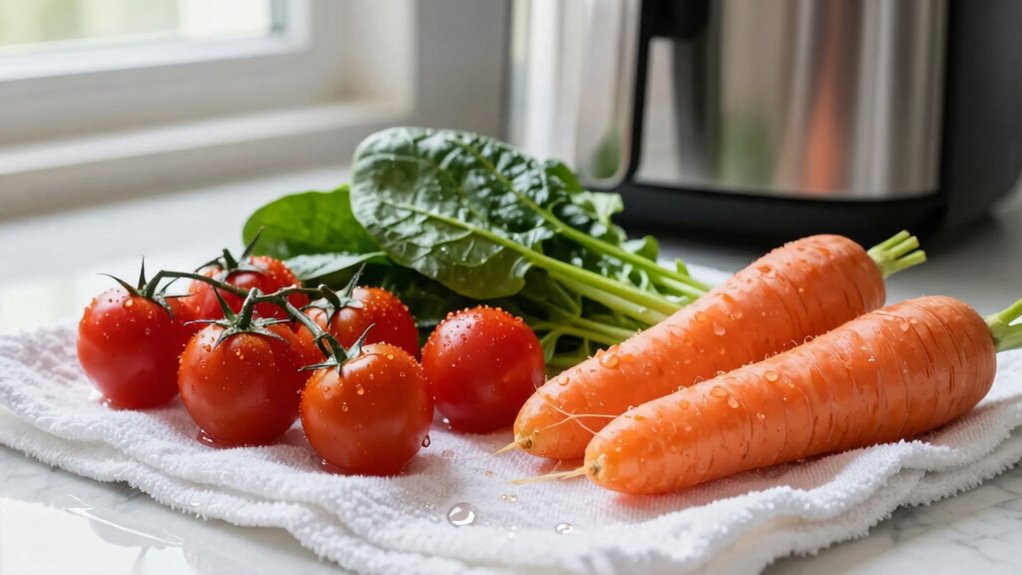

After washing your vegetables, gently pat them dry with a clean towel or paper towels to remove surface moisture. For larger batches, use a salad spinner to speed up the process. Make sure you eliminate as much water as possible to prevent sogginess and promote even browning in the air fryer. Proper drying is key to crispy, delicious results, and you’ll discover more tips if you keep exploring these simple techniques.

Get kitchen gear delivered free — and shop member deals
- Fast, free delivery on millions of items
- Access to Prime Big Deal Days deals on October 6–7
- Prime Video, Amazon Music and more included
Key Takeaways
- Gently pat washed vegetables with a clean towel or paper towels to remove surface moisture.
- Use a salad spinner to efficiently eliminate excess water from larger quantities of vegetables.
- Spread vegetables in a single layer on a clean cloth or paper towels to air dry further.
- Allow vegetables to sit briefly after patting to let residual moisture evaporate.
- Ensure vegetables are thoroughly dry before seasoning and air frying for optimal crispiness.
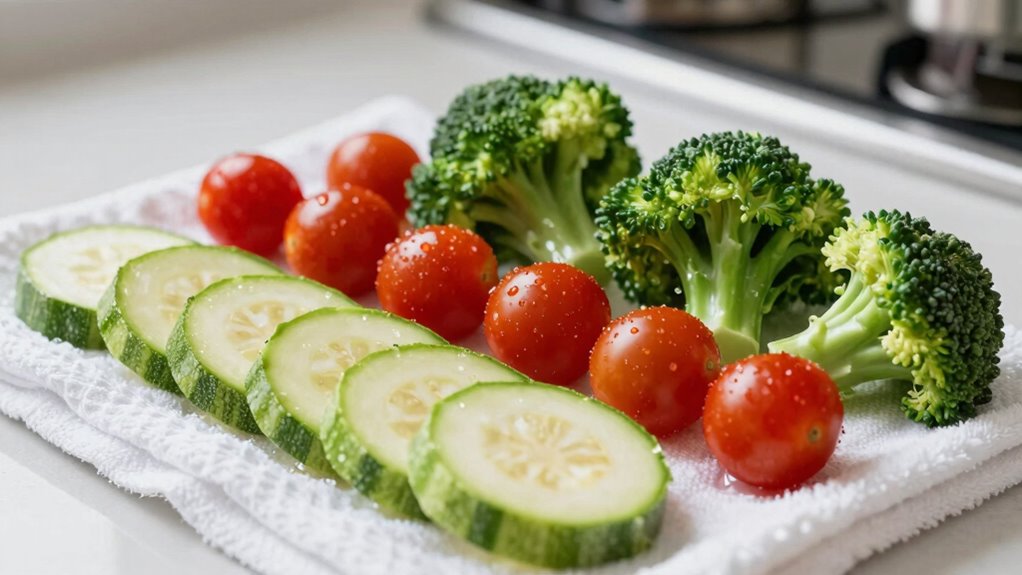
Drying washed vegetables thoroughly before air frying is essential to achieve crisp and evenly cooked results. When you wash vegetables, they often retain moisture on their surface, which can cause uneven cooking, sogginess, or even steam instead of crispness. To prevent this, take the time to dry them properly. You can do this by patting them gently with a clean kitchen towel or paper towels. For larger quantities, using a salad spinner is a quick and effective way to remove excess water. The goal is to eliminate as much moisture as possible because excess water can interfere with the browning process, leaving your vegetables limp rather than crispy. Proper storage methods also help maintain their texture and freshness, especially if you prepare them in advance. Additionally, understanding proper drying techniques can further improve the crispiness of your air-fried vegetables. Incorporating air circulation in your drying process can help speed up moisture removal and ensure even drying.
Once your vegetables are thoroughly dried, you should consider seasoning tips that enhance flavor without adding too much moisture. Lightly tossing your veggies with a bit of oil helps the seasonings stick better and promotes even cooking. Use high-quality oils like olive or avocado oil in moderation—just enough to coat the vegetables lightly. Then, sprinkle your preferred seasonings such as salt, pepper, garlic powder, paprika, or herbs. Keep in mind that dry seasonings will adhere better and prevent clumping, which can cause uneven seasoning and affect the crispiness. Experiment with different spice blends, but always start with a small amount and adjust to taste. Understanding proper storage methods can significantly extend the freshness and texture of your vegetables.
Frequently Asked Questions
Can I Reuse the Dried Vegetable Scraps for Compost?
Yes, you can reuse dried vegetable scraps for composting, which supports vegetable composting and waste reduction. Once the scraps are thoroughly dried, add them to your compost bin, ensuring they’re broken into smaller pieces for faster decomposition. This way, you turn kitchen waste into valuable compost, reducing landfill waste. Dried scraps decompose more efficiently and help enrich your garden soil, making your waste reduction efforts more sustainable and eco-friendly.
How Long Can Washed Vegetables Stay Wet Before Drying?
You should dry washed vegetables within 15 to 30 minutes to prevent excess water absorption, which can lead to spoilage. If they stay wet longer, bacteria might grow. Use effective drying techniques like patting them dry with a clean towel or air drying on a clean surface. Quick drying guarantees they stay fresh and reduces moisture that can interfere with air frying or storage.
Is It Necessary to Dry Vegetables if Air Frying Immediately?
You don’t need to dry vegetables if you’re air frying immediately, but doing so can improve their crispness and prevent excess oil splattering. Proper drying techniques help with vegetable preservation by reducing moisture that can cause sogginess or uneven cooking. Use a clean towel or salad spinner to remove surface moisture thoroughly. This step guarantees your vegetables turn out crispy and delicious, making your air frying experience more effective and enjoyable.
What Are the Best Tools for Drying Vegetables Quickly?
Think of your kitchen as a bustling workshop, and the best tools for drying vegetables quickly are your trusty kitchen accessories. A salad spinner acts like a whirlpool, spinning away excess water in a flash. Microfiber towels soak up moisture like a sponge, speeding up vegetable preservation. Paper towels also work wonders, blotting water away swiftly. These tools turn a soggy mess into crisp, ready-to-cook veggies, ensuring perfect air frying results every time.
Does Drying Affect the Flavor of Vegetables Before Air Frying?
Drying vegetables before air frying helps retain flavor and can improve texture, but it might slightly diminish some fresh flavors if overdone. Properly drying guarantees excess moisture is removed, preventing sogginess and promoting crispness. You won’t notice a significant flavor change if you dry gently, and the texture impact is positive, making your vegetables crunchier. Just make sure not to over-dry, as that could dull some of the fresh taste.
Conclusion
Drying your vegetables thoroughly before air frying is like giving them a fresh start, ensuring they crisp up perfectly. When you pat them dry, you prevent excess moisture that can cause sogginess and splattering. Just a few gentle pats with a clean towel or a spin in a salad spinner works wonders. Think of it as giving your veggies a quick spa treatment—refreshing and essential for that crispy, delicious finish you’re aiming for!
Fall Picks
fall essentials
As an affiliate, we earn on qualifying purchases.