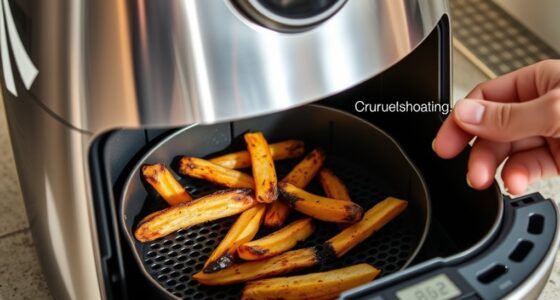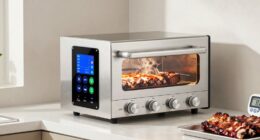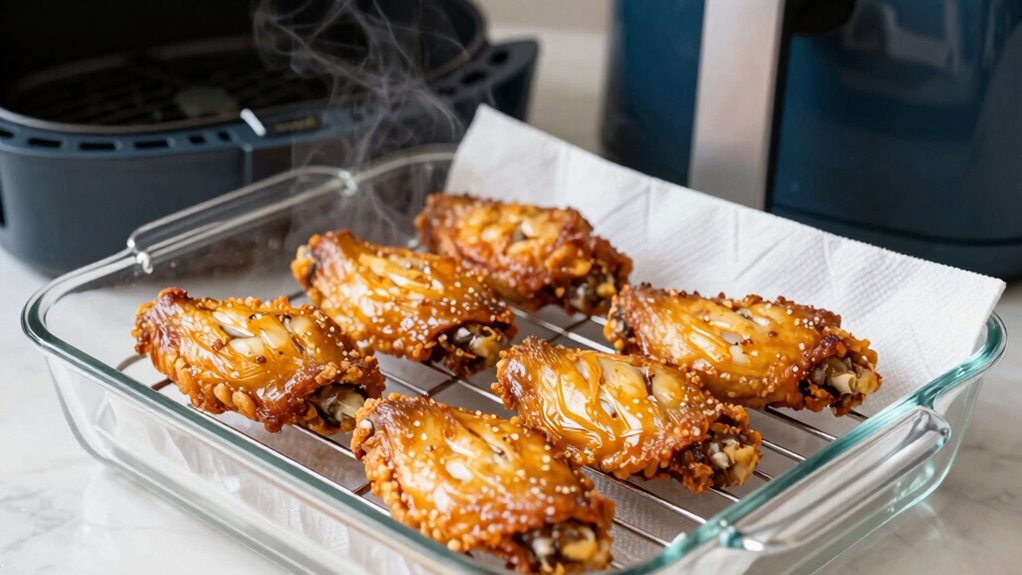

To hold food warm between air fryer batches, place cooked items on a wire rack or lined plate to allow air circulation and prevent sogginess. Cover them lightly with aluminum foil to retain moisture, and keep the food at a safe temperature above 140°F using a food thermometer. Use a warming drawer or set your oven to a low temperature if needed. For more tips on keeping food fresh and safe, keep exploring these helpful guidelines.

Get kitchen gear delivered free — and shop member deals
- Fast, free delivery on millions of items
- Access to Prime Big Deal Days deals on October 6–7
- Prime Video, Amazon Music and more included
Key Takeaways
- Transfer cooked food to a wire rack or lined plate to keep it crisp and allow air circulation.
- Cover food lightly with aluminum foil to retain moisture without trapping steam.
- Keep the food at a temperature above 140°F (60°C) using a food thermometer to ensure safety.
- Use a warming drawer or oven set to around 170°F (75°C) for extended holding without overcooking.
- Serve within a reasonable timeframe and re-crisp in the air fryer if needed before serving.
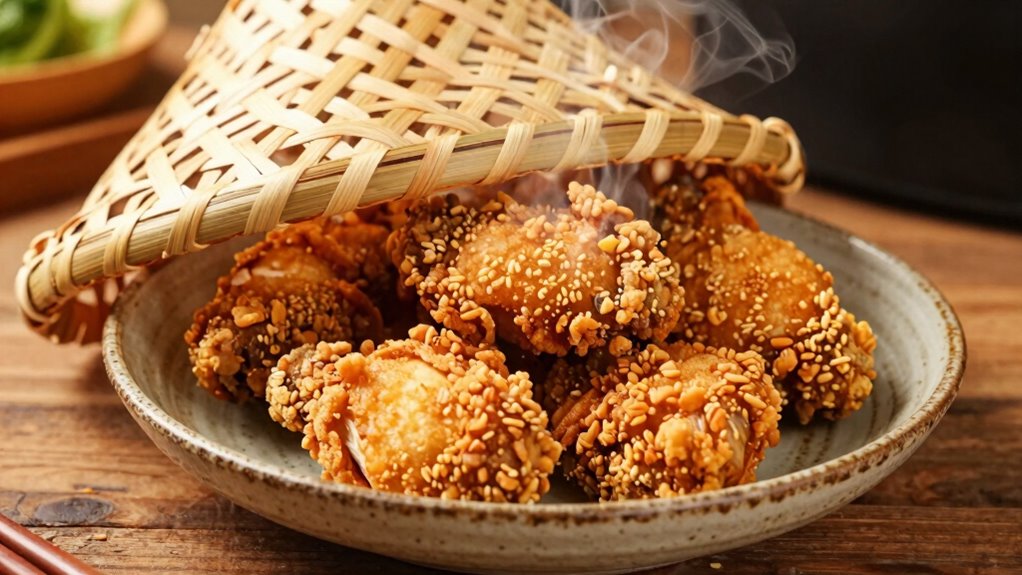
When you’re cooking multiple batches in your air fryer, it’s essential to keep your food warm without sacrificing crispness or texture. To do this effectively, you need to consider both air fryer safety and food presentation tips. First, avoid stacking or overcrowding food as it can lead to uneven heating or even safety hazards. Instead, place your cooked items on a wire rack set over a baking sheet or on a plate lined with paper towels. This allows air to circulate around the food, helping it stay warm and crisp. Keep in mind that leaving food uncovered for too long can cause it to dry out, so covering the food lightly with aluminum foil helps retain moisture while preventing it from becoming soggy. Additionally, understanding food safety temperature guidelines is crucial for ensuring your food remains safe to eat during holding times. Maintaining safe food temperatures is crucial, especially when holding food for an extended period. Use a food thermometer to ensure the internal temperature stays above 140°F (60°C), which is important for food safety. If you’re concerned about bacteria growth, consider setting your oven or a warming drawer to a low heat (around 170°F or 75°C) and placing your food inside. This method keeps your food at a safe temperature without risking overcooking or losing crunch. Just remember, leaving food in the warm zone for too long could compromise safety, so aim to serve within a reasonable timeframe. Food presentation tips also play a big role in keeping your dishes appealing. When reheating or holding food, arrange it neatly on a platter or plate to maintain visual appeal. Use garnishes like fresh herbs or a squeeze of lemon to brighten the dish before serving, which helps mask any slight moisture loss. For added crispness, briefly re-crisp items in the air fryer at a low temperature before serving—this can revive texture and make your presentation look fresh. If you’re stacking food, be mindful of how the layers look; stacking too high can make the dish look cluttered, so opt for a clean, organized layout. To further enhance food safety practices, regularly check your holding equipment to ensure it is functioning properly and maintaining the correct temperature. Proper food storage techniques are also essential to prevent cross-contamination and spoilage during the holding period. Incorporating temperature control tools like digital thermometers can significantly improve safety and quality. Additionally, using airtight containers for storing leftovers can help preserve freshness and prevent contamination. Lastly, when holding food between batches, stay attentive to avoid safety hazards. Never leave food out at room temperature for more than two hours, and always check for signs of spoilage before reheating. Using these safety considerations combined with thoughtful presentation tips will ensure your food remains delicious, safe, and visually appealing, even after holding it for a little while. This way, you get to enjoy each batch at its best—crispy, warm, and perfectly plated.
As an affiliate, we earn on qualifying purchases.
Frequently Asked Questions
Can I Reuse the Same Holding Method for Different Types of Food?
Yes, you can reuse the same holding method for different types of food, but it’s best to ensure proper food storage and reheating techniques. For example, use a warming tray or a low-temperature oven to keep foods warm without drying them out. Ensure each type of food is stored properly and reheated safely to maintain quality and prevent spoilage. Adjust your methods based on the specific food to achieve the best results.
How Long Can Food Stay Warm Without Losing Quality?
Did you know that food can stay safe for up to two hours at the right temperature? You can keep food warm for about 1 to 2 hours without significant quality loss, but it’s essential to maintain proper food temperature and moisture. After that, food starts to dry out or spoil. To keep it tasting fresh, use a warm, covered container or a low oven, ensuring moisture stays in and temperature stays steady.
Is It Safe to Cover Food While Holding It Warm?
Yes, it’s safe to cover food while holding it warm, but you need to guarantee proper temperature control for food safety. Use a clean, oven-safe cover or foil to keep heat in and prevent contamination. Make sure the food stays at or above 140°F (60°C) to prevent bacteria growth. Regularly check the temperature, and avoid covering food too tightly to allow moisture escape, maintaining quality and safety.
Will Holding Food Warm Affect Its Texture or Crispiness?
Holding food warm can be a delicate balancing act, like walking a tightrope. If you keep it warm too long, moisture escapes, making it soggy and dulling its crispiness. To preserve crispiness, use a low oven or a warming drawer, and avoid covering it tightly, which traps moisture. This way, you maintain food moisture and keep your snacks crispy, ensuring they stay delicious until you’re ready to enjoy them.
What Are the Best Alternative Methods if I Don’t Have an Air Fryer?
If you don’t have an air fryer, you can use alternative tools like an oven or toaster oven to keep your food warm. Storage containers with lids work well to maintain heat and prevent moisture loss. You might also try wrapping food in foil or placing it in a warm, low-temperature oven. These methods help preserve crispiness and prevent sogginess, ensuring your food stays fresh until you’re ready to serve.
Conclusion
To keep your food warm between air fryer batches, try using a low oven or tenting with foil to maintain heat without overcooking. Think of it like a gentle hug, keeping everything cozy until you’re ready to serve. This method guarantees your food stays crispy and delicious, just as a well-placed blanket keeps you warm. With these tips, you can confidently prepare multiple batches without sacrificing taste or texture.
Halloween Picks
halloween
As an affiliate, we earn on qualifying purchases.