To avoid overchecking, set clear temperature goals based on what you’re cooking and insert your thermometer near the end of the cooking process for accuracy. Perform an initial check, then wait 5-10 minutes before rechecking to prevent unnecessary openings that cause temperature fluctuations. Use visual cues like juices or color changes to help gauge doneness and rely on practical routines to build confidence. If you want to learn more about maintaining a systematic approach, keep exploring these tips.

Get kitchen gear delivered free — and shop member deals
- Fast, free delivery on millions of items
- Access to Prime Big Deal Days deals on October 6–7
- Prime Video, Amazon Music and more included
Key Takeaways
- Perform an initial check near the end of cooking, then wait 5-10 minutes before rechecking.
- Rely on visual cues like juices, color, and texture to assess doneness alongside thermometer readings.
- Use properly calibrated digital probes for quick, accurate measurements without frequent testing.
- Maintain patience and develop a routine to prevent opening the oven or grill repeatedly.
- Trust that once the target temperature is reached, further checks are unnecessary to avoid overchecking.
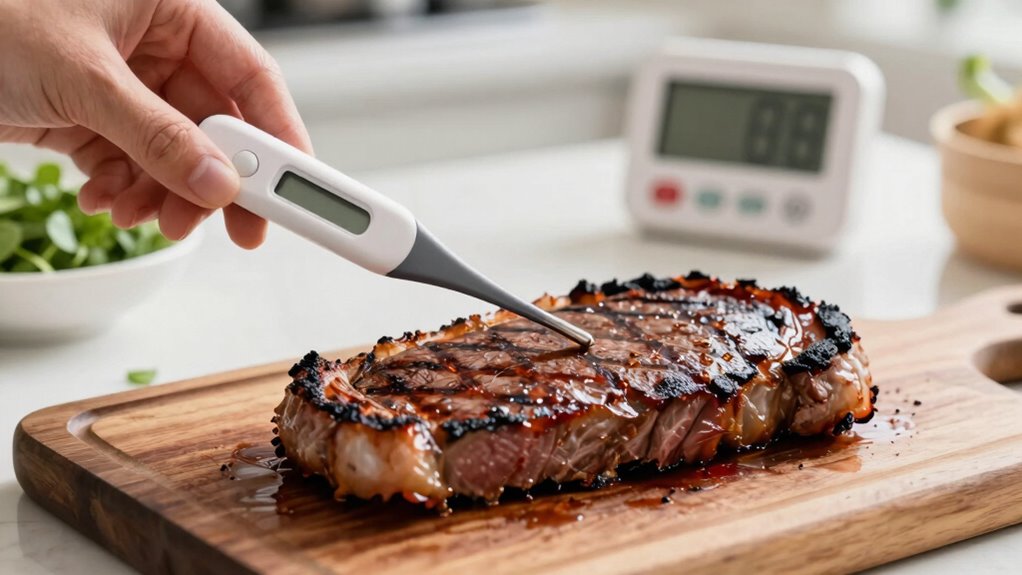
Using a thermometer is essential for guaranteeing your food is cooked safely, but constantly checking it can become obsessive and disruptive. When you fixate on every temperature reading, it not only interrupts your cooking flow but may also lead to overcooking or undercooking your food. To maintain food safety and achieve cooking precision without overchecking, you need a balanced approach.
Start by understanding the correct temperature for different foods. Knowing the safe internal temperature for meats, poultry, seafood, and other dishes helps you set a clear target. Once you know these benchmarks, you can focus on checking your thermometer at the right moments rather than obsessively inspecting throughout the process. For instance, insert your thermometer toward the end of the cooking time, when the food is close to being done. This reduces unnecessary interruptions and gives you a more accurate reading without constantly opening the oven or grill. Additionally, familiarizing yourself with cooking times and temperatures can help you develop a more intuitive sense of doneness, further reducing the need for frequent checks.
Know safe internal temperatures and check your food near the end of cooking for accurate, efficient results.
Another tip is to rely on visual cues alongside your thermometer. Look for signs like juices running clear, color changes, or firm textures, which can confirm that your food is nearing the right temperature. Using these cues helps you avoid frequent thermometer checks, making the process smoother. Remember, once you hit the target temperature, you can often remove the food from heat, as it will continue to cook slightly through residual heat—a process called carryover cooking. This way, you avoid overcooking just by relying solely on your thermometer. Developing an understanding of carryover cooking can help you better judge when to remove your food from heat.
Develop a routine that minimizes overchecking. For example, after the initial check to gauge progress, wait a few minutes before testing again. Typically, a 5-10 minute interval is enough, depending on what you’re cooking. This helps you maintain patience and prevents the temptation to keep opening the oven or grill. Keep your thermometer in good condition, calibrate it regularly, and use a digital probe for quick, accurate readings. Proper tools make it easier to check precisely when needed, reducing the urge to confirm repeatedly. Calibrating your thermometer ensures accurate readings and helps you avoid unnecessary checks. Remember, a well-maintained thermometer provides reliable data, making your cooking process more efficient and less stressful.
Finally, trust your instincts and the knowledge you’ve gained. Once your thermometer shows the correct temperature, resist the urge to keep checking. Overchecking not only disrupts your cooking but can also cause temperature fluctuations that impact food safety and cooking precision. By setting clear goals, using visual cues, and establishing a checking routine, you can confidently cook your meals safely without becoming obsessive. This balanced approach ensures your food is perfectly cooked, safe to eat, and your cooking experience remains enjoyable.
As an affiliate, we earn on qualifying purchases.
Frequently Asked Questions
How Often Should I Calibrate My Food Thermometer?
You should calibrate your food thermometer at least once a year to guarantee accurate readings, but if you notice inconsistent results or after dropping it, recalibrate more frequently. Regular calibration maintains thermometer accuracy, helping you cook food safely and prevent undercooking or overcooking. Use the ice water method or boiling water method for calibration. Keeping your thermometer properly calibrated guarantees precise temperature measurements every time you cook.
Can I Use a Digital Thermometer for Liquids?
Yes, you can use a digital thermometer for liquids. Its digital accuracy makes it easy to get precise temperature readings, ensuring your liquids are at the right temperature. Just make sure the thermometer is designed for liquid compatibility, meaning it can handle immersion without damage. Follow the manufacturer’s instructions for proper use, and always clean the probe before and after use to maintain accuracy and hygiene.
What’s the Best Way to Store a Food Thermometer?
Think of your food thermometer as a trusted compass—its storage safety directly impacts temperature accuracy. You should store it in a clean, dry place, preferably in a protective case or a designated drawer away from metal objects that could cause damage. Avoid extreme temperatures and moisture, which can affect readings. Proper storage keeps your thermometer precise, ensuring safe, accurate cooking every time, much like a reliable guide leading you to culinary success.
Are There Different Thermometers for Different Foods?
Yes, there are different thermometers for various foods, which helps guarantee cooking safety and thermometer accuracy. For instance, you might use a digital or dial thermometer for meats, a candy thermometer for sweets, or a probe thermometer for roasts. Choosing the right thermometer for each task minimizes overchecking, maintains accuracy, and assures your food reaches safe temperatures. Always select the appropriate tool to ensure your cooking is both safe and precise.
How Long Does a Typical Food Thermometer Last?
A typical food thermometer can last around 2 to 5 years, depending on usage and care, symbolizing a trusted guardian of your food safety. Regular calibration ensures temperature accuracy, like sharpening a sword before battle. If it’s dropped or shows inconsistent readings, it’s time to substitute it. Proper maintenance keeps your thermometer reliable, safeguarding your health and ensuring your cooking remains precise, just as a steady compass guides your culinary journey.
Conclusion
Using a thermometer confidently can save you from unnecessary fuss and guarantee your food is perfectly cooked. Once you get into the habit of checking at the right moments, you’ll trust your instincts more and overchecking will become a thing of the past. So, next time, ask yourself: do you really need to keep poking, or is it time to let your thermometer do the work? After all, isn’t quality cooking about balance and confidence?
Halloween Picks
halloween
As an affiliate, we earn on qualifying purchases.