
TL;DR

Get kitchen gear delivered free — and shop member deals
- Fast, free delivery on millions of items
- Access to Prime Big Deal Days deals on October 6–7
- Prime Video, Amazon Music and more included
A Livingetc report describes renewed interest among British designers in centuries-old Swedish ceramic stoves, known as kakelugnar, and related European tiled heaters. Designers and a stove-company director say these stoves can release heat for 12 to 24 hours after one burn, but the report does not provide independent performance or emissions data. Installation can cost several thousand pounds and may require site preparation; local rules and the choice of fuel affect suitability.
Livingetc has reported renewed interest among British interior designers in European ceramic stoves, including Swedish kakelugnar, which store heat in tiled structures and can serve as room focal points. The report says a single hot burn can provide 12 to 24 hours of heat, but it offers no independent testing to verify that range or claims of lower emissions.
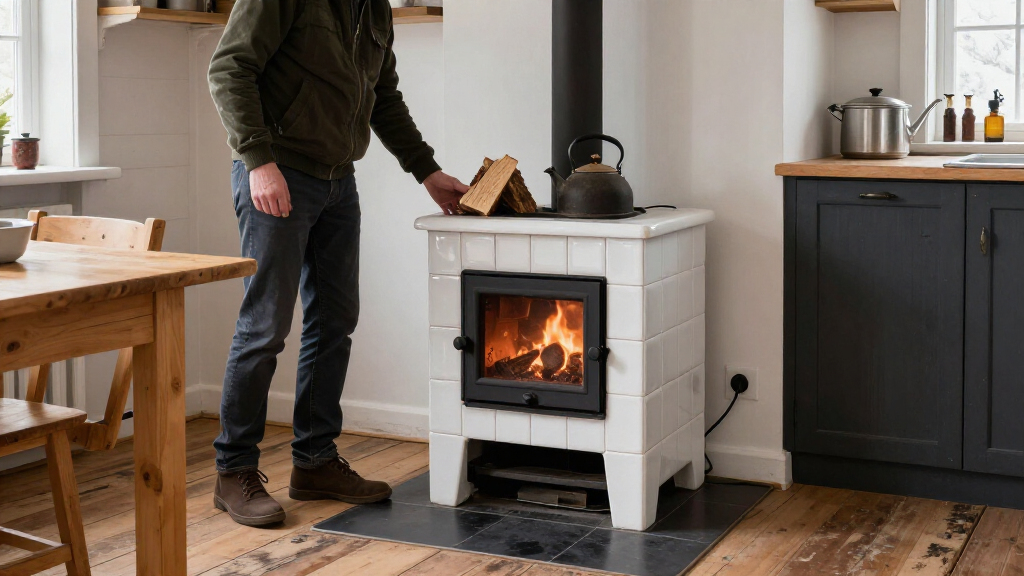
These stoves differ from open fireplaces and many conventional wood burners because they are built to absorb heat from a fire and release it gradually through their ceramic mass. Alan Hills, director of The Ceramic Stove Company, told Livingetc that a hot burn can heat a home for 12 to 24 hours and use fewer logs than a conventional wood burner. He also said the fire burns hotter, allowing more particulates to combust in the firebox.
The report does not provide test results, fuel-use comparisons or emissions measurements to support those claims. Performance will depend on a stove’s design, installation, fuel, operation and the building it is heating. Nor does the article establish that ceramic stoves are suitable everywhere: in London, designer Olivia Outred chose a gas-fitted stove for an east London home to meet local air-quality requirements, according to the report.
Installations can involve assembling a substantial structure in the room. Outred told Livingetc that her project began with a brick tower, onto which curved ceramic tiles were applied. Hills said installation is best scheduled after wet trades such as plastering have finished; some models are modular and can be assembled in a couple of days. The report says prices start at several thousand pounds and notes that a reinforced base may be needed.
Long Heat, High Upfront Cost
The appeal is both practical and visual: a heat-storing stove may continue radiating warmth well after the fire has gone out, while its tiled exterior can function as a permanent architectural feature. For households weighing heating choices, that combination may be attractive, but the article does not establish how much a typical installation saves on fuel bills or how its lifetime costs compare with other heating systems.
Cost and regulation matter as much as appearance. A price starting at several thousand pounds, possible structural preparation and restrictions on solid-fuel appliances can make the project unsuitable for some homes. Readers should check local air-quality rules and obtain project-specific advice before treating the reported efficiency or emissions advantages as a guarantee.
As an affiliate, we earn on qualifying purchases.
A Northern European Heating Tradition
Kakelugn is the Swedish term for a tiled ceramic stove; kachelofen is the German term for the broader stove tradition. Livingetc describes such heaters as a centuries-old northern European feature that is now appearing in British interior design projects. The article says British designers are adopting the form as an alternative to familiar open fireplaces and wood burners.
Examples in the report include a custom pink stove at Villa Luella, designed by AOR Architects, and Outred’s gas-fitted East London installation. It also describes tiled stoves in projects by AIYA Bureau and Canadian designer Colette van den Thillart. These examples illustrate different finishes and settings; they do not establish typical performance or costs.
“Ceramic stoves work by generating heat for 12 to 24 hours from one hot burn, using far fewer logs than a conventional wood burner.”
— Alan Hills, director of The Ceramic Stove Company, speaking to Livingetc
Performance Depends on the Installation
The supplied report does not identify the publication date, provide independent measurements of heat output or emissions, or specify the models and conditions behind the 12-to-24-hour heat claim. Its assertions about fewer logs and particulates are attributed to Hills rather than supported by comparative test results.
It is also unclear how much a full installation costs beyond the report’s starting figure of several thousand pounds, how often homes need to burn fuel to maintain warmth, or what savings owners might see. Suitability depends on the property, stove design and fuel. Rules differ by location, and the London example used gas rather than wood; readers should verify current local requirements before choosing a system.
Check Costs, Rules and Site Needs
Anyone considering a ceramic stove will need to establish the installed price, whether the floor or base needs reinforcement, and how the appliance can be fitted around other renovation work. They should also confirm which fuels are permitted in their area and ask suppliers for model-specific performance and emissions information, rather than relying on general claims.
The Livingetc report does not announce a policy change, product launch or next industry milestone. The immediate development is the design trend it documents; whether adoption grows will depend on household costs, local rules, installation constraints and evidence about real-world performance.
Key Questions
What is a Swedish kakelugn?
A kakelugn is a Swedish tiled ceramic stove. Its ceramic structure absorbs heat from a fire and releases it gradually; kachelofen is a related German term.
How long can a ceramic stove stay warm?
Alan Hills of The Ceramic Stove Company told Livingetc that these stoves can provide heat for 12 to 24 hours after one hot burn. The supplied report includes no independent test results, so the figure should be treated as an attributed claim, not a guaranteed duration.
Are ceramic stoves more efficient and cleaner than wood burners?
The report attributes claims of fewer logs and lower particulate emissions to Hills, who says the fire burns hotter and combusts more particulates in the firebox. It provides no comparative measurements; results can depend on the appliance, fuel, installation and use.
How much does a ceramic stove cost to install?
Livingetc says prices start at several thousand pounds. It does not give a typical total installed cost. The project may also require a suitable base and coordination with building work.
Can a ceramic stove be installed in any home?
No general approval is established by the report. Suitability depends on the property, installation requirements, chosen fuel and local rules. One London project used a gas-fitted model; homeowners should check local air-quality requirements and consult qualified installers.
Source: rss
Halloween Picks
halloween
As an affiliate, we earn on qualifying purchases.