TL;DR

Get kitchen gear delivered free with Prime
- Fast, free delivery on millions of items
- Prime Video, Amazon Music and more included
- Member-only deals all year
An Ideal Home report suggests seven alternatives to throwing away Halloween pumpkins, including saving seeds, roasting them, composting, and burying pieces in a garden bed. It warns against leaving pumpkins in woodland for wildlife and says carved or deteriorated pumpkins should not be eaten.
Ideal Home has outlined seven ways to reuse Halloween pumpkins rather than put them in the bin, with options for food, gardening and decoration. The report also cautions readers not to leave pumpkins in woodland for wildlife, saying they can spoil quickly and may harm animals.
The recommendations include drying seeds for spring planting, roasting extra seeds as a snack, adding chopped pumpkin to a compost heap, and burying small pieces in a garden bed that is not being planted immediately. The report says pumpkin adds organic matter but contains substantial moisture, so composters should mix it with dry materials such as fallen leaves and turn the heap to maintain airflow.
Other suggestions are to decorate pumpkins without carving them, use a hollow shell as a temporary bird feeder, and cook suitable pumpkins before they deteriorate. The article’s author says two seedlings grown from saved seeds produced four pumpkins the following year; that is a personal result, not a general yield estimate.
Rachel Cole, senior seed and plant buyer at DT Brown, advises checking a pumpkin’s condition before considering it as food. According to Cole, a properly stored, intact pumpkin may still be suitable if it is a food-safe variety and shows no deterioration. A pumpkin left outdoors or used to hold a candle should not be eaten, she says.
Safer Uses for Leftover Pumpkins
The advice gives households alternatives to discarding a seasonal food and garden material, while distinguishing between reuse that can be practical and disposal choices that may create problems. Composting or burying small pieces can return organic matter to soil, but the report stresses that the material needs time to break down and should not be placed against plant stems.
The wildlife warning is especially relevant for people who might leave carved pumpkins outdoors after the holiday. The article says pumpkins are not a natural woodland food source and can become mouldy as they decompose. Decorated pumpkins may also contain candlewax or other foreign materials, making them unsuitable for animals to eat.
Products Worth Considering

Ninja Professional XL Food Processor, 12-Cup, 1200 Peak Watts, NF701

Ninja Kitchen System Pro, 1500W, 72oz Pitcher, 8-Cup, Black, BL770

Cuisinart 14-Cup Food Processor with 720-Watt Motor, Stainless Steel (DFP-14BCNY)
As an affiliate, we earn on qualifying purchases.
From Carving to Garden Reuse
Halloween pumpkins are often carved and displayed outdoors, but the Ideal Home report focuses on what to do once the display is over. It frames the issue as household waste reduction and offers choices that depend on the pumpkin’s condition: food use for suitable intact fruit, seed saving for future planting, or garden reuse for pumpkins no longer fit to eat.
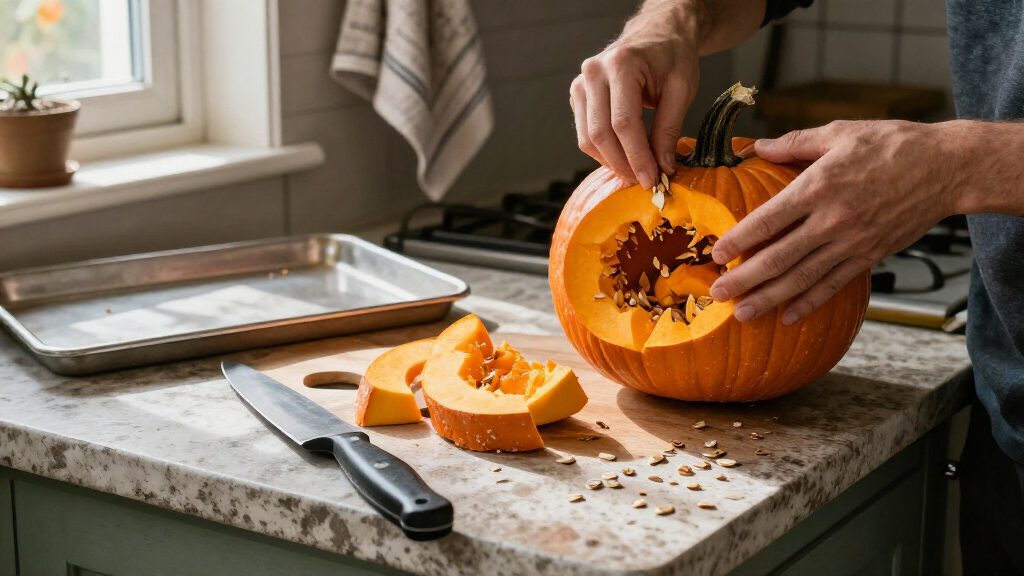
For seed saving, the report recommends separating seeds from the flesh, washing them, drying them thoroughly and storing them in an envelope until spring. For roasting, it suggests drying the cleaned seeds before seasoning and baking them. The listed cooking directions are 200C for about 10 to 15 minutes, turning every five minutes; ovens and seed sizes vary, so readers should check for doneness.
““It’s easy to think of a pumpkin as something only useful for Halloween, but it’s actually a valuable organic material that people can put to good use.””
— Rachel Cole, senior seed and plant buyer at DT Brown
Condition Determines Each Option
The report does not give a single disposal method that applies to every pumpkin. Whether it is safe to eat depends on its variety, storage and condition, and the article does not provide a detailed test for deciding when a pumpkin has deteriorated. Readers should not eat one that has been outdoors or held a candle, according to Cole’s advice.
The bird-feeder suggestion is described as temporary, but the source excerpt does not specify what food to put in it, how long to leave it out or how to clean it. The article also does not provide local waste rules; where composting or garden burial is not practical, readers may need to check their local council’s guidance.
Choose a Reuse Before Disposal
After Halloween, check each pumpkin’s condition and choose an option accordingly: save seeds, cook only suitable intact fruit, or compost or bury pieces in a prepared garden area. For composting, cut the pumpkin into smaller pieces and balance its moisture with dry leaves or other carbon-rich material.
Keep pumpkins out of woodland and do not feed wildlife with decorated or mouldy remains. Anyone making a feeder can use the shell only as a short-term garden feature and should remove it when it begins to spoil.
Key Questions
Can I eat a pumpkin after Halloween?
Sometimes. Rachel Cole of DT Brown says an intact pumpkin that was stored properly may be suitable if it is a food-safe variety and shows no signs of deterioration. The report advises against eating pumpkins left outdoors or used to hold a candle.
Can Halloween pumpkins be left in the woods for animals?
No, the report advises against it. It says pumpkins can decompose and become mouldy, are not natural woodland food, and may make wildlife unwell. Candlewax and other decorations can also pose a risk.
How should I add pumpkin to compost?
Cut it into small pieces and mix it with dry, carbon-rich material such as fallen leaves. The report says turning the heap occasionally can help maintain airflow and limit wet, compacted conditions.
How do I save pumpkin seeds for planting?
Separate the seeds from the flesh, wash and dry them thoroughly, then store them in an envelope until spring. The Ideal Home author reports growing four pumpkins from two seedlings, but that personal result is not a guaranteed yield.
Source: idealhome.co.uk