TL;DR

Get kitchen gear delivered free with Prime
- Fast, free delivery on millions of items
- Prime Video, Amazon Music and more included
- Member-only deals all year
Livingetc reports that skinimalism—a move toward shorter skincare routines and fewer products—could influence bathroom design, with smaller vanities, less counter space and more attention to water filters. Dermatologists quoted in the report describe the trend and its motivations, but the article does not establish that filters improve skin or that the design changes are widespread.
Livingetc has reported that skinimalism, a beauty trend centered on shorter skincare routines and fewer products, may shape bathroom design by reducing demand for large vanities and crowded counters. The report also points to water filters as a growing consideration, while noting that the proposed design shift is a trend rather than a documented industry-wide change.
The report describes skinimalism as a move away from elaborate, multi-step routines toward pared-back, targeted skincare. It argues that people who keep fewer products close at hand may not need extensive countertop space or shelving, potentially making floating sinks and compact vanities more practical in both powder rooms and primary bathrooms.
Dermatologist Dr. Joanne Jacob told Livingetc that a simpler regimen can change how a bathroom is planned and styled. With fewer products on display, she said, design attention can move toward lighting, atmosphere and a small selection of products. Jacob also said some consumers are looking at possible underlying contributors to skin issues, including nutrition and water quality.
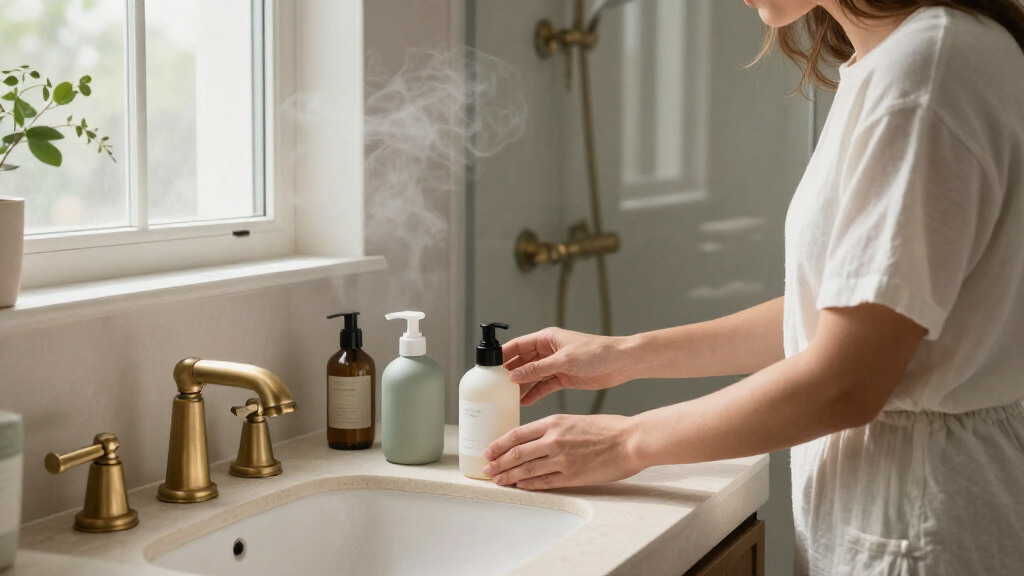
The report identifies three design directions: adding a water filter, shrinking vanity areas and reducing counter space. It describes filters that attach to sinks or showers, and suggests that fewer products could be kept in concealed storage. These examples are presented as ways skinimalism might affect design; the report does not provide sales figures, adoption data or research establishing how common the changes are.
Smaller Routines, Different Bathroom Priorities
If the trend influences renovation choices, it could change which bathroom features homeowners prioritize. A compact vanity or standalone sink may suit a routine that uses only a few products, freeing space for lighting, materials or storage elsewhere. For people planning a remodel, the practical question becomes how much surface area they actually use, rather than how much they can fit.
The filter discussion adds a wellness dimension to the design argument. Jacob described water quality as one factor people may consider when investigating skin concerns. Dr. Indy Chabra, a dermatologist quoted in the report, framed filters and a smaller product selection as part of a shift toward quality over quantity. Those comments reflect the experts’ views; they do not establish that filtered water treats skin conditions or that consumers should replace medical advice with a bathroom fixture.
For designers and retailers, the idea offers a potential link between beauty habits and household layouts. But without market data, it remains unclear whether skinimalism is already changing renovation decisions at scale or is chiefly a design interpretation of a broader beauty conversation.
Products Worth Considering

Instant Pot Duo Plus 6-Quart 9-in-1 Electric Pressure Cooker

Vitamix 5200 Blender with 64 oz. Container, Black

KitchenAid Artisan 5-Quart Tilt-Head Stand Mixer, Almond Cream
As an affiliate, we earn on qualifying purchases.
From Skincare Shelves to Sink Design
Livingetc’s report connects changing personal-care routines to bathroom planning, an area where storage and counter space are often designed around the products people use every day. Its core premise is straightforward: fewer daily products may require less display and storage space. That could make minimalist sink arrangements more usable, rather than simply a stylistic choice.
The article also places skinimalism within a reaction to lengthy routines and product overconsumption. Chabra characterized the trend as a response to routines that, in his view, could contribute to irritation and decision fatigue. The report does not include independent research quantifying those effects or confirming that the trend has produced a measurable shift in bathroom renovations.
Livingetc includes examples of sink and shower filters and compact bathroom layouts, alongside product references. These illustrate the ideas under discussion, but they are not evidence of filter performance or a measure of consumer demand.
“When the goal of skincare shifts from a 10-step routine to a simple targeted regimen, the need for excessive counter space or shelving changes.”
— Dr. Joanne Jacob, dermatologist, speaking to Livingetc
How Far the Design Shift Has Spread
The report does not establish how many homeowners or designers are changing bathroom plans because of skinimalism. It gives no survey results, renovation statistics or sales data to show whether smaller vanities and reduced counter space are becoming more common.
It also does not provide clinical evidence that sink or shower filters improve skin, or specify which impurities any cited products remove and under what conditions. Jacob discusses water quality as a possible factor in skin concerns, but that is not the same as evidence that a particular filter prevents or treats a condition. The extent to which the trend will influence design beyond the examples in the report remains uncertain.
What Homeowners Can Watch
The next sign of whether the idea is gaining traction would be evidence beyond trend commentary: renovation surveys, designer reports or sales data showing demand for smaller vanities, standalone sinks or bathroom filters. Livingetc’s report does not announce a product launch, formal design standard or forecast with a defined timeline.
For anyone considering a remodel, the report’s practical takeaway is to plan around actual routines and storage needs before reducing counter space. Water filters should be evaluated on their stated specifications and evidence, rather than assumed to solve skin problems. Future reporting and market data may show whether skinimalism becomes a lasting influence on bathroom design or remains a suggested connection between beauty habits and interiors.
Key Questions
What does skinimalism mean in this report?
Skinimalism refers to using a shorter, simpler skincare routine with fewer products, rather than a lengthy multi-step regimen.
How could it affect bathroom design?
Livingetc suggests that fewer products may reduce the need for large vanities, extensive shelving and broad counters, making compact storage or standalone sinks more workable.
Does the report show that water filters improve skin?
No. It reports that dermatologists discussed water quality as a possible consideration, but it provides no clinical evidence showing that a particular filter improves or treats skin conditions.
Is skinimalism already changing bathrooms widely?
The report does not provide adoption figures or renovation data. It describes a possible design influence, but how widespread the shift is remains unclear.
Source: livingetc.com