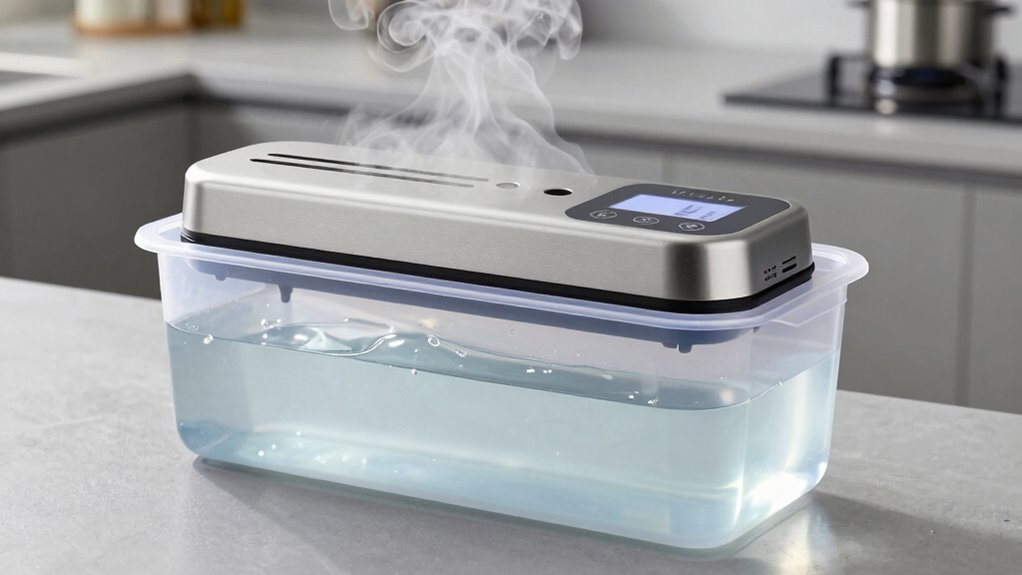

To stop heat loss with your sous vide circulator, choose a container made from low-thermal-conductivity materials like sturdy plastics or polycarbonate. Use an appropriately sized vessel to ensure full immersion, and secure a tight-fitting lid to prevent warm water from escaping. Insulate the container with foam or reflective barriers, wrap it well, and minimize opening during cooking. Proper sealing and insulation are key—learn more about effective setups to keep your water at a perfect temperature.
Key Takeaways
- Use containers made of low-conductivity materials like polycarbonate to minimize heat transfer and retain water temperature.
- Insulate containers with thermal blankets, foam sleeves, or reflective barriers to reduce heat loss during cooking.
- Ensure lids are tight-fitting and sealed properly to prevent warm water escape and maintain consistent temperature.
- Keep the setup in draft-free areas and avoid frequent lid openings to reduce unnecessary heat dissipation.
- Select appropriately sized containers to ensure full food submersion and efficient heat retention with minimal energy use.
Why Choosing the Right Container Is Critical for Maintaining Temperature

Choosing the right container is essential because it directly affects your sous vide circulator’s ability to maintain a consistent temperature. The container material plays a pivotal role; insulated, heat-retentive materials like polycarbonate or sturdy plastic help minimize heat loss. Avoid thin or reflective surfaces that can interfere with temperature stability. Proper container material can significantly influence heat retention and overall cooking efficiency. Selecting the appropriate insulation and material can also reduce energy consumption and extend your equipment’s lifespan. Additionally, considering heat transfer principles can help you better understand how your container’s properties impact temperature stability. Understanding thermal insulation can guide you in choosing materials that maximize energy efficiency. Size selection is equally important—your container should be large enough to fully submerge your food without overcrowding, ensuring even heat distribution. A container that’s too small can cause water circulation issues, while an oversized one may waste energy and make maintaining precise temperatures difficult. Picking the correct material and size not only enhances temperature consistency but also improves overall cooking results. When you choose wisely, your sous vide experience becomes more precise and reliable. Additionally, understanding navigation and mapping explainers can help optimize your setup for better temperature control and efficiency.
What Causes Heat Loss During Sous Vide? Common Troubleshooting Tips

Heat loss during sous vide often happens because of insufficient insulation or poor sealing. If your container isn’t well-insulated, your water temperature drops faster than it should. Check for leaks or gaps in your seal, as they can also let heat escape and disrupt your cooking. Ensuring proper insulation techniques can significantly reduce heat loss and improve efficiency. Additionally, using thermal covers designed specifically for sous vide containers can help maintain a consistent temperature throughout the process. Regularly monitoring your temperature accuracy can also help detect and address heat loss issues early, especially when combined with proper container setup practices. Being aware of maintenance costs associated with your equipment can also prevent unexpected disruptions during long cooking sessions.
Insufficient Insulation Materials
Insufficient insulation materials can cause significant heat loss during sous vide cooking. Without proper thermal insulation, heat escapes through the container walls, making it harder to maintain a consistent temperature. Using low-quality or inappropriate container materials, like thin plastic or metal, worsens heat transfer and leads to energy waste. To minimize heat loss, choose containers with good thermal insulation properties, such as thick-walled polycarbonate or insulated coolers. Avoid containers that allow heat to easily transfer out, as this increases cooking time and energy consumption. Ensuring your container materials are suitable for thermal insulation is essential for efficient sous vide cooking. Proper insulation helps your circulator work less hard and keeps your food at a precise, stable temperature. Additionally, selecting appropriate container materials can help optimize heat retention and improve cooking efficiency. Incorporating thermal insulation techniques, such as foam sleeves or insulating wraps, can further enhance heat retention. Utilizing body insulation techniques can also help prevent heat loss during prolonged cooking sessions, ensuring consistent results. Selecting smart home technology solutions can also help monitor and optimize your cooking environment for even better results.
Poor Seal Effectiveness
A common cause of heat loss during sous vide is a poor seal around your bags or containers, which allows warm water to escape and cold air to enter. Maintaining seal integrity is essential to keep the temperature consistent. If your bag or container isn’t sealed properly, heat escapes, and cooking times can be affected. Ensure your bags are sealed tightly, removing as much air as possible before submerging. The container material also matters; flexible, food-grade bags or sturdy vacuum-sealed pouches help create a better seal. Rigid containers should have tight-fitting lids with secure locking mechanisms. Regularly check for leaks or gaps in your seal, and use quality materials designed for sous vide cooking. Proper sealing prevents heat loss and improves overall cooking precision. Using high-quality materials specifically designed for sous vide can further enhance seal effectiveness and minimize heat escape. Additionally, employing proper sealing techniques can significantly reduce the risk of heat loss during your sessions. Ensuring your setup has a secure lid or cover further minimizes heat dissipation and maintains consistent water temperature. Choosing the right container type can also help reduce heat transfer and improve overall efficiency during cooking. To further prevent heat loss, consider adding insulation around your water bath or using specialized insulating covers that trap heat effectively.
Which Containers Are Best for Minimizing Heat Loss?

Choosing the right container can substantially reduce heat loss during sous vide. Consider insulated options and materials with low conductivity to keep your water at a steady temperature. Also, think about container size, as it influences heat retention and energy efficiency. Using a properly sealed lid can further minimize heat escape during cooking. Selecting containers with thermal insulation properties can enhance temperature stability and reduce energy consumption over time. Additionally, opting for containers made from insulating materials can provide an extra layer of heat retention. Incorporating containers with efficient heat transfer features can optimize temperature maintenance and overall cooking performance. Moreover, selecting containers designed with insulation properties can significantly improve heat retention during extended cooking sessions.
Insulated Container Options
To keep your sous vide water bath at a consistent temperature, selecting an insulated container that minimizes heat loss is essential. The best options have sufficient insulation thickness and a shape that reduces surface area exposure. Thick insulation helps maintain temperature by limiting heat transfer, while a container shape with smooth, rounded edges minimizes heat escape. Consider containers with double-walled walls or foam insulation for maximum efficiency. The shape can also influence how well heat is retained, with taller, narrower designs generally better at reducing heat loss than wide, shallow ones. Effective insulation plays a crucial role in maintaining precise temperatures during long cook times. Additionally, choosing a container with high-quality insulation can enhance energy efficiency and reduce overall power consumption. Selecting containers made from materials with low thermal conductivity can further improve heat retention and overall performance.
Material Conductivity Factors
The material of your container plays a crucial role in minimizing heat loss during sous vide cooking. Material properties, especially thermal conductivity, determine how well heat transfers and stays consistent inside the container. Low thermal conductivity materials, such as polycarbonate or certain plastics, resist heat transfer, helping maintain a stable water temperature. Conversely, metals like stainless steel have high thermal conductivity, which can lead to faster heat loss if not properly insulated. Choosing a container with favorable properties means less energy is needed to keep the water at the correct temperature, ensuring efficiency and consistent results. Be mindful of the material’s ability to insulate and conduct heat, as these factors directly impact your sous vide setup’s effectiveness in preventing heat loss.
Container Size Considerations
A well-sized container can considerably reduce heat loss during sous vide cooking by minimizing the water volume that needs to be maintained at a precise temperature. Choosing the right container material and volume capacity helps improve efficiency. Smaller containers with adequate volume capacity ensure the water stays at the desired temperature longer, reducing energy use. Avoid overly large containers, which require more heat to maintain consistent temperatures. Look for containers made from sturdy, insulating materials like polycarbonate or food-grade plastic, which help retain heat. Proper sizing prevents unnecessary heat dissipation and keeps your sous vide setup energy-efficient.
- Container material’s insulating properties
- Volume capacity suited for your batch size
- Compatibility with your circulator for ideal circulation
How Can You Insulate Your Water Bath Effectively?
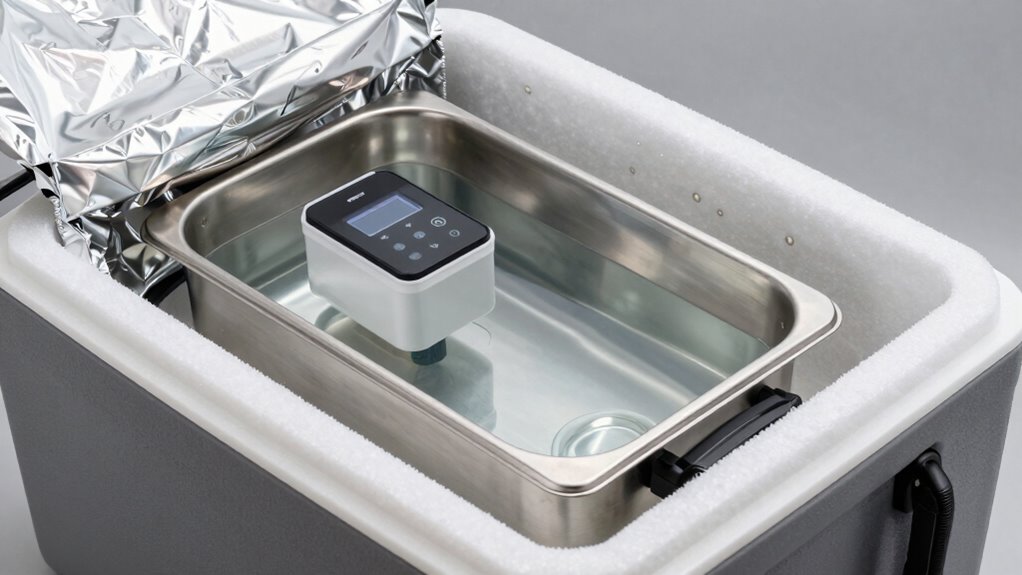
Wondering how to keep your water bath at a steady temperature? The key is effective insulation. Using thermal blankets around your container creates a barrier that minimizes heat loss, helping maintain a consistent temperature. Make sure the blanket covers all sides, including the top, to maximize insulation. Additionally, sealing the lid tightly with lid seals prevents heat escape through gaps, ensuring your water stays warm longer. These simple steps can appreciably improve energy efficiency and temperature stability during your sous vide cooking. If you’re using a container with a lid, double-check that it fits snugly and is properly sealed. Combining thermal blankets with secure lid seals provides a practical, low-cost solution for keeping your water bath at the perfect temperature.
How to Fill and Secure Your Container to Prevent Heat Escape
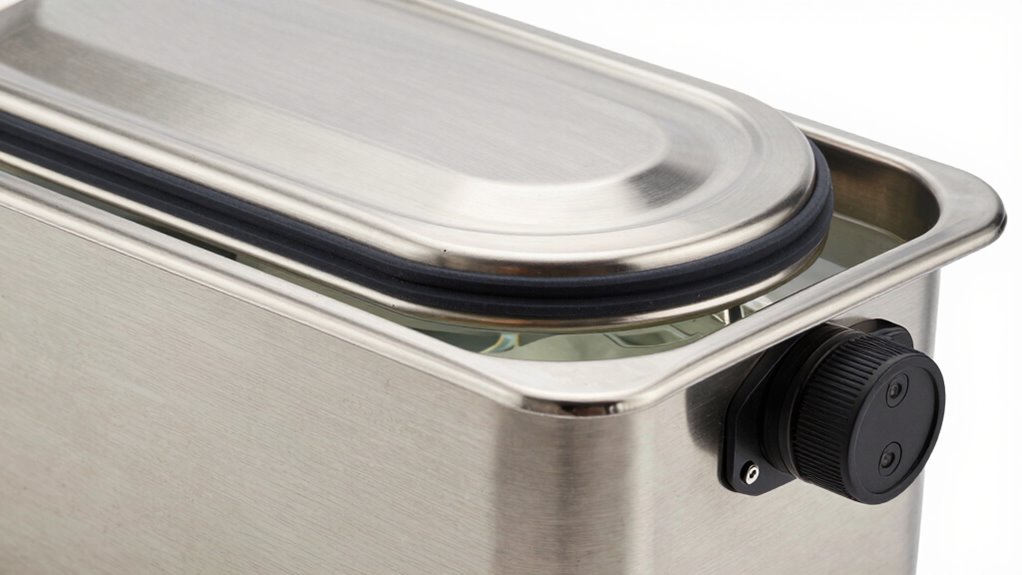
To effectively prevent heat escape, you need to fill your container with water to an appropriate level and guarantee it’s secured properly. Use an airtight lid to minimize heat loss and prevent evaporation. Ensure the lid fits snugly, sealing the top completely. For added insulation, consider applying foam insulation around the container’s sides—this boosts heat retention and reduces energy use. Securing the container prevents accidental spills and maintains consistent temperature.
Fill the container with water, secure the lid tightly, and add foam insulation for better heat retention.
- Use an airtight lid that fits tightly to reduce heat exchange.
- Apply foam insulation around the container’s exterior for extra warmth.
- Stabilize the lid and container to avoid gaps or leaks.
What Are Common Mistakes That Cause Your Water to Cool Off?
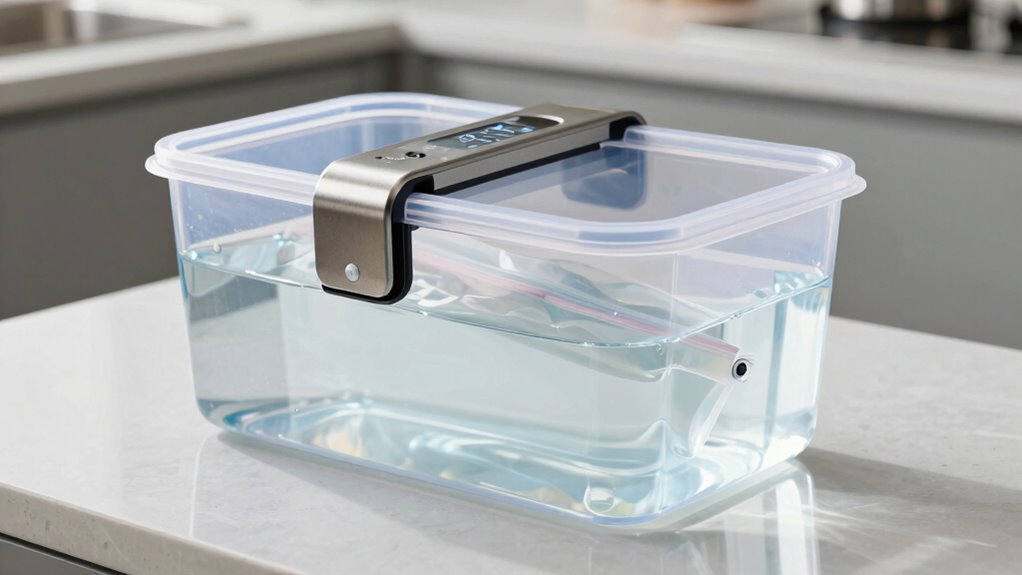
Even with a properly secured container and airtight lid, simple mistakes can still cause your water to lose heat. Poor air circulation around the container allows heat to escape more quickly, so guarantee your setup isn’t in a drafty area. Additionally, neglecting water agitation can lead to uneven temperature distribution, which makes the water cool off faster in certain spots. If your water isn’t stirred or circulated properly, heat isn’t evenly maintained, causing fluctuations that can compromise your cooking. Also, avoid opening the lid unnecessarily, as exposing the water to the ambient air allows heat to escape. Keep the lid sealed tightly and minimize disturbances to maintain a stable temperature. These small mistakes can considerably impact your sous vide results.
DIY Insulation Ideas to Boost Temperature Stability and Save Energy

Enhancing your sous vide setup with DIY insulation can substantially improve temperature stability and reduce energy consumption. By using effective thermal insulation and suitable container materials, you minimize heat loss and keep your water at a consistent temperature. Simple solutions include wrapping your water bath with foam insulation, repurposing thick blankets, or constructing a custom enclosure with insulating panels. These methods help retain heat longer and require less energy to maintain the desired temperature. Focus on using materials with good thermal insulation properties, like foam or reflective barriers, and ensure the container is well-sealed to prevent heat escape. With a few inexpensive adjustments, you’ll enjoy more precise cooking results and lower energy bills.
- Use foam insulation or reflective barriers
- Repurpose household items like blankets or towels
- Build a custom insulated enclosure
Frequently Asked Questions
How Often Should I Check My Water Temperature During Sous Vide Cooking?
You should check your water temperature every 30 to 60 minutes during sous vide cooking. This helps you catch any temperature fluctuation early and prevent water evaporation. If you notice the water level dropping, add hot water to preserve consistent temperature and avoid overworking your circulator. Regular checks ensure your food cooks evenly and safely, especially during longer sessions.
Can I Reuse My Container for Multiple Sous Vide Sessions?
Sure, you can reuse your container for multiple sous vide sessions. Just check its durability and guarantee the lid insulation remains effective. Ironically, many overlook how a sturdy container with a well-insulated lid helps maintain consistent temperature, saving you time and energy. So, if your container still looks solid and the lid keeps heat in, go ahead—reuse it. Just clean it thoroughly between uses for ideal results.
What Materials Should I Avoid When Choosing a Container?
You should avoid plastic materials with hazards like BPA or other harmful chemicals, as they can leach into your food. Also, steer clear of containers made from metals that aren’t compatible with your sous vide circulator, since some metals can interfere with temperature accuracy or cause corrosion. Opt for food-safe, heat-resistant plastics or compatible stainless steel to guarantee safety and effective heat transfer during your sous vide sessions.
Does the Size of the Container Affect Heat Retention Efficiency?
Yes, the size of your container affects heat retention efficiency. Larger containers with more water volume tend to hold heat longer, especially if they have good container insulation. Smaller containers lose heat faster because they have less water to maintain temperature. To optimize efficiency, choose a container that’s appropriately sized for your needs and guarantees proper insulation, which helps minimize heat loss and keeps your sous vide cooking consistent.
How Do Ambient Room Temperature Changes Impact Water Bath Stability?
Room temperature fluctuations can considerably impact your water bath stability during sous vide cooking. When the ambient temperature drops or rises unexpectedly, it causes the water temperature to drift, potentially overworking your circulator. To counter this, use insulation methods like foam lids or thermal blankets around the container. These help maintain a consistent water temperature, ensuring your food cooks evenly despite changes in room temperature.
Conclusion
Think of your sous vide setup as a cozy nest for your food. Choosing the right container and insulating it properly keeps the heat inside, turning your water bath into a warm, reliable haven. When you prevent heat from escaping, you’re like a skilled gardener shielding delicate blooms from the cold. With a little effort, you’ll enjoy perfectly cooked meals every time, transforming your kitchen into a haven of consistent, precise warmth.