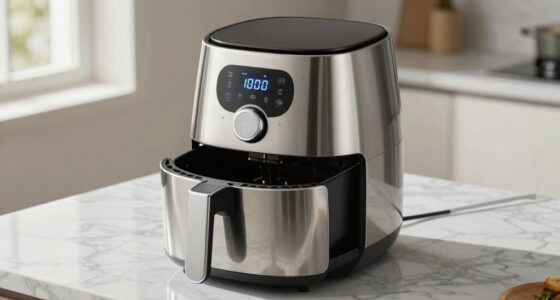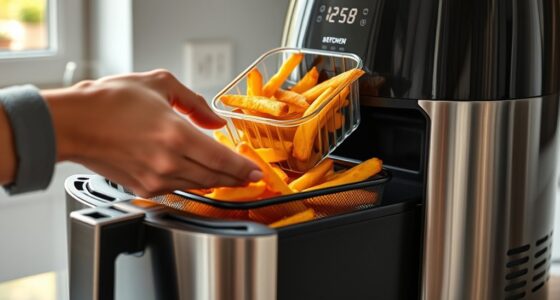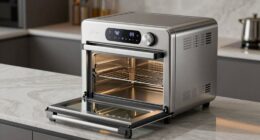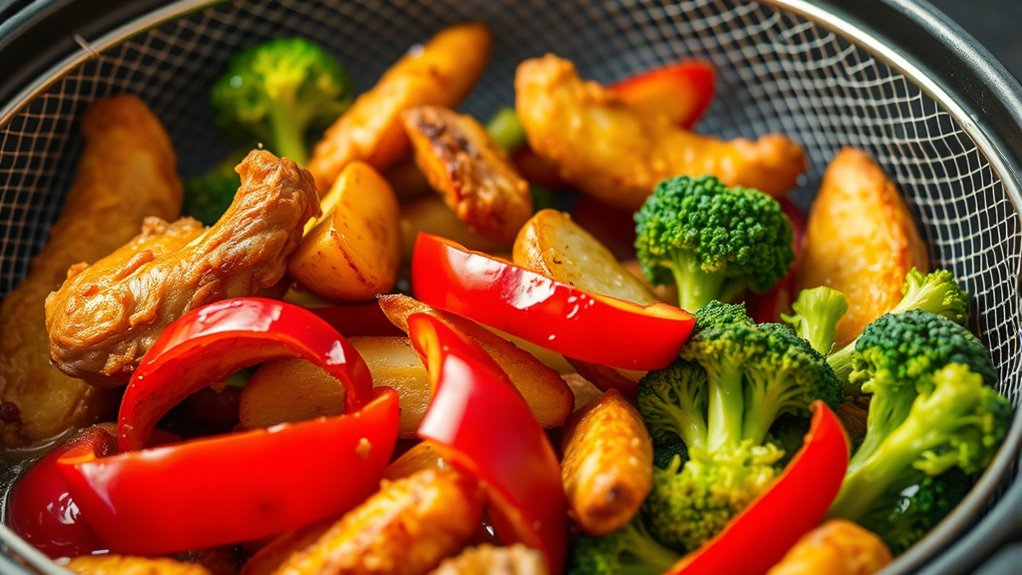

You can generally fill your air fryer up to about 75% of its capacity or within the manufacturer’s recommended weight limit to cook safely and evenly. Overfilling can lead to soggy food, uneven cooking, or even appliance overheating. It’s important to leave space for hot air circulation around your ingredients. If you want to avoid these issues and get the best results, it’s worth understanding how much food is appropriate for your specific model.
Key Takeaways
- Follow the manufacturer’s recommended capacity and fill line for safe and even cooking.
- Avoid filling the basket more than 75% to ensure proper hot air circulation.
- Adjust food quantities based on ingredient size and model-specific capacity limits.
- Overfilling can cause sogginess, uneven cooking, and potential appliance overheating.
- Use proper handling tools and ensure the air fryer is not overcrowded for optimal results.
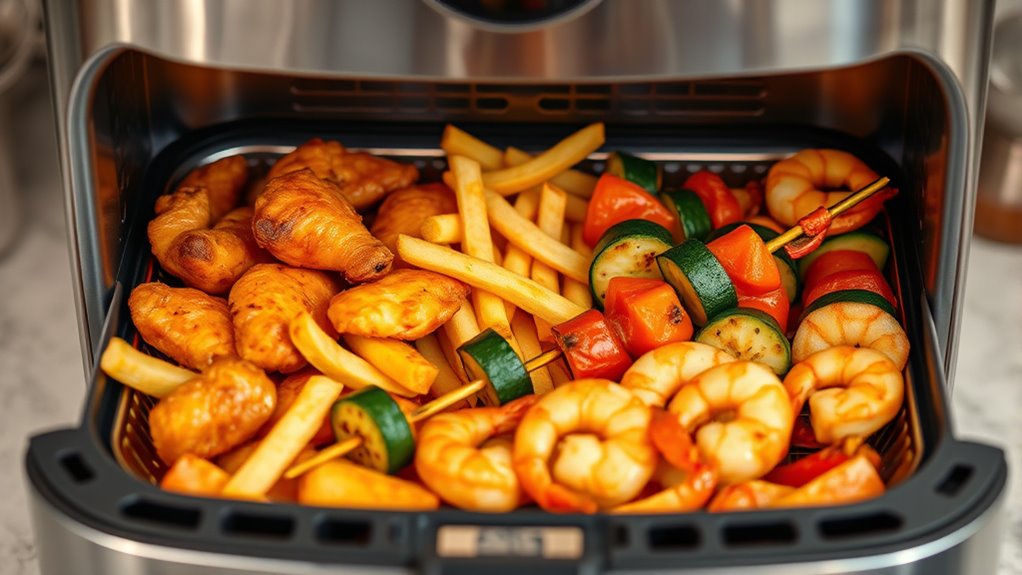
If you’re wondering how much food you can safely cook in an air fryer, the answer depends on your specific model’s capacity. Most air fryers come with a maximum fill line or recommended weight limit, which you should always follow to guarantee safe operation. Overcrowding the basket can lead to uneven cooking, soggy textures, and potential safety hazards. To get the best results, stick to the manufacturer’s guidelines, which typically suggest filling the basket no more than 75% full. This allows hot air to circulate freely around your food, promoting even cooking and crispy results.
When planning your air fryer recipes, it’s tempting to toss in as much as possible to save time, but doing so compromises both safety and quality. Overfilling can cause the appliance to overheat, increase cooking time, and even lead to smoke or fires in extreme cases. It’s crucial to consider the size and weight of ingredients—large pieces like chicken breasts or thick-cut fries need more space, while smaller items like vegetables or shrimp can be cooked in slightly higher quantities if spaced properly. Remember, the goal is to allow hot air to reach all surfaces of your food evenly, which is why avoiding overcrowding is critical.
Additionally, some models may have specific capacity limits that vary between brands and sizes, so consulting your user manual can help prevent mishaps. Kitchen safety is paramount when using an air fryer. Always ensure the appliance is placed on a stable, heat-resistant surface away from water or flammable materials. When adding food, be cautious of hot oil or juices that may splatter. Use tongs or heat-resistant gloves to prevent burns, especially when handling cooked items. Before starting, double-check that the basket and tray are correctly inserted and that no packaging or foreign objects are inside. When you’re finished cooking, allow the appliance to cool down before cleaning or storing it to avoid burns or damage.
Frequently Asked Questions
Can I Cook Raw Vegetables Alongside Frozen Foods?
You can cook raw vegetables alongside frozen foods in your air fryer, but timing and temperature are key. Toss the fresh vegetables with spice marination for added flavor, and add them later if the frozen foods take longer to cook. Stir or shake the basket halfway through to guarantee even cooking. Adding fresh herbs towards the end keeps their flavor vibrant, giving you a delicious, well-seasoned meal.
How Do I Prevent Overcrowding in the Basket?
Alright, don’t let your air fryer turn into a crowded Times Square! To prevent overcrowding, use proper layering techniques, spreading food evenly in the basket. Keep the basket capacity in mind—avoid overfilling by cooking in batches if needed. This ensures hot air circulates well, leading to crispier results and preventing uneven cooking. Your air fryer will thank you, and so will your taste buds!
What Is the Maximum Weight Capacity for My Air Fryer?
Your air fryer’s capacity typically ranges from 2 to 6 quarts, with weight limits around 2 to 3 pounds per load. Always check the manufacturer’s food load limits to prevent overloading, which can affect cooking performance and safety. To maximize efficiency, don’t exceed the recommended weight capacity, and guarantee even distribution. Following these guidelines helps your air fryer cook food thoroughly while preventing damage.
Can I Cook Multiple Types of Food Together?
You can cook multiple types of food together, but you need to prioritize cooking safety and ingredient separation. For example, cook foods with similar cook times and textures to avoid uneven results. Use a rack or separate compartments if available, and shake or turn ingredients midway to prevent burning or sticking. This way, you guarantee all foods are cooked thoroughly and safely, delivering a delicious, well-prepared meal.
How Does Food Quantity Affect Cooking Time and Temperature?
When you increase portion sizes in your air fryer, you might need to adjust the cooking time and temperature for ideal results. Larger quantities can reduce cooking efficiency because heat spreads slower, causing uneven cooking. To guarantee everything cooks evenly, avoid overcrowding the basket, and consider shaking or turning food midway. Smaller, evenly distributed portions generally cook faster and more efficiently, giving you better control over your meal’s doneness.
Conclusion
Now that you know how much food your air fryer can hold, you’ll cook more efficiently and avoid overcrowding. Did you know that over 75% of air fryer users report better tasting results when they don’t overcrowd the basket? Keep your food in a single layer for crispy, evenly cooked meals. So, measure your portions carefully, and enjoy quick, delicious dishes every time without sacrificing flavor or texture.