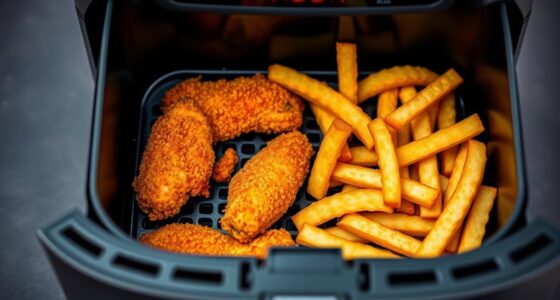
Understanding your air fryer’s modes—like crisp, roast, bake, and broil—helps you cook better and keep your appliance in top shape. The crisp mode gives foods a deep-fried texture with less oil, while roast is great for larger, dense items like chicken. Bake turns it into a mini oven for cakes and bread, and broil gives toppings a quick, crispy finish. mastering these functions will enhance your cooking skills; exploring each mode reveals even more possibilities.
Key Takeaways
- Crisp mode mimics deep-frying with less oil, producing a crunchy exterior.
- Roast mode uses higher heat for cooking larger or denser items like chicken and vegetables.
- Bake mode converts the air fryer into a mini oven, ideal for small baked goods.
- Broil mode applies high heat from above for browning or crisping dishes quickly.
- Proper use and cleaning of each mode ensure optimal performance and safety.

Are you new to the world of air fryers and feeling overwhelmed by the many terms? It’s completely normal to feel a bit lost when you’re just starting out, especially with so many modes and functions to understand. One of the first things you’ll want to get familiar with are the different cooking modes like crisp, roast, bake, and broil. Knowing what each mode does will help you cook your favorite dishes perfectly and keep your appliance in good shape.
Getting familiar with air fryer modes like crisp, roast, bake, and broil helps you cook better and maintain your appliance.
When it comes to air fryer modes, “crisp” is probably the most popular. It replicates the deep-frying effect but with less oil, giving your food that golden, crunchy exterior. If you’re using the crisp mode, it’s a good idea to keep in mind some safety tips, especially when handling hot food and surfaces. Always use tongs or oven mitts to avoid burns, and ensure your air fryer is on a heat-resistant surface. Proper air fryer cleaning after each use is essential to prevent grease buildup, which can affect the functionality of the crisp mode and pose fire hazards. Regularly cleaning the basket and tray keeps your appliance safe and running smoothly, extending its lifespan.
The roast mode is designed for cooking larger or denser items, like chicken or vegetables, with a result similar to traditional roasting. It typically involves higher heat and longer cooking times. When using this mode, safety tips include checking the interior for hot spots and avoiding overcrowding, which can hinder even cooking. Proper cleaning also includes wiping down the interior to remove any residue that could impact roasting performance. This helps prevent smoke and keeps your air fryer safe from potential fire risks caused by leftover grease or food particles.
Bake mode turns your air fryer into a mini oven, great for baking small batches of cakes, muffins, or bread. It requires careful temperature control—most models have adjustable settings for precise baking. Safety tips here involve monitoring the cooking process to prevent over-baking or burning, as well as ensuring the appliance isn’t obstructed or covered during operation. Regularly cleaning the interior and exterior helps maintain proper airflow and prevents grease buildup, which could compromise safety and performance.
Broil mode is fantastic for finishing dishes with a crispy top or quick browning. It uses high heat from the top element and is similar to traditional broiling in an oven. When broiling, always keep a close eye on your food to prevent burning and follow safety tips like avoiding contact with hot surfaces and ensuring proper ventilation. After broiling, cleaning is essential—residue from high-temperature cooking can accumulate quickly and, if left unchecked, may cause smoke or fire hazards. Keeping your air fryer clean and practicing safety tips ensures your appliance remains reliable and safe to use, whether you’re crisping, roasting, baking, or broiling.
Frequently Asked Questions
How Does the Air Fryer’s Temperature Compare to Traditional Ovens?
Your air fryer’s temperature is usually comparable to a traditional oven but tends to run hotter, often reaching 400°F or higher for quick crisping. To keep it performing well, you should regularly clean and maintain it, including cleaning tips like wiping down the basket and checking for grease buildup. Proper maintenance guarantees consistent temperature control, helping you achieve perfect results whether you’re roasting, baking, or broiling.
Can I Convert Oven Recipes for Air Fryer Use?
Yes, you can convert oven recipes for your air fryer. Just adjust the temperature by reducing it by about 25°F and cut the cooking time by roughly 20%. Use air fryer accessories like racks or baskets for even cooking, and take advantage of its cooking mode versatility—such as crisp, roast, bake, or broil modes—to match the original dish. Keep an eye on your food to prevent overcooking.
What Foods Are Best Suited for Each Mode?
Think of your air fryer as a culinary canvas, where each mode paints a different masterpiece. For crispy snacks like fries or chicken wings, use the Crisp mode for that irresistible crunch. Roast works wonderfully for vegetables and meats, bringing out rich flavors. Bake is perfect for pastries and bread, while Broil gives a quick, intense heat ideal for finishing dishes with a golden top. Use food pairing and mode tips to elevate your cooking.
How Do Cooking Times Differ Between Modes?
Cooking times vary based on mode-specific timing and your food’s thickness and desired crispiness. When switching modes, expect adjustments: crisp mode might need shorter times for crispy results, while bake or roast could take a bit longer for thorough cooking. Always check your food early to prevent overcooking. You can fine-tune your cooking time with small adjustments, ensuring perfect results tailored to each mode’s strengths.
Are There Safety Concerns With Using Different Modes?
You might worry about safety when switching modes, but with proper air fryer safety and mode operation precautions, risks are minimal. Always follow the manufacturer’s instructions, avoid overloading, and verify the appliance is on a stable surface. Be cautious with high-heat modes like broil, and avoid touching hot surfaces. By staying attentive and adhering to safety guidelines, you can enjoy all modes confidently and safely.
Conclusion
Now that you’ve mastered these air fryer terms, you’re practically a culinary wizard! With just a flick of the wrist, you can transform simple ingredients into crispy, golden masterpieces faster than you can say “delicious.” Remember, understanding modes like crisp, roast, bake, and broil unleash a world of flavor and perfection. So go ahead—dive into your air fryer adventures with confidence. Your taste buds are about to experience a revolution they’ll never forget!