
Understanding wattage helps you determine if your outlets can handle your devices safely. Your outlets are usually rated for 15 or 20 amps, supporting around 1800 to 2400 watts. If you overload them with high-wattage appliances or consistently trip circuit breakers, your system might be at risk. Monitoring the wattage of your electronics and distributing your loads keeps everything safe. Keep exploring to learn how to prevent overloads and upgrade your system when needed.
Key Takeaways
- Check your circuit breaker’s amperage (15 or 20 amps) to determine maximum wattage capacity (about 1800 or 2400 watts).
- Add up the wattage of all devices plugged into one outlet to avoid exceeding its capacity.
- Recognize overload signs like flickering lights, warm outlets, or tripped breakers indicating the outlet can’t keep up.
- Use power strips rated for your total wattage and distribute high-wattage appliances across different outlets.
- Consider upgrading your electrical system if multiple devices frequently overload your outlets or trip circuit breakers.
What Is Wattage and Why Does It Matter?
Wattage is a measure of how much power an electrical device consumes or produces, and understanding it helps you choose the right equipment for your needs. Knowing a device’s wattage reveals its power consumption, which impacts your energy bill and overall efficiency. Appliances with higher wattage typically use more energy and may require a stronger power supply. Conversely, lower-wattage devices are usually more efficient, saving you money over time. Selecting appliances with appropriate wattage ensures your outlets can handle the load without overloading or tripping the circuit. Being aware of wattage also helps you understand the capacity of your electrical system** and prevents potential overloads that could cause safety hazards. By understanding wattage, you can better assess your power needs, optimize appliance efficiency, and avoid potential electrical issues**. This knowledge is essential for maintaining a safe and effective electrical system at home.
How To Check Your Outlet’s Capacity
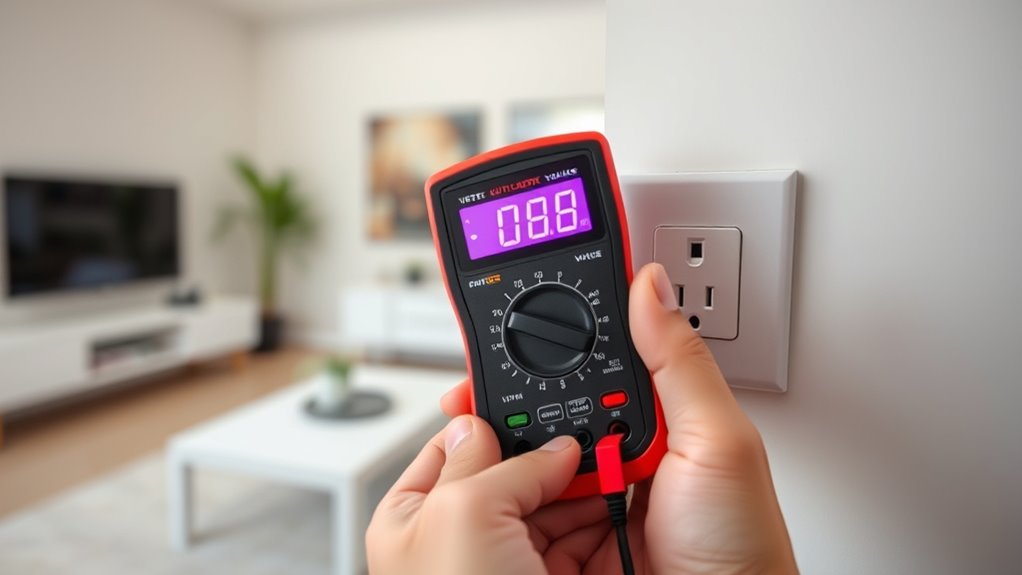
To guarantee your electrical system can handle your devices safely, it’s important to know your outlet’s capacity. Start by checking your circuit breaker; it controls the maximum current your outlet can handle. If your breaker is rated at 15 or 20 amps, your outlet’s capacity is 1800 or 2400 watts respectively. You can also test your outlets with a multimeter to measure voltage and ensure they’re functioning properly. When using a power strip, make sure it’s rated for the total wattage of connected devices—not exceeding the outlet’s limit. Here’s a quick guide:
| Circuit Breaker Rating | Outlet Capacity (Watts) |
|---|---|
| 15 amps | 1800 watts |
| 20 amps | 2400 watts |
| 10 amps | 1200 watts |
| 5 amps | 600 watts |
Always stay within these limits for safety. Additionally, understanding the power capacity of outlets can help prevent overloads and electrical hazards.
Recognizing Signs of Overloaded Outlets
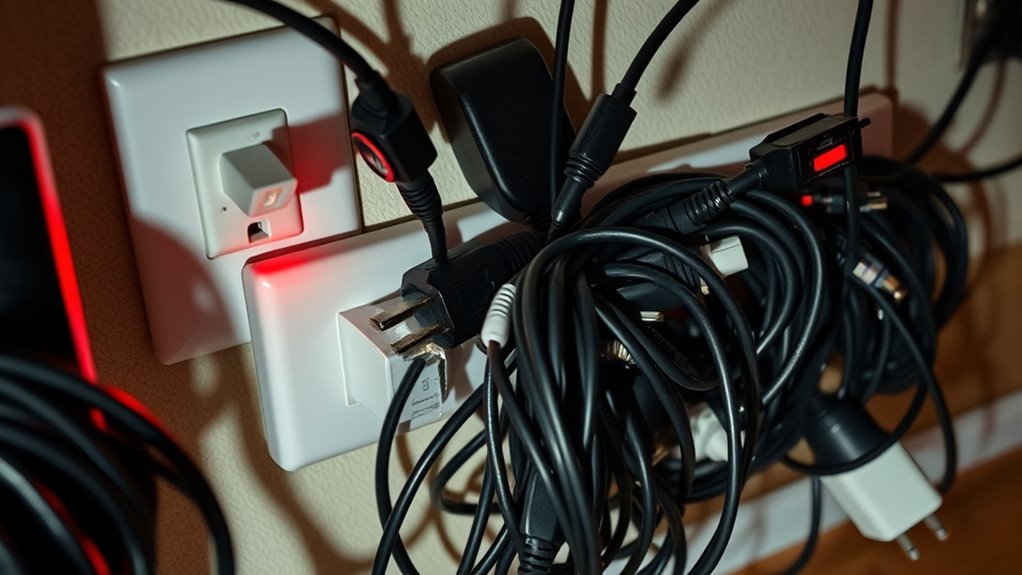
When outlets are overloaded, they often show warning signs that shouldn’t be ignored. You might notice outlets feeling warm or hot to the touch, which could indicate electrical safety issues. Flickering lights or frequent tripping of circuit breakers are also common signs of overload. You may experience a sudden power surge, causing appliances to behave unpredictably or shut off unexpectedly. Sparks or burning smells near an outlet are serious red flags that demand immediate attention. Overloading outlets not only risks damage to your devices but also increases the chance of electrical fires. Regularly inspecting your electrical system and understanding overload symptoms can help prevent dangerous situations caused by overloaded circuits. Staying alert to these signs helps protect your home and loved ones. Recognizing these warning signals early can prevent dangerous situations caused by overloaded circuits.
Safe Practices for Managing Power Usage

Managing your power usage effectively can prevent electrical issues and keep your home safe. Start by understanding your circuit breakers; they protect your circuits by shutting off power during overloads. Never ignore tripped breakers—reset them only after confirming the cause isn’t an overload. Use surge protectors on sensitive electronics to guard against voltage spikes, which can damage devices and increase fire risk. Avoid plugging too many high-wattage appliances into a single outlet or power strip. Distribute your devices across different outlets and circuits to prevent overload. Regularly inspect cords and plugs for damage. If you notice flickering lights or frequent breaker trips, consult a professional electrician. Incorporating data-driven strategies can help optimize your power management and ensure your electrical system remains safe and efficient. Following these practices ensures your power system remains safe, reliable, and capable of handling your household’s demands.
Upgrading Your Electrical System for Higher Demands
As your household’s energy needs grow, upgrading your electrical system becomes vital to guarantee safety and reliability. You might need to install new circuit breakers that can handle higher loads or replace outdated panels to meet current electrical codes. Upgrading ensures your wiring can support increased wattage without tripping or risking fires. Always consult a licensed electrician to evaluate your system’s capacity and determine the appropriate upgrades. Adhering to electrical codes is essential for safety and insurance purposes, especially when adding new circuits or outlets. This process may involve rewiring or installing dedicated circuits for high-demand appliances. Additionally, understanding your home’s wattage requirements can help you select the right components for your upgrade. By investing in these upgrades, you prevent overloads, reduce risks, and ensure your home’s electrical system can keep up with your evolving power needs.
Frequently Asked Questions
Can I Use a Power Strip to Increase Outlet Capacity Safely?
You can use a power strip to increase outlet capacity, but do so securely. Choose a surge protector with built-in overload protection to guard your devices. Avoid daisy-chaining extension cords or multiple power strips, as this can overload circuits and cause hazards. Always check the wattage rating of your power strip and appliances, and never exceed its limit. This way, you guarantee safe, reliable power without risking damage or fire.
How Do I Calculate the Total Wattage of Multiple Devices?
To calculate the total wattage of multiple devices, you need to add their individual power consumption, which is often listed in watts on each device. Check each device’s energy calculation or label, then sum these values. This helps you determine if your outlets can handle the combined load. Keep in mind, exceeding the outlet’s capacity can be dangerous, so always stay within safe limits for electrical safety.
Are There Specific Outlets Designed for High-Wattage Appliances?
If you’re using high wattage appliances, you’ll want special outlet types designed for that purpose. These outlets are built to handle more power safely and prevent overloads. Look for outlets labeled for high wattage or dedicated circuits for appliances like dryers or ovens. Using the right outlet helps protect your devices and ensures safe operation, so don’t skip verifying that your outlets are appropriate for your high wattage appliances.
What Are the Risks of Overloading Outlets in Older Homes?
Overloading outlets in older homes can be dangerous because hazardous wiring may not handle the extra power. You risk overheating, which increases the fire risk and can cause electrical shorts or damage. Always avoid plugging too many high-wattage appliances into one outlet. If you notice frequent tripping or outlets feeling hot, it’s time to have an electrician inspect your wiring to prevent potential hazards.
How Often Should I Have My Electrical System Inspected?
You should stay ahead of the game by having your electrical system inspected regularly, ideally every 3 to 5 years. Think of it as keeping your finger on the pulse of your home’s safety. Regular electrical maintenance and safety inspections help identify potential hazards before they become costly problems, especially if your home is older. Don’t wait for issues to strike—schedule professional checkups to keep your electrical system in top shape.
Conclusion
Knowing your outlet’s wattage capacity is key to avoiding hazards. Did you know that over 50% of electrical fires start from overloaded outlets? By checking your outlets and practicing safe power management, you can protect your home and loved ones. Upgrading your system when needed guarantees you stay ahead of high-demand devices. Stay vigilant, and remember—safety starts with understanding your wattage. Your home’s safety depends on it!