Dehydrate mode uses lower temperatures—around 125°F to 135°F—and runs for several hours to gradually remove moisture from your ingredients. Unlike standard air frying, which relies on high heat for quick cooking and crispy results, dehydration preserves flavors, nutrients, and textures by slowly drying foods like fruits, vegetables, and jerky. This gentle process extends shelf life and creates healthy snacks. Keep exploring to discover more about how these methods can benefit your cooking.

Get kitchen gear delivered free — and shop member deals
- Fast, free delivery on millions of items
- Access to Prime Big Deal Days deals on October 6–7
- Prime Video, Amazon Music and more included
Key Takeaways
- Dehydrate mode operates at lower temperatures (~125°F to 135°F) for gradual moisture removal, unlike the high heat of standard air frying.
- It runs for several hours to preserve nutrients and flavors, whereas air frying is focused on quick cooking.
- Dehydrate mode transforms fresh ingredients into dried snacks without cooking through, while air frying creates crispy, cooked foods.
- The process involves steady temperature regulation and long drying periods, preventing overcooking or mold growth.
- Dehydration extends shelf life and retains vitamins, unlike air frying, which emphasizes texture and rapid results.
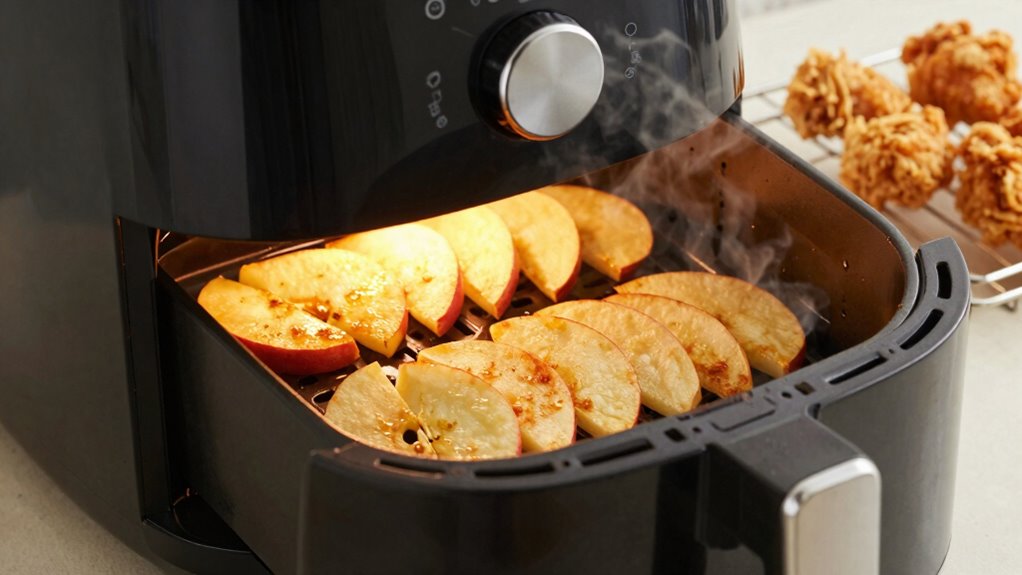
When choosing an air fryer, understanding the differences between dehydrate mode and standard air frying can help you make the most of your appliance. Dehydrate mode operates at lower temperatures for longer periods, which allows you to turn fresh ingredients into healthy snack options right at home. Unlike standard air fryers that focus on crispy, cooked foods quickly, dehydrate mode gently removes moisture from fruits, vegetables, and even meats without cooking them through. This process preserves the natural flavors, nutrients, and textures of your ingredients, making it an excellent choice for creating wholesome snacks without added preservatives or sugars.
Dehydrate mode gently removes moisture, preserving nutrients for healthy, homemade snacks and ingredient longevity.
In dehydrate mode, your air fryer acts more like a food dehydrator. You set it to a low temperature—often around 125°F to 135°F—and let it run for several hours. During this time, moisture is steadily removed from your ingredients, resulting in dried fruit slices, vegetable chips, or jerky. This method is ideal for ingredient preservation because it locks in vitamins and minerals that can be lost during other cooking processes. For you, this means you get snacks that are not only tasty but also nutritious, with no artificial additives. You can customize your dried snacks precisely, controlling the ingredients and avoiding excess salt or sugar commonly found in store-bought options. Additionally, temperature control is crucial in dehydrate mode to ensure proper drying without overcooking. Proper temperature regulation can also prevent the growth of bacteria and mold during the drying process. Moreover, understanding the drying process helps in achieving evenly dried results and maintaining the desired texture. Knowing how to manage food preservation techniques can further enhance your results and extend the shelf life of your dried goods.
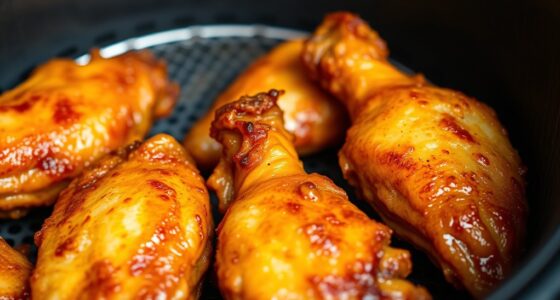
Standard air frying, on the other hand, is designed for quick, high-heat cooking. It’s perfect for creating crispy fries, chicken wings, or breaded foods in a fraction of the time compared to traditional frying or baking. The focus here is on texture and speed rather than long-term ingredient preservation. While it’s excellent for preparing meals that are crispy on the outside and tender inside, it doesn’t lend itself to making dried snacks or extending the shelf life of ingredients.
Understanding these differences allows you to expand your culinary repertoire. If you’re after healthy snack options, dehydrate mode is your go-to. It helps you make dried fruits, vegetable chips, or homemade jerky that retain their nutrients and flavor. Plus, it’s an energy-efficient way to preserve seasonal produce and reduce food waste. Meanwhile, standard air frying makes quick, delicious meals that satisfy your craving for crispy textures. By knowing which mode to use, you’ll maximize your air fryer’s versatility, ensuring you get both nutritious snacks and crispy meals with ease.
home food dehydrator for fruits and vegetables
As an affiliate, we earn on qualifying purchases.
As an affiliate, we earn on qualifying purchases.
Frequently Asked Questions
Can Dehydrate Mode Be Used for Fresh Fruits and Vegetables?
Yes, you can use dehydrate mode for fresh fruits and vegetables. It’s great for fruit preservation and vegetable drying, helping you make snacks or store produce longer. Just slice your fruits and vegetables evenly, set the right temperature, and let the dehydrator work. This method preserves nutrients and flavor while removing moisture. Keep an eye on the process to guarantee perfect results, making healthy, homemade dried snacks easily.
Does Dehydrate Mode Require Different Temperature Settings Than Air Frying?
Dehydrate mode often requires different temperature settings than air frying because it uses lower, more precise temperatures for gentle drying. You’ll find that temperature precision is vital for successful dehydration, preventing overcooking or burning. While air frying focuses on high heat for crispness, dehydration employs lower temperatures and longer cooking times, making it a different technique altogether. Adjust your settings accordingly to master dehydration and achieve perfect, evenly dried fruits or vegetables.
How Long Does Dehydration Typically Take Compared to Air Frying?
Dehydration takes considerably longer than air frying, often 4 to 8 hours depending on the food, while air frying usually lasts 15 to 30 minutes. This extended time allows for better flavor retention and texture preservation, making dried fruits and herbs more flavorful and crispy. You get a richer, more concentrated taste with dehydration, whereas air frying emphasizes quick crispiness without the same depth of flavor.
Is There a Difference in Energy Consumption Between the Two Modes?
Dehydrate mode generally uses less energy than standard air frying because it operates at lower temperatures and longer durations, focusing on gentle moisture removal. This results in better energy efficiency and lower power consumption for dehydration tasks. You’ll find that, while it may take more time, it consumes less energy overall. Using dehydration mode can save you electricity, making it a more eco-friendly choice for preserving fruits, vegetables, and herbs.
Are Specific Accessories Needed for Dehydration Versus Air Frying?
You might find that dehydration requires specific accessories, like a mesh tray or drying racks, to allow air circulation and prevent sticking. Notably, accessory compatibility varies; some air fryer baskets work for dehydration, but others don’t. Cooking vessel differences matter too—dehydration often needs more open, breathable containers, while air frying uses solid baskets. So, check your appliance’s recommendations to guarantee your accessories suit your cooking method and avoid surprises.
Conclusion
So, next time you’re debating between dehydration and air frying, remember that dehydration is perfect for preserving fruits, herbs, or making snacks with a crispy texture, while standard air frying is best for quick, crispy meals. Don’t worry that dehydration takes longer; it’s worth it for the concentrated flavors and healthy snacks you can’t get with regular air frying. With both modes, you’ll enjoy versatile, delicious results right from your kitchen.
Halloween Picks
halloween
As an affiliate, we earn on qualifying purchases.