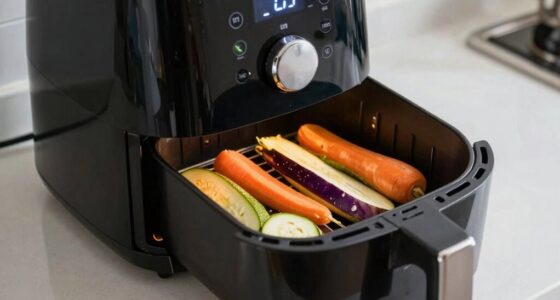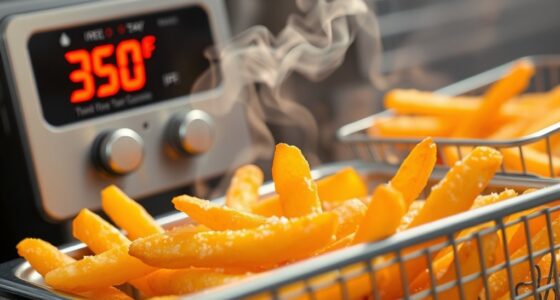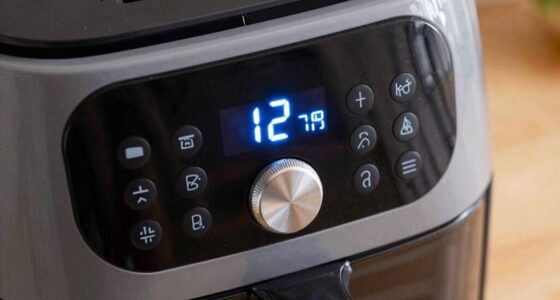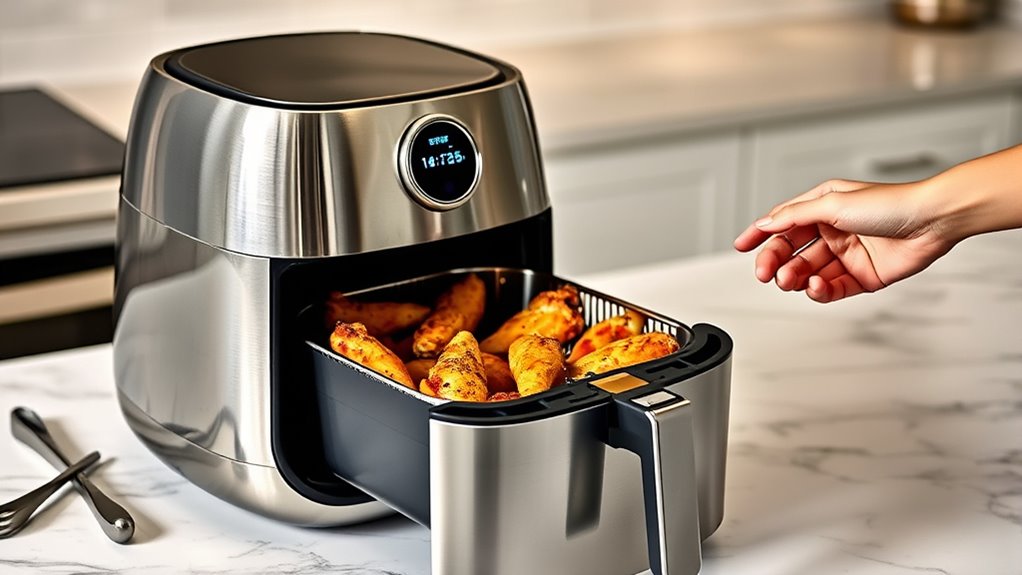

To estimate air fryer cooking times without a cookbook, trust your senses and experience. Start with general guidelines—about 10-15 minutes at 375°F for vegetables or 20-25 minutes at 400°F for chicken—and adjust based on visual cues like color and aroma. Shake the basket halfway and observe the food closely. With practice, you’ll develop an intuitive sense of timing and when to tweak it, so keep experimenting to build confidence. Keep exploring for more tips on perfecting your skills.

Get kitchen gear delivered free with Prime
- Fast, free delivery on millions of items
- Prime Video, Amazon Music and more included
- Member-only deals all year
Key Takeaways
- Use general time and temperature guidelines as starting points, then adjust based on visual and sensory cues.
- Recognize that smaller pieces cook faster, allowing for quicker estimation of cooking times.
- Observe color, aroma, and texture during cooking to gauge doneness accurately.
- Develop familiarity with your air fryer’s behavior through experience and note-taking.
- Trust your senses and experiment regularly to refine timing without relying on strict recipes.
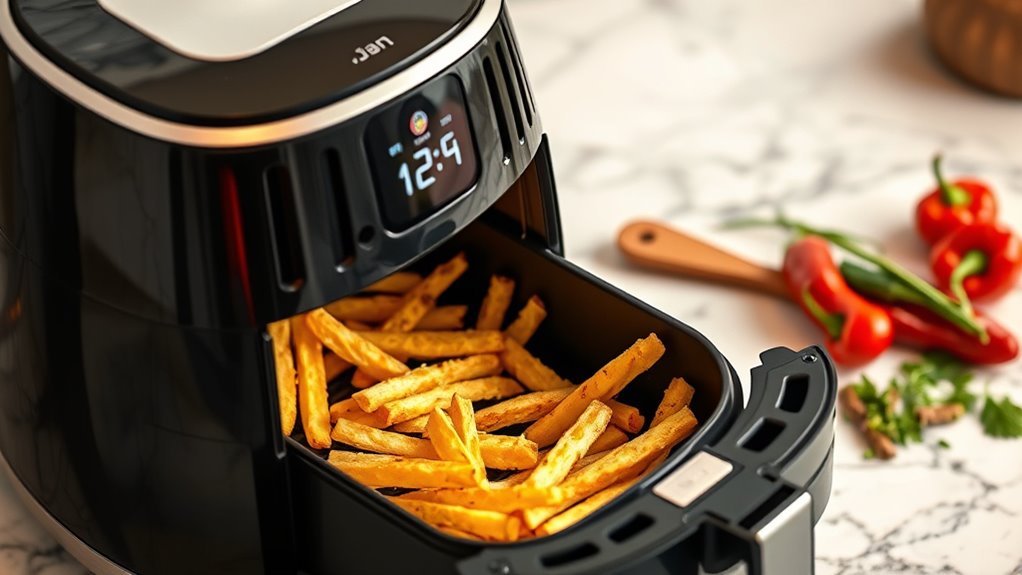
Cooking with an air fryer doesn’t have to rely on a cookbook. In fact, once you get comfortable, you’ll see that improvising recipes and estimating cooking times becomes second nature. The key is to understand how your air fryer works and to develop a sense of timing based on experience. Instead of rigidly following recipes, you can experiment with what you have on hand, trusting your instincts for adjustments. This approach not only saves time but also makes the process more fun and personalized.
Master your air fryer by trusting your instincts and experimenting beyond recipes.
When you start improvising, it’s helpful to think in terms of general guidelines rather than fixed times. For example, vegetables usually take around 10-15 minutes at 375°F, while chicken pieces might need 20-25 minutes at 400°F. By paying attention to how your food looks and smells during cooking, you can make smarter time estimations. For instance, if you notice that your fries are golden but not yet crispy after 10 minutes, you can add a few more minutes, shaking the basket halfway through to ensure even cooking. Over time, you’ll develop an intuitive sense of how long different foods need, reducing the need to constantly check or consult a manual.
Recipe improvisation becomes easier once you understand the basics of timing and temperature. Instead of following a strict recipe, you can adjust ingredients and cooking durations based on your preferences. Want crispier results? Extend the cooking time slightly or increase the temperature a bit. Looking for a quicker meal? Cut larger items into smaller pieces, which cook faster. Keep in mind, though, that every air fryer is different; some run hotter or cooler, so your initial estimations might need tweaking. That’s why keeping notes on your experiments helps you refine your timing skills for future meals.
Another tip is to use visual cues and smells as guides. When food starts to turn golden or smell fragrant, it’s often a sign that it’s close to done. Opening the basket at intervals to check on the progress allows you to adjust time estimates on the fly. Over time, you’ll learn from your outcomes and become more confident in your improvisations. Remember, cooking without a strict recipe doesn’t mean you’re guessing blindly; it’s about developing an understanding of how your air fryer behaves and trusting your senses.
As an affiliate, we earn on qualifying purchases.
Frequently Asked Questions
How Can I Adjust Cooking Times for Different Air Fryer Models?
You can adjust cooking times for different air fryer models by considering air fryer calibration and model variations. Start by reducing or increasing the time slightly and monitor your food closely. Check your air fryer’s manual for specific guidance, and remember that newer or different brands may cook faster or slower. Keeping notes on your adjustments helps you perfect timing, ensuring consistent results across various models.
What Are Common Mistakes When Estimating Air Fryer Cooking Times?
You often overestimate or underestimate cooking times, leading to overcooking tendencies or inconsistent results. Relying solely on time guides without checking food can cause issues. It’s best to start with shorter times and adjust based on your air fryer’s performance. Avoid ignoring preheating or overcrowding, which also affects results. By paying close attention and testing, you’ll improve your estimates and achieve consistently delicious dishes.
How Do Ingredient Sizes Affect Cooking Duration?
Ingredient size directly impacts cooking duration; larger pieces take longer to cook, while smaller ones finish quicker. When you cut ingredients into uniform sizes, you guarantee even cooking and better timing estimates. If pieces are uneven, some may burn or remain undercooked. Always consider ingredient size when estimating cooking times, and adjust accordingly to prevent overcooking or undercooking, ensuring your food turns out perfectly every time.
Can I Cook Multiple Items at Once Without Changing Times?
Yes, you can cook multiple items at once, but you’ll need to take into account layered cooking and ingredient placement. Place lighter or delicate items on top and denser ones at the bottom to ensure even cooking. Keep in mind, this might slightly extend cooking times, so check for doneness regularly. Stir or rearrange items if needed, and avoid overcrowding to allow proper air circulation and consistent results.
How Do I Compensate for Different Food Starting Temperatures?
Did you know that starting temperature variability can affect cooking times by up to 20%? To compensate, you should use preheating strategies, like letting your air fryer reach the desired temperature before adding food. Adjust cooking times based on the initial temperature—if food starts colder, add a few extra minutes; if warmer, reduce time slightly. This way, you guarantee consistent, perfectly cooked results every time.
Conclusion
Now that you’ve got a feel for estimating air fryer times, you’re practically a culinary pioneer, charting new territory without a cookbook. Trust your instincts, keep an eye on your food, and don’t be afraid to experiment—just like daring explorers of old. Remember, even in this modern age, a little trial and error leads to the best results. So go ahead, whip up those delicious meals and make your kitchen your own little frontier.
Halloween Picks
halloween
As an affiliate, we earn on qualifying purchases.