To sear, crisp, and caramelize in an air fryer, start by preheating it to high temperatures around 375°F to 400°F for browning and flavor development. Keep the ingredients dry and lightly coated with oil for even browning. Use a single layer to allow hot air circulation and shake or turn foods midway. Adjust temperatures and times based on thickness, and finish with sauces or glazes for added flavor. The more you explore, the better your results will become.
Key Takeaways
- Use high temperatures (375°F to 400°F) to achieve effective searing, crisping, and caramelizing.
- Preheat the air fryer to ensure even browning and consistent results.
- Apply a light coat of oil to enhance browning without excess fat.
- Avoid overcrowding by placing food in a single layer for optimal airflow and crispiness.
- Brush or add sauces during the final minutes to promote caramelization and flavor development.
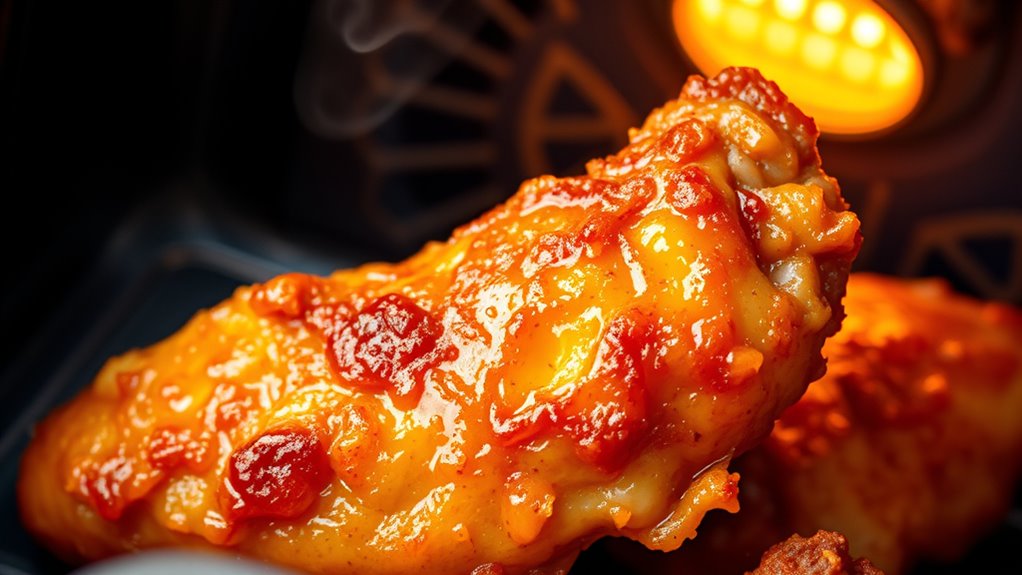
An air fryer is a versatile kitchen appliance that allows you to enjoy crispy, delicious foods with less oil. When it comes to searing, crisping, and caramelizing, understanding how to utilize cooking temperatures and food preparation techniques is key to achieving perfect results. The right combination of heat and preparation methods enhances flavor, texture, and appearance, making your dishes stand out.
First, controlling cooking temperatures is essential. Air fryers operate in a range of about 180°F to 400°F (82°C to 204°C), allowing you to fine-tune the heat for different tasks. For searing and caramelizing, higher temperatures—around 375°F to 400°F—are ideal because they promote Maillard reactions, which develop that rich, browned exterior and deep flavors. When crisping foods, you’ll want to start with a higher temperature to quickly create a crunchy surface, then reduce it to finish cooking the interior without burning the outside. Always preheat your air fryer if your recipe calls for it; this ensures even cooking and consistent results.
Preheat your air fryer and use high temperatures for searing, caramelizing, and crispy results.
Food preparation techniques play a critical role as well. To achieve maximum searing and crisping, dry your ingredients thoroughly before placing them in the air fryer. Excess moisture can hinder browning and lead to sogginess. For meats or vegetables, applying a light coating of oil helps promote browning without excess fat—remember, the goal is less oil, not no oil. When caramelizing sugars or adding a glaze, brush your food with a thin layer of sugar-based sauce during the final minutes of cooking. This technique intensifies color and flavor without burning the sugars.
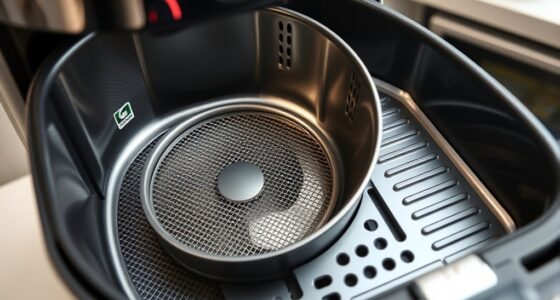
Positioning the food properly in the basket is also crucial. Avoid overcrowding, as it prevents hot air from circulating evenly, which is necessary for that crispy exterior and caramelized surface. Use a single layer whenever possible. Shaking or turning food midway through cooking ensures uniform searing and crisping. For thicker cuts, you might need to lower the temperature slightly and extend the cooking time to prevent burning the exterior while ensuring the inside cooks thoroughly. Additionally, understanding advanced techniques such as food positioning and timing can further elevate your results.
Frequently Asked Questions
Can I Use Foil or Parchment Paper in an Air Fryer for Searing?
You can use foil or parchment paper in your air fryer for searing, but guarantee foil safety by avoiding blocking airflow, which can cause uneven cooking. Parchment alternatives like silicone mats work well too. Always check your air fryer’s manual for specific guidelines, and never cover the entire basket to prevent overheating. Using these options helps keep your air fryer clean and makes searing safer and easier.
How Do I Prevent Food From Sticking During Crisping?
To prevent food from sticking during crisping, you should start with proper food preparation. Use non-stick sprays on your basket or food surfaces before placing them in the air fryer. Additionally, lightly coating your food with oil can help. Ensuring your basket is clean and dry also minimizes sticking. These steps help achieve crispiness without food adhering, making for a better cooking experience.
What’s the Optimal Temperature for Caramelizing Sugars?
You should set your air fryer to around 340°F (170°C) for ideal caramelizing. This temperature allows the sugar to melt evenly and develop a rich caramel color without burning. Keep a close eye, as higher temperatures can cause the sugar to quickly turn bitter or burn. Stir or shake the food gently to promote even sugar melting, ensuring a beautiful, glossy caramelization.
How Do I Achieve Even Searing on Thicker Cuts?
To achieve even searing on thicker cuts, use thick cut techniques that guarantee uniform heat. Preheat your air fryer to a high temperature, around 400°F, to promote even heat distribution. Flip or rotate the meat halfway through cooking to prevent hot spots. Keep an eye on the process, and avoid overcrowding, which can hinder heat circulation. This approach helps you get that perfect, evenly seared crust every time.
Can I Use an Air Fryer for Sous-Vide Style Cooking?
You can’t truly do sous-vide style cooking in an air fryer because it lacks precise temperature control needed for that method. While some see air fryers as sous-vide alternatives, they can’t replicate the low, steady heat to achieve tender, evenly cooked results. Instead, use them for finishing or crisping, but for authentic sous-vide, you’d need a dedicated immersion circulator with precise temperature control.
Conclusion
Now that you’ve revealed the secrets of searing, crisping, and caramelizing in your air fryer, your dishes will dance with flavor and texture. Think of it as wielding a magic wand that turns simple ingredients into culinary masterpieces, igniting your passion for cooking. Embrace these techniques with confidence, and watch your meals become irresistible works of art—each bite a symphony of crunch and sweetness. Your kitchen adventures are about to reach a whole new level of delicious!