When a grill claims to be “less smoke,” it usually means it reduces visible smoke and fumes but doesn’t eliminate harmful particles or chemicals. Many use technology like filters or infrared heat, but these still release microscopic particles and pollutants that can pose health risks indoors, especially without good ventilation. Understanding what “less smoke” truly entails is important for safety. If you want to know more about how these claims can be misleading, keep exploring.

Get kitchen gear delivered free — and shop member deals
- Fast, free delivery on millions of items
- Access to Prime Big Deal Days deals on October 6–7
- Prime Video, Amazon Music and more included
Key Takeaways
- “Less smoke” typically indicates a reduction, not complete elimination, of visible smoke and fumes during grilling.
- Technologies like filters, fans, or infrared heat aim to lower smoke but may not remove all harmful emissions.
- Reduced smoke does not guarantee safety; microscopic particles and chemicals can still pose health risks.
- Proper ventilation and regular filter maintenance are essential to ensure indoor air quality when using smokeless grills.
- Always critically assess “smokeless” claims, understanding they often mean “less” rather than “none” of smoke or pollutants.
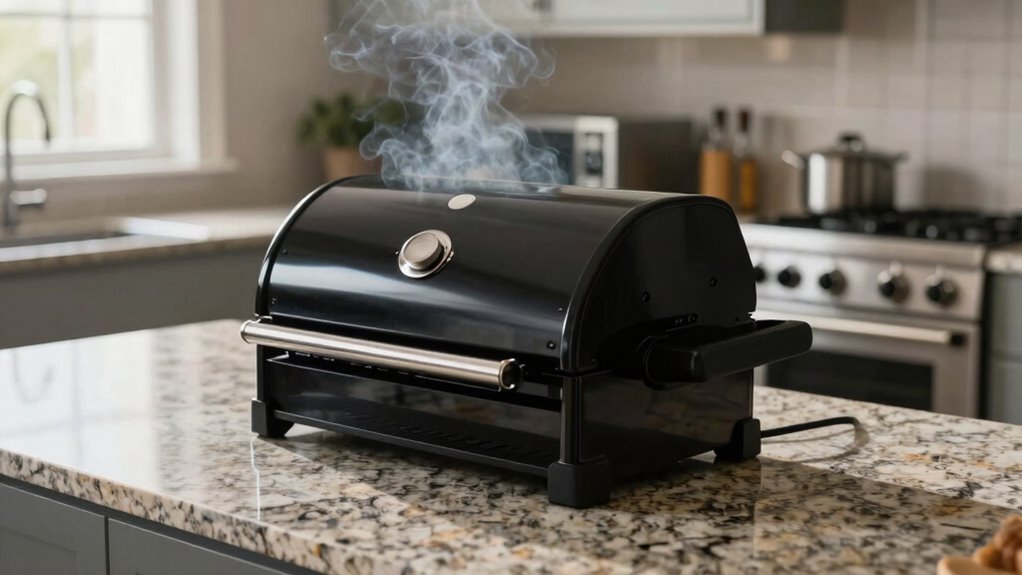
Many smokeless grills claim to offer a healthier and cleaner alternative to traditional outdoor barbecues, but it’s vital to examine these claims carefully. When you’re considering indoor cooking options, “less smoke” can seem like a significant advantage, especially if you’re concerned about the health implications of smoke exposure. However, the term “smokeless” can be misleading, as it doesn’t always mean the absence of smoke, but rather a reduction. Many grills produce less visible smoke, but that doesn’t necessarily mean they’re completely free of harmful emissions.
Many smokeless grills reduce visible smoke but may still emit harmful particles and fumes.
In the context of indoor cooking, reducing smoke is appealing because it minimizes the smell, lingering odors, and potential residue on walls and furniture. Yet, it’s essential to understand what “less smoke” really entails. Some grills use special technology, like infrared heat or vaporized fat collection systems, to cut down smoke production. These methods can indeed limit the amount of visible smoke, but they may not eliminate the tiny particles or harmful compounds that can still be released during cooking. These microscopic particles can pose health risks over time, especially if you’re cooking frequently in an enclosed space with poor ventilation. Recognizing smoke particle size is crucial when assessing the safety of indoor grills. Additionally, understanding the emissions produced during cooking can help you better evaluate potential health risks. It’s also important to note that the air quality in your kitchen can significantly influence health outcomes when using any indoor cooking device. Furthermore, the presence of specific air pollutants from cooking can vary depending on the materials and foods involved, underscoring the need for proper monitoring.
It’s tempting to think that a “smokeless” grill automatically means healthier indoor cooking, but that’s not always the case. While reduced smoke can mean fewer irritants and less indoor air pollution, it doesn’t guarantee the absence of harmful fumes or chemicals. Some grills still emit volatile organic compounds (VOCs) or other pollutants depending on what you’re cooking and the materials involved. So, even if you notice less visible smoke, you should still guarantee good ventilation and consider the types of foods you prepare. Proper airflow and ventilation effectiveness are essential components in maintaining a healthy indoor environment.
When evaluating smokeless grill claims, pay attention to the technology behind them. Some grills rely on fans and filters that trap smoke particles, but these filters can become clogged over time and might require regular maintenance. Others use heating elements that vaporize fat and juices before they can create smoke, but this process can sometimes alter the flavor or texture of your food. Ultimately, understanding what “less smoke” really means helps you make informed choices about the health implications of indoor cooking with these devices.
In the end, if your goal is a healthier cooking environment, remember that reducing smoke is just one part of the picture. Proper ventilation, choosing foods wisely, and understanding the technology behind your smokeless grill will help you enjoy indoor cooking without compromising health. While these grills do offer benefits, don’t assume they are completely smoke-free or entirely risk-free; instead, approach the claims with a critical eye and prioritize safety and cleanliness in your kitchen.
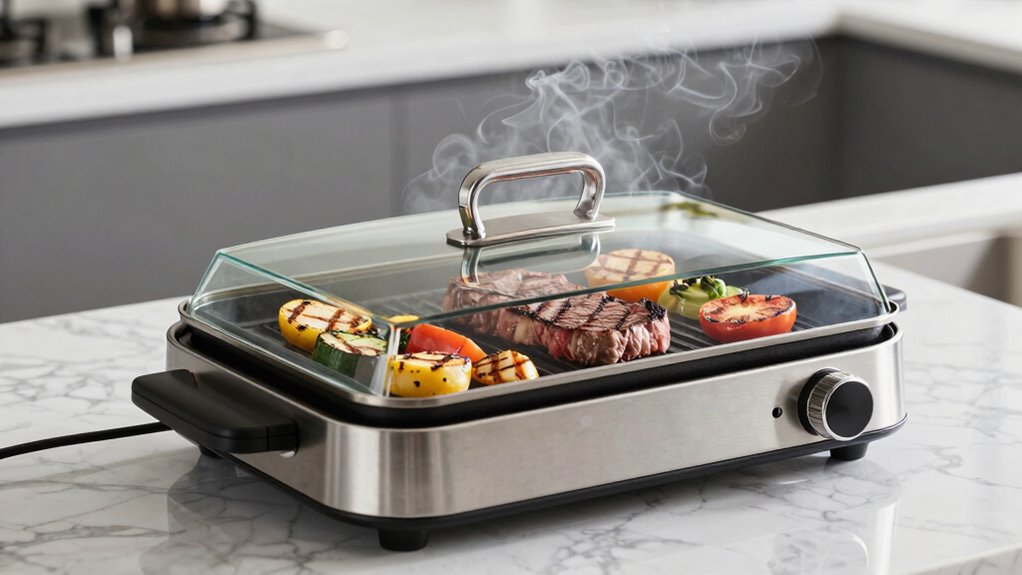
indoor smokeless grill with filtration
As an affiliate, we earn on qualifying purchases.
As an affiliate, we earn on qualifying purchases.
Frequently Asked Questions
Do Smokeless Grills Fully Eliminate Smoke?
No, smokeless grills don’t fully eliminate smoke, but they markedly reduce it through advanced cooking techniques and smoke reduction technologies. You’ll notice less smoke compared to traditional grills, making indoor cooking more pleasant. However, some smoke may still occur, especially with high-fat foods or high temperatures. These grills aim to minimize smoke, but complete elimination isn’t usually achievable, so expect some residual smoke during your cooking sessions.
Are “Less Smoke” Claims Legally Regulated?
“Less smoke” claims are often regulated under advertising standards to protect consumer safety, but regulations can vary. You should be cautious, as some brands might exaggerate their claims without strict oversight. Manufacturers must follow advertising standards that prevent false or misleading information. Always check for verified testing or certifications to confirm the product genuinely produces less smoke, safeguarding your expectations and safety.
Can Smokeless Grills Be Used Indoors Safely?
Yes, you can use smokeless grills indoors safely if you follow proper indoor safety and ventilation requirements. Make certain your cooking area has good ventilation, like an exhaust fan or open windows, to prevent smoke buildup. Always read the manufacturer’s instructions and use the grill on a heat-resistant surface. By adhering to these guidelines, you minimize risks and enjoy indoor grilling without compromising safety.
Do “Less Smoke” Grills Affect Flavor?
Yes, “less smoke” grills can impact flavor, but not necessarily negatively. The goal is smoke suppression, which minimizes overpowering smoke flavor while still allowing for flavor enhancement from grilling. You might notice a slightly milder taste, but many grills still deliver delicious results. With proper seasoning and technique, you can enjoy flavorful favorites without the heavy, smoky aftertaste, making indoor grilling both enjoyable and effective.
How Effective Are Smokeless Grills in Different Weather Conditions?
Smokeless grills are generally effective across various weather conditions, but outdoor durability and weather performance vary by model. In windy or rainy weather, their efficiency might decrease as wind can disperse smoke less effectively, and rain can interfere with electrical components. Make sure you choose a grill with good outdoor durability, like waterproof features and sturdy construction, to maximize performance regardless of weather, making your grilling experience reliable and enjoyable in different conditions.
Conclusion
So, next time you see a “less smoke” claim, don’t just take it at face value—prepare for a culinary revolution! It’s not just a grill; it’s a smoke-free miracle worker, turning your backyard into a gourmet paradise without a single puff of smoke in sight. Say goodbye to smoky messes and hello to effortless, mouthwatering grilling. With these claims, you’re not just cooking—you’re transforming your entire outdoor experience into pure, smoky-free magic!
Fall Picks
fall essentials
As an affiliate, we earn on qualifying purchases.