Avoid cooking foods with wet batters, greasy items, or delicate ingredients in your air fryer, as they can cause splattering, damage, or sticking. Also steer clear of foods with high moisture or large portions that can lead to uneven cooking or strain the appliance’s airflow. Using proper methods guarantees safety and better results. Curious to know more about what to watch out for? Keep exploring to keep your air fryer in top shape.
Key Takeaways
- Foods with wet batters can drip, cause smoke, and damage the appliance’s heating element.
- Greasy foods release excess oil, leading to smoking, greasy buildup, and potential damage.
- Fragile items like soft baked goods may fall apart or stick, complicating cleanup and risking surface damage.
- Foods with high moisture, such as stews or soups, can cause spattering and harm the heating element.
- Large or overloaded items hinder airflow, cause uneven cooking, and strain the appliance.

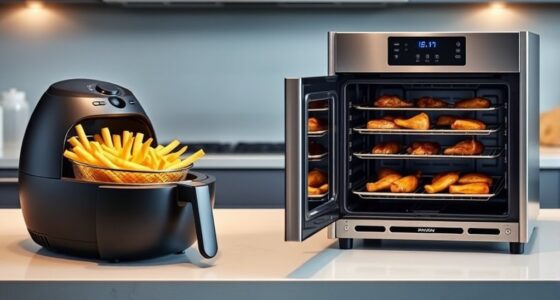
While air fryers are versatile and convenient, there are certain foods you should avoid cooking in them to prevent damaging your appliance or ruining your meal. Understanding what not to cook in an air fryer is essential for maintaining air fryer safety and ensuring your appliance lasts longer. It also helps you avoid common mistakes that could lead to messy cleanups or compromised food quality. Some foods, especially those with high moisture content or that produce a lot of grease, pose challenges when cooked in an air fryer. For example, foods like raw grains, wet batters, or cheese-laden dishes can cause splattering or even damage the heating element if not handled correctly.
Avoid cooking wet batters and greasy foods in your air fryer to prevent damage and mess.
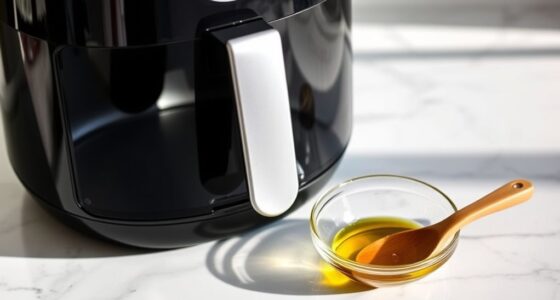
One major concern is cooking foods with wet batters directly in the air fryer. Batters tend to drip and splatter, which can clog the vents or cause smoke. If you want to make battered foods, it’s better to pre-cook or bake them in a traditional oven or deep fryer. Additionally, greasy foods like bacon or greasy meats can release excess oil, leading to smoking and a greasy buildup inside the appliance. To maintain air fryer safety, always use a drip tray or place foods on a rack to minimize mess and prevent grease from accumulating on heating elements.
Foods that are extremely delicate, such as fragile fish or soft baked goods, should be approached with caution. Without proper parchment paper or a suitable basket liner, these items can fall apart or stick to the basket, making cleanup difficult and risking damage to the non-stick coating. Also, foods that require a lot of moisture, like stews or soups, aren’t suitable for air fryers because they can cause spattering or damage the heating element. If you’re unsure whether a dish is suitable, check your air fryer’s manual or consult cooking tips tailored to your specific model.
Certain foods like whole roasts or large cuts of meat might also be problematic, especially if they exceed the recommended size or weight. Overloading the air fryer hampers proper air circulation, leading to uneven cooking. This not only affects food safety but can also strain the appliance, decreasing its lifespan. To keep your air fryer in top condition, avoid overfilling it and stick to recommended cook times and temperatures. Proper air circulation is essential for even cooking and avoiding appliance strain, so always follow the manufacturer’s guidelines. By understanding these limitations and practicing good air fryer safety, you can enjoy delicious meals without risking damage or compromising your health. Being mindful of what not to cook ensures you maximize your appliance’s potential and maintain safe, effective cooking habits.
Frequently Asked Questions
Can I Cook Raw Eggs in an Air Fryer?
You can cook raw eggs in an air fryer, but you need to follow proper egg safety and cooking techniques. To do this safely, crack the eggs into a heatproof dish, then cook at 350°F for about 8-10 minutes for a scramble or 10-12 minutes for a fried egg. Always guarantee eggs reach a safe internal temperature to prevent foodborne illness, and avoid cooking whole eggs in shells directly in the air fryer.
Is It Safe to Reheat Pizza in an Air Fryer?
Reheating pizza in an air fryer is safe and efficient, as 85% of users find it maintains the crust crispy and flavor intact. This method guarantees food safety by reheating evenly at 350°F for 3-4 minutes, reducing bacteria risk. Just avoid overcrowding the basket and check that the internal temperature reaches 165°F. Your pizza will taste fresh, and you’ll enjoy a quick, safe snack every time.
How Do I Clean My Air Fryer After Cooking Greasy Foods?
To clean your air fryer after greasy foods, start by unplugging it and letting it cool. Remove the basket and tray, then soak them in warm soapy water to loosen grease buildup. Use a soft sponge or brush to scrub away grease, avoiding abrasive tools. For the main unit, wipe the interior with a damp cloth, ensuring you don’t damage the heating element. Regular cleaning prevents residue and keeps your air fryer working efficiently.
Can I Cook Frozen Vegetables Without Thawing First?
Yes, you can cook frozen vegetables in your air fryer without thawing first. Simply place the frozen vegetables directly into the basket, and adjust the cooking time slightly longer than fresh. Skipping the thawing process conserves time and keeps the veggies crispy. Just shake the basket halfway through to ensure even cooking, and enjoy a quick, healthy side dish without any extra steps.
What’s the Best Way to Cook Bacon in an Air Fryer?
To cook bacon in your air fryer, lay the slices in a single layer without overlapping. Set the temperature to 400°F (200°C) and cook for 8-12 minutes, flipping halfway through. For perfect bacon crisping, keep an eye on it near the end. Use air fryer tips like using parchment paper or a rack to prevent mess. Adjust cook time based on thickness for crispy, delicious bacon every time.
Conclusion
So, now you know what to avoid, but there’s one tricky thing left—some foods might seem fine but can surprise you in ways you didn’t expect. Will that overstuffed quesadilla turn into a messy disaster? Or could that delicate dessert crack under pressure? Keep experimenting, stay cautious, and you’ll master your air fryer. But remember, sometimes the biggest surprises come from the foods you thought were safe—are you ready to discover what’s next?