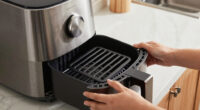
When you see browning before the food is fully cooked, it’s triggered by heat causing chemical reactions, mainly the Maillard reaction, to start on the surface. This process creates flavor, aroma, and color early in cooking. The surface reacts first because it’s closest to the heat, developing character before the interior is ready. Understanding this helps you control your cooking better—if you keep going, you’ll discover how timing affects flavor and texture even more.
Key Takeaways
- Browning begins early due to surface reactions like the Maillard reaction, which occur at specific temperatures before full cooking.
- The surface heats faster, triggering initial browning that signals flavor development ahead of internal doneness.
- Higher heat accelerates surface browning, often before the interior is fully cooked through.
- Monitoring browning helps chefs control timing for optimal flavor without overcooking the inside.
- Browning indicates chemical changes that produce flavor compounds, happening early during heating.
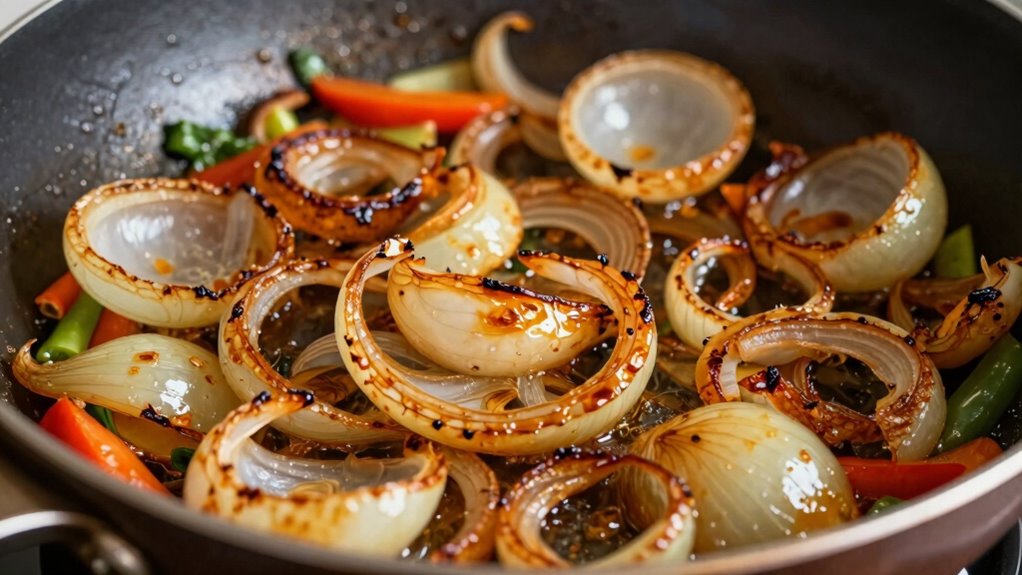
Have you ever noticed that your food starts to brown before it looks fully cooked? This isn’t a coincidence. That early browning is actually a sign of the complex chemical reactions happening inside your pan. When heat is applied, the surface of your food begins to undergo browning and flavor development, even if the inside still seems underdone. The key process at play here is the Maillard reaction, a chemical reaction between amino acids and reducing sugars that creates those rich, savory flavors and the browned color we associate with perfectly cooked food.
Understanding the timing of the Maillard reaction helps you better control your cooking. It doesn’t happen instantaneously; instead, it has a specific window called Maillard reaction timing. This window varies depending on the temperature and moisture content of your food. At higher temperatures, browning happens faster, often before the food is fully cooked through. That’s why you might see a beautifully browned crust on a steak or roasted vegetables, even if the interior still needs more time. It’s the surface reacting to heat first, developing flavor and color in advance of the cooking process inside.
This early browning isn’t just about aesthetics—it’s an essential part of flavor development. The Maillard reaction produces hundreds of new compounds that give your food complex, savory notes. When you see that initial browning, it’s a sign that these flavorful molecules are forming, enhancing taste and aroma. If you wait too long to finish cooking, you risk over-browning or burning the surface, which can turn bitter or charred. That’s why timing and temperature control are vital: you want your food to brown just enough to develop flavor without sacrificing texture or risking burnt flavors. Proper heat management plays a crucial role in this process by ensuring you don’t rush or delay the reactions.
In practical terms, knowing that browning begins before food looks fully done encourages you to monitor your heat levels carefully. For example, searing a piece of meat at a high temperature creates rapid browning that locks in juices and flavor early on. Then, lowering the heat to finish cooking inside prevents burning and allows even doneness. The same principle applies to roasting vegetables or baking bread—seeing that initial color change tells you that flavor development is underway, even if the interior needs more time to reach the right temperature. Recognizing the role of heat transfer in this process can help you better anticipate when to adjust your cooking. Additionally, understanding the chemical reactions involved can improve your overall technique and results. Being aware of the Maillard reaction timing enables you to optimize your cooking process and achieve more flavorful, perfectly cooked dishes.
In essence, that early browning is a sign of good technique. It means your heat is just right to trigger the Maillard reaction timing, producing rich flavors and appealing color. Recognizing this helps you become a more confident cook, knowing when to turn up or down the heat for perfect results. So, next time your food starts to brown before it looks fully cooked, remember—you’re witnessing the delicious start of flavor development, happening just ahead of complete doneness.

TempPro TP420 2-in-1 Instant Read Thermometer for Cooking, Infrared Thermometer with Meat Probe, Non-Contact Laser Meat Thermometer for Griddle Grill Pizza Oven HVAC Pool (Previously ThermoPro)
【2-in-1 Infrared & Probe Thermometer】Perfect for home chefs, grilling enthusiasts and DIY hobbyists who demand professional control; Use…
As an affiliate, we earn on qualifying purchases.
As an affiliate, we earn on qualifying purchases.
Frequently Asked Questions
How Does Browning Affect the Flavor of Food?
Browning enhances the flavor of your food through the Maillard reaction and caramelization process. When you brown food, these reactions develop complex, rich flavors and deepen the aroma. The Maillard reaction creates savory, umami notes, while caramelization adds sweetness and depth. By starting to brown early, you guarantee these flavors fully develop, making your dish more flavorful and satisfying even before it looks completely cooked.
Is Early Browning a Sign of Undercooking?
Early browning isn’t necessarily a sign of undercooking. It often indicates the development of flavor and texture through the Maillard reaction, which enhances taste and creates a desirable crust. While browning can slightly reduce moisture retention, it doesn’t mean your food is undercooked. Keep an eye on internal temperature and don’t rely solely on appearance. Proper browning can improve flavor without compromising safety or doneness.
Can Browning Vary Between Different Cooking Methods?
Sure, browning varies wildly across cooking techniques—think of it as a culinary chameleon. Different methods, like searing or roasting, trigger surface reactions uniquely, causing browning to start at different times. You might see a beautifully browned steak early on, while a slow-cooked roast remains pale longer. So yes, your browning can vary depending on technique, and that’s exactly what makes cooking both art and science.
Why Do Some Foods Brown Faster Than Others?
Some foods brown faster because of their sugar and amino acid content, which influence the Maillard reaction and caramelization process. You’ll notice that proteins and sugars react quickly under heat, causing browning before the food appears fully cooked. Factors like temperature, moisture, and pH also play roles. As a result, certain foods develop a flavorful, browned exterior early, while others need more time for these chemical reactions to occur completely.
Does Browning Impact the Nutritional Value of Food?
Browning can impact the nutritional value of food by causing some nutrient loss, such as vitamins sensitive to heat. It may also lead to nutritional changes that increase antioxidant levels, which can be beneficial. When food browns, you’re sometimes gaining antioxidants, but you might also lose certain nutrients. So, while browning adds flavor, it’s good to be mindful of potential nutritional changes, regarding vitamin content.

Lodge Seasoned Cast Iron Skillet – PFAS-Free, Non-Toxic Cookware – Use with an Oven, Stove, Grill, or Campfire – Naturally Non-Stick & Oven Safe – 10.25 Inches
Quality Cast Iron Frying Pan: The Lodge Seasoned Cast Iron Skillet is loved for its great heat retention,…
As an affiliate, we earn on qualifying purchases.
As an affiliate, we earn on qualifying purchases.
Conclusion
So, remember, browning often begins before your food looks fully done, like a sign that the process has already kicked off underneath the surface. Don’t judge a dish by its crust alone; patience is key. Keep an eye on those subtle changes, and trust that the real magic happens beneath the surface. After all, sometimes you have to look beyond the outside to see the true progress happening inside.

CAROTE Nonstick Frying Pan Skillet,Non Stick Granite Fry Pan Egg Pan Omelet Pans, Stone Cookware Chef's Pan, PFOA Free,Induction Compatible(Classic Granite, 8-Inch)
Eco-friendly Classic Granite – Non-stick Granite Material, PFOS,PFOA free, our cookware ensures your daily cooking is always safer…
As an affiliate, we earn on qualifying purchases.
As an affiliate, we earn on qualifying purchases.

Alpha Grillers Meat Thermometer Digital – Instant Read Food Thermometer for Cooking & Grilling – Professional Kitchen Gifts for Men, Dad & Mom
Instant Read Food Thermometer | Our instant read thermometer features a temperature probe and advanced, highly accurate technology…
As an affiliate, we earn on qualifying purchases.
As an affiliate, we earn on qualifying purchases.