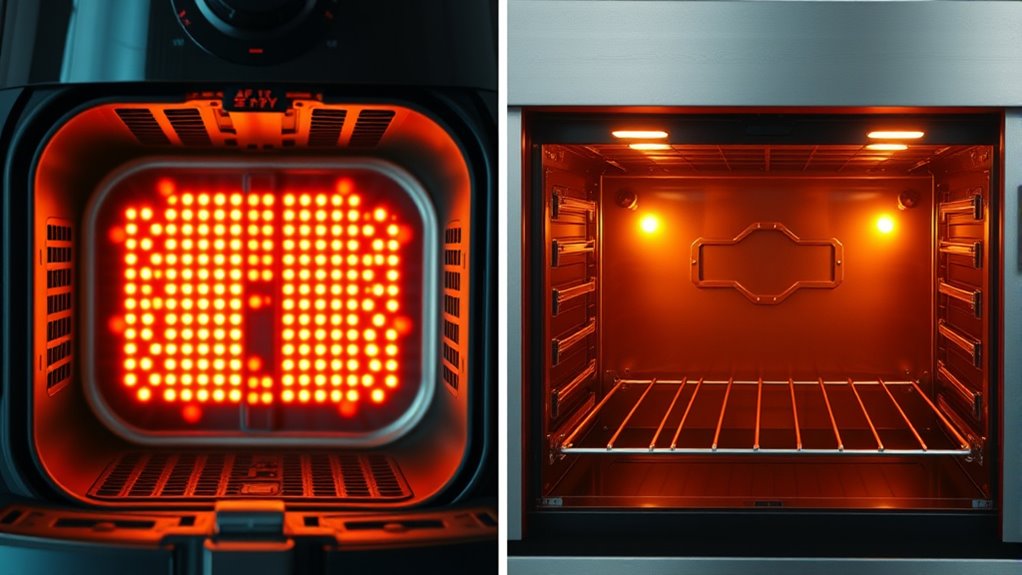

In an air fryer, a powerful fan circulates hot air rapidly around your food, creating a crispy exterior similar to frying, while convection ovens use steady airflow with top and bottom heating elements to cook larger batches evenly. The patterns of heat distribution differ: air fryers focus on intense, rapid circulation, and convection ovens rely on balanced airflow. Discover how adjusting fan speed and placement improves your cooking results as you explore more details.
Key Takeaways
- Air fryers use rapid, high-speed air circulation in a compact chamber for crisp textures, while convection ovens rely on steady airflow across larger spaces.
- Fan placement and speed in both appliances affect heat distribution, with central fans promoting more even cooking.
- Air fryers produce intense, localized heat for crispy results, whereas convection ovens distribute heat more evenly for tender, moist foods.
- Energy efficiency is higher in air fryers due to concentrated heat and quicker cooking times compared to larger convection ovens.
- Proper heat and fan control minimize hot spots and ensure consistent cooking, with airflow patterns directly impacting food texture and flavor.
Understanding the Basics of Air Fryer and Convection Oven Technologies
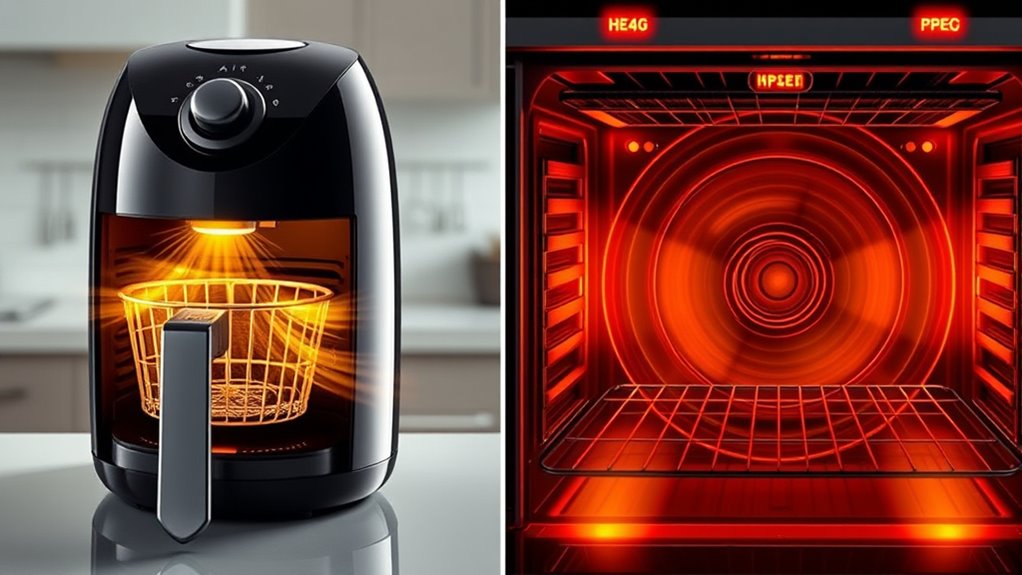
While both air fryers and convection ovens rely on similar heating principles, they differ markedly in design and function. An air fryer uses a compact, enclosed chamber with a powerful fan that circulates hot air rapidly around your food. This promotes baking versatility, allowing you to cook everything from crispy fries to baked goods with ease. Convection ovens, on the other hand, are larger and often include multiple racks, making them suitable for baking larger quantities. They also incorporate fans to distribute heat evenly. In terms of energy efficiency, air fryers typically use less power because they heat a smaller space and cook faster. Both appliances leverage circulating hot air, but their designs influence how effectively they deliver consistent, even heat for various cooking tasks. Additionally, the heat distribution patterns of each appliance impact their ability to produce evenly cooked results.
How Circulating Hot Air Works in Air Fryers
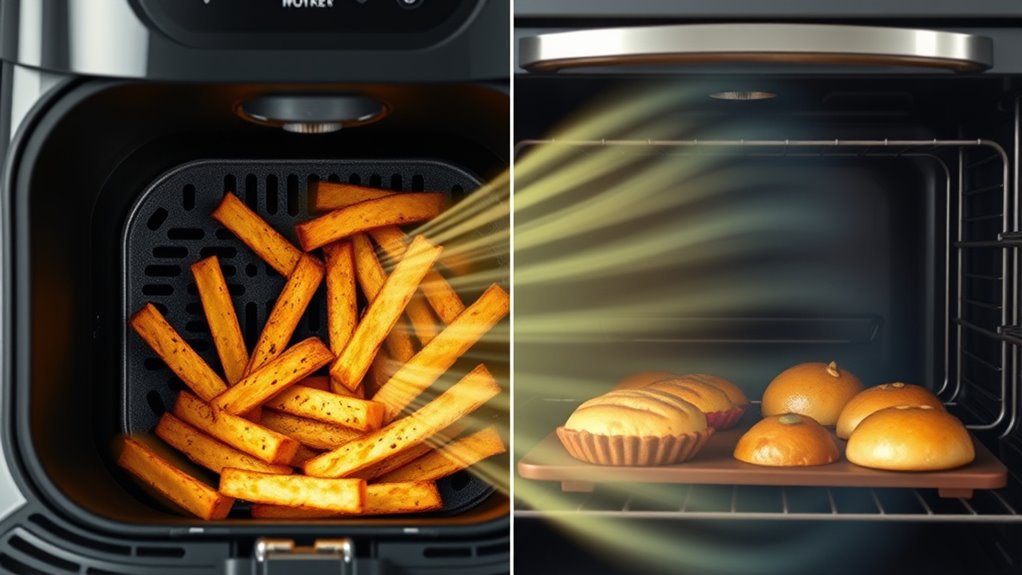
Air fryers achieve their signature crispy results through a rapid circulation of hot air that surrounds your food. This process relies on strong air circulation, which ensures heat reaches all sides evenly. The fan inside the unit blows hot air at high speed, creating a convection effect that mimics deep frying without oil. This constant movement of hot air improves heat uniformity, preventing hot spots and uneven cooking. As a result, your food gets crispy on the outside while remaining tender inside. The design of air fryers promotes quick heat transfer, reducing cook times and promoting consistent results. By evenly distributing heat through circulating hot air, air fryers deliver reliable, crispy textures that are hard to achieve with traditional cooking methods. Additionally, the efficiency of heat transfer is enhanced by the fan mechanism, which plays a crucial role in maintaining optimal airflow.
The Heat Distribution in Convection Ovens
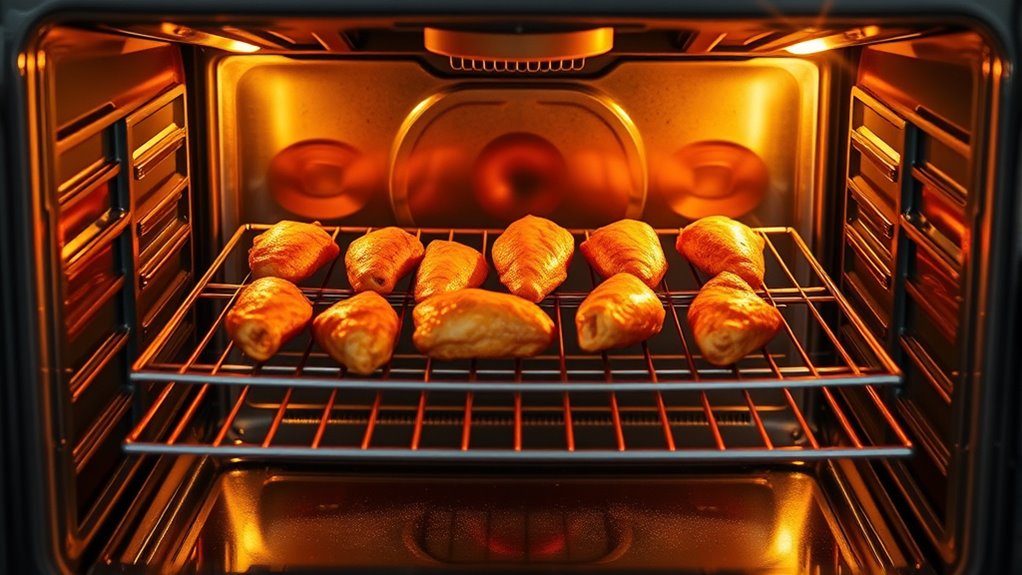
Convection ovens use fans to circulate heat, but you might notice uneven cooking due to uneven airflow patterns. Sometimes, hot spots form, causing certain areas to cook faster than others. Understanding these patterns helps you achieve more consistent results in your cooking. Additionally, being aware of heat distribution can assist in adjusting rack placement and cooking times for better outcomes.
Uniform Airflow Patterns
Because of their design, convection ovens typically offer more consistent heat distribution than air fryers. This is due to their airflow consistency, which guarantees even heat circulation around the food. The fan placement plays a vital role here; it’s usually positioned to direct air evenly across the oven chamber, preventing uneven cooking. Proper fan placement creates a uniform airflow pattern, reducing hot or cold spots. Unlike air fryers, which often have a smaller cooking chamber and less sophisticated airflow mechanisms, convection ovens are designed to promote steady, even airflow throughout the entire space. This consistent airflow pattern helps you achieve uniform cooking results, with heat reaching every part of your food evenly. Additionally, AI tools can assist in optimizing airflow settings and enhancing cooking precision for better results.
Hot Spot Formation
Hot spots can still form in convection ovens if the heat isn’t evenly managed, leading to uneven cooking. To avoid this, you need to be mindful of convection oven maintenance, such as regularly cleaning vents and ensuring the heating element functions properly. These hot spots can cause certain areas to cook faster, which may compromise air frying safety if food isn’t cooked evenly. Rotating trays and repositioning food during cooking can help distribute heat more uniformly. Understanding the heat patterns in your convection oven allows you to adjust settings or placement accordingly. Being proactive about maintenance and monitoring heat distribution helps prevent hot spots, ensuring your food cooks evenly and safely, just like in a well-functioning air fryer. Additionally, knowing about the heat distribution in your oven can help you optimize cooking techniques for better results.
Comparing the Heating Elements: Top-Bottom vs. Circular Heat
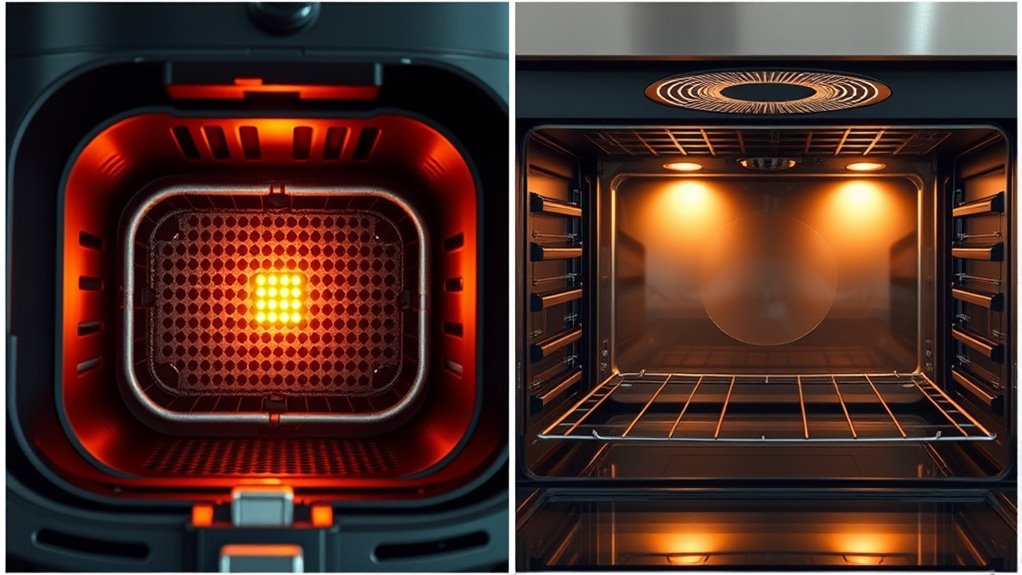
When comparing heating elements, the key difference lies in how heat is distributed throughout the appliance. Top-bottom heating elements in convection ovens primarily emit heat from the top and bottom, creating a more direct, zone-specific heat pattern. This design tends to use more energy, as the heating elements work harder to maintain even temperatures across larger spaces. In contrast, circular heat, common in air fryers, features a single, centrally located element surrounded by a fan, promoting even heat distribution. This design improves energy efficiency by reducing the need for continuous, intense heating. You’ll notice that the heating element design directly influences how quickly your food cooks and how much energy the appliance consumes during operation. Understanding heat distribution can help you choose the appliance that best suits your cooking needs and energy efficiency goals.
The Role of Fan Speed and Placement in Heat Circulation
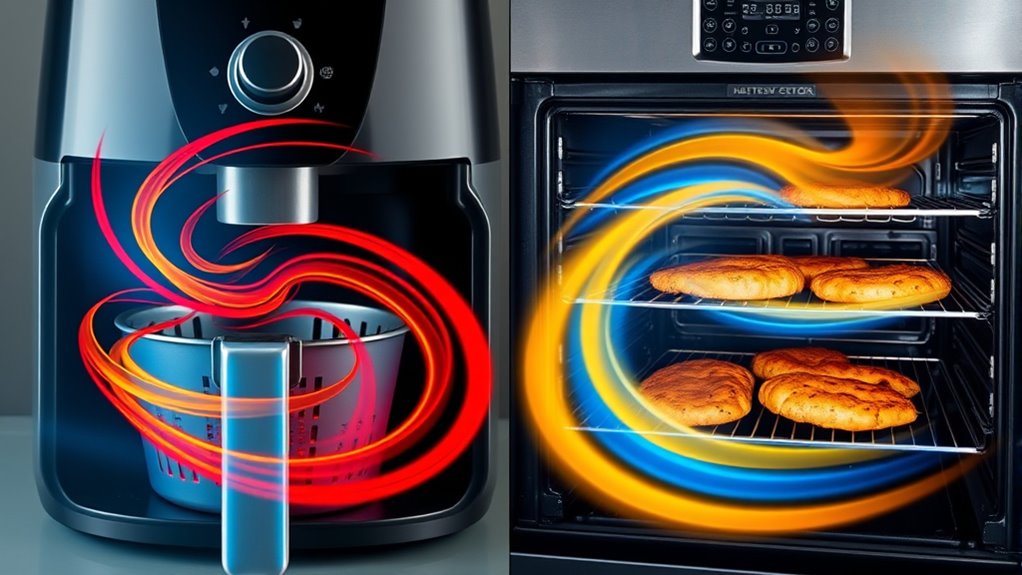
Your appliance’s fan speed and placement play a vital role in how evenly heat circulates. Adjusting the fan speed can improve cooking efficiency, while proper placement guarantees consistent airflow. Understanding these factors helps you get better results from your air fryer or convection oven. Efficient heat circulation is crucial to prevent hotspots and ensure uniform cooking.
Fan Speed Variations
Fan speed and placement play a crucial role in how evenly heat circulates inside an air fryer or convection oven. Adjusting fan speed directly impacts airflow regulation, which determines how uniformly heat distributes around your food. Higher fan speeds create more vigorous airflow, leading to faster cooking and crisper results, but may risk uneven heating if not well-controlled. Conversely, lower fan speeds promote gentler circulation, allowing for more even heat transfer, ideal for delicate dishes. Some models offer adjustable fan settings, giving you control based on your cooking needs. Proper fan speed ensures ideal heat distribution, preventing hot spots or cold zones. Understanding these variations helps you fine-tune your appliance’s performance, resulting in better-cooked, evenly browned dishes every time. For those interested in vehicle performance, fan speed control is also a key factor in tuning for optimal engine cooling and efficiency.
Placement Impact on Heat
Proper placement of the fan and heating elements considerably influences how heat circulates inside your appliance. When fans are positioned correctly, heat retention improves, keeping the temperature consistent and reducing energy usage. Misplaced fans can create uneven heat, causing hot spots or cold areas, which hampers cooking efficiency. This uneven distribution affects energy efficiency and might require longer cooking times. Here’s a quick comparison:
| Fan Placement | Effect on Heat Circulation |
|---|---|
| Central Fan | Even heat, better heat retention |
| Side Fan | Possible uneven heating, less efficient |
| Top/Bottom Fan | May cause hot spots or cold zones |
Optimizing fan placement ensures better heat retention and more efficient, consistent cooking. Proper design and heat distribution technology play a crucial role in achieving optimal results.
Circulation Efficiency
Efficient heat circulation in air fryers and convection ovens depends heavily on both fan speed and placement. Proper fan settings reduce airflow turbulence, ensuring smooth, even airflow. Correct fan placement minimizes heat layering, preventing hot spots and cold zones. To optimize circulation, consider these factors:
- Adjust fan speed for steady airflow without creating excessive turbulence.
- Position the fan centrally for uniform heat distribution.
- Maintain proper distance between food and heating elements to reduce heat layering.
- Use consistent airflow patterns to avoid airflow turbulence that disrupts even cooking.
- Ensuring the fan’s optimal placement can significantly improve overall heat circulation and cooking performance.
Impact of Heat Patterns on Cooking Times and Results
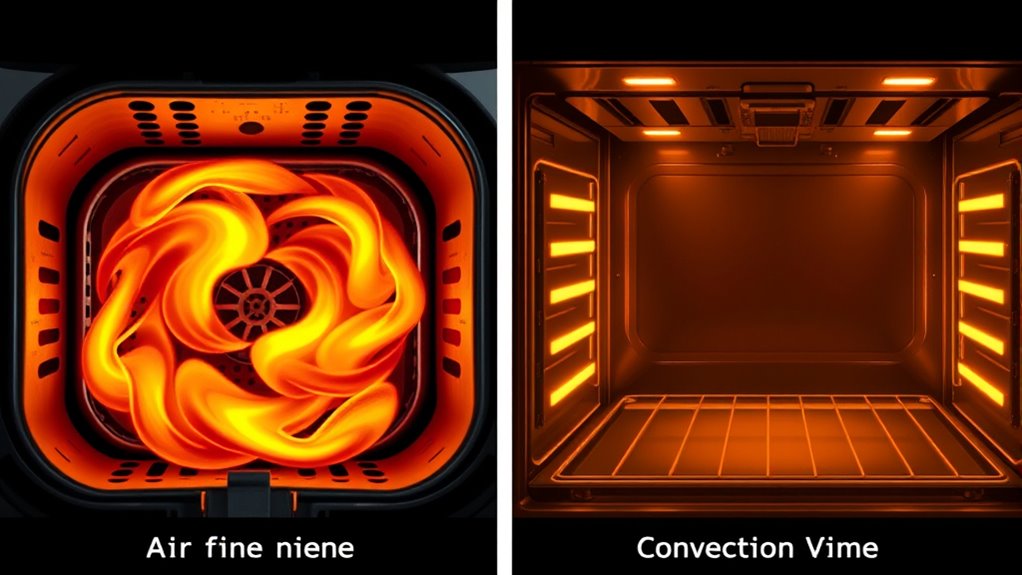
Because heat distribution varies between air fryers and convection ovens, the patterns of heat circulation markedly influence cooking times and results. In a convection oven, more consistent heat circulation promotes better heat retention, which can lead to more even cooking and slightly longer cooking times. Conversely, air fryers often concentrate heat in a smaller space, reducing heat retention but speeding up cooking due to intense, localized heat. This difference affects energy efficiency as well: convection ovens may consume more energy over longer periods, while air fryers typically cook faster, reducing energy use. Your choice impacts not just the timing but also how thoroughly your food cooks and how efficiently your appliance uses energy, depending on the heat pattern and circulation design.
Flavor and Texture Differences Stemming From Heat Distribution
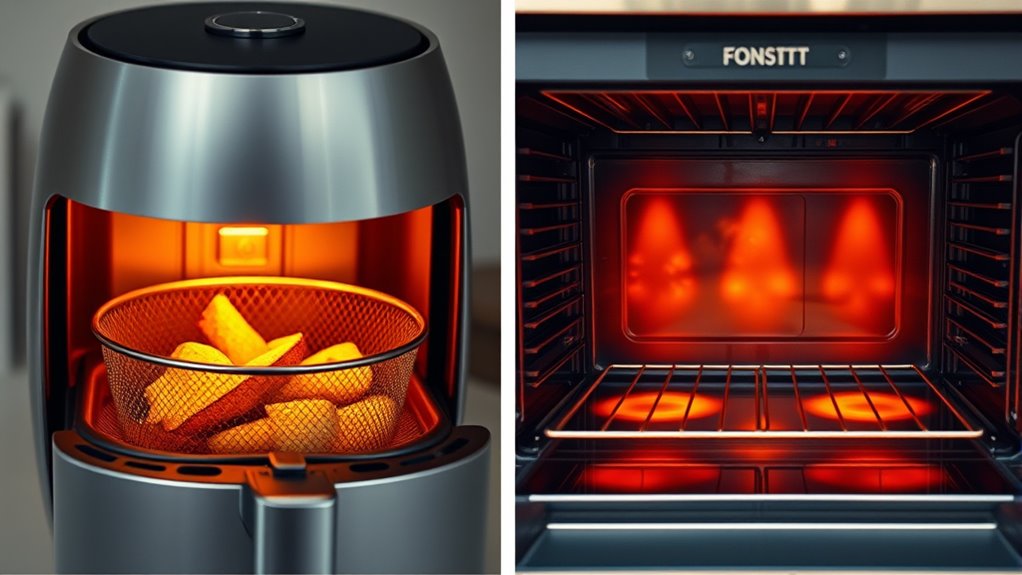
The way heat is distributed in an air fryer versus a convection oven considerably influences the flavor and texture of your food. Because of this, your seasoning techniques and cookware compatibility play essential roles in achieving desired results. For example:
Heat distribution in air fryers versus convection ovens impacts flavor and texture significantly.
- Crispiness: Air fryers produce a more uniform heat, creating a crispier exterior due to rapid air circulation.
- Moisture retention: Convection ovens tend to retain more moisture, resulting in juicier textures.
- Flavor development: Even heat distribution enhances seasoning absorption, amplifying flavor.
- Cookware choices: Non-stick and metal cookware work well in both, but some materials may heat unevenly in one appliance over the other.
Understanding these differences helps you optimize your cooking style for better flavor and texture.
Common Cooking Scenarios for Each Appliance Type
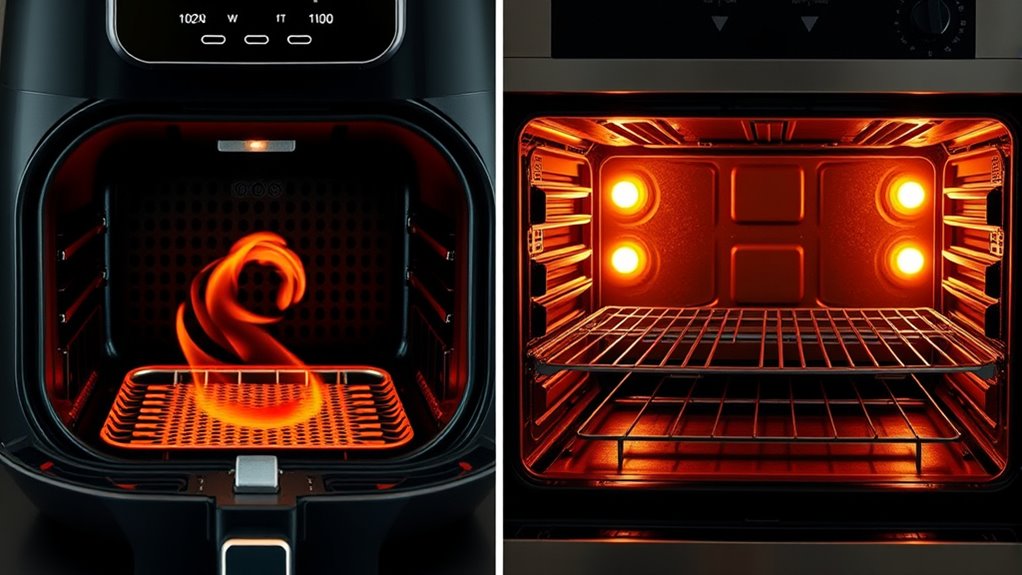
Both air fryers and convection ovens excel in cooking crispy, evenly cooked dishes, but their best uses depend on the specific scenario. If you’re baking cookies, roasting vegetables, or preparing baked goods, a convection oven offers greater baking versatility due to its larger capacity and more consistent heat distribution. It’s ideal for multi-layer baking and larger batches. On the other hand, if you want quick, efficient frying with less oil, an air fryer delivers superior frying efficiency. It’s perfect for crispy fries, chicken wings, or snacks. For small, fast meals that require crispiness, the air fryer is more convenient. Each appliance suits different needs—convection ovens excel in baking versatility, while air fryers shine in frying efficiency.
Tips for Optimizing Cooking With Different Heat Patterns
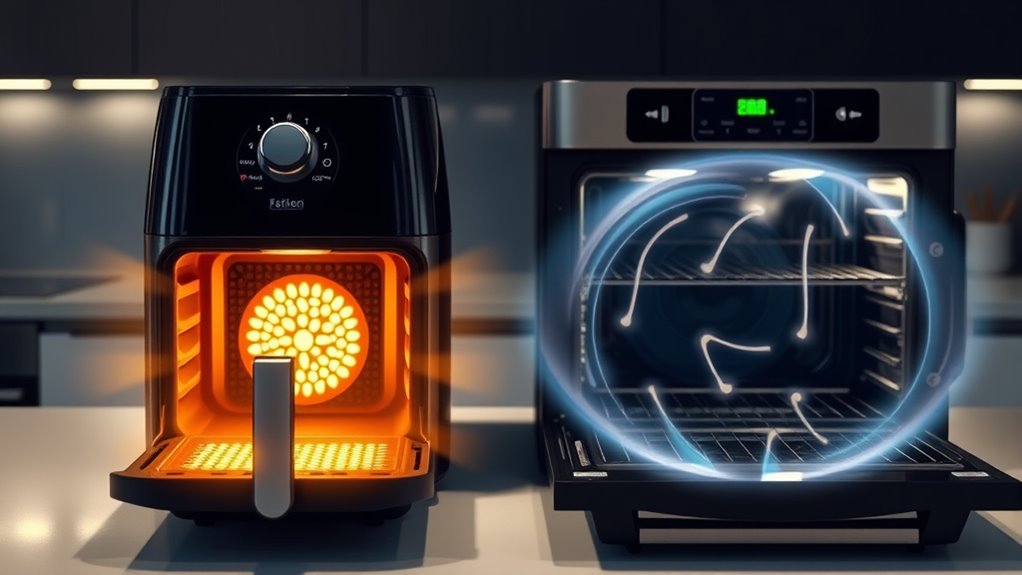
Understanding how each appliance distributes heat can substantially improve your cooking results. To maximize baking versatility and energy efficiency, consider these tips:
Master heat distribution for better baking and energy savings with simple appliance tips.
- Adjust placement: Position food closer to the heat source for faster cooking with convection ovens, or spread items evenly for even browning in an air fryer.
- Use preheating: Preheat your appliance to guarantee consistent heat, especially for delicate baked goods.
- Rotate and shake: Turn or shake food halfway through to promote even heat distribution, reducing cooking time and energy use.
- Customize settings: Use specific temperature and fan speed adjustments tailored to the heat pattern, enhancing baking versatility while conserving energy.
Frequently Asked Questions
How Does the Size of the Appliance Affect Heat Circulation?
The size of your appliance impacts heat circulation by influencing airflow efficiency and cavity insulation. A smaller unit generally offers better airflow, leading to more uniform heat distribution, while larger appliances might struggle with airflow, causing uneven cooking. Proper cavity insulation helps retain heat, but if the appliance is too big or too small for your needs, it can affect how effectively heat circulates, so choose a size that balances airflow and insulation for ideal results.
Can Heat Pattern Differences Influence Cooking Safety?
Imagine your kitchen as a battlefield where heat patterns fight for dominance. These differences can impact safety considerations because uneven heat distribution may cause hot spots, risking burns or undercooked food. If you notice poor heat uniformity, it’s essential to monitor cooking closely. Understanding how heat patterns influence your appliance helps you cook safely and efficiently, ensuring every meal is both delicious and secure.
Do Different Materials in the Oven Walls Impact Heat Distribution?
Different materials in your oven walls do affect heat distribution, impacting cooking performance. Wall insulation helps retain heat, making sure your food cooks evenly, while material conductivity determines how quickly heat transfers through the walls. If your oven walls are made of highly conductive materials, heat spreads more uniformly. Conversely, poor conductivity can create hot spots. So, the type of wall material plays a vital role in achieving consistent, safe cooking results.
How Do Ambient Kitchen Temperatures Alter Heat Performance?
Managing your kitchen’s mood means monitoring ambient temperatures, which can muddle heat performance. When the environment’s warmer or cooler, microwave interference and temperature sensors might misread or malfunction, leading to uneven cooking. You should stay vigilant, ensuring consistent conditions. By controlling your kitchen climate, you help your appliances deliver precise, proper heat, preventing pesky problems like uneven browning or undercooked spots, and making your meals more perfect and predictable.
Are Certain Food Types More Suited to Specific Heat Patterns?
You’ll find that certain food types respond better to specific heat patterns, affecting cooking textures and energy efficiency. For example, crispy foods like fries benefit from rapid, high heat, ideal in air fryers, while baking bread needs steady, even heat, suited for convection ovens. Choosing the right appliance based on these patterns helps you achieve better textures and saves energy, making your cooking more efficient.
Conclusion
Understanding how heat circulates in your air fryer and convection oven helps you cook smarter. For instance, if you’re roasting veggies, the even heat of a convection oven ensures crispy edges. Meanwhile, an air fryer can give you that perfect, crispy fry without added oil. By choosing the right appliance for your dish, you’ll enjoy better results every time. So, next time, consider how heat patterns can elevate your cooking game.