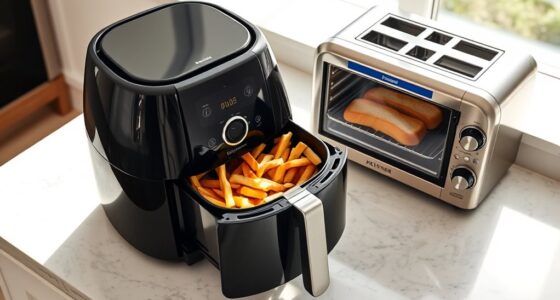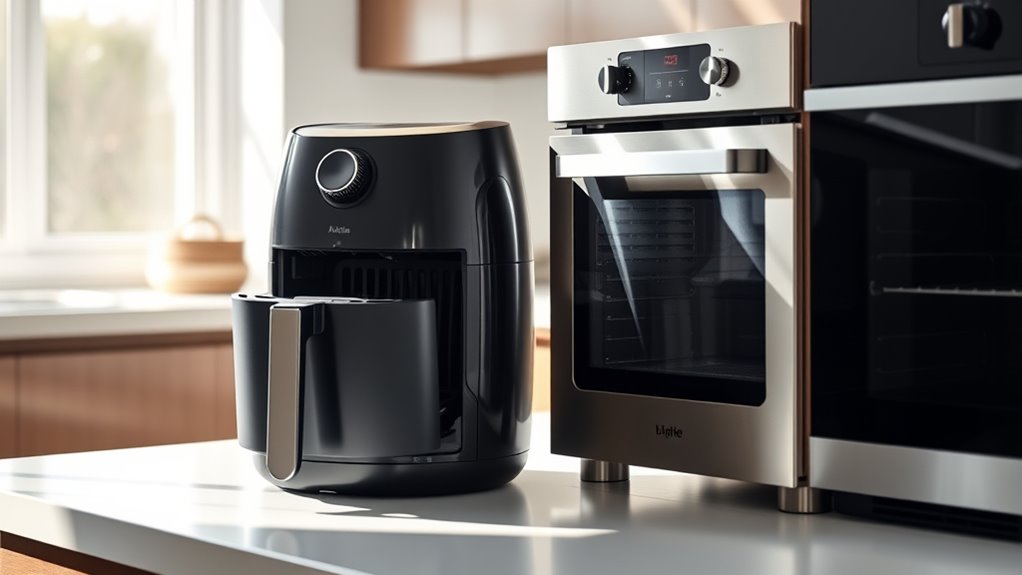

If you want to save more power, an air fryer is generally better than a traditional oven. It heats up faster, uses less energy, and cooks food quicker, especially for small meals or snacks. Its compact size reduces energy needed to reach cooking temperature. Overall, an air fryer tends to be more energy-efficient for everyday quick cooking. To see how these differences add up and find the best choice for your needs, keep exploring further.
Key Takeaways
- Air fryers heat up quickly with smaller elements, consuming less energy than traditional ovens.
- Faster cooking times in air fryers reduce overall energy use for small meals.
- Conventional ovens require longer preheating and maintain larger cavities, increasing energy consumption.
- For quick, small portions, air fryers are generally more energy-efficient than ovens.
- Ovens are better suited for large batches, but for daily quick meals, air fryers save more power.
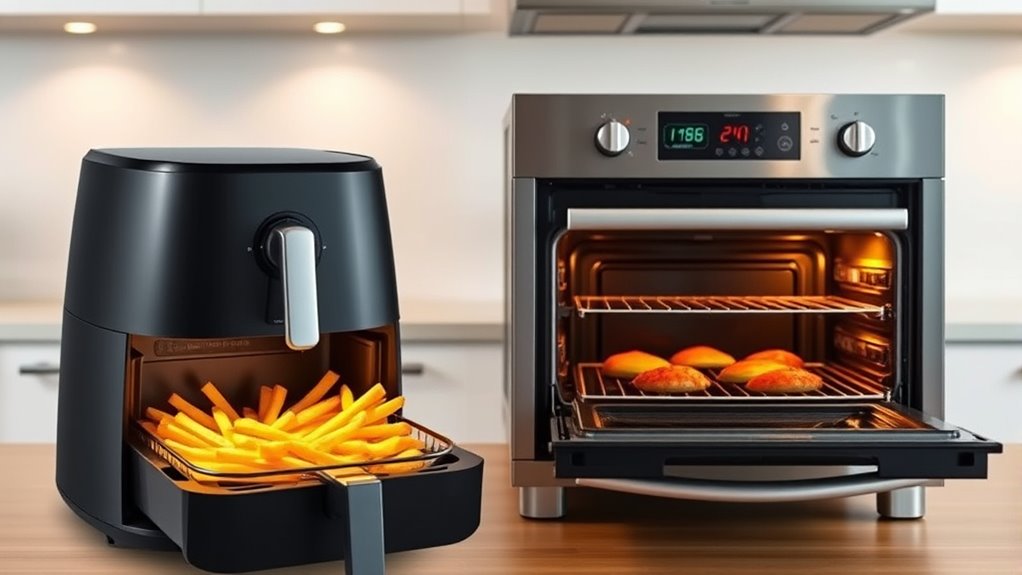
When comparing energy consumption, air fryers often stand out as a more efficient option than traditional ovens. One major reason is their quick cooking speed. Air fryers heat up rapidly, often within minutes, allowing you to prepare meals faster than you would with a conventional oven. This not only saves you time but also reduces the amount of energy used during the cooking process. Since they operate with smaller heating elements and a compact cooking chamber, less energy is required to reach and maintain the right temperature. As a result, you’re likely to use less power overall, especially for smaller meals or quick snacks.
Another benefit of air fryers is their ability to deliver flavorful results while using less energy. Unlike traditional ovens, which often require preheating and longer cooking times, air fryers cook food quickly, sealing in moisture and flavor efficiently. This rapid cooking process helps retain the natural flavors and textures of your food, making your meals just as tasty, if not more so, than those prepared in a conventional oven. Because the hot air circulates rapidly around the food, it creates a crispy exterior without the need for excess oil or prolonged cooking. This means you’re not only saving energy but also preparing healthier, flavorful dishes with less fuss.
In addition, the smaller size of an air fryer means it requires less energy to reach the desired temperature and maintain it throughout cooking. Since traditional ovens have larger cavities and more heating elements, they consume more electricity to sustain high temperatures over longer periods. If you’re cooking small portions or quick meals, using an air fryer is more energy-efficient because it heats up quickly and cools down fast once done. This efficient heat transfer results in less wasted energy, making it a smarter choice for saving power.
While traditional ovens are better suited for large batches or complex baking tasks, they tend to be less energy-efficient for everyday quick meals or snacks. Air fryers, with their faster cooking times, rapid heat-up, and ability to retain flavor, are ideal for everyday use when saving energy is a priority. Their efficiency in both time and power consumption makes them a practical and eco-friendly kitchen appliance. So, if you’re looking to cut down on energy use without sacrificing flavor or cooking speed, the air fryer is a compelling choice that aligns well with modern, energy-conscious lifestyles. Additionally, understanding the power consumption of your appliances can help you make more informed decisions to reduce your overall energy footprint.
Frequently Asked Questions
Do Air Fryers Use More Electricity Than Traditional Ovens?
You’ll find that air fryers generally use less electricity than traditional ovens because they heat up faster and cook more quickly. This makes them more energy-efficient for small meals. In an appliance comparison, air fryers are often more power-savvy for quick snacks, while ovens may be better for large batches. So, if saving energy is your goal, an air fryer can be a smarter, more efficient choice.
How Does Cooking Time Impact Energy Consumption in Both Appliances?
Imagine a warm kitchen, where your choice of appliance shapes your energy bill. When you keep cooking duration short, both air fryers and ovens use less power, boosting power efficiency. Longer cooking times increase energy consumption, making your appliances work harder. So, to save power, opt for quick meals and efficient settings. Your mindful timing helps conserve energy, turning everyday cooking into an eco-friendly act of love.
Are Newer Models of Air Fryers More Energy-Efficient Than Older Ones?
Yes, newer air fryer models tend to be more energy-efficient than older ones. Improved appliance design, such as better insulation and faster cooking technology, helps reduce energy consumption. Modern models often feature advanced heating elements and smarter controls, allowing you to cook more quickly and efficiently. By choosing the latest air fryers, you can save power while enjoying the same great results, making them a smarter, eco-friendly option.
Does the Size of the Oven or Air Fryer Affect Energy Usage?
Have you ever wondered how size impacts energy use? Larger ovens or air fryers typically consume more power because they heat more space, but their capacity differences mean they can cook more at once, potentially saving energy per serving. Smaller models use less energy overall, but may require multiple batches. So, your choice depends on your cooking needs and how efficiently you want to use energy based on size impact.
Which Appliance Heats up Faster and Saves More Energy Initially?
You’ll find that an air fryer heats up faster due to its smaller size and superior preheating efficiency. It reaches cooking temperatures quickly and maintains temperature stability better, saving energy right from the start. Ovens take longer to preheat and often have less consistent temperature control, which can lead to higher energy consumption initially. So, for quick heating and initial energy savings, an air fryer is the better choice.
Conclusion
So, next time you’re deciding between an air fryer and an oven, consider how a simple choice can unexpectedly save you energy—and money. It’s funny how a small appliance like an air fryer, often just a kitchen gadget, can actually make a difference in your power bill. Sometimes, the tiniest decisions have the biggest impact. So, whether you’re cooking for one or many, think about energy use—you might just find that saving power is easier than you thought.