
Wattage shows how much power your kitchen appliances use, affecting their performance, energy bills, and electrical needs. Higher wattage means faster heating and better performance, but it can also raise costs and require a stronger power source. To choose the right wattage, check appliance labels, consider what you need, and guarantee your wiring can handle the load. Want to understand how wattage impacts your kitchen’s efficiency? Keep exploring for more insights.
Key Takeaways
- Understand the wattage of appliances to ensure your electrical system can support their combined power needs safely.
- Higher wattage appliances heat faster but consume more energy; balance performance with energy efficiency.
- Check appliance labels for wattage details to accurately estimate power consumption and prevent overloads.
- Match wattage with your power source capacity, avoiding outlets or circuits that can’t handle high-wattage devices.
- Regular wiring inspections and proper maintenance ensure safety and compliance when using high-wattage kitchen appliances.

Emeril Lagasse Extra Large French Door Air Fryer Toaster Oven Combo, 24 Cooking Functions and Digital Controls, 7 Accessories Included, Stainless Steel Finish, 26QT Capacity
A VERSATILE AIR FRYER AND MULTI-COOKER COMBO: Elevates practically any meal, from air frying quick after-school snacks to...
As an affiliate, we earn on qualifying purchases.
Understanding Wattage and Its Role in Kitchen Appliances

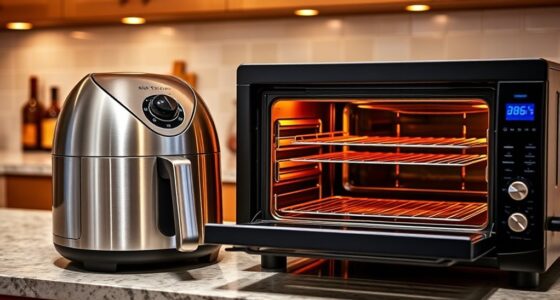
Wattage measures how much electrical power an appliance uses when it’s running, which directly impacts its performance and energy consumption. Knowing the wattage of your appliances helps you understand how much energy they require to operate. Small gadgets might use as little as 5W, while high-power ranges can consume over 12,000W. For kitchen appliances, wattage varies markedly: compact ranges often use around 3,000–4,000W, and standard ranges typically consume 6,000–8,000W. Each burner on an electric cooktop can range from 1,400W to 3,700W, influencing cooking speed and energy use. Higher wattage usually means faster heating and better performance but also leads to increased energy consumption. Understanding wattage helps you estimate costs, select suitable appliances, and improve your kitchen’s energy efficiency. Proper wattage selection ensures your appliances operate safely and efficiently, avoiding overloads or unnecessary energy waste. Additionally, considering appliance energy monitoring features can help track and optimize your energy use over time, especially when assessing the power requirements of different devices. Being aware of energy efficiency can also help reduce your overall electricity bills and environmental impact. Recognizing the relationship between wattage and performance can further aid in choosing appliances that meet your specific needs without excess energy use.
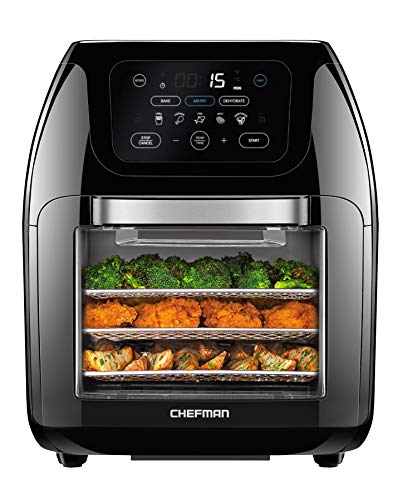
CHEFMAN Multifunctional Digital Air Fryer+ Rotisserie, Dehydrator, Convection Oven, 17 Touch Screen Presets Fry, Roast, Dehydrate, Bake, XL 10L Family Size, Auto Shutoff, Large Easy-View Window, Black
Versatile countertop cooking: Air fry, bake, dehydrate, rotisserie, or roast to crispy perfection in one convenient appliance
As an affiliate, we earn on qualifying purchases.
How to Read and Calculate Appliance Wattage
To accurately determine how much power an appliance uses, start by locating its label or sticker, usually found on the back, bottom, or inside the door. This label displays important information about the appliance wattage. To read wattage: 1. Find the power consumption listed in watts (W), volts (V), or amps (A). 2. If only voltage and current are provided, use the formula: Watts = Volts x Amps to calculate the wattage. 3. Some appliances show wattage directly, making it easier to identify their power needs. Checking the filtration systems can also help you understand the appliance’s efficiency and suitability for your needs. Additionally, understanding the energy efficiency of appliances can guide you towards more cost-effective choices. Being aware of water conservation principles can further help you select appliances that are environmentally friendly and reduce water and energy use. Considering security features when choosing appliances can also enhance your home’s safety and security. Incorporating appliance maintenance routines can ensure optimal performance and accurate wattage readings. Using this method helps you quickly assess your appliances’ energy use and guarantees you select the right power for your kitchen needs.

Cosori 9-in-1 TurboBlaze Air Fryer 6 Qt, Premium Ceramic Coating, 90°–450°F, Precise Heating for Even Results, Air Fry, Roast, Bake, Broil, Dry, Frozen, Proof, Reheat, Keep Warm, 120V, Dark Gray
𝘼𝙞𝙧 𝙁𝙧𝙮𝙚𝙧 𝙐𝙥𝙜𝙧𝙖𝙙𝙚: Innovative TurboBlaze Technology delivers a powerful 3600 rpm fan speed and temperatures up to 450℉,...
As an affiliate, we earn on qualifying purchases.
Average Power Consumption of Common Kitchen Devices
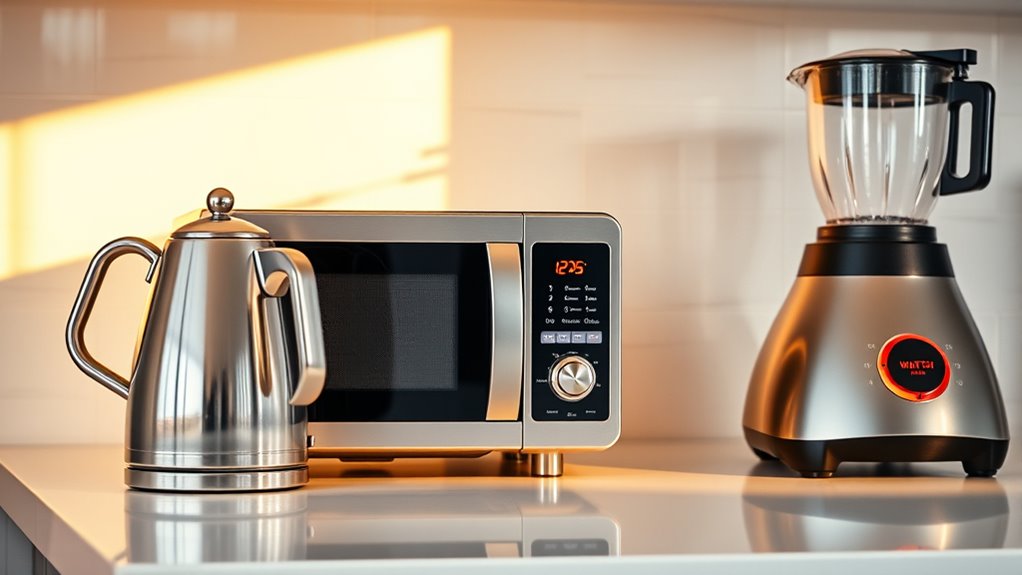
Understanding the typical power consumption of common kitchen devices helps you better manage energy use and avoid surprises on your electricity bill. Electric appliances vary widely in wattage, affecting their energy consumption. For example, electric ovens usually run between 1,000 and 5,000 watts, but larger models can surge up to 12,000 watts during preheating. Microwave ovens generally use 600 to 1,200 watts, heating food quickly and efficiently. Electric cooktops or ranges have burners consuming 1,400 to 3,700 watts, with total usage reaching 6,000 to 12,000 watts when multiple burners are on. Small appliances like toasters, blenders, and food processors typically operate between 200 and 1,000 watts. Refrigerators usually consume 100 to 800 watts, depending on size and energy efficiency. Sound healing science indicates that certain frequencies used in kitchen appliances can influence cellular regeneration and overall health. Additionally, understanding energy efficiency standards can help you select more power-conscious appliances for your kitchen. Being aware of power consumption patterns can also assist in optimizing your energy usage and lowering costs. Moreover, selecting appliances with high energy ratings can significantly reduce overall electricity consumption over time. Recognizing how power management techniques can extend appliance lifespan and efficiency is also beneficial.

Ninja Air Fryer with Air Crisp | 5 QT Capacity fits up to 4lbs of Fries | 4-in-1 Pro Air Fry, Roast, Reheat, Dehydrate | 400°F Max Temp | 1750 Watts | W/Nonstick Basket & Crisper Plate | Grey | AF141
AIR CRISP TECHNOLOGY: 400℉ superheated air surrounds food for hot, crispy results with little to no oil.
As an affiliate, we earn on qualifying purchases.
Impact of Wattage on Energy Costs and Efficiency
The power and energy costs associated with household appliances directly depend on their wattage ratings. Higher wattage appliances, like ovens over 8,000W, consume more energy and drive up your monthly electricity bill compared to energy-efficient devices like 10W LED bulbs. Using appliances with lower wattage that match your actual needs boosts energy efficiency and reduces power consumption. To maximize savings, consider:
- Choosing energy-efficient appliances with lower wattage ratings.
- Avoiding oversized appliances that waste energy.
- Managing appliances with high surge wattages to prevent unnecessary power spikes.
- Being aware of power management strategies to optimize energy use and reduce costs. Regularly monitoring appliance energy consumption patterns can help identify opportunities for further savings. Incorporating smart technology in your appliances can also enhance control over energy use and improve efficiency. Additionally, understanding power supply stability can prevent equipment damage and ensure consistent performance.
Selecting the Right Power Source for Your Kitchen Needs

Choosing the right power source for your kitchen appliances is essential to guarantee safety and efficiency. Your appliances’ wattage determines the electrical current needed and influences the type of power source required. Most electric ranges range from 3,000 to 12,000 watts, so you’ll need a suitable power source that can handle this load. Standard household outlets in the U.S. support about 1,800 watts, which isn’t enough for high-wattage appliances like ovens or cooktops; these often need a 240V power connection. To avoid overloads, sum the wattages of all appliances you’ll use simultaneously. Using a power meter helps you measure actual wattage, ensuring your electrical system or generator can meet your kitchen’s power demands safely and efficiently. Incorporating smart home technology can also optimize energy use and monitor power consumption effectively. Understanding personality traits can assist in better managing household energy habits for more efficient usage. Additionally, being aware of Glycolic Acid benefits can influence skincare routines, which is also an important aspect of a well-equipped and efficient kitchen environment. Moreover, knowing the safety standards for electrical appliances can prevent hazards and ensure compliance with local regulations. Regularly inspecting your electrical wiring ensures that connections remain safe and capable of handling your appliances’ power requirements.
Frequently Asked Questions
What Is the Best Wattage for a Kitchen?
When choosing the best wattage for your kitchen, consider your cooking habits and appliance needs. If you mainly do basic cooking, appliances around 3,000 to 6,000 watts should suffice, saving energy and costs. For more intensive cooking or larger families, look for ranges with higher wattages, up to 12,000 watts. make certain your electrical system can handle the total wattage to avoid overloads and maintain efficient, safe operation.
How Many Watts Does a Kitchen Use?
Your kitchen typically uses between 1,000 and 4,000 watts, depending on the appliances you run at once. An oven might use 2,000 to 5,000 watts, while stovetop burners draw 1,400 to 3,700 watts. Small appliances like toasters and blenders use less, around 300 to 1,000 watts. Lighting consumes only about 10 to 50 watts, making overall power consumption quite manageable based on your appliance usage.
What Appliances Can Run on 300 Watts?
You can run small kitchen appliances on 300 watts, like blenders, food processors, and toasters for short periods. Portable induction cooktops or single burner units in eco mode also work well. Additionally, low-power LED lights, digital timers, and small radios function comfortably on this wattage. Keep in mind, larger appliances like coffee makers and kettles need more power, so they won’t operate efficiently on a 300W supply.
Is 2000 Watts a Lot of Power?
Think of 2000 watts as a sturdy engine powering your home. Yes, it’s quite a bit of power, enough to run several small to medium appliances at once. You can keep your microwave, blender, and even a small heater running simultaneously. It’s ideal for emergencies or backup power, but won’t handle large appliances like dryers or air conditioners. So, it’s powerful, but not limitless—perfect for everyday needs without overloading.
Conclusion
Choosing the right wattage for your kitchen appliances isn’t just a good idea—it’s the key to unleashing superpowers of efficiency and savings. Get it wrong, and you could be wasting more energy than a spaceship in orbit! By understanding wattage, you’ll wield the power to slash costs, boost performance, and turn your kitchen into a high-tech powerhouse. So, arm yourself with knowledge and make wattage work for you—your wallet and planet will thank you!