
TL;DR

Get kitchen gear delivered free with Prime
- Fast, free delivery on millions of items
- Prime Video, Amazon Music and more included
- Member-only deals all year
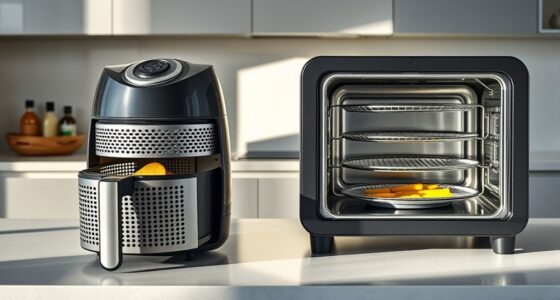
Small kitchens need compact air fryers that save space while delivering crisp, tasty results. This guide covers best models, key features, and practical tips to fit an air fryer into your tiny kitchen with ease.
Imagine trying to fit an entire convection oven in a closet-sized kitchen. That’s the challenge many small-space dwellers face. But with the right air fryer, you can enjoy crispy fries, roasted veggies, and reheated leftovers without sacrificing counter space.
In this guide, you’ll learn how to pick an air fryer that ticks all the boxes: size, capacity, ease of use, and cleaning. Whether you live in an apartment, RV, or a tiny home, these tips will help you turn a cramped corner into a culinary playground.
Measure your available space carefully, including clearance for opening baskets and vents.
Square baskets maximize cooking area in tight corners better than round ones.
A 2–3 quart model suits singles or couples, while 4-quart units can handle small meals for two.
Latest designs with vertical stacking and smart controls save space and add convenience.
Always maintain proper ventilation and avoid operating under cabinets to prevent overheating.
What makes an air fryer perfect for tiny kitchens?
Air fryers designed for small kitchens are all about compactness and efficiency. They cook with rapidly circulated hot air, functioning much like a mini convection oven. The best models heat up quickly, use less energy, and fit into tight spaces.
For example, a 2-quart air fryer can roast vegetables or reheat leftovers in less than 15 minutes, without heating your entire apartment. The key is choosing a model that offers enough capacity without overwhelming your limited counter space.
Think about your typical meals. If you mostly prepare snacks or single servings, a 2-3 quart unit will suffice. But if you cook for two or want to batch-cook, aim for 3-4 quarts. Larger models often sound appealing but can turn your space into a cluttered corner.
Understanding why size matters is crucial. Smaller models are not only easier to store but also heat up faster and consume less energy, making them more efficient for quick meals. However, a tradeoff exists: smaller capacity means you might need to cook in multiple batches for larger meals, which could slightly increase total cooking time. Balancing capacity with available space ensures you don’t compromise on meal size or convenience.
compact air fryer for small kitchens
As an affiliate, we earn on qualifying purchases.
As an affiliate, we earn on qualifying purchases.
How to measure and compare the perfect size for your small kitchen
Choosing the right size isn’t just about capacity—it’s about the full footprint. Here’s how to make sure your new air fryer fits:
- Measure your available counter space, including clearance for opening the basket.
- Check the appliance’s external dimensions—width, depth, and height—plus handles and vents.
- Think about storage. Will you keep it out or store it away after use?
- Prioritize shape: square baskets often maximize space, making it easier to fit into tight corners.
For example, a 3-quart square-basket model might measure 11 inches wide and 9 inches deep. If your counter has a 15-inch clearance, it leaves room to work or store nearby.
Understanding the implications of size helps you avoid purchasing an appliance that looks compact but actually requires more space due to bulky handles or vents. It also influences how you plan your kitchen layout—knowing exact dimensions prevents frustration and ensures your air fryer integrates seamlessly into your limited space.
Remember, a smaller footprint with a larger capacity isn’t always possible. Focus on the usable cooking area—wide, shallow baskets cook more evenly than deep, narrow ones—and consider how the shape complements your kitchen’s layout. This way, you maximize efficiency without sacrificing functionality.
Compare top small-space air fryers side-by-side
| Model | Size (inches) | Capacity | Shape | Special Features |
|---|---|---|---|---|
| MiniSquare 2.0 | 11 x 9 x 12 | 2 quarts | Square | Dishwasher-safe basket, manual dial |
| CompactChef 3 | 12 x 10 x 13 | 3 quarts | Square | Digital controls, preset programs |
| SlimFit Dual | 10 x 8 x 14 | 2.5 quarts | Round | Dual baskets, independent cooking |
| LiteToaster Oven Air Fryer | 15 x 13 x 9 | 4 quarts | Rectangular | Multi-functions, convection bake |
For tiny kitchens, a square-basket model often offers the best use of space. The MiniSquare 2.0 has a small footprint but still cooks enough for a single person. Meanwhile, a toaster-oven combo might be larger but replaces multiple appliances. Recognizing how dimensions translate into real kitchen space helps you choose an appliance that fits comfortably without crowding your countertops or storage areas.
Keep in mind that the shape and size of the appliance impact how you organize your kitchen. For example, square baskets fit snugly into corners, maximizing the available space, while round baskets may leave unused gaps. Comparing these details ensures you select a model that truly integrates into your small kitchen environment.
Latest innovations that make small kitchens happier
Manufacturers are pushing the limits of space efficiency. Stacked dual-zone models place two cooking chambers vertically, reducing width while maintaining capacity. This vertical stacking maximizes kitchen real estate by using height instead of width, which is often more limited in small spaces. Some models now feature viewing windows and internal lights—so you can check browning without opening the door. This reduces heat loss and allows for more precise cooking, especially when space for multiple appliances is tight.
Newer appliances often have smart controls, like app connectivity and pre-programmed recipes. These features add convenience by simplifying operation, but they can also influence the appliance’s overall size and cost. For example, smart models may require additional space for control modules or wiring, which could impact your choice if your space is very limited.
Material improvements matter, too: nonstick coatings are more durable, and dishwasher-safe baskets make cleanup a breeze. For small kitchens, ease of cleaning and low maintenance are big selling points because they reduce clutter and improve efficiency.
One recent hit is the stacked dual-zone air fryer, which cooks different foods at different temps in separate chambers. It’s perfect if you want crispy chicken and roasted veggies at the same time without mixing flavors or taking up extra space. This innovation exemplifies how space-saving design can enhance versatility and meal variety in tiny kitchens.
Why a compact air fryer is a game-changer for tiny kitchens
Imagine crisp, golden fries made in under 15 minutes—without heating your full oven. That’s what a compact air fryer can do for small kitchens. It’s a quick, energy-efficient way to enjoy fried foods, roasted veggies, and reheated leftovers.
Compared to a full-size oven, a small air fryer uses about 50% less energy while preheating in just a few minutes. This reduction in energy consumption not only saves money but also decreases your environmental footprint—a significant consideration for eco-conscious small-space dwellers.
For example, during a heatwave, you can cook chicken wings or roasted potatoes without turning the entire apartment into a sauna. The hot circulating air allows for crispy results similar to deep frying but with much less oil and mess. Plus, the quick preheat times mean less waiting and more immediate meals.
Most importantly, a small air fryer can reduce your reliance on larger appliances, decluttering your counters and storage. This streamlined setup means more space for other essentials or even just a cleaner, more organized kitchen environment. The core benefit is not just in cooking but in transforming how you utilize limited space for maximum culinary output.
What to watch out for when choosing your tiny kitchen’s air fryer
Size isn’t everything. The biggest mistake is assuming a smaller model always equals better. You must consider capacity, ventilation, and how the model fits your cooking style.
For example, a 2-quart basket might be perfect for reheating a small plate but won’t cook a family-sized batch of fries. Also, check the physical dimensions—some models look small but have bulky handles or vents that eat up space. These hidden design elements can unexpectedly reduce usable space or interfere with your kitchen layout.
Ensure the model has enough clearance around vents to prevent overheating. Never operate an air fryer directly under cabinets or too close to walls—hot air needs room to circulate. Overlooking these details can lead to overheating, appliance damage, or safety hazards, which are especially problematic in small, confined kitchens.
And don’t forget noise and odors. Fans are loud, and cooking smells can linger longer in tight spaces. Choose a model with quiet operation if your kitchen is tight on ventilation, or consider placement strategies to minimize disruption.
Lastly, consider electrical needs—most small models need a dedicated outlet. Avoid extension cords, which can be fire hazards if overloaded. Ensuring proper electrical safety prevents potential accidents and prolongs your appliance’s lifespan.
Understanding these tradeoffs helps you select a model that balances size, safety, and functionality, ensuring your small kitchen remains safe, efficient, and enjoyable to cook in.
Top tips to store and use your air fryer in a tiny space
Maximize your small kitchen with smart storage and placement:
- Make a cardboard template of the footprint before buying—see if it fits your counter.
- Keep some breathing room around the vents for safe operation.
- Choose models with cord storage or flat tops—easy to tuck away or place under cabinets.
- If you rarely use it, store it in a cabinet or pull-out drawer. When in use, place it on a stable, heat-resistant surface.
- Use reusable silicone liners sparingly—they’re great for cleanup but can block airflow if overloaded.
- Shake or turn food halfway through cooking to promote even browning, especially in smaller baskets.
For example, a friend of mine keeps her 3-quart square air fryer on a small rolling cart. When she’s done, she slides it into a closet, freeing up her tiny countertop. This approach emphasizes that strategic storage and placement are key to maintaining a clutter-free, functional kitchen in tight quarters. Proper organization not only saves space but also makes daily cooking more convenient and less stressful, reinforcing that small spaces can be highly efficient when managed thoughtfully.
Frequently Asked Questions
What size air fryer is best for one person or a couple?
A 2- to 3-quart air fryer is ideal for singles or couples. It offers enough capacity for meals like crispy chicken wings or roasted veggies without taking up too much space, making it perfect for small kitchens.How much counter space and ventilation clearance does an air fryer need?
Most models need at least 3 inches of clearance around vents and a flat surface that can handle hot temperatures. Measure your counter carefully—allowing space for opening the basket and airflow is key to safe, efficient cooking.Can an air fryer safely operate beneath kitchen cabinets?
Only if there’s sufficient ventilation space—at least 3 inches of clearance. Operating directly under cabinets can cause overheating or damage. Always follow the manufacturer’s clearance instructions for safe use.Is a compact air fryer large enough to cook a complete meal?
Yes, for small meals or snacks. A 3-quart model can cook enough for one or two people, but for larger families, a bigger model or dual-basket design might be necessary. Overcrowding reduces crispiness, so cook in batches if needed.Are square baskets better than round baskets?
Generally, yes. Square baskets make better use of corner space, allowing you to fit more food in a flat layer. They’re especially advantageous in tiny kitchens where maximizing every inch counts.Conclusion
In tiny kitchens, a well-chosen air fryer can become your secret weapon—delivering crispy, flavorful dishes without hogging space or energy. Think smart about size, shape, and placement, and your compact kitchen will feel more like a culinary playground than a cramped corner.
Remember: the right model isn’t just about fitting in; it’s about fitting your needs. With a little planning, you’ll turn your small space into a big flavor factory that’s easy to clean, easy to store, and always ready to cook.
Halloween Picks
halloween
As an affiliate, we earn on qualifying purchases.