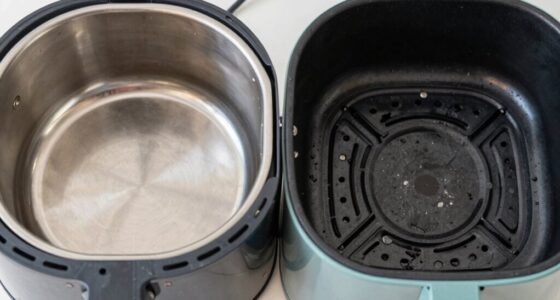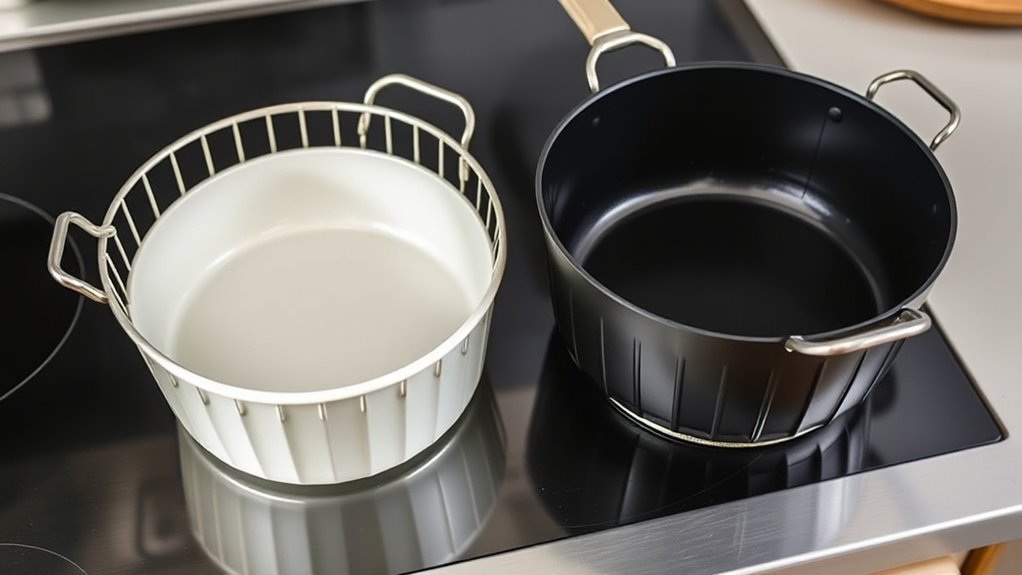

When choosing between ceramic-coated and PTFE nonstick baskets, consider safety, durability, and heat limits. Ceramic coatings are safer at high temperatures and less likely to release fumes, though they can chip over time. PTFE baskets offer excellent nonstick performance but risk fumes if overheated. Your cooking style and maintenance preferences are key. To find out more about which option suits you best, keep exploring the details ahead.
Key Takeaways
- Ceramic-coated baskets are safer for high-heat cooking and don’t emit harmful fumes, unlike PTFE baskets that can release fumes above 500°F.
- PTFE coatings offer superior nonstick performance but are more prone to damage if scratched or overheated.
- Ceramic coatings are generally more heat-resistant and less likely to degrade at high temperatures, though they may chip over time.
- Both baskets require gentle cleaning; avoid abrasive tools to prevent coating damage and prolong lifespan.
- Choice depends on safety priorities, cooking style, and maintenance preferences, with ceramic being more heat-tolerant and PTFE offering easier nonstick use.

When choosing a nonstick basket for your cooking needs, understanding the differences between ceramic-coated and PTFE (polytetrafluoroethylene) options is essential. Both serve the purpose of preventing food from sticking, but they differ markedly in composition, safety concerns, and maintenance. Ceramic-coated baskets are usually made from a base of metal, like aluminum, coated with a layer of ceramic that provides a smooth, nonstick surface. PTFE baskets, on the other hand, are coated with a synthetic polymer that offers excellent nonstick properties. Your choice depends on your cooking style, safety priorities, and how easy you want cleaning to be.
Safety concerns are a vital factor when evaluating these materials. Ceramic coatings are generally regarded as safer because they don’t contain potentially hazardous chemicals like PFOA or PTFE. They can withstand higher temperatures without breaking down, reducing the risk of releasing fumes. PTFE baskets are safe to use at normal cooking temperatures, but when heated beyond 500°F, they can start to break down and emit fumes that may cause flu-like symptoms in humans and be lethal to birds. If you’re concerned about health and safety, especially if you cook at high heat frequently, ceramic-coated baskets might be the better option. However, it’s important to note that the durability of ceramic coatings can vary; some may chip or crack over time, exposing the metal underneath. Additionally, coating durability can influence the lifespan and safety of the basket, making it an important consideration.
Cleaning these baskets properly extends their lifespan and maintains their safety. For ceramic-coated baskets, you’ll want to avoid abrasive scrubbers that can scratch the surface. Instead, use warm soapy water and a soft sponge or cloth for cleaning. Sometimes, stubborn residues may require a bit of baking soda paste or a gentle scrub with a non-abrasive brush. PTFE baskets are similarly easy to clean; they also respond well to warm water and mild detergents. Avoid using steel wool or harsh cleaners, as they can damage the coating and compromise its nonstick properties. Additionally, always allow the baskets to cool before cleaning to prevent warping or damage.
Frequently Asked Questions
Are Ceramic Coatings More Environmentally Friendly Than PTFE?
Yes, ceramic coatings are more eco-friendly than PTFE because they have a lower environmental impact during production and disposal. You’ll find ceramic coatings free of harmful chemicals like PFOA and PTFE, making them safer for the environment. They also tend to last longer, reducing waste. So, if eco-friendliness comparison matters to you, ceramic coatings offer a greener alternative, helping you cook with less environmental concern.
Can Ceramic-Coated Baskets Withstand Higher Cooking Temperatures Than PTFE?
Yes, ceramic-coated baskets can withstand higher cooking temperatures than PTFE. They offer better heat resistance, typically enduring up to 450°C (842°F), whereas PTFE coatings usually max out around 260°C (500°F). This makes ceramic coatings more durable under high heat, reducing the risk of coating degradation. So, if you’re cooking at higher temperatures, ceramic-coated baskets are a safer and more reliable choice due to their superior heat resistance and coating durability.
How Do Nonstick Coatings Affect Food Flavor Over Time?
Nonstick coatings can influence food flavor over time through flavor absorption and coating degradation. As the coating wears down, it may release particles or flavors can seep into the coating, altering taste. You might notice food tasting different or metallic after prolonged use. To prevent this, regularly inspect your basket for signs of degradation and replace it when the coating starts to chip or peel, ensuring your food stays fresh and flavorful.
Are Ceramic and PTFE Baskets Dishwasher Safe?
Your ceramic or PTFE basket probably isn’t dishwasher safe, and putting them in the machine could be disastrous! Dishwasher safety depends on coating durability—most ceramic-coated baskets tend to handle dishwashers better, but PTFE ones often don’t. To keep your baskets in top shape and prevent damage, hand washing is usually the safest bet. Don’t risk ruining your investment; always check manufacturer instructions for proper care.
What Is the Typical Lifespan Difference Between the Two Coatings?
Ceramic coatings typically last 1 to 3 years, depending on use and care, while PTFE coatings often last 2 to 5 years. The lifespan comparison shows PTFE coatings generally have greater durability, but ceramic coatings may chip or wear faster over time. You should consider how frequently you use and clean your baskets, as proper care can extend their coating durability and overall lifespan.
Conclusion
When choosing between ceramic-coated and PTFE nonstick baskets, consider your cooking style and safety preferences. Did you know that ceramic coatings are often free from potentially harmful chemicals like PFOA? While ceramic tends to last longer at high temperatures, PTFE offers superior nonstick performance initially. Ultimately, understanding these differences helps you pick the right basket for healthier, easier cooking. So, weigh your needs and enjoy stress-free food prep with the best nonstick option for you.