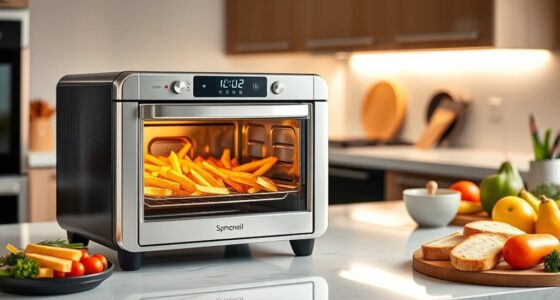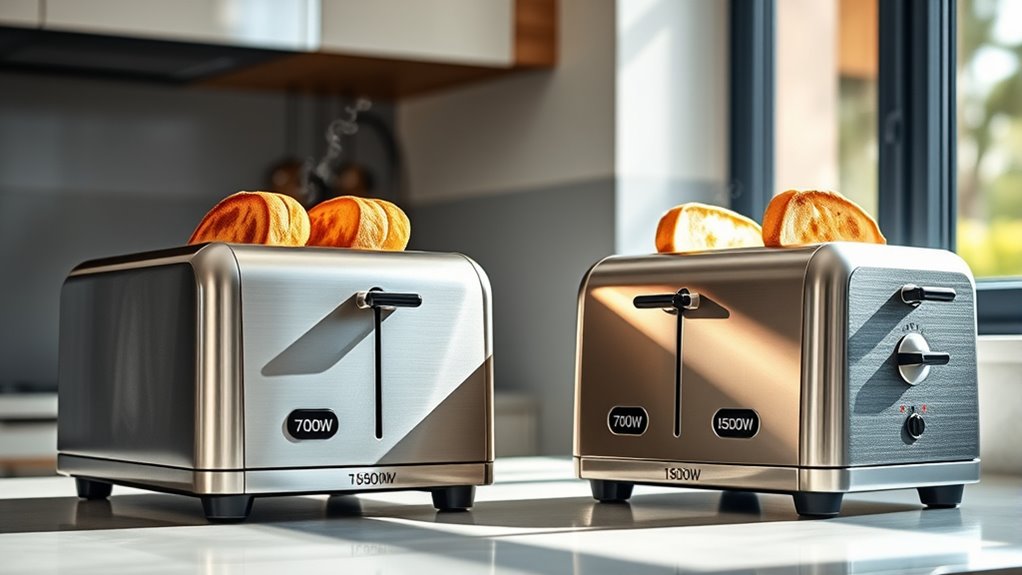

Higher wattage models often heat up faster, but that doesn’t always mean they cook better or more efficiently. Performance depends on factors like design, heat distribution, and stability of power supply. A high-wattage appliance might not outperform a well-designed, lower-wattage one if other features aren’t optimized. If you want to understand what truly influences cooking speed and efficiency, there’s more to uncover beyond just wattage.
Key Takeaways
- Higher wattage often heats food faster, but design and heat transfer efficiency also significantly impact cooking speed.
- Wattage measures energy use, not performance; efficient appliances can perform equally well at lower wattages.
- Voltage stability affects performance; fluctuations can slow heating regardless of wattage rating.
- Advanced features like sensors and insulation improve cooking times without relying solely on wattage.
- Real-world results show that high wattage doesn’t always mean better or quicker cooking outcomes.
Understanding Wattage: What Does It Really Mean?
Have you ever wondered what wattage truly indicates about a device’s performance? Many people assume that higher wattage means better power efficiency, but that’s a common wattage myth. Wattage measures how much energy a device uses, not how well it performs. A higher number doesn’t necessarily mean faster cooking or more effectiveness. Instead, it shows the amount of energy consumed during operation. Understanding this can help you make smarter choices without falling for wattage myths. For example, a lower-wattage appliance might still cook just as well as a high-wattage one if it’s more efficient in how it uses power. So, don’t just chase higher wattage—consider how well the device converts energy into performance. Wattage alone doesn’t tell the full story.
How Power Affects Heating and Cooking Speed

While wattage indicates how much energy a device consumes, it also influences how quickly it heats up and cooks. Higher wattage models generally heat faster because they deliver more power, reducing cooking times. However, voltage stability plays a key role; consistent voltage ensures the appliance maintains steady power output, preventing fluctuations that could slow heating or damage the device. When voltage is unstable, even high-wattage appliances might not perform at their full potential, affecting cooking speed. Additionally, increased wattage can raise safety concerns if appliances aren’t designed properly, making user safety a priority. Proper insulation, circuit protection, and voltage regulation help guarantee that high-power models heat efficiently without compromising safety, giving you faster results without risking damage or harm. Proper electrical setup is essential to ensure that high-wattage appliances operate safely and effectively.
The Role of Design and Technology in Efficiency
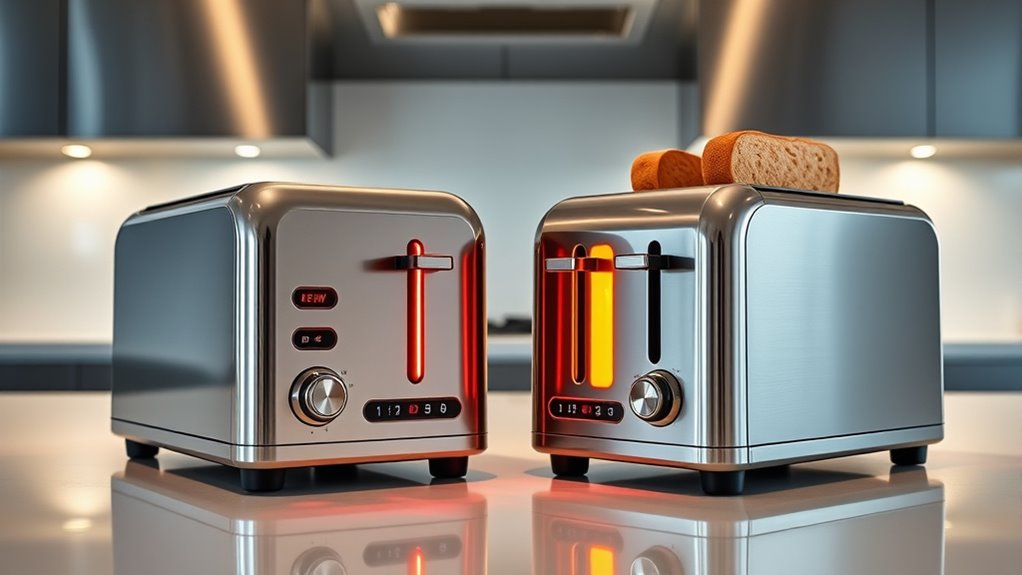
Innovative design and advanced technology play a crucial role in enhancing appliance efficiency. When appliances are thoughtfully engineered, they use energy more effectively, reducing waste and lowering utility costs. Features like smart sensors detect when cooking is complete, preventing unnecessary energy use, while precise temperature controls ensure consistent results without overworking the device. Modern safety features, such as automatic shut-offs and thermal safeguards, not only protect you but also optimize energy efficiency by preventing overheating. Additionally, better insulation and improved internal components minimize energy loss, making appliances more effective. By focusing on design and technology, manufacturers create appliances that deliver faster, safer, and more energy-efficient performance, helping you save money and reduce your carbon footprint without sacrificing convenience. Proper maintenance of appliances also ensures they operate at peak efficiency over time.
Comparing Common Kitchen Appliances by Wattage
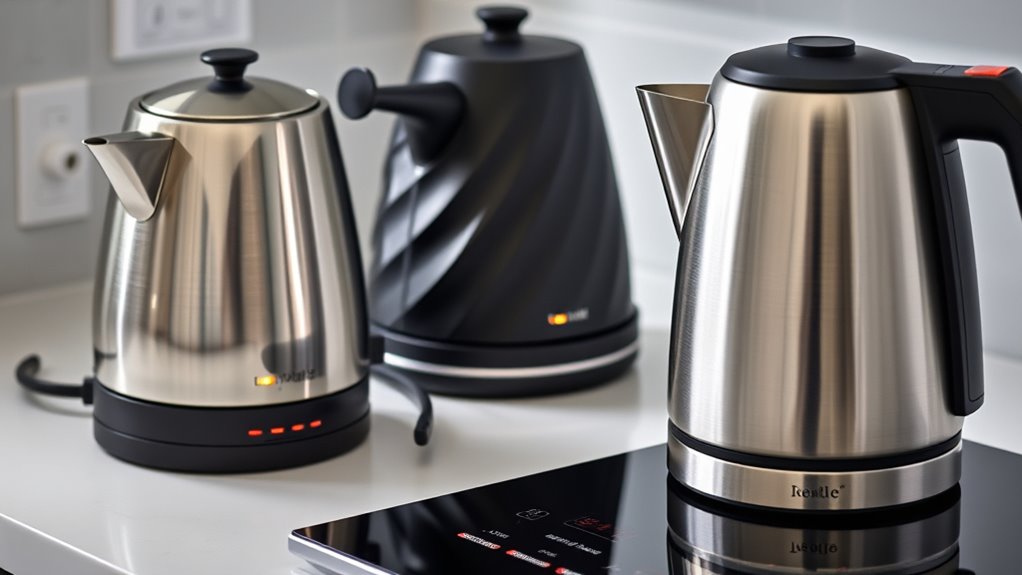
Understanding how wattage affects your kitchen appliances can help you choose the right tools for faster cooking and better results. Higher wattage typically means quicker heating and more consistent performance, but it also uses more energy. Comfort solutions like top mattress toppers and ergonomic kitchen appliances can enhance your overall experience. Let’s compare common appliances to see which wattages deliver the best balance of power and efficiency.
Wattage and Heating Speed
Wattage directly influences how quickly a kitchen appliance heats up, meaning higher wattage often translates to faster heating times. However, faster heating isn’t always better; it can impact energy efficiency and user safety. Higher wattage models may consume more electricity, increasing energy costs, but they heat more rapidly, saving time. To better understand, consider:
- Heating speed varies with wattage, affecting how quickly your food cooks.
- Energy efficiency depends on balancing wattage with heat retention, avoiding waste.
- User safety is essential; higher wattage appliances can become hot faster, requiring caution.
- Design factors influence heating speed beyond wattage alone, such as insulation and temperature controls. Additionally, cooking appliance design can optimize heating performance and safety features.
Choosing the right wattage involves weighing these factors for ideal performance and safety.
Power and Cooking Consistency
While higher wattage can speed up heating, it doesn’t always guarantee consistent cooking results across different appliances. Power ratings reflect the electric current an appliance uses, but factors like design and heating element quality influence how evenly and reliably it cooks. Two devices with similar wattage may perform differently because of internal components or heat distribution. High wattage doesn’t ensure uniformity; it simply provides more energy. If you want consistent results, focus on appliance quality and features that promote even heat, rather than wattage alone. Understanding how electric current interacts with design helps you choose appliances that deliver reliable, predictable cooking, regardless of their power ratings. Additionally, heating element design plays a crucial role in how well an appliance performs. Ultimately, wattage is just one piece of the puzzle for consistent cooking performance.
Real-World Tests: Do High-Wattage Models Perform Better?

Have you noticed how some high-wattage appliances seem to work faster, but that’s not always the case? Real-world tests show variations in cooking speed and power consistency, which can impact performance. Let’s look at data to see if higher wattage truly means better results in everyday use. Additionally, understanding vetted products and their safety features can influence how effectively a high-power appliance performs over time.
Cooking Speed Variations
Many users assume that higher wattage models heat up faster and cook food more quickly, but real-world tests reveal a more nuanced picture. Cooking speed variations depend on multiple factors beyond wattage alone. Forsale 100 Additionally, the quality of the heating element and the overall build quality can significantly influence cooking performance. 1. Design efficiency: Well-designed appliances transfer heat more effectively, reducing cook times regardless of wattage. 2. Power efficiency: Some high-wattage models waste energy, which can slow overall cooking if the appliance isn’t optimized. 3. Thermal regulation: Precise temperature control ensures consistent cooking, preventing over- or undercooking despite wattage. 4. Appliance durability: Cheaper, high-wattage models may struggle to maintain performance over time, impacting their cooking speed. Ultimately, wattage alone doesn’t guarantee faster cooking. Proper balance between Power efficiency and durability often yields better results than simply choosing the highest wattage model.
Power Consistency Factors
High wattage alone doesn’t guarantee consistent cooking performance, as real-world tests show. Power fluctuation can cause uneven heat distribution, making high-wattage models less reliable if the power supply isn’t stable. Voltage stability is critical; even a powerful microwave can underperform if voltage dips or surges occur. These fluctuations can lead to inconsistent cooking times and uneven heating, regardless of wattage ratings. Many high-wattage models are designed with advanced circuitry to compensate for supply variations, but not all do. When choosing a microwave, consider how well it manages power fluctuation and maintains voltage stability. Reliable performance depends not just on wattage but also on the appliance’s ability to handle fluctuations in your home’s electrical system. Proper filtration and pump protection can help ensure consistent operation and safeguard internal components.
Real-World Performance Data
Do high-wattage microwaves truly deliver better performance in everyday use? Real-world tests show mixed results. Higher wattage can cook faster, but voltage fluctuations often limit gains, especially in older homes. Your preferences matter, too—some prefer even heating over quick results. Consider these points:
- Speed varies with voltage stability, impacting high-wattage efficiency.
- Cooking results depend on microwave design, not just power.
- User preferences influence whether faster cooking outweighs uneven heating.
- Real-world data reveals that high wattage doesn’t always mean better outcomes.
- Additionally, air purifier features such as filtration technology and coverage area can influence overall air quality, which may be a consideration for your environment.
While high-wattage models can shave minutes off cooking time, voltage fluctuations and personal preferences can diminish their advantage. To get the best performance, choose a microwave that balances wattage with consistent power delivery and suits your typical use.
Energy Consumption and Cost Considerations
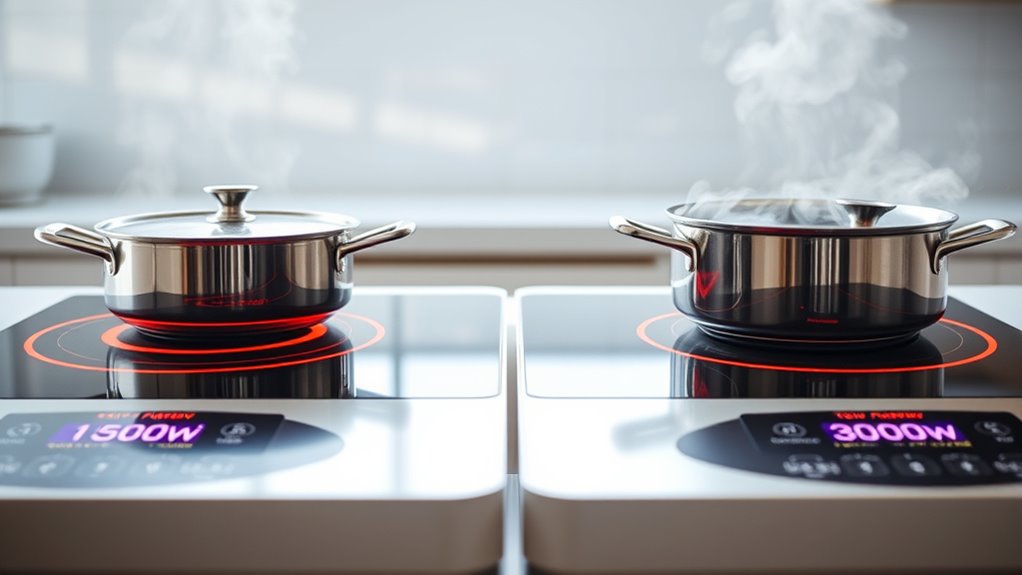
Understanding the energy consumption and associated costs of different devices is essential when choosing equipment with varying wattages. Higher wattage models typically use more energy, which can increase your monthly electricity bills. However, energy efficiency plays a key role in balancing performance and cost savings. An appliance with a higher wattage might cook faster, but if it’s less efficient, it could end up costing more over time. To make smarter decisions, compare energy labels and look for models with better efficiency ratings. Investing in energy-efficient appliances can reduce your overall energy use and save you money in the long run. Keep in mind that initial costs might be higher, but the ongoing savings often outweigh these upfront expenses. Additionally, understanding vetted information about appliance ratings can help you make informed choices that align with your budget and environmental goals.
When Wattage Isn’t the Whole Story: Other Important Factors

While wattage provides a basic measure of an appliance’s energy use, it doesn’t tell the whole story about efficiency and performance. Power measurement, like wattage limitations, can be misleading if you rely solely on numbers. Here are four factors to weigh:
- Design efficiency – How well the appliance converts electrical power into useful work.
- Heat loss – Some models waste energy as heat, reducing effective cooking power.
- Heat distribution – Even heat transfer impacts cooking speed, regardless of wattage.
- Control mechanisms – Precise regulation can improve performance without increasing wattage.
Understanding these factors helps you see beyond wattage limitations and choose appliances that perform better in real-world use.
Choosing the Right Appliance for Your Needs
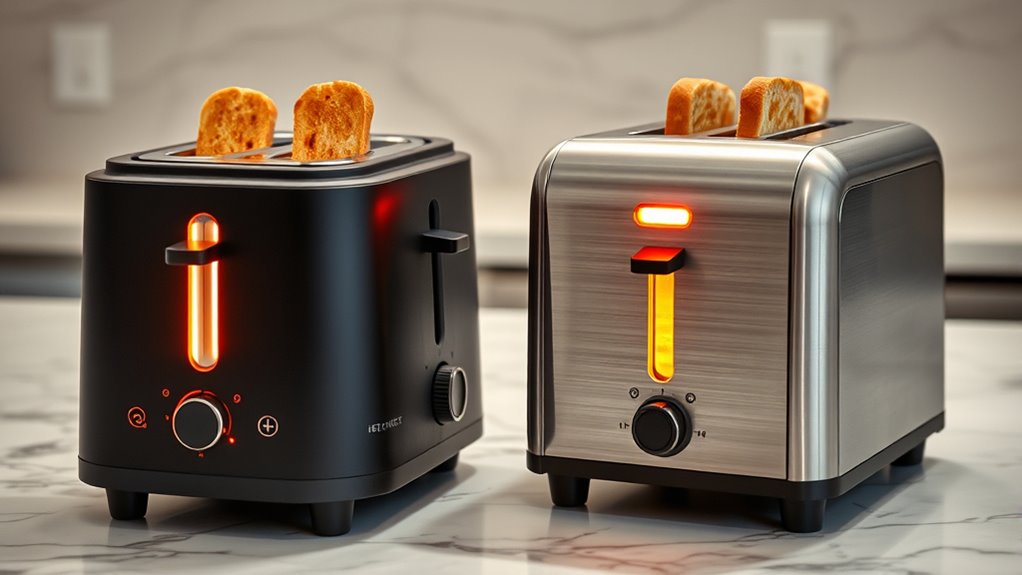
Choosing the right appliance depends on your specific needs and how you plan to use it. Consider whether you prioritize power efficiency or maximum performance. If you’re looking to save energy and reduce utility bills, opt for models designed with energy efficiency in mind. Low-wattage appliances often consume less power, making them ideal for everyday tasks without sacrificing quality. Conversely, high-power options might cook faster but could lead to higher energy costs. Think about the frequency and duration of use, as well as your overall energy savings goals. Selecting an appliance that matches your needs guarantees you get the right balance between performance and cost, helping you make smarter, more sustainable choices.
Debunking Myths About Power and Performance
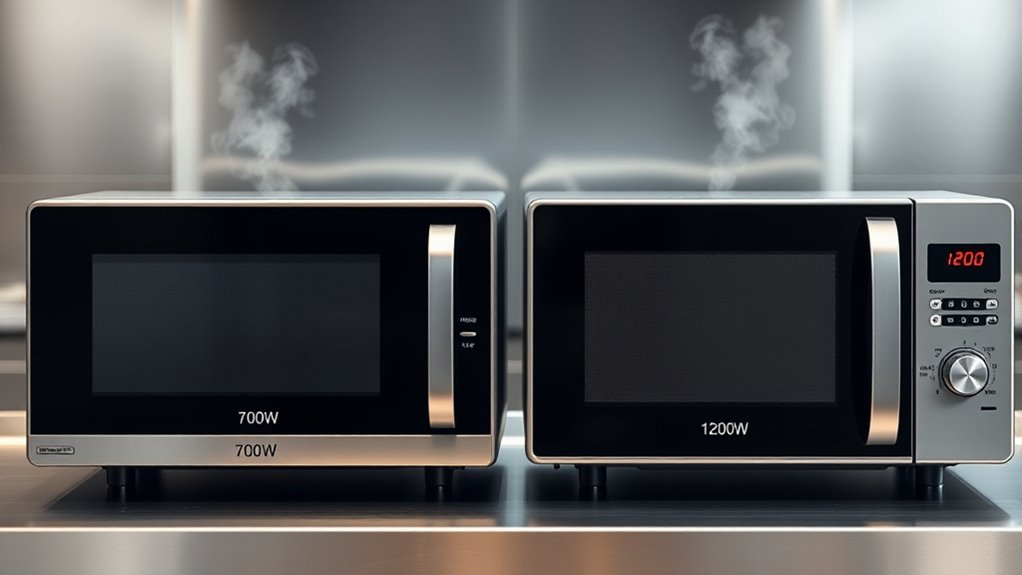
Many people assume that higher wattage always means better performance, but that’s a common misconception. More wattage doesn’t automatically translate to faster cooking or better results. Instead, focus on power efficiency and safety features. Here’s what to contemplate:
Higher wattage doesn’t guarantee better results; prioritize efficiency and safety instead.
- Higher wattage can mean increased energy use, but not necessarily better efficiency.
- Some appliances with lower wattage perform just as well due to smarter design.
- Safety features like automatic shutoff or overheating protection are vital, regardless of wattage.
- Performance depends on how well an appliance converts power into effective output, not just raw wattage.
Understanding these points helps you avoid overestimating high-power models and prioritize safety and efficiency for better performance.
Frequently Asked Questions
Does Higher Wattage Always Mean Better Cooking Results?
Higher wattage doesn’t always mean better cooking results. While more power can speed up cooking, it also increases power consumption and may affect appliance longevity over time. You should consider how efficiently the appliance uses its wattage rather than just focusing on high power. A well-designed, lower-wattage model can deliver excellent results without unnecessary energy use or risking damage to the appliance.
How Does Wattage Impact Energy Efficiency in Appliances?
Wattage impacts energy efficiency because higher wattage appliances consume more energy, potentially increasing your energy bills. However, a more powerful model might cook faster, saving you time and possibly reducing overall energy use. Keep in mind, higher wattage can also affect your appliance’s lifespan due to increased wear and tear. Choosing the right wattage helps balance energy consumption and durability, ensuring efficient performance without unnecessary energy waste.
Are High-Wattage Appliances More Durable or Prone to Faster Wear?
Imagine a high-wattage appliance as a powerful engine revving at full throttle. You might think it wears out faster, but if it’s built with quality parts, its power longevity can actually extend its appliance lifespan. High-wattage models aren’t inherently more prone to wear; proper maintenance and design matter more. With good care, they can perform consistently, offering durability while delivering that extra punch you need.
Can Lower Wattage Appliances Still Cook Effectively?
You can still cook effectively with lower wattage appliances, as they often focus on energy efficiency and power consumption. While they might take a bit longer to cook certain foods, their appliance longevity usually means less wear and tear over time. If you’re patient and choose the right settings, lower wattage models can deliver good results without sacrificing performance, making them a smart choice for energy-conscious households.
What Safety Considerations Come With High-Power Kitchen Devices?
You might think high-power kitchen devices are safe, but it’s essential to take into account electrical wiring and fire hazards. High wattage appliances draw more current, which can overload circuits if your wiring isn’t up to code. Always ensure your electrical system can handle these devices, and never leave them unattended while in use. Proper maintenance and safety checks reduce fire risks, keeping your kitchen safe and efficient.
Conclusion
So, next time you’re eyeing that high-wattage appliance, remember, power isn’t everything. It might cook faster, but other factors like design, technology, and efficiency play vital roles. Don’t be fooled by wattage hype—there’s more to performance than just numbers. Curious to see if higher wattage truly makes a difference in your kitchen? The real truth might just surprise you, and it’s waiting to be uncovered. Are you ready to find out?