
Many people think humidifiers only need annual cleaning, but that’s a myth. To prevent mold, bacteria, and mineral deposits, you should clean your humidifier at least once a week. Regular maintenance also involves checking and replacing filters as recommended. Using gentle, non-abrasive tools and proper cleaning solutions guarantees a safe, effective process. Keep up with routine care, and you’ll avoid common issues—stick with it to discover more tips.
Key Takeaways
- Many believe humidifiers only need annual cleaning, but weekly maintenance prevents mold and mineral buildup.
- Regular cleaning at least once a week is essential, not just when issues appear.
- Using gentle, non-abrasive cleaners and soft tools ensures effective cleaning without damaging parts.
- Proper upkeep maintains optimal humidity levels and extends your humidifier’s lifespan.
- Proactive maintenance—rather than waiting for visible problems—ensures healthier air and prevents costly repairs.
Common Misconceptions About Cleaning Frequency
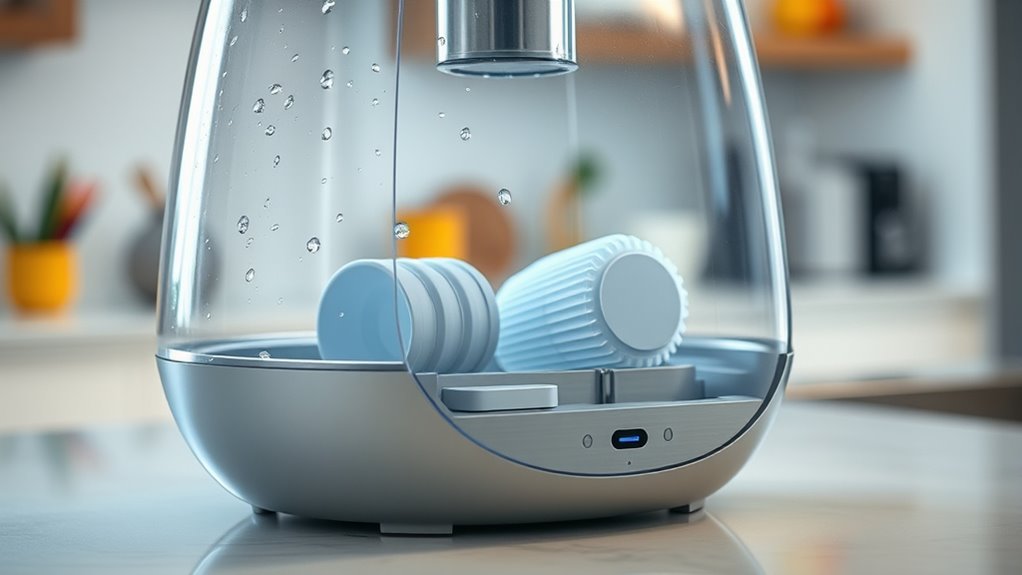
Many people believe they only need to clean their humidifier once a year, but this is a common misconception. Regular cleaning is essential to maintain water quality and prevent mold or bacteria buildup. Neglecting routine cleaning can lead to mineral deposits, which can clog filters and reduce efficiency. You should also check and replace filters as needed, since old filters can harbor dirt and contaminants. Poor water quality can cause mineral buildup and affect your humidifier’s performance. By cleaning more frequently, you ensure cleaner mist output and healthier air. Don’t wait for visible issues—staying proactive with filter replacement and cleaning schedule keeps your humidifier running smoothly and extends its lifespan. Proper maintenance is key to safe, effective humidification. Regular inspections can help identify potential issues before they become major problems.
How Often Should You Really Maintain Your Humidifier?
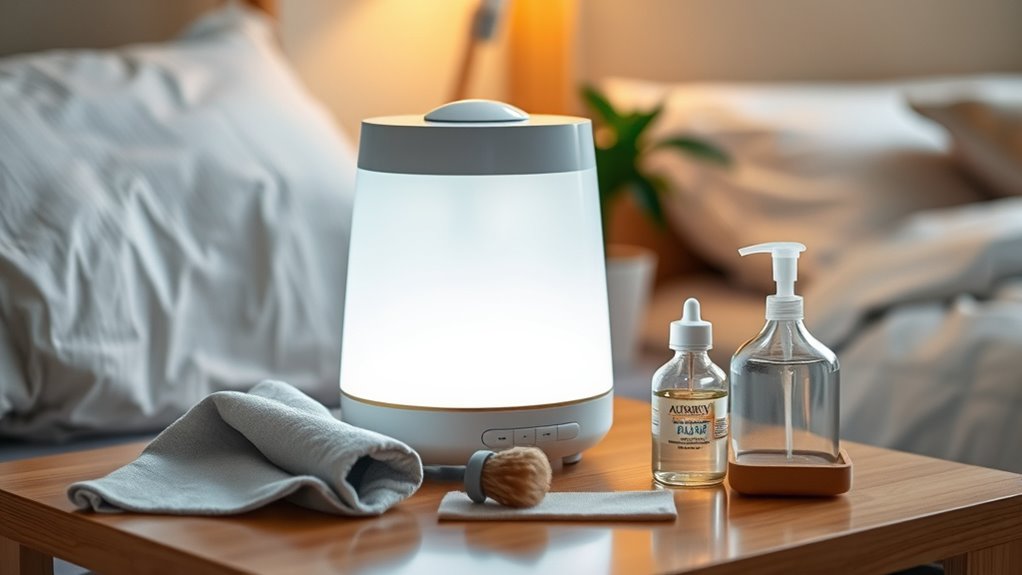
For ideal performance and health, you should clean your humidifier at least once a week. Regular cleaning prevents mold, bacteria, and mineral buildup that can affect water quality. If you notice mineral deposits or cloudy water, it’s a sign you need to clean it more often. Additionally, replacing filters as recommended by the manufacturer is essential for maintaining proper humidity levels and guaranteeing clean air. Neglecting filter replacement can lead to reduced efficiency and compromised air quality. Be sure to empty, rinse, and dry your humidifier thoroughly during each cleaning to prevent microbial growth. Consistent maintenance keeps your humidifier functioning properly, prolongs its lifespan, and guarantees you’re breathing healthy, clean moisture. Incorporating professional voiceover techniques into your routine can help you better understand and follow the proper maintenance steps. Adjust your cleaning schedule based on water quality and usage frequency for ideal results.
The Truth About Using Cleaning Products and Maintenance Tools
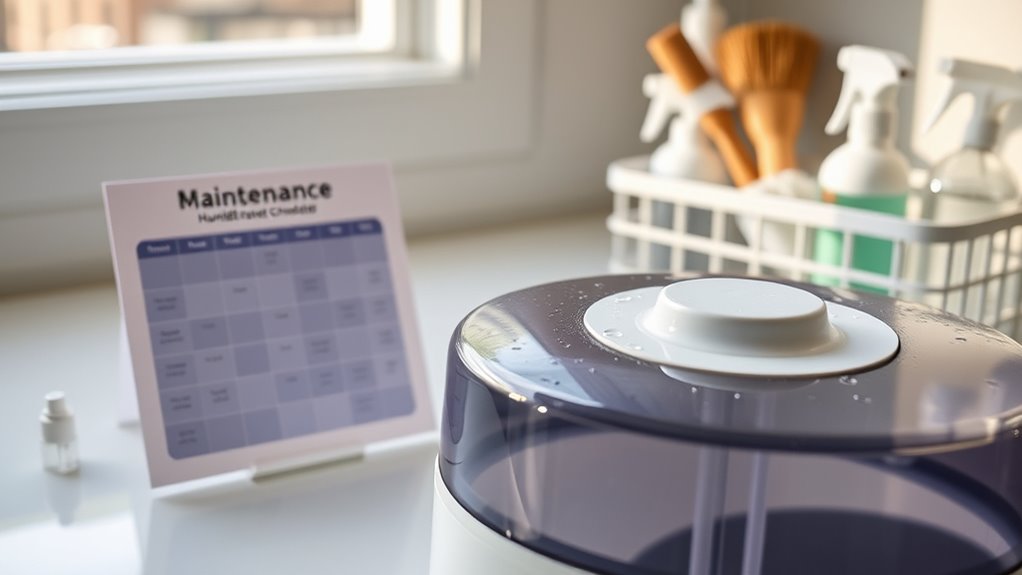
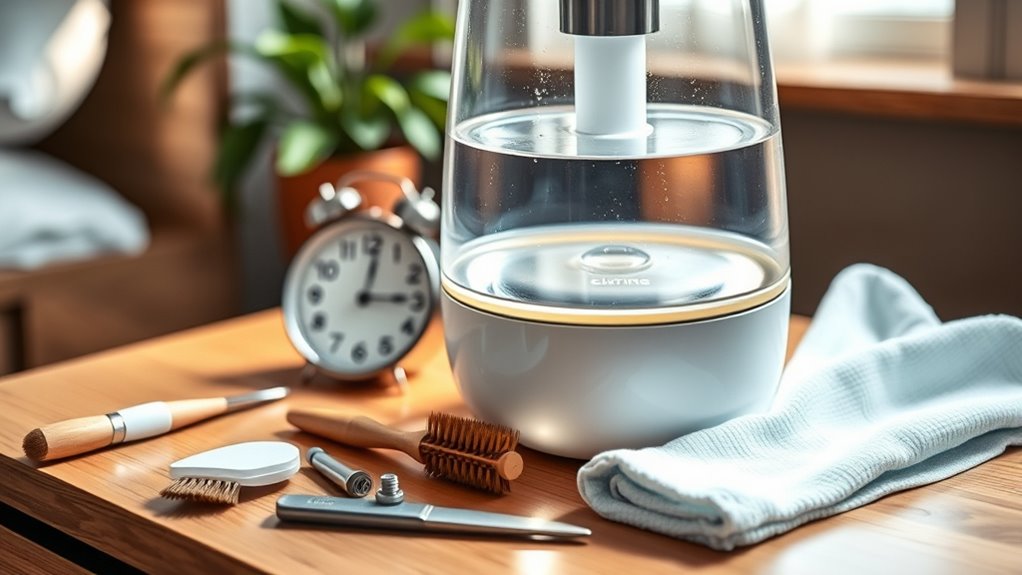
Using the right cleaning products and maintenance tools can make a significant difference in how well your humidifier performs. When selecting cleaning chemicals, stick to gentle, non-abrasive solutions to avoid damaging sensitive parts. Harsh chemicals can cause corrosion or leave residues that promote mold growth. Proper maintenance tools, like soft brushes and microfiber cloths, help you reach all nooks and crannies without scratching surfaces. Cleaning chemicals are effective at disinfecting mineral deposits and bacteria, but overusing them can lead to buildup or chemical residue. Always follow the manufacturer’s instructions for both cleaning chemicals and maintenance tools to guarantee thorough cleaning without harming your unit. Using the correct products and tools assures your humidifier remains safe, efficient, and long-lasting. Proper maintenance can also extend the lifespan of your humidifier and improve its overall performance, especially when using best vacuum expert recommended cleaning techniques.
Frequently Asked Questions
Can I Use Vinegar for All Types of Humidifiers?
You can use vinegar for most humidifiers, but it’s best to choose the right vinegar type for DIY cleaning. White distilled vinegar is the safest and most effective option, as it’s gentle yet powerful at removing mineral buildup. Avoid apple cider or flavored vinegars, which can leave residues. Always dilute vinegar with water and follow your humidifier’s manufacturer instructions to prevent damage and keep it running smoothly.
Is It Necessary to Replace Filters Regularly?
Replacing filters regularly is like changing the oil in your car; it keeps everything running smoothly. You should follow your humidifier’s maintenance schedule and swap out filters as recommended, usually every 1-3 months. Neglecting filter replacement can lead to mold, bacteria, and decreased efficiency. Staying consistent with filter replacement guarantees your humidifier stays clean, safe, and effective, providing you with healthy, humidified air year-round.
How Do I Know if My Humidifier Needs Maintenance?
You’ll know your humidifier needs maintenance if you notice reduced airflow, strange odors, or increased mineral buildup. Regularly inspecting the unit helps extend its lifespan and guarantees it functions efficiently. Check your warranty coverage for specific maintenance requirements, as neglecting these can void it. Staying proactive with cleaning and parts replacement keeps your humidifier running smoothly, saving you money and preventing costly repairs down the line.
What Are Signs of Mold or Bacteria Growth?
If you notice a musty smell or see visible mold symptoms like black or green spots, your humidifier likely has mold or bacteria growth. Bacteria indicators include slimy residues or cloudiness in the water. If your humidifier produces unusual odors, or if the water looks cloudy despite regular cleaning, these are signs you need to clean it thoroughly to prevent health issues. Regular maintenance helps keep mold symptoms and bacteria indicators at bay.
Are There Any DIY Cleaning Methods to Avoid Damage?
Yes, there are DIY cleaning methods that help you avoid damage. You should regularly disinfect your humidifier with a mixture of white vinegar and water to remove buildup and mold. Use a soft cloth or brush to gently scrub parts, avoiding abrasive materials that can scratch or harm components. Always rinse thoroughly and dry completely to prevent mold growth. These steps ensure effective cleaning while preventing damage to your humidifier.
Conclusion
Now that you know the truth behind humidifier maintenance, you can clear away the fog of myths and keep your device running smoothly. Think of your humidifier as a garden—regular care keeps it lush and healthy, preventing mold and bacteria from taking root. Don’t let misconceptions water down your efforts. Stay consistent with your cleaning schedule, and your home will breathe easier, just like a fresh morning breeze after a storm.