Choosing individual knives over a complete set can save you money in the long run because you only buy high-quality, essential tools tailored to your cooking style. Sets often include unnecessary or low-quality blades that wear out faster and cost more over time. By building your collection gradually and maintaining your knives well, you’ll reduce replacement costs and improve your kitchen efficiency. Keep exploring to discover how to make the best, cost-effective setup for your needs.
Key Takeaways
- Buying individual high-quality knives tailored to your needs often saves money and reduces unnecessary clutter over time.
- Sets may include redundant or low-durability knives, leading to higher long-term replacement and maintenance costs.
- Proper storage and regular sharpening extend the lifespan of individual knives, decreasing overall expenses.
- Gradually investing in essential, versatile knives allows better quality choices at lower initial costs.
- Customizing your knife collection ensures optimal performance and safety, ultimately reducing long-term kitchen setup expenses.
What’s the Actual Cost of Knife Sets vs. Buying Knives Solo
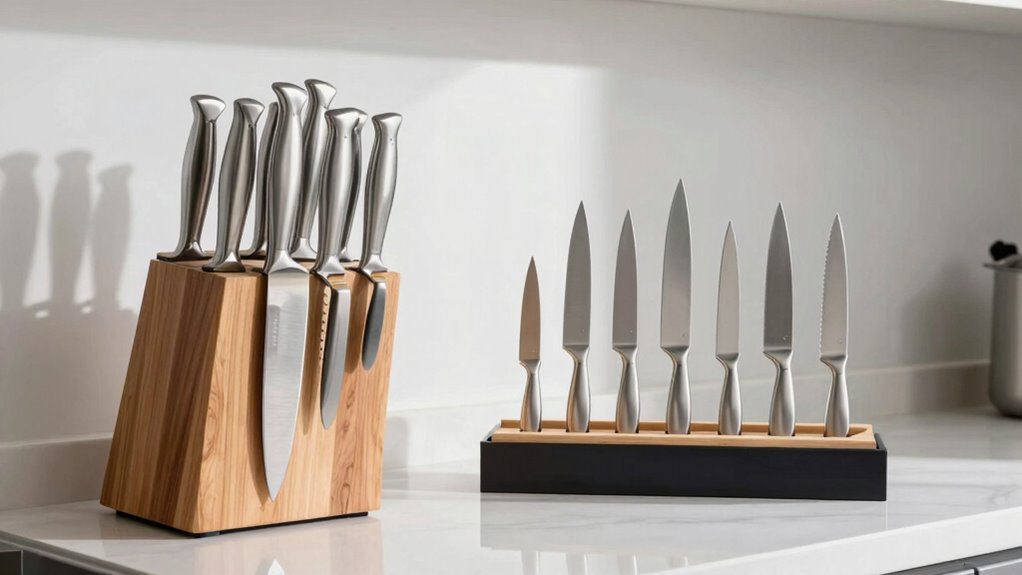
When comparing the cost of knife sets to buying individual knives, it’s important to understand that while sets often seem like a good deal upfront, they may not always be the most economical choice in the long run. Knife sets usually include a variety of blades, but not all are essential, and some may have lower blade durability, making them prone to dulling or chipping faster. You should consider the brand reputation, as reputable brands typically produce knives with better blade durability, ensuring they last longer and perform better over time. Buying individual knives allows you to choose high-quality pieces that suit your specific needs, potentially saving money by avoiding unnecessary or low-quality blades that could require frequent replacement. This approach can be more cost-effective and efficient in the long run.
How to Assess Knife Quality and Performance
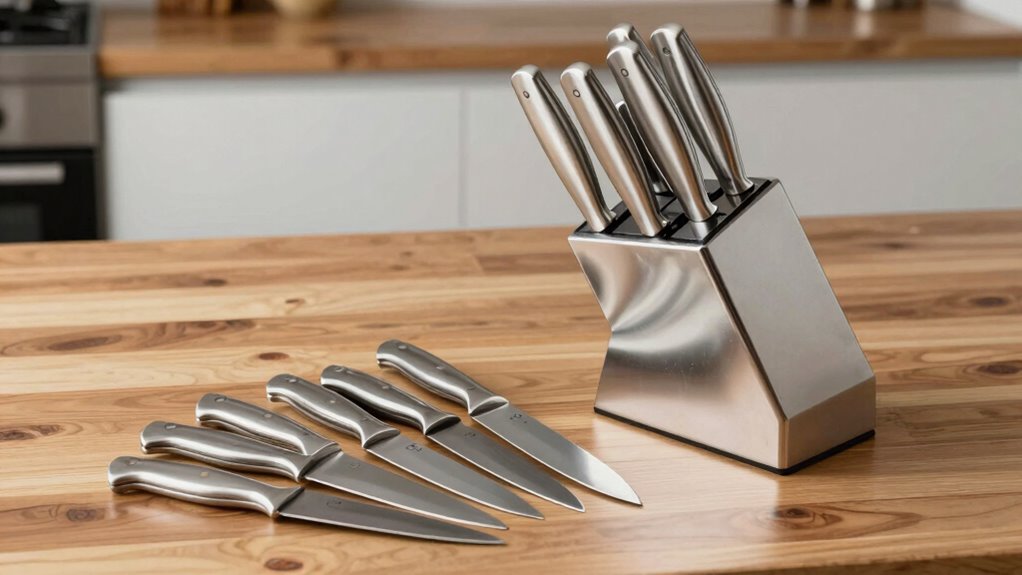
To accurately assess knife quality and performance, you need to examine several key factors. First, check the blade sharpness— a high-quality knife should effortlessly cut through ingredients without excessive force. Test its edge on different foods to see how well it maintains sharpness. Next, evaluate handle ergonomics; a comfortable handle provides a secure grip, reducing fatigue and increasing control during use. Feel the handle’s material and shape— it should feel balanced and fit comfortably in your hand. Also, inspect the blade’s construction— full tang blades generally offer better durability and balance. Avoid knives with loose fittings or uneven edges. Additionally, consider the European standards that ensure consistent quality and safety across brands. By focusing on blade sharpness and handle ergonomics, you’ll make smarter decisions and invest in knives that deliver reliable performance over time.
How Your Cooking Needs Influence Your Knife Choices
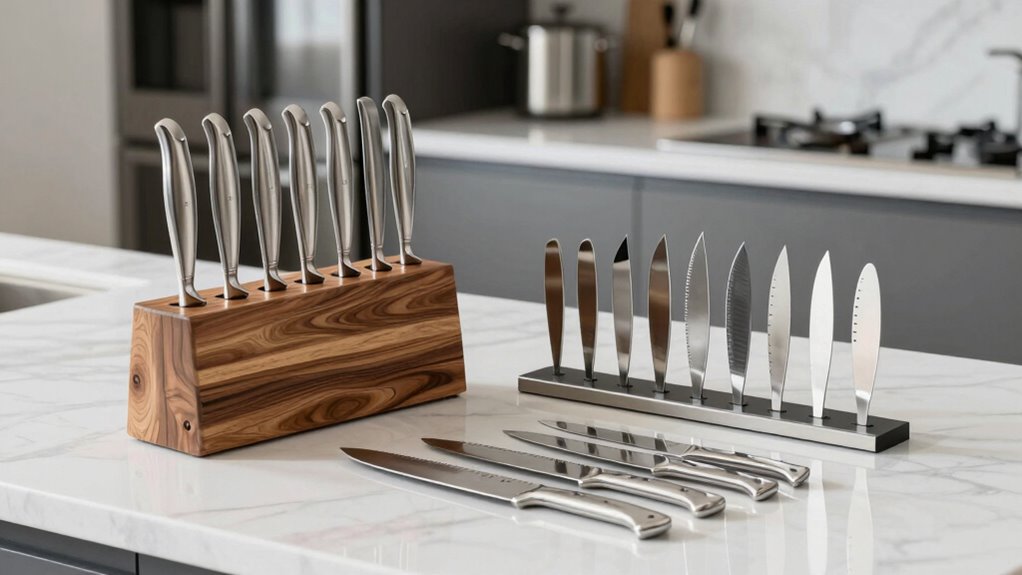
Your cooking style shapes the knives you need, so consider the types of dishes you prepare most often. If you cook frequently, investing in specialized knives can save time, while occasional cooks might opt for versatile pieces. Also, think about the ingredients you handle—chopping vegetables requires different tools than carving meats. Additionally, selecting knives with high-quality blades can improve performance and durability over time. Recognizing knife maintenance can further extend their lifespan and ensure consistent results. Incorporating ergonomic designs into your knife selection can reduce fatigue and improve comfort during prolonged use. Exploring sustainable kitchen practices can help you incorporate eco-friendly options into your culinary setup.
Cooking Style Compatibility
The way you cook considerably influences the types of knives that will serve you best. If you often prepare vegetables, a versatile chef’s knife is essential, while heavy-duty tasks may require a cleaver. Your cooking style determines whether you need specialized knives or a basic set. Consider how you store your knives—organized knife storage helps preserve sharpness and safety. Brand reputation matters for quality and durability, especially if you cook frequently. When choosing, think about:
- The variety of knives matching your cuisine
- The importance of easy knife access
- How often you sharpen your blades
- Compatibility with your storage options
- Long-term value based on brand reputation
Matching your cooking style to the right knives ensures efficiency, safety, and cost savings over time.
Frequency of Use
How often you cook and the types of dishes you prepare considerably impact which knives you’ll find most useful. If you cook daily or prepare a variety of foods, investing in a versatile set or multiple individual knives makes sense. For occasional cooking, a few essential knives may suffice, reducing the need for extensive knife storage and frequent knife sharpening. Additionally, understanding your cooking habits can help optimize your knife collection for efficiency and longevity. Considering your backyard transformation plans can also influence the types of knives you choose, especially if you’re preparing outdoor meals or handling fresh ingredients from a garden. Moreover, the frequency of use can influence the long-term cost associated with maintaining and replacing your knives, making it an important factor in your decision.
Ingredient Types Handled
Different ingredients demand specific knife types to guarantee efficient and safe preparation. For example, tomatoes need a serrated knife, while steaks require a sharp chef’s knife. Your choice impacts not just performance but also your knife storage and kitchen aesthetics. When selecting knives, consider the variety of ingredients you handle regularly. Properly matching knife types to ingredient needs ensures smoother prep, reduces damage, and keeps your kitchen organized and visually appealing. Additionally, understanding brewing methods can help you appreciate the importance of specialized tools in other areas of kitchen and beverage preparation, highlighting the value of having appropriate kitchen tools tailored to specific tasks.
Do Knife Sets Save Money: or Might They Cost More?
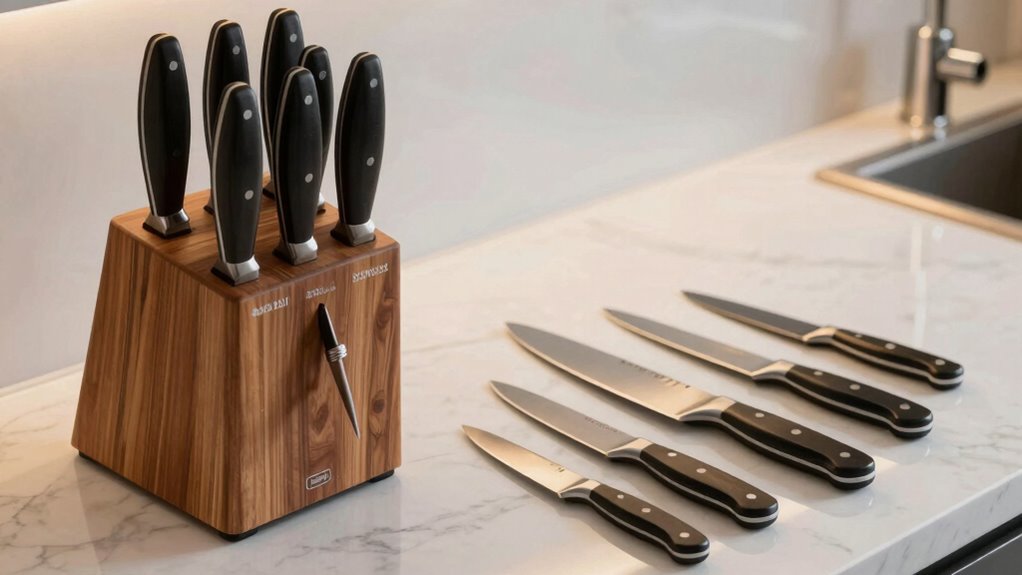
Buying a knife set might seem like a good deal, but it’s worth considering whether it saves you money in the long run. You could end up paying for knives you don’t need or use often, affecting cost efficiency over time. Plus, hidden expenses like replacement costs or limited flexibility can make sets more expensive than buying individual knives. Additionally, maintenance and proper storage are essential for extending the lifespan of your knives and ensuring safety.
Cost Efficiency Over Time
While knife sets often seem like a cost-effective solution, they may not always save you money over time. You might find that buying individual knives tailored to your needs results in better value. Quality knives tend to have better knife durability, lasting longer with proper care. Plus, choosing your own storage solutions ensures your knives stay in prime condition and avoid unnecessary damage.
Consider these points:
- You avoid paying for unnecessary knives that rarely get used
- You can invest in high-quality blades for specific tasks
- Proper storage extends knife lifespan and maintains sharpness
- Replacing individual knives as needed prevents wasting money on dull or broken ones
- Custom sets can adapt over time, saving costs in the long run
This approach guarantees long-term efficiency and better investment in your kitchen tools.
Purchasing Flexibility Options
Choosing between knife sets and individual knives depends largely on your flexibility needs. With knife sets, you get a coordinated collection, which simplifies knife storage and assures compatibility. This can be convenient if you prefer having all essential knives in one place and want to avoid the hassle of selecting each piece separately. However, if your needs change or you want specific styles, buying individual knives offers more customization. Keep in mind that maintaining a versatile set may require regular knife sharpening, especially if you add knives over time. While sets might seem cost-effective upfront, you could end up with unused or redundant knives, potentially increasing long-term costs. Ultimately, your flexibility in choosing and customizing your knives impacts both your initial purchase and ongoing maintenance.
Potential Hidden Expenses
Even though knife sets often seem like a cost-effective solution, they can hide expenses that add up over time. Poor storage solutions may lead to damaged blades or safety issues, costing you more in replacements or repairs. Additionally, brand reputation matters—cheap sets might wear out quickly or lack quality, forcing you to buy new knives sooner. You might also face the expense of customizing storage to fit the set, which isn’t always included. Moreover, the limited variety in a set could mean purchasing individual knives later, negating initial savings. Finally, some sets include knives you never use, wasting money and space. Be mindful of these hidden costs before choosing a set, and consider whether customizing with individual knives might be more economical long-term.
How to Maintain Your Knives and What Replacements Cost

Maintaining your knives properly can guarantee their lifespan and ensure they perform at their best. Regular knife care includes hand washing, drying immediately, and storing them safely to prevent damage. Blade sharpening is essential; dull knives require more force and can be dangerous. You can sharpen blades using a whetstone, honing rod, or professional service. Proper maintenance reduces the need for frequent replacements, saving you money in the long run. When replacements are necessary, costs vary: a quality replacement knife can range from $20 to $100 or more, depending on the brand and material. Investing in good maintenance habits helps avoid the expense of replacing entire sets prematurely, prolonging the life and performance of your knives.
Tips for Building a Cost-Effective Knife Collection Over Time
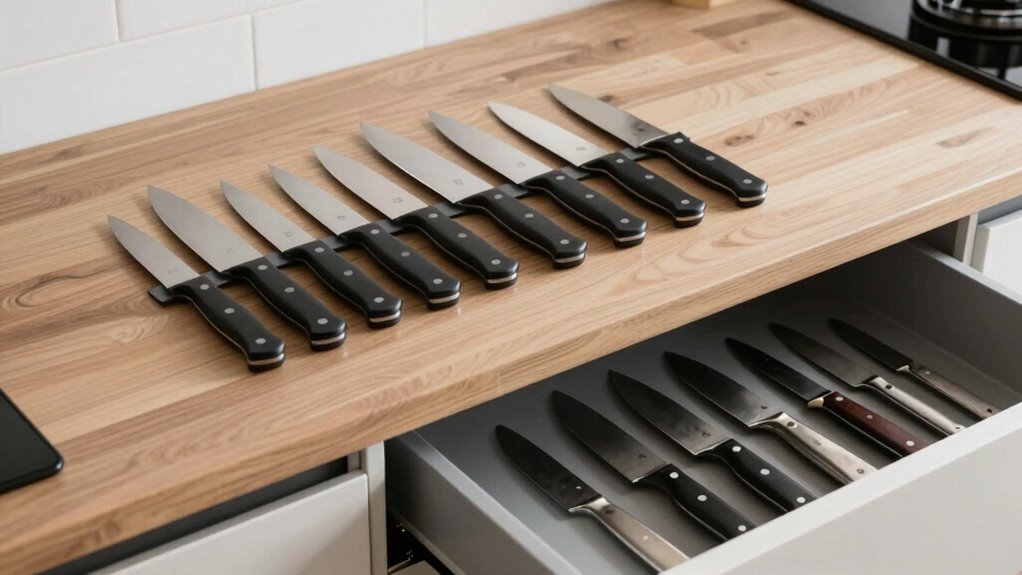
Building a cost-effective knife collection requires strategic planning and patience. To maximize your investment, focus on quality over quantity and prioritize essential knives. Proper knife storage is vital; use a magnetic strip or knife block to keep blades protected and accessible. Regular knife sharpening keeps your knives performing well and extends their lifespan, saving you money in the long run. Consider buying individual knives gradually, targeting specific needs rather than purchasing a full set upfront. Look for sales or secondhand options to find quality tools at lower prices. Keep your knives well-maintained, avoid unnecessary replacements, and develop a routine for sharpening and storing them safely. Additionally, understanding knife maintenance can significantly prolong their usability and ensure safe, efficient use. Developing good blade care routines can further enhance the longevity of your knives and maintain their cutting performance. Proper sharpening techniques are essential for keeping your knives in optimal condition, preventing damage and ensuring precise cuts. Ensuring proper piercing care and hygiene practices for body piercings can also prevent complications and maintain your investment in both health and appearance. This approach guarantees your collection remains functional, durable, and budget-friendly over time.
Which Setup Keeps Expenses Low and Cuts Better?
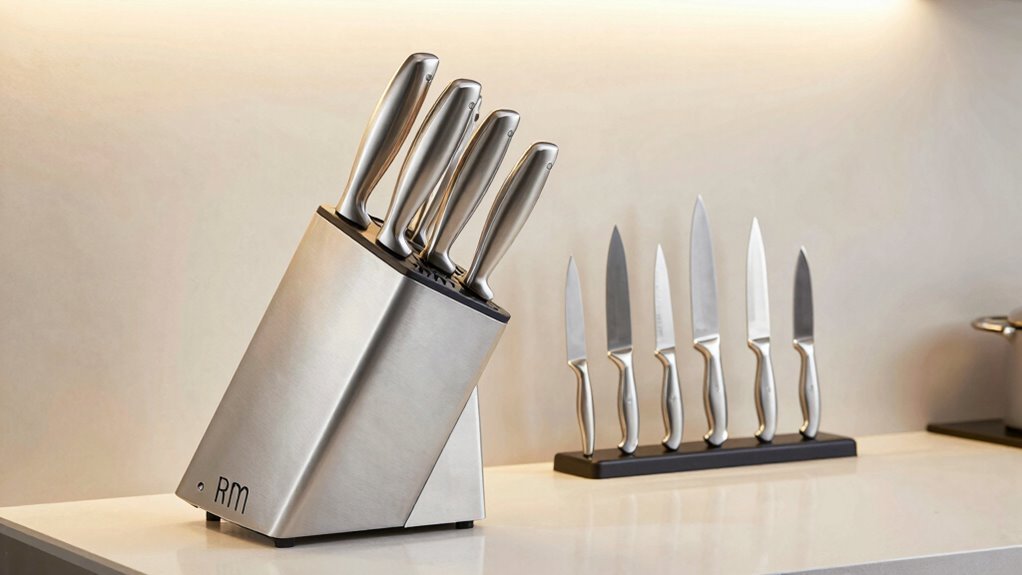
Which setup allows you to keep costs low while guaranteeing you get a sharp, reliable cut? Opting for individual knives can be more budget-friendly upfront, especially if you choose reputable brands known for quality. This approach lets you invest gradually, replacing or upgrading pieces as needed, which can save you money long-term. Plus, with individual knives, you can select specific blades tailored to your tasks, improving knife safety and reducing accidents. On the other hand, a well-made knife set might seem costly initially but often includes high-quality tools that stay sharp longer and perform better. Ultimately, the key to lower expenses and better cuts lies in prioritizing brand reputation and maintaining your knives properly. This guarantees safety, durability, and consistent performance over time.
Frequently Asked Questions
Are There Specific Knife Brands Known for Better Long-Term Value?
You’ll find that brands like Wüsthof, Global, and Shun offer better long-term value due to their strong reputation and high material quality. These brands produce knives that stay sharp longer, resist rust, and handle daily use well. Investing in their knives may cost more upfront, but their durability and performance make them cost-effective over time. Prioritize brand reputation and material quality to make certain your knives last and perform reliably.
How Do Warranty and Customer Service Impact the True Cost of Knives?
Warranty and customer service quality directly impact the true cost of knives. When you buy knives with solid product warranties, you protect yourself from unexpected replacement or repair costs. Good customer service means you get quick, helpful support if issues arise, saving you time and frustration. Investing in knives backed by reliable warranties and responsive customer service can save you money long-term, ensuring your knives last and perform well without hidden expenses.
Can Knife Storage Options Affect the Longevity of Your Knives?
Did you know proper knife storage can extend your blades’ lifespan by up to 50%? You should prioritize knife maintenance and choose storage organization that prevents dulling and chipping. Using a knife block or magnetic strip keeps blades protected and accessible, reducing wear. Poor storage, like loose drawers, increases chances of damage and shortens your knives’ longevity. So, invest in good storage options to keep your knives sharp and lasting longer.
What Are the Environmental Considerations When Choosing Between Sets and Individual Knives?
When choosing between sets and individual knives, consider environmental factors like sustainable materials and eco-friendly packaging. Opt for knives made from recycled or eco-conscious materials to reduce your carbon footprint. Additionally, select products with minimal or biodegradable packaging to lessen waste. By making mindful choices, you support sustainability and reduce environmental impact, ensuring your kitchen setup is both eco-friendly and long-lasting.
How Does the Frequency of Use Influence the Optimal Knife Purchasing Strategy?
Your knifing frequency and usage patterns directly impact your best purchasing strategy. If you cook daily and need diverse tools, investing in a quality knife set makes sense for convenience and long-term value. However, if you use knives infrequently or for specific tasks, buying individual knives allows you to select only what you truly need, saving money and reducing clutter. Tailor your approach based on how often and how you use your knives.
Conclusion
Choosing between knife sets and individual knives is like steering a winding road—you’ll find what suits your style best. If you shop smart, maintain your blades, and focus on your cooking needs, you can craft a kitchen that slices through expenses and prep work alike. Remember, it’s not just the price tag that matters, but how your knives dance with your culinary rhythm. With patience and care, your perfect setup will unfold, sharp and ready for every flavor adventure.