Choosing the right hole size for perforated parchment in your air fryer is key to cooking success. Larger holes allow better airflow, making foods crispier and reducing cook time, but they may weaken the paper and cause tearing. Smaller holes support delicate foods and improve handling but might restrict airflow, leading to uneven results. Understanding how hole size impacts airflow, heat transfer, and food texture helps you get perfect crispy dishes; if you keep exploring, you’ll discover how to select the ideal pattern for your recipes.
Key Takeaways
- Proper hole size balances airflow to ensure even cooking without damaging the parchment or food.
- Larger holes increase airflow for crispier results but may weaken parchment support.
- Smaller holes provide gentle airflow, suitable for delicate foods and preventing tearing.
- Correct perforation design maintains parchment durability during high-temperature air frying.
- Matching hole size to recipe needs improves cooking efficiency and reduces common issues like sogginess or burning.
Understanding How Perforations Enhance Air Circulation
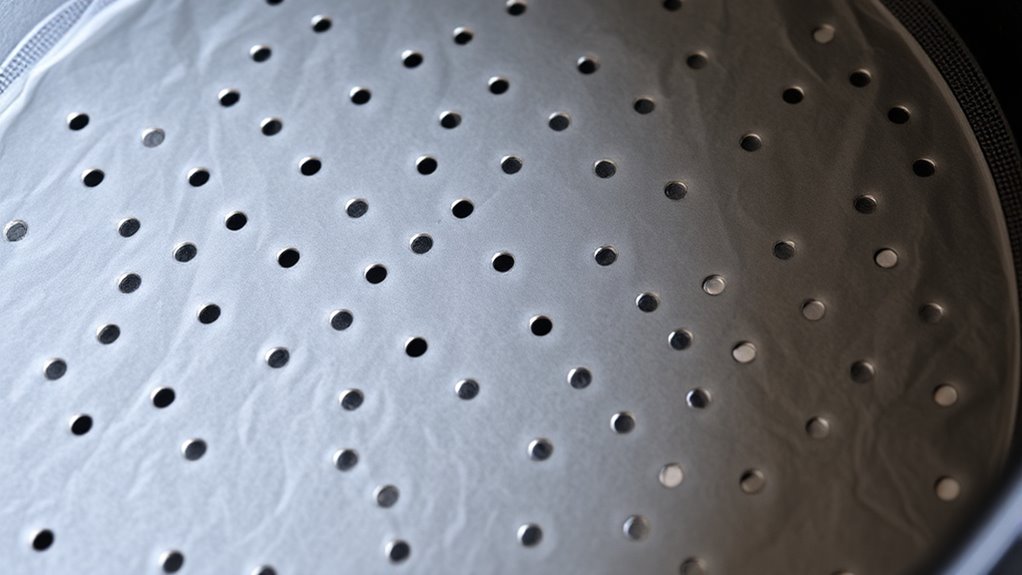
Perforations in air-fryer parchment play a crucial role in improving air circulation. When you use perforated parchment, hot air flows more evenly around your food, promoting consistent cooking. This enhanced airflow prevents the buildup of steam and excess moisture, which can cause sogginess. As a result, your food maintains ideal texture and crispness. Additionally, perforations help control food absorption, ensuring that moisture doesn’t get trapped on the surface or inside the parchment. This balance allows for better moisture retention in the food itself, preventing it from drying out while still achieving a crispy exterior. The airflow created by perforations also reduces the need for excessive oil, supporting healthier cooking options. By improving air circulation, perforated parchment supports healthier, more evenly cooked meals with desirable textures and flavors. Proper ventilation is essential for achieving optimal results when air frying.
The Impact of Hole Size on Cooking Efficiency

The size of the holes in your parchment directly affects airflow and how evenly your food cooks. Larger holes boost airflow, promoting quicker, more uniform results, while smaller ones may restrict circulation. Understanding this balance helps you optimize cooking efficiency every time. Incorporating natural materials like parchment with perforations can also help improve heat transfer and reduce cooking times, making your meal prep more efficient.
Airflow Optimization
Choosing the right hole size on your parchment can considerably influence airflow and, consequently, cooking efficiency. Proper perforation design affects airflow dynamics by allowing hot air to circulate evenly around your food, reducing hot spots and ensuring thorough cooking. Larger holes enable better airflow, which speeds up cooking and promotes crispiness. Conversely, smaller holes may restrict airflow, leading to uneven results. When selecting perforations, consider how the size impacts both speed and crispness. Optimized airflow means your food cooks faster, with a consistent texture throughout. Additionally, understanding airflow optimization can help you select the most effective perforation pattern for your specific air fryer model. Considering material properties of parchment paper can further enhance cooking performance by influencing heat transfer and durability. Being aware of perforation design also helps prevent common issues like tearing or sticking. By understanding the relationship between hole size and airflow, you can enhance your air fryer’s performance, making every meal turn out just right. Effective perforation design is essential for maximizing efficiency and achieving perfect results.
Cooking Uniformity
When hole size is optimized on your parchment, it directly influences how evenly your food cooks. Proper perforation ensures consistent airflow, allowing heat to circulate uniformly and preventing hot spots or undercooked areas. Larger holes can improve airflow but may compromise perforation durability, leading to tears over time. Conversely, smaller holes enhance parchment flexibility, making it easier to handle and fit inside your air fryer without damage. Striking the right balance in hole size maintains both perforation durability and parchment flexibility, which are essential for achieving cooking uniformity. Additionally, understanding the offensive and defensive security measures involved in ethical hacking helps in designing better security protocols for your cooking appliances. When these factors align, you’ll notice more consistent results, with food cooked evenly on all sides, reducing cooking time and enhancing texture. Optimized perforation ultimately delivers a better cooking experience, especially when considering the lifecycle of kitchen tools and their maintenance.
How Different Hole Sizes Affect Food Texture and Crispiness
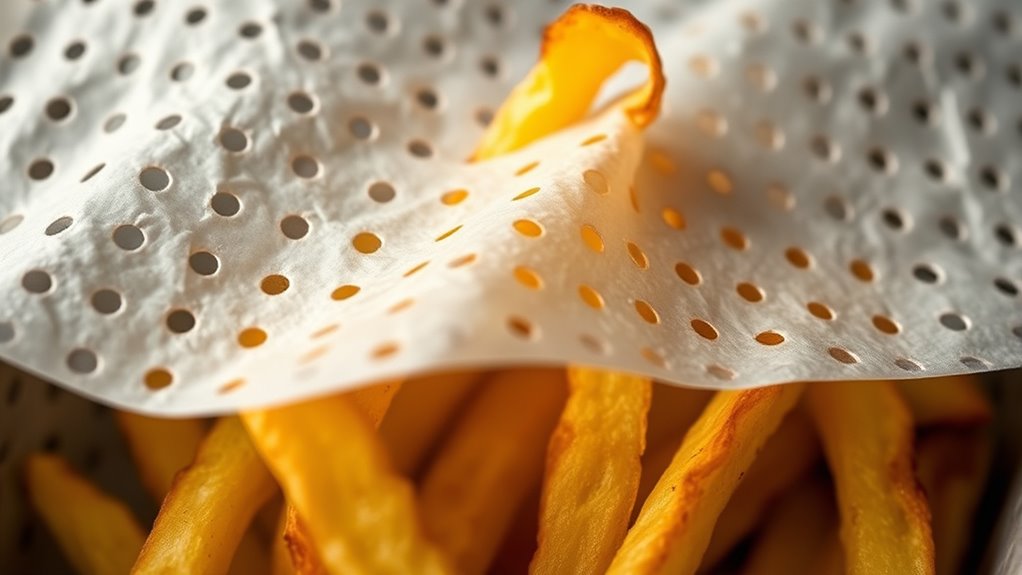
Different hole sizes in parchment paper with perforations can substantially influence how your food turns out, especially in terms of texture and crispiness. Smaller holes promote a slightly softer crust, while larger holes allow more airflow, resulting in a crunchier exterior. The right hole size balances crispiness with food safety, preventing excess moisture buildup that could cause uneven cooking or sogginess. Additionally, choosing appropriate perforation sizes ensures material durability; overly large holes may weaken the parchment, risking tears during cooking. Conversely, smaller holes maintain structural integrity while still enhancing crispiness. Understanding how hole size impacts these factors helps you achieve ideal texture in your air fryer creations without compromising safety or durability. Proper perforation is also essential for ensuring consistent results and preventing potential hazards during cooking. Moreover, selecting the correct perforation size can optimize airflow to improve overall cooking efficiency.
Selecting the Right Perforation Pattern for Various Recipes
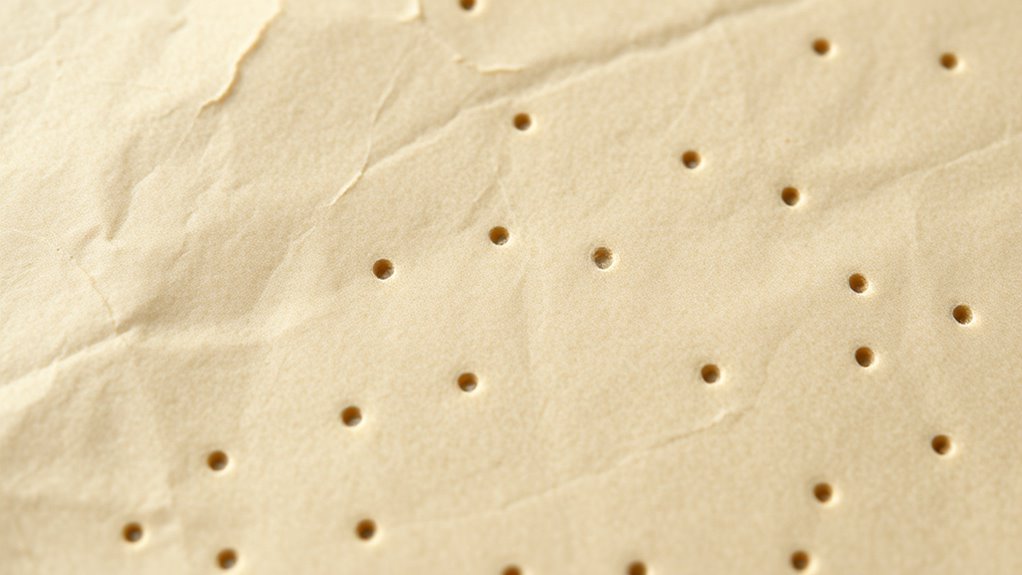
Selecting the right perforation pattern depends on the specific recipe you’re preparing. For foods needing maximum airflow, such as crispy fries or roasted vegetables, choose perforation patterns with larger or more numerous holes to promote even browning. If you’re cooking delicate items like fish or baked goods that benefit from gentle steam escape, opt for smaller or fewer perforations to prevent sogginess. The parchment material also influences your choice; sturdier parchment can support more perforations without tearing, while thinner options are better for light, delicate dishes. Understanding how different perforation patterns interact with your recipe’s moisture content and texture goals helps you pick the optimal setup. Considering perforation size can significantly impact the cooking outcome, especially for achieving desired crispness or moisture retention. Selecting the appropriate perforation pattern ensures optimal heat circulation and prevents overcooking or undercooking. Incorporating airflow dynamics into your selection process can further enhance cooking performance and results. The sound design principles related to airflow can also inform how different perforation designs influence heat and moisture distribution, leading to better results. Environmental considerations play a role in choosing sustainable materials and proper disposal practices, ensuring your cooking habits support eco-friendly practices. Tailoring the pattern ensures your air fryer produces consistent, crispy results every time.
Common Mistakes When Choosing Perforated Parchment Paper

One common mistake is choosing perforated parchment paper with holes that are too large or too numerous for the recipe, which can lead to excessive airflow and cause fragile foods to dry out or stick. When selecting parchment, consider baking tips that prioritize parchment durability and appropriate perforation size. Oversized holes may seem appealing for airflow but compromise the paper’s ability to support delicate foods, increasing the risk of tearing or burning. Conversely, too many small holes can restrict airflow, leading to uneven cooking. Always match the perforation pattern to your recipe’s needs to prevent common pitfalls. Proper perforation design ensures optimal airflow and support for various foods, preventing mishaps. Using the right perforation pattern can also help maintain the integrity of the parchment, which is crucial for successful baking. Incorporating perforated parchment with suitable hole sizes can enhance cooking results and reduce waste. Paying attention to airflow regulation can significantly improve the quality of your air fryer dishes. Making informed choices helps ensure your air fryer produces perfectly cooked, non-sticky, and well-textured dishes.
Tips for Properly Using Perforated Parchment in Your Air Fryer

To get the most favorable results, start by choosing perforated parchment with the right hole size for your air fryer. Make sure not to overcrowd the basket, so air can circulate freely and food crisps evenly. Keep an eye on airflow and adjust your setup if needed to achieve optimal crispiness.
Choose Correct Hole Size
Choosing the right hole size for perforated parchment is essential for ideal air circulation and food crispiness. If the holes are too small, airflow gets restricted, leading to soggy results, especially at higher baking temperatures. Conversely, oversized holes may cause small food items to slip through or prevent even browning. To guarantee durability, select a perforation pattern that maintains the parchment’s integrity under heat, especially during longer cooking times. Proper hole size allows hot air to circulate efficiently, promoting even cooking and crispiness. Always consider the specific baking temperature when choosing perforations—higher temps require sturdier parchment with appropriately sized holes. Additionally, ensuring the perforation pattern is optimized for the air fryer’s technology can significantly improve cooking results. By matching hole size to your air fryer’s needs, you optimize performance, ensuring your food cooks evenly without compromising parchment durability.
Prevent Overcrowding Parchment
Overcrowding your air fryer with too much food can hinder airflow and prevent your perforated parchment from doing its job effectively. To guarantee proper cooking and protect parchment durability, avoid packing the basket too tightly. Here are four tips:
- Leave space around food to promote even heat circulation.
- Use only the recommended amount of food for your parchment size.
- Remove excess items that block airflow or cause crowding.
- Opt for smaller batches to reduce environmental impact by minimizing waste and reusability issues.
Monitor Airflow and Crispiness
Ensuring proper airflow is key to achieving the crispy results you want with your air fryer. When using perforated parchment, make sure it doesn’t block the airflow around your food. Place the parchment directly on the baking surface, keeping it flat and secure so air can circulate freely. This promotes even cooking and crispiness. Avoid overcrowding your basket, as excess food can trap steam and reduce crispiness. Also, choose parchment with good durability so it withstands high temperatures without tearing or curling. Regularly check that the holes in your parchment are unobstructed, which allows hot air to reach all sides of your food. Proper airflow ensures your dishes come out evenly crisped and delicious every time.
Frequently Asked Questions
Can Perforated Parchment Paper Be Reused Multiple Times?
You might wonder if perforated parchment paper can be reused multiple times. Reusability concerns depend on how well it holds up after each use, but generally, it’s not recommended because it can tear or become contaminated. Reusing it could reduce environmental impact, but it may compromise food safety and performance. For best results, use fresh parchment each time, balancing reusability with safety and effectiveness.
How Do I Prevent Tearing During Loading and Unloading?
Did you know that improper handling causes nearly 60% of tearing issues? To prevent tearing during loading and unloading, follow simple loading tips like gently placing food and avoiding overstuffing the basket. Use tongs instead of fingers for better grip, and lift parchment from edges rather than pulling on the food. These steps help protect your parchment from tearing, ensuring a smooth cooking process every time.
Is Perforated Parchment Safe for High-Temperature Cooking?
Perforated parchment is safe for high-temperature cooking if it’s designed for that purpose. Check its heat resistance to guarantee it can handle your air fryer’s temperature without burning or releasing harmful chemicals. Properly manufactured perforated parchment maintains food safety, prevents sticking, and allows heat circulation. Always follow manufacturer instructions, and avoid using it beyond recommended heat levels to ensure your cooking remains safe and effective.
How Do Hole Sizes Influence Cleanup and Residue?
You’ll find that hole sizes in perforated parchment directly impact residue control and cleanup efficiency. Larger holes allow more airflow and grease drainage, reducing sticky residue buildup on your air fryer basket. This means less scrubbing and quicker cleanup after cooking. Smaller holes might trap more residue, making cleanup more tedious. Choosing the right hole size helps maintain a cleaner cooking environment and streamlines your cleanup process.
Can Perforated Parchment Be Used in Other Cooking Appliances?
You can definitely use perforated parchment paper in other cooking appliances like ovens and grills. It’s a great alternative for baking sheets and roasting trays, helping with even heat distribution. Just keep in mind that parchment paper durability varies with heat and moisture; select high-quality options for longer use. Always check the appliance’s temperature limits and ensure the perforations won’t obstruct airflow or cooking performance.
Conclusion
Choosing the right perforated parchment isn’t just about hole size; it’s about revealing your air fryer’s full potential. Think of perforations as the secret passageways to perfectly crispy, evenly cooked food—each hole a whisper of airflow guiding your dishes to perfection. When you select wisely, you transform simple ingredients into culinary masterpieces. So, embrace the perforations, and let your air fryer’s true magic unfold—because in the dance of heat and air, the right holes make all the difference.