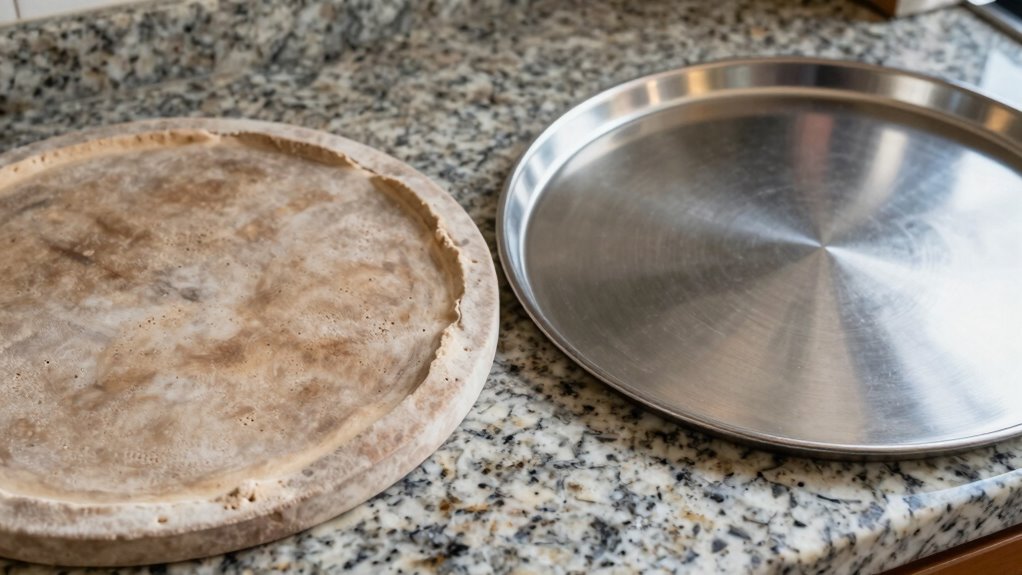

If you’re choosing between pizza stones and steels for your countertop oven, steels heat faster, transfer heat more evenly, and help you achieve crisp crusts more easily, especially at high temperatures. Stones take longer to preheat and gradually retain heat, but they absorb moisture and can produce excellent results with proper care. Both can work well if you optimize preheating and oven settings. Keep exploring to discover which option suits your baking style best.

Get kitchen gear delivered free — and shop member deals
- Fast, free delivery on millions of items
- Access to Prime Big Deal Days deals on October 6–7
- Prime Video, Amazon Music and more included
Key Takeaways
- Steel heats faster and offers quicker heat transfer, ideal for high-temperature baking and rapid crust formation.
- Stones are porous, absorb moisture, and promote crisp crusts but require longer preheating times.
- Steels are easier to clean, less porous, and less prone to flavor absorption over time.
- Both surfaces need thorough preheating; steel reaches desired temps faster, suitable for high hydration doughs.
- Choice depends on oven max temperature, moisture management, and desired crust texture.
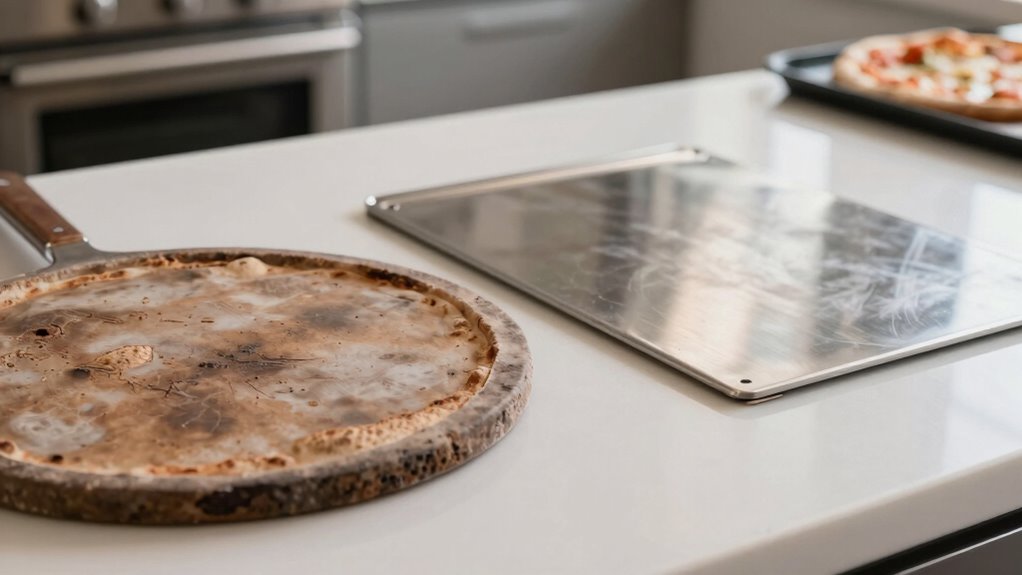
When it comes to making perfect homemade pizza, choosing the right cooking surface can make all the difference. Both pizza stones and pizza steels have their strengths, but your choice depends on how you control your dough hydration and oven temperature. A well-hydrated dough, which means higher dough hydration, benefits from a cooking surface that can evenly transfer heat, helping your crust develop that perfect crispness without burning. Similarly, maintaining a consistent oven temperature is crucial for achieving a well-cooked pizza, and your surface choice impacts how well heat is conducted.
Pizza stones are porous and absorb moisture, which helps create a crisp crust by drawing moisture away from the dough as it bakes. They tend to heat more gradually and retain heat well, making them suitable for home ovens that might not reach extremely high temperatures. When you use a pizza stone, it’s essential to preheat it thoroughly—ideally for at least 30 minutes—to ensure even heat distribution. This preheating aids in achieving the high oven temperature needed for a perfectly baked pizza. However, because stones are porous, they can also absorb oils and flavors over time, so cleaning them properly becomes part of your routine. Additionally, their moisture absorption can vary depending on the type of stone used, affecting how your crust turns out.
Pizza stones absorb moisture for crisp crusts, requiring thorough preheating and proper cleaning over time.
On the other hand, pizza steels are made of metal, usually steel or sometimes aluminum, which conducts heat much faster and more efficiently than stones. This rapid heat transfer is especially advantageous if you’re working with dough that has higher hydration levels, as it helps develop a crispy, well-baked crust quickly. A pizza steel heats up in a fraction of the time compared to a stone, allowing you to reach your target oven temperature faster and maintain it more consistently. The high thermal conductivity of steels means that your pizza gets a more immediate and even bake, which is perfect when you’re aiming for that ideal crust without overcooking the toppings. Additionally, steels are less porous, making them easier to clean and less prone to flavor absorption.
Both surfaces require proper preheating and consistent oven temperatures, but steels give you an edge in terms of quick heat recovery and crispness. If your oven can reach and sustain higher temperatures—around 500°C or 550°F—a steel can help you maximize that heat for restaurant-quality results. Conversely, if your oven maxes out at lower temps, a pizza stone can still produce fantastic crusts, provided you give it enough time to evenly heat through.
In the end, your choice hinges on how you manage dough hydration and oven temperature. Both tools can produce excellent results, but steels often provide a more responsive and crisp finish, especially for higher hydration doughs and higher oven temperatures. Knowing the thermal conductivity of your cooking surface can help you optimize your pizza baking process and achieve the best possible crust.
As an affiliate, we earn on qualifying purchases.
Frequently Asked Questions
Can You Use a Pizza Stone or Steel in a Microwave Oven?
You shouldn’t use a pizza stone or steel in a microwave oven because of safety concerns. Microwave safety is compromised since these materials aren’t designed for microwave use, and they can cause sparks or damage. Additionally, their material durability doesn’t hold up against microwave radiation. Stick to microwave-safe dishes to avoid accidents. Using proper cookware guarantees safety and helps preserve the longevity of your microwave.
How Do You Clean and Maintain Pizza Stones and Steels?
Did you know that properly maintained pizza stones and steels can last over a decade? To clean them, avoid soap; instead, scrub off food with a brush or plastic scraper and rinse with water. For maintenance, let them cool, then store in a dry place. Regularly inspect for cracks, and avoid sudden temperature changes. Follow these cleaning methods and maintenance tips, and your stones and steels will stay in great shape for years.
Are Pizza Stones or Steels Better for Baking Gluten-Free Crusts?
You’ll find steels better for baking gluten-free crusts because their superior baking performance creates a crisp, evenly cooked gluten-free texture. Steels conduct heat more efficiently, resulting in faster, more consistent results, which is essential for gluten-free dough that can be tricky to perfect. While stones offer a more traditional feel, steels give you better control over baking performance, helping you achieve that ideal, crispy gluten-free crust every time.
What Is the Maximum Temperature Pizza Stones and Steels Can Withstand?
You’ll want to know that pizza steels generally withstand temperatures up to 2,500°F, thanks to their material composition of steel, which offers high temperature durability. Conversely, pizza stones usually tolerate up to 1,200°F, owing to their ceramic or cordierite composition, which can be more fragile under extreme heat. Both materials are designed to handle high temperatures, but steels excel in resisting thermal shock and extreme heat, ensuring better performance at higher temperatures.
Can Pizza Stones or Steels Be Used on Outdoor Grills?
Yes, you can use pizza stones and steels on outdoor grills, but you need to ensure surface durability and heat resistance. Pizza steels are more durable and can withstand higher temperatures, making them ideal for outdoor grilling. Pizza stones, while effective, may crack under rapid temperature changes or intense heat. Always preheat your grill thoroughly and avoid sudden temperature shifts to protect your surface and ensure even cooking.
Conclusion
Ultimately, whether you choose a pizza stone or steel, you’re shaping more than just dough—you’re crafting moments of warmth and connection in your kitchen. Imagine the crackle of a perfectly baked crust, the aroma filling your space like a warm embrace. Each bake becomes a dance of fire and patience, turning simple ingredients into memories. So, select your tool, preheat your heart, and let every slice remind you that great pizza is about the love you put in.
Fall Picks
fall essentials
As an affiliate, we earn on qualifying purchases.