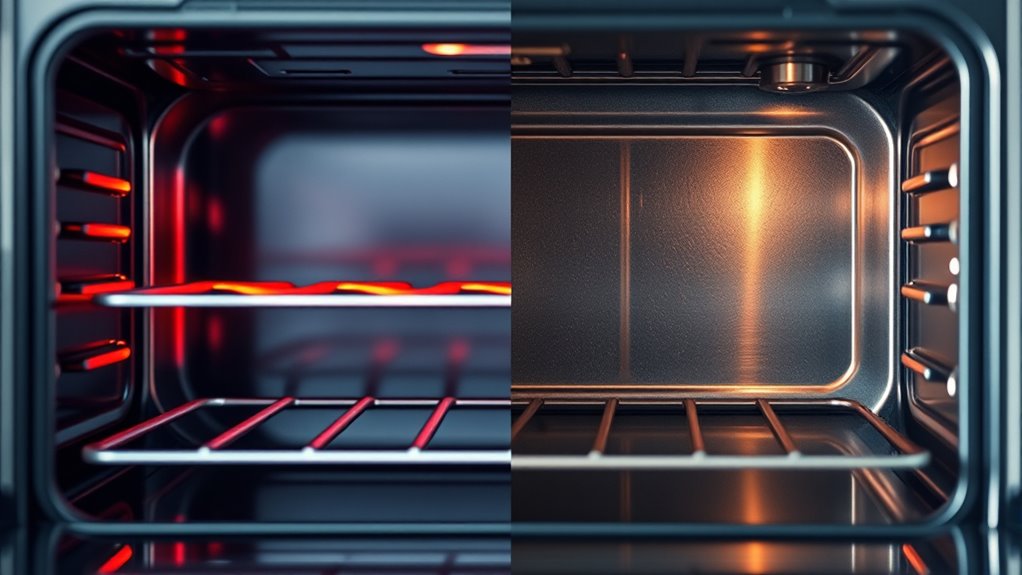

Using the preheat function guarantees your oven reaches the right temperature before you start cooking, which leads to consistent, even results and better safety. Skipping preheating can cause uneven cooking, affect taste and texture, and potentially damage your oven over time. While some tasks may tolerate no preheating, for most baked goods and delicate dishes, it’s essential. Keep going to discover how understanding this simple step can improve your cooking outcomes.
Key Takeaways
- Preheating ensures the oven reaches and maintains the correct temperature for consistent baking results.
- Skipping preheat can cause uneven cooking, affecting taste, texture, and overall food quality.
- Using the preheat function reduces the risk of food sticking, burning, or undercooking, promoting safety and better outcomes.
- For certain recipes or reheating, preheating may be optional, saving time and energy without compromising results.
- Regularly preheating can extend oven lifespan by preventing uneven heat cycles and reducing appliance wear.
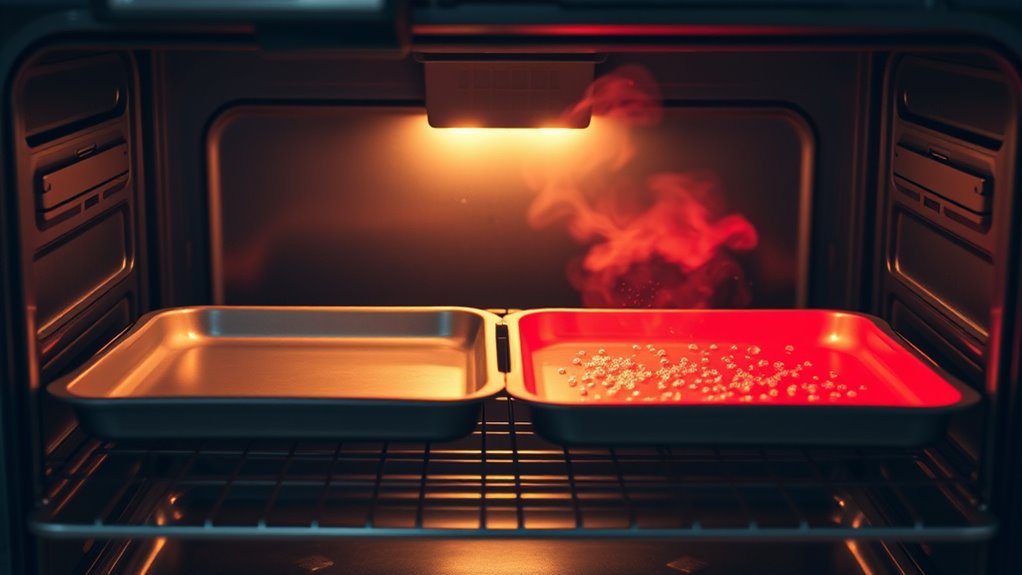
When it comes to using an oven, deciding whether to preheat can significantly impact your cooking results. Preheating is the process of turning your oven on early and waiting until it reaches the desired temperature before placing your food inside. Many home cooks wonder if skipping this step affects oven safety or baking efficiency, and the answer depends on what you’re cooking. In general, preheating enhances baking efficiency because it ensures your oven is at the right temperature from the start, leading to more consistent results. It also supports oven safety by reducing the risk of uneven cooking or potential mishaps caused by sudden temperature changes. When you skip preheating, you risk unevenly cooked food, especially in baking recipes that rely on precise temperatures, like cakes or bread. Cold spots can cause parts of your dish to undercook or overcook, which not only affects taste and texture but can also waste ingredients and time.
Preheating is especially vital if you’re baking delicate items that require exact temperatures, as it allows heat to distribute evenly throughout the oven. This even heat distribution improves baking efficiency because your dish reaches the desired doneness faster and more uniformly. Conversely, if you’re roasting vegetables or reheating leftovers, preheating might not be as essential. These tasks may tolerate a slightly lower or fluctuating temperature without compromising the final result. However, even in these cases, preheating can save you time and energy, ensuring your oven isn’t working harder than necessary and that your food heats evenly.
In terms of oven safety, preheating can help prevent accidents. When an oven is at the right temperature, there’s less likelihood of food sticking or burning, which can sometimes cause smoke or sparks in extreme cases. Additionally, consistently heating your oven before cooking minimizes the risk of overexposure to hot surfaces or sudden temperature shifts that could damage the appliance over time. If you frequently cook without preheating, you might notice that your oven wears out faster because of uneven heat cycles and the extra effort your appliance makes to reach the desired temperature mid-cook.

Emeril Lagasse Extra Large French Door Air Fryer Toaster Oven Combo, 24 Cooking Functions and Digital Controls, 7 Accessories Included, Stainless Steel Finish, 26QT Capacity
A VERSATILE AIR FRYER AND MULTI-COOKER COMBO: Elevates practically any meal, from air frying quick after-school snacks to...
As an affiliate, we earn on qualifying purchases.
Frequently Asked Questions
How Does Preheating Affect Energy Consumption?
Preheating your oven can slightly increase energy consumption initially, but it improves energy efficiency overall by ensuring even cooking and reducing the need for extended cooking time. When you preheat, your oven reaches ideal performance faster, which helps maintain consistent oven performance. Skipping preheating may save some energy upfront but can lead to uneven cooking, causing you to use more energy later to finish your dishes properly.
Can Preheating Reduce Overall Cooking Time?
Yes, preheating can reduce your overall cooking time. When you preheat, your oven reaches the ideal temperature faster, enhancing oven efficiency. This means your food cooks more evenly and consistently, preventing undercooked or overcooked spots. By starting with a hot oven, you save time and ensure better cooking consistency, especially for baked goods or dishes requiring precise temperatures. Skipping preheat might lead to longer cook times and uneven results.
Is Preheating Necessary for All Types of Recipes?
Preheating isn’t necessary for all recipes, but it often helps you achieve the right oven temperature for consistent results. For baked goods like cookies or bread, preheating guarantees even cooking and better texture. However, for roasting vegetables or slow-cooking dishes, you might skip preheating. Knowing when to preheat improves your cooking consistency and prevents undercooked or unevenly cooked dishes. Always follow your recipe guidelines for best results.
How Does Preheating Impact Food Texture and Quality?
Skipping preheat might seem daring, but it wrecks your food’s texture and quality. When you preheat, your oven reaches the right temperature quickly, ensuring even cooking and a perfect crust or tender interior. Without it, your dish suffers from uneven heat, leading to inconsistent textures and flavors. So, if you care about oven temperature and cooking consistency, preheating isn’t just a suggestion; it’s a necessity for culinary success.
Are There Safety Concerns With Skipping Preheating?
Skipping preheating generally isn’t a safety concern if you follow proper oven safety rules, such as avoiding contact with hot surfaces. However, it can affect appliance longevity, as uneven heating may strain your oven over time. To keep your appliance in good shape and ensure safe operation, always monitor your oven’s temperature and avoid rushing the preheating process when necessary.

Cosori 9-in-1 TurboBlaze Air Fryer 6 Qt, Premium Ceramic Coating, 90°–450°F, Precise Heating for Even Results, Air Fry, Roast, Bake, Broil, Dry, Frozen, Proof, Reheat, Keep Warm, 120V, Dark Gray
𝘼𝙞𝙧 𝙁𝙧𝙮𝙚𝙧 𝙐𝙥𝙜𝙧𝙖𝙙𝙚: Innovative TurboBlaze Technology delivers a powerful 3600 rpm fan speed and temperatures up to 450℉,...
As an affiliate, we earn on qualifying purchases.
Conclusion
Whether you choose to preheat or not, your results depend on your goals. Preheating offers precision and efficiency, ensuring consistent cooking and better texture. Skipping it may save time but risks uneven results. It’s a trade-off—like rushing versus patience. Ultimately, understanding when to preheat elevates your cooking, turning a simple step into a strategic choice. So, next time, decide whether to prioritize speed or perfection, because in the kitchen, every detail counts.

Nuwave Bravo XL Pro Air Fryer Toaster Oven, Improved 100% Super Convection, Quicker & Crispier Results, 100 Presets, Multi-Layer Even Cooking, 50-500F, Smart Probe, PFAS Free, 30QT, Stainless Steel
FASTER FAN, BETTER RESULTS: The newly designed and engineered fan and housing can produce 100% faster fan speed...
As an affiliate, we earn on qualifying purchases.
CHEFMAN Multifunctional Digital Air Fryer+ Rotisserie, Dehydrator, Convection Oven, 17 Touch Screen Presets Fry, Roast, Dehydrate, Bake, XL 10L Family Size, Auto Shutoff, Large Easy-View Window, Black
Versatile countertop cooking: Air fry, bake, dehydrate, rotisserie, or roast to crispy perfection in one convenient appliance
As an affiliate, we earn on qualifying purchases.