
A rotisserie can boost your cooking by providing versatile options, even heat, and better results, especially for larger cuts and multiple dishes. It’s easy to use and energy-efficient, making it ideal for home chefs looking for consistent, flavorful outcomes. However, it often costs more and takes up space. If you want to explore more detailed comparisons and see if it’s right for you, keep exploring the options.
Key Takeaways
- Rotisserie offers even heat distribution and versatile cooking options beyond just chicken.
- It simplifies achieving perfectly cooked, tender, and flavorful results with less monitoring.
- Rotisseries are generally more energy-efficient and can save on utility costs over time.
- They require additional space and typically involve a higher initial investment.
- Ideal for those seeking consistent, gourmet-quality dishes and experimenting with various meats.
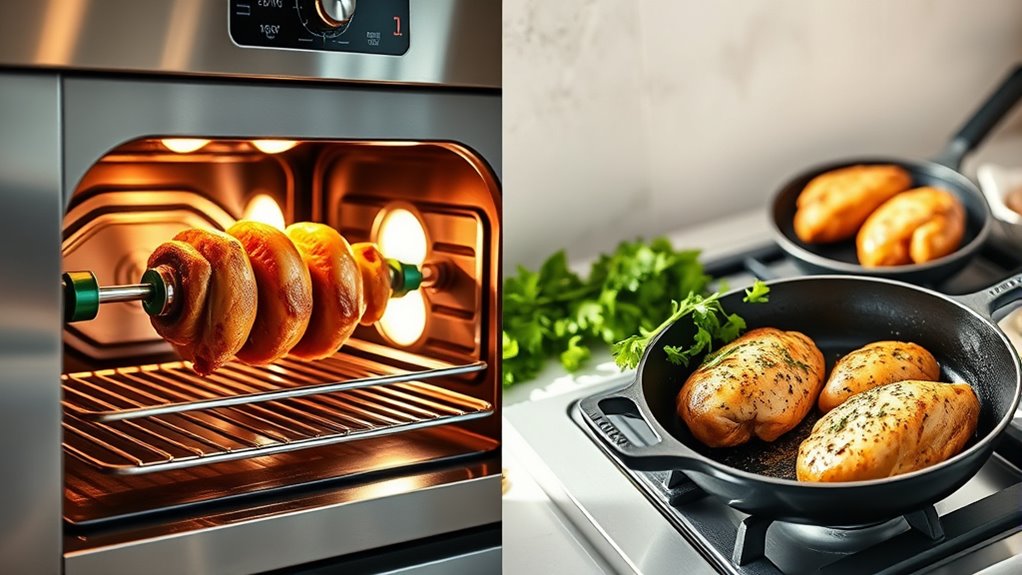
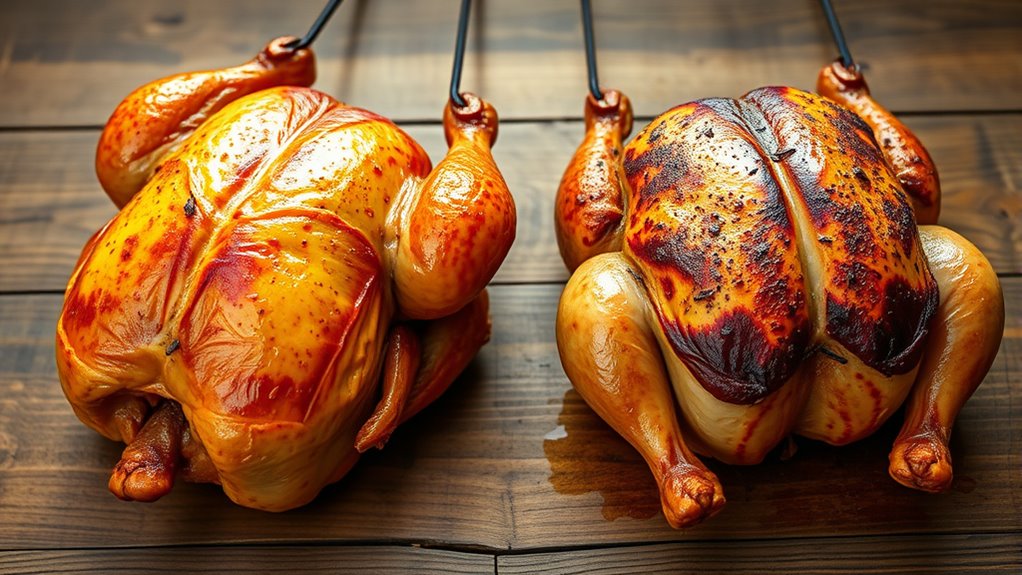
Are rotisserie cooking methods worth the extra effort and cost compared to traditional roasting? It’s a question many home cooks ask when weighing the benefits of investing in a rotisserie. The main advantage lies in its remarkable cooking versatility. With a rotisserie, you can prepare a broad range of dishes beyond just chicken—think succulent roasts, kebabs, and even certain vegetables that benefit from even, rotating heat. The constant turning ensures that heat is evenly distributed, reducing the likelihood of hot spots and burnt edges. This makes it easier to achieve perfectly cooked, tender results without constantly monitoring the oven or grill. If you enjoy experimenting with different types of meats and recipes, a rotisserie can considerably expand your culinary options, giving you more flexibility to get creative in your kitchen. Additionally, the consistent heat distribution of a rotisserie minimizes the need for frequent adjustments during cooking, making the process more straightforward for beginners. Energy efficiency is another compelling factor to contemplate. Rotisserie appliances, especially those designed for indoor use like countertop models, often use less energy than traditional ovens. Because they cook food faster and focus heat more directly on the item being cooked, they can save you money on your utility bills over time. Additionally, since the heat is contained within a smaller space, you’re not heating up an entire oven cavity or large grill area, which means less energy wasted. This efficiency benefits both your wallet and the environment, making a rotisserie a more sustainable choice for everyday cooking. However, it’s worth noting that rotisseries tend to be more expensive upfront and require more space or countertop real estate. They might also need a bit of practice to master, especially if you’re new to rotisserie cooking. Still, many enthusiasts swear by the superior results they achieve, especially when cooking larger cuts of meat or multiple items simultaneously. The ease of turning out evenly cooked, flavorful dishes can justify the initial investment, especially if you frequently entertain or enjoy making home-cooked meals with a gourmet touch. In the end, whether a rotisserie is worth it depends on your cooking habits and priorities. If you value cooking versatility and energy efficiency, it’s a tool that can elevate your culinary game. It offers a unique way to prepare a variety of dishes with less effort and more consistent results. But if you’re satisfied with traditional roasting and don’t want to spend extra on appliances, you might find that your current methods are sufficient. Still, for those looking to broaden their cooking options while saving energy, a rotisserie could be a worthwhile addition to your kitchen arsenal.
Frequently Asked Questions
What Are the Health Benefits of Using a Rotisserie?
Using a rotisserie offers several health benefits by enhancing your nutritional intake and simplifying meal preparation. It helps retain more nutrients in the meat compared to other cooking methods, making your meals healthier. Plus, it allows you to cook evenly and efficiently, reducing added fats and oils. This makes it easier to prepare nutritious, flavorful dishes quickly, supporting your health goals while saving time in the kitchen.
How Much Space Does a Rotisserie Appliance Require?
A typical rotisserie appliance requires about 12 to 18 inches of countertop footprint, giving you enough space to cook without clutter. You’ll want to contemplate storage considerations when not in use, as some models are compact while others are larger and may need dedicated storage. Think about your kitchen layout, available space, and how often you’ll use it to decide if the size fits seamlessly into your cooking area.
Can a Regular Oven Replicate Rotisserie Results?
A regular oven can mimic some rotisserie benefits, like roasting meats evenly and achieving a crispy exterior. However, oven limitations include less consistent rotation and airflow, which can affect juiciness and tenderness. While you can get good results, a dedicated rotisserie offers more precise control over heat and rotation, leading to juicier, more evenly cooked meat. If you prioritize convenience and authentic results, a rotisserie might be worth the investment.
Is a Rotisserie More Energy-Efficient Than Other Cooking Methods?
Is a rotisserie more energy-efficient than other methods? It depends, but generally, rotisseries use less energy because they cook food evenly and quickly, reducing overall energy consumption. Plus, they can lower environmental impact by wasting less heat and power. So, if you’re aiming for eco-friendliness and efficiency, a rotisserie might be a smarter choice. Wouldn’t you prefer a method that saves energy and helps the environment?
What Types of Foods Are Best Suited for Rotisserie Cooking?
You’ll find rotisserie cooking ideal for foods like rotisserie chicken, which stays juicy and flavorful, and grilled vegetables that develop a smoky taste. The even heat rotation enhances the texture and taste of meats and vegetables alike. It’s perfect if you want tender, evenly cooked meals with a crispy exterior. Whether for a quick dinner or entertaining guests, rotisserie cooking elevates simple ingredients into delicious, satisfying dishes effortlessly.
Conclusion
In the end, choosing between rotisserie and no rotisserie is like picking your favorite flavor—each brings its own magic. The rotisserie turns your cooking into a fiery dance, infusing flavor and juiciness, while no rotisserie keeps things simple and straightforward. Think of it as your culinary compass—do you crave the sizzle and spectacle, or prefer the quiet, steady approach? Either way, your kitchen’s got the tools to turn everyday meals into a tasty adventure.