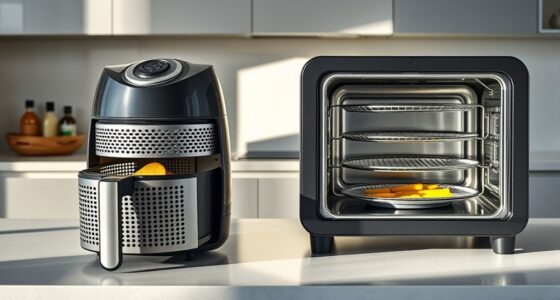
Choosing between top and bottom heating elements in an air fryer affects how your food turns out. A top element provides quick, crispy results, perfect for finishing dishes with a golden crust. A bottom element promotes even cooking and thorough heat distribution, ideal for baked goods and casseroles. Understanding these differences helps you get the best results for your cooking style. Keep exploring to learn more about how each setup can enhance your dishes.
Key Takeaways
- Top heating elements provide focused, rapid heat for crispier surfaces and faster cooking times.
- Bottom heating elements ensure even heat distribution for uniform cooking throughout the food.
- Top elements are ideal for foods needing quick, crispy finishes; bottom elements suit baked goods and casseroles.
- Energy efficiency varies; top elements reduce cooking time and energy use with concentrated heat.
- Choosing between them depends on the desired food texture, cooking style, and dish type.
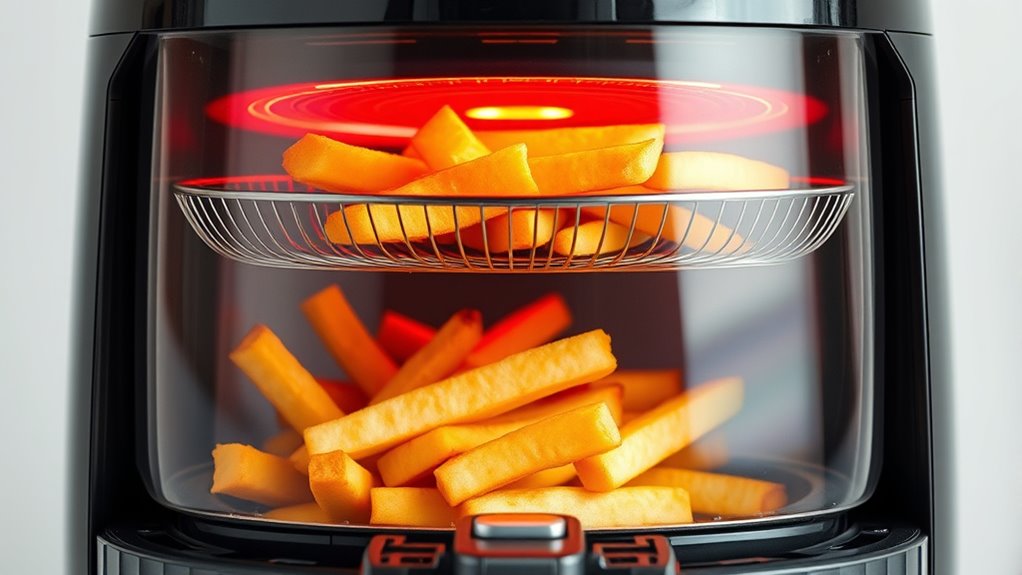
When choosing an air fryer, understanding the difference between top and bottom heating elements can make a big impact on your cooking results. The placement of these elements influences how heat is distributed inside the appliance, affecting everything from cooking speed to food crispiness. If you’re aiming for even cooking, it’s essential to contemplate how each setup manages temperature distribution. A top heating element usually directs heat downward, which can create a focused, direct heat source. This often results in faster cooking times and crispier finishes on the top of your food, but it may lead to uneven results if the heat doesn’t circulate well. Conversely, a bottom heating element tends to generate heat from below, promoting more uniform temperature distribution across the entire basket. This setup helps prevent hot spots and ensures that food cooks evenly from the bottom up, which is particularly useful for items like fries or baked goods.
Energy efficiency is another critical factor influenced by the heating element placement. Generally, top heating elements can be more efficient in certain scenarios because they concentrate heat where it’s needed most, reducing the time it takes to reach desired temperatures. This focused heat minimizes energy waste and can lower your overall power consumption during cooking. On the other hand, bottom heating elements might require slightly longer operation times to achieve the same results, especially if they rely on natural heat conduction and convection patterns within the cooking chamber. While this might seem less efficient, some modern air fryers incorporate advanced designs and insulation to optimize energy use regardless of the element placement.
Your choice between top and bottom heating elements should also consider the types of dishes you most often prepare. If you frequently cook foods that benefit from rapid, crispy surfaces, a top element might be advantageous due to its intense heat focus. For dishes that need thorough, even cooking—like baked items or casseroles—a bottom element with good heat circulation can help produce consistent results. Ultimately, the decision comes down to your cooking style and priorities. If you want quick results with crispy textures and are okay with occasionally checking for evenness, a top heating element setup offers that edge. If you prefer consistent, evenly cooked dishes and are mindful of energy consumption, then a bottom heating element might serve you better. Recognizing these differences allows you to select an air fryer that aligns with your culinary goals, ensuring better results every time you cook.
Frequently Asked Questions
Do Heating Elements Affect Cooking Times Differently?
Heating elements do affect cooking times differently because of heating distribution. If your air fryer has only a bottom element, it may cook slower or unevenly, especially at the top. Conversely, a top heating element distributes heat more evenly, increasing cooking speed and reducing time. You’ll notice quicker results and more consistent cooking when heat is evenly distributed, making your meals faster and more evenly cooked.
Are There Safety Concerns With Top or Bottom Elements?
You should be aware of safety hazards and maintenance concerns with both top and bottom heating elements. Top elements can pose burn risks if touched during operation, while bottom elements may accumulate grease, increasing fire hazards. Regularly cleaning and inspecting your air fryer helps prevent these issues. Always follow manufacturer instructions and turn off the appliance before maintenance to guarantee safety, regardless of which heating element is used.
How Do Heating Elements Impact Energy Efficiency?
Heating elements directly impact your air fryer’s energy efficiency by influencing energy consumption and heating performance. When the element heats quickly and retains heat well, your appliance uses less energy to maintain the desirable temperature, saving you money. Bottom elements often provide more consistent heat, improving efficiency during cooking. Conversely, less effective elements lead to longer cook times and higher energy use, making your air fryer less efficient overall.
Can Heating Elements Be Replaced Easily?
Yes, heating elements can often be replaced, but it depends on your air fryer’s model. You’ll need to find the right replacement parts, which are usually available from the manufacturer or third-party suppliers. The installation process typically involves unplugging the appliance, removing any panels or screws, and carefully installing the new heating element. If you’re comfortable with basic repairs, this can be a straightforward task, but professional help is recommended if you’re unsure.
Do Different Elements Influence Food Flavor or Texture?
Imagine the sizzle of food as heat hits it—your air fryer’s heating elements directly influence flavor impact and texture differences. A top element creates a crispy, golden finish, enhancing flavor with a caramelized crust. Conversely, a bottom element promotes even cooking, resulting in tender interiors. Your choice of element shapes the final taste and texture, making each dish uniquely satisfying based on how heat is applied.
Conclusion
So, whether you prefer the gentle, all-encompassing warmth of the bottom element or the focused heat from the top, think of your air fryer as a culinary symphony. Each element plays its part, creating a dance of heat that turns raw ingredients into crispy perfection. Embrace the rhythm, experiment with both, and soon you’ll master the art of crispy, golden delights—your kitchen’s very own fireworks display of flavor!