
TL;DR

Get kitchen gear delivered free with Prime
- Fast, free delivery on millions of items
- Prime Video, Amazon Music and more included
- Member-only deals all year
A House Beautiful report identifies five textile patterns designers say they are becoming less interested in: abstract brushstrokes, mass-market block prints, faux tapestry, ikat and oversized watercolor florals. The comments are designers’ views, not evidence of a measured industry-wide shift; the report points instead to a preference for more nuanced, detailed or genuinely handmade textiles.
House Beautiful has reported that several designers plan to move away from five once-popular textile patterns as 2027 approaches: abstract brushstrokes, mass-market block prints, faux tapestry, ikat and oversized watercolor florals. Their comments describe personal design preferences, not a measured market-wide decline, but they offer readers a snapshot of the prints some professionals say they are ready to use less often.
The designers’ criticisms differ by pattern. Sara Swabb, founder of Storie Collective, says abstract brushstrokes can feel forced when contrast is stark and individual marks compete for attention. She favors prints with subtle color shifts and hand-painted irregularity, which she says add depth and mix well with other fabrics.
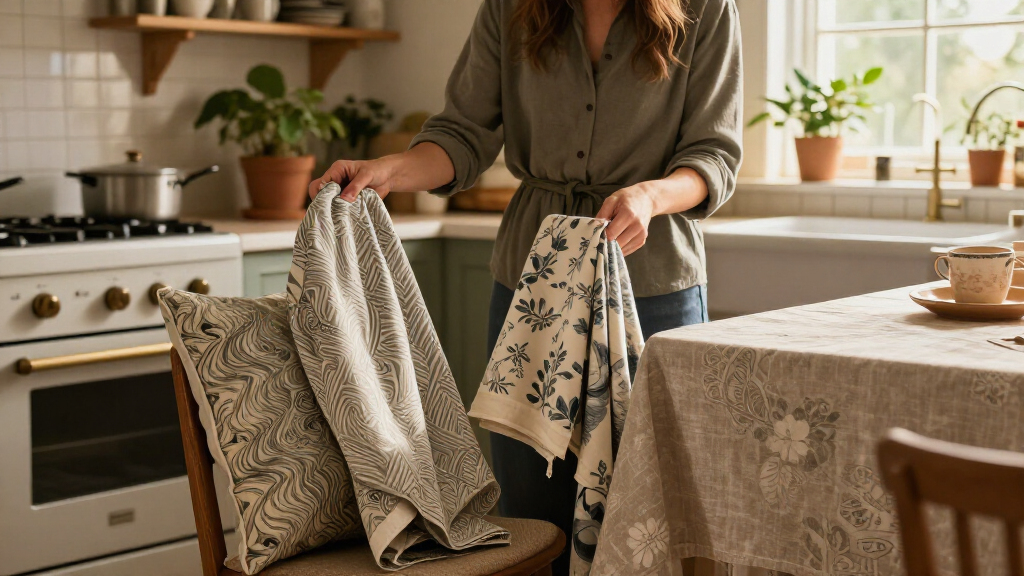
Sonia Chauhan, founder of Studio Sonia, distinguishes handmade block printing from mass-produced versions. She describes traditional production as repeated stamping with a hand-carved block and says small imperfections reflect the maker’s hand. In her view, mass-printed fabric does not reproduce those details. Adnan Anwar also objects to what he sees as derivative, overexposed faux tapestry prints, particularly when used to cover an entire sofa. He says a tapestry-print pillow can work, while preferring actual tapestry remnants for upholstery.
Meghan Jay says ikat can be difficult to combine with other patterns and that its colors can feel overly saturated in already layered rooms. Jay and Eve Jean, founder of Eve Jean Interiors, both say they are ready to move away from oversized watercolor florals. Jay finds their washed-out, abstract look dated, while Jean says it can lack the expression of patterns with clearer detail. Jay instead favors smaller-scale botanical prints with more definition.
How the Print Choices Affect Rooms
For readers planning a room refresh, the report offers practical guidance rather than a universal rulebook: pattern scale, contrast and layering can affect how a textile works with the rest of a space. A busy or saturated print may be harder to combine with other patterns, while detailed botanical designs or less sharply contrasting fabrics may suit someone seeking a quieter mix.
The distinction between handmade and mass-produced block prints also highlights a choice beyond appearance. Chauhan’s preference centers on the process and the evidence of handwork, while the report does not compare price, availability or durability. Readers can treat the designers’ opinions as options to consider, not as a requirement to replace existing furnishings.
As an affiliate, we earn on qualifying purchases.
The Five Patterns in Focus
The report situates the discussion around designers looking toward 2027 trends, noting that attention often falls both on emerging colors and on styles that may be losing appeal. It says the five prints had become widely seen, but supplies no sales figures, survey results or other data to measure how common they are or whether demand is changing.
Across the examples, the stated preferences lean toward more restrained or more specific design choices: nuanced brushwork instead of high-contrast strokes, actual hand-stamped fabric instead of mass-market imitation, limited faux-tapestry use, careful mixing with ikat, and smaller, more defined botanical motifs instead of oversized watercolor florals. These are individual designers’ recommendations as reported by House Beautiful.
“They bring depth to a room and mix beautifully with other fabrics.”
— Sara Swabb, founder of Storie Collective
How Broad Is the Shift?
The report does not establish that these patterns are falling out of favor across the design industry or among consumers. It presents opinions from named designers, without a survey, sales data, sample size or comparison with earlier years. The claim that the prints have been widely seen is not quantified, and the source gives no measure of how many designers share these views.
It is also unclear whether the preferences described will translate into broader changes in product ranges or home-furnishing purchases by 2027. The comments should be read as professional taste and advice, not a verified forecast or a reason that homeowners must replace textiles they already own.
What Designers May Favor Next
The report points to designers’ stated alternatives: nuanced brushwork, genuinely handmade block prints and smaller botanical patterns with clear detail. It also suggests using faux-tapestry fabric more selectively and taking care when combining ikat with other prints. These are recommendations in the article, not confirmed industry-wide directions.
As 2027 approaches, readers can watch for whether designers, retailers or later reports provide broader evidence of changing preferences. House Beautiful’s source does not announce a follow-up survey, forecast data or specific product launches, so the scale and staying power of the shift remain unverified.
Key Questions
Which five textile patterns do the designers say are starting to look dated?
The report names abstract brushstrokes, mass-market block prints, faux tapestry, ikat and oversized watercolor florals.
Are these patterns confirmed to be falling out of favor industry-wide?
No. The article reports the views of individual designers but does not provide consumer research, sales figures or a broad industry survey.
What alternatives do the designers recommend?
The preferences described include subtle, irregular brushwork, genuinely hand-stamped block prints and smaller botanical patterns with more defined detail. These are personal recommendations, not rules.
Does the report say homeowners should replace these prints?
No. It describes designers’ changing preferences and does not call for homeowners to replace existing furnishings. Whether to use a pattern is a matter of personal taste and how it works in the room.
Source: rss
Halloween Picks
halloween
As an affiliate, we earn on qualifying purchases.