
TL;DR

Get kitchen gear delivered free with Prime
- Fast, free delivery on millions of items
- Prime Video, Amazon Music and more included
- Member-only deals all year
Victoria Beckham designed a shell-shaped stainless-steel butter dish for her collaboration with Westwing, putting a familiar kitchen object in the spotlight. Livingetc presents the design as part of a broader interest in butter displays and decorative tableware, though it does not establish how widely the trend has spread.
Victoria Beckham has designed a shell-shaped stainless-steel butter dish for her collaboration with Westwing, a product that Livingetc says reflects growing interest in making everyday butter service part of the table setting. The design gives a familiar kitchen item a decorative role, but the report does not provide sales figures or evidence that the trend has reached a particular scale.
The Westwing piece is described by Livingetc as an elegant, shell-shaped design that presents butter as a feature of a tablescape rather than something simply taken from a packet. The article calls it a surprising product from Beckham’s collaboration with the homewares retailer. It does not specify the dish’s price, release date, materials beyond stainless steel, or whether it is still available.
The report places the dish alongside a broader range of butter-centered presentation, including whipped-butter displays, butter candles, decorated platters and vintage molds. It points to the highly photographed whipped butter served at Copenhagen restaurant Atelier September as one example of food presentation attracting attention online. These examples illustrate the aesthetic trend; they do not establish how many consumers are buying butter dishes or adopting elaborate serving styles.
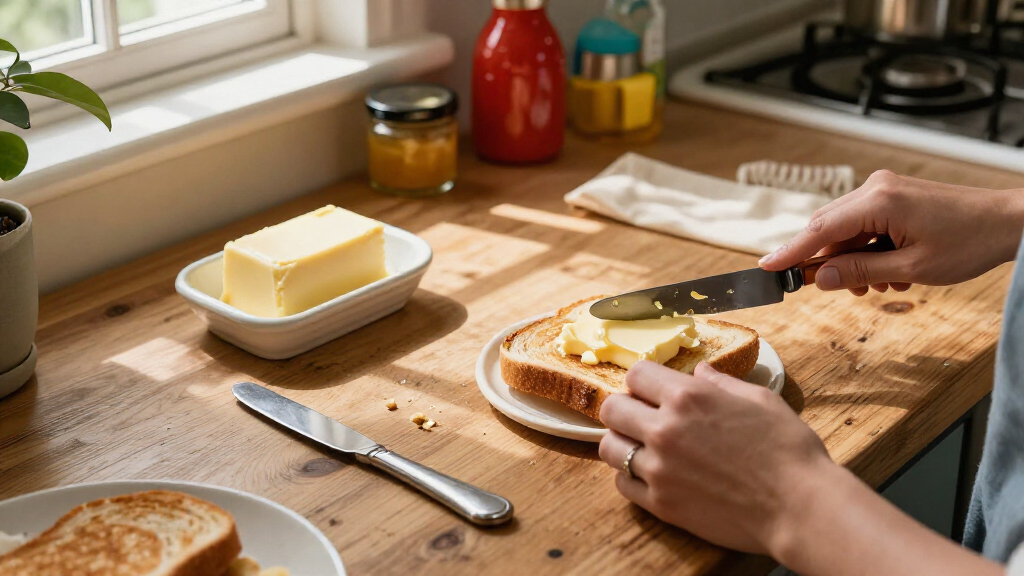
Designer Henry Holland, whose homewares collection also includes a butter dish, told Livingetc that the appeal lies partly in giving a commonplace object a considered place in the home. He described a butter dish as something that can sit on a counter or dining table every day, making its appearance worth caring about. The article also quotes food stylist Clara Santa Isabel describing butter as something she likes to treat as a small sculpture, rather than only as an accompaniment to bread.
A Small Luxury for Everyday Tables
The design speaks to an approach to interiors that puts everyday rituals and useful objects in focus. A butter dish is a relatively small household purchase, but its prominent place on a counter or breakfast table makes it a way to add character without changing an entire room. Livingetc frames that appeal against the cost of living and the difficulty of accessing larger luxuries, suggesting that modest, repeat-use objects can offer a sense of pleasure.
That interpretation comes from the article and its interviewees, not from consumer research included in the report. The story does not show whether the dish has prompted new buying behavior, particularly among younger customers. Its significance is more limited and specific: Beckham’s product gives a recognizable name and a sculptural design to an item that designers and food stylists have already been treating as part of the visual presentation of meals.
As an affiliate, we earn on qualifying purchases.
From Butter Displays to Tableware
The article describes the current interest as developing over several years, while acknowledging that it is difficult to identify exactly when it began. It traces a shift in how butter is presented: beyond a simple bread accompaniment, it can appear as whipped peaks, molded shapes or decorative centerpieces. Social-media images of these displays have helped make butter presentation visible, though the report supplies no dates, platform data or trend measurements.
Holland connects butter dishes with a mix of nostalgia and contemporary design. He told Livingetc that the object has an old-fashioned quality associated with earlier generations, but can be reinterpreted in a playful, sculptural style. He also said younger people are having more fun with interiors and feel less pressure to make everything match. Those are his observations, rather than findings from a survey cited by the publication.
““It’s something that sits on your kitchen counter or dining table every day, so why shouldn’t it be something you really love looking at?””
— Henry Holland, designer, speaking to Livingetc
The Trend’s Reach Is Unmeasured
The supplied report does not establish how many people are buying butter dishes, whether younger consumers are purchasing them at a higher rate, or whether Beckham’s Westwing design has sold well. It includes no sales figures, market research, price information or consumer survey. The article’s description of a growing interest is based on design examples and interviews, so its reach should not be treated as measured.
The timing is also incomplete: the material does not give the collaboration’s launch date or say whether the dish is currently available. It is not clear whether the attention is primarily about Beckham’s name, Westwing’s product, wider social-media food styling, or some combination of those factors.
Availability and Sales Remain Open
The next concrete details to watch for are product availability, pricing and sales information from Westwing or Beckham’s representatives. None is included in the supplied report. Further evidence, such as retailer data or consumer research, would be needed to judge whether the design reflects a broad purchasing trend or mainly a visual moment in interiors coverage.
For now, the confirmed development is the existence of Beckham’s shell-shaped butter dish and its place in the Westwing collaboration, as described by Livingetc. The larger claim that it may create a new generation of “butter dish people” remains a playful interpretation of the trend rather than a verified outcome.
Key Questions
What did Victoria Beckham design?
She designed a shell-shaped stainless-steel butter dish for her collaboration with Westwing, according to the Livingetc report.
Is the butter dish available to buy?
The supplied report does not give a price, release date or current availability, so those details are not confirmed here.
What does “butter dish people” mean in this story?
It refers informally to people who use a butter dish as both a practical kitchen item and a decorative part of a counter or table setting. The phrase is not evidence of a measured consumer category.
Is butter-dish use especially popular with younger people?
Livingetc says butter dishes have become appealing to some Gen Z and millennial consumers and quotes designer Henry Holland on younger people’s interest in personalizing interiors. The report provides no survey or sales data confirming how widespread that interest is.
Source: rss
Fall Picks
fall essentials
As an affiliate, we earn on qualifying purchases.