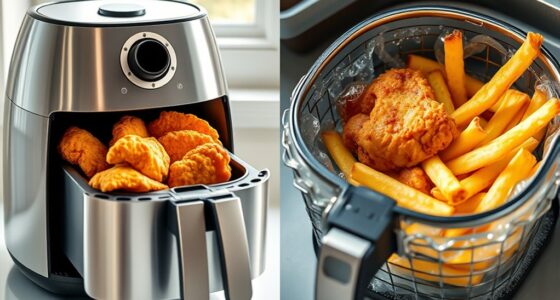
Yes, air frying can lower acrylamide levels in your fries compared to traditional deep frying by using lower temperatures and circulating hot air instead of oil. This cooking method helps prevent excessive browning, which reduces acrylamide formation. Scientific studies show air frying produces less acrylamide while maintaining good flavor and texture. If you want to find out more about how to make healthier fried foods, keep exploring the options available.
Key Takeaways
- Air frying typically produces lower acrylamide levels than deep frying due to reduced oil absorption and lower cooking temperatures.
- Studies indicate that air-fried fries have significantly less acrylamide formation compared to traditional deep-fried options.
- Adjusting cooking time and temperature in air frying helps minimize browning and chemical reactions that create acrylamide.
- Using fresh, firm potatoes and soaking them before air frying further reduces acrylamide risk.
- Overall, air frying is a healthier method that can effectively lower acrylamide content in homemade fries.

Ninja Air Fryer with Air Crisp | 5 QT Capacity fits up to 4lbs of Fries | 4-in-1 Pro Air Fry, Roast, Reheat, Dehydrate | 400°F Max Temp | 1750 Watts | W/Nonstick Basket & Crisper Plate | Grey | AF141
AIR CRISP TECHNOLOGY: 400℉ superheated air surrounds food for hot, crispy results with little to no oil.
As an affiliate, we earn on qualifying purchases.
Understanding Acrylamide Formation in Fried Foods

Acrylamide forms in fried foods primarily through a chemical reaction known as the Maillard reaction, which occurs when carbohydrates and amino acids, especially asparagine, are heated at high temperatures. This reaction is responsible for browning and flavor development but can also produce harmful compounds like acrylamide. Understanding this process is key to maintaining cooking safety, as higher temperatures and longer cooking times increase acrylamide levels. When frying or roasting foods at high heat, you might unintentionally promote these chemical reactions, raising health concerns. To reduce risks, it’s important to monitor cooking temperatures and times, avoiding excessive browning. Being aware of acrylamide formation helps you make safer choices in your cooking methods and supports overall health. Additionally, research indicates that temperature control during cooking can significantly influence acrylamide levels in your dishes.

Nuwave Bravo XL Pro Air Fryer Toaster Oven with Grill Combo, 2025 New Ultra-Fast Convection System, 35% Crispier, 2X More Even, 142 Presets, 50-500F, Smarter Probe, PFAS Free, 30QT, Stainless Steel
142 EASY-COOK PRESETS: The Bravo toaster oven countertop is equipped with 12 versatile cooking functions including air fry,...
As an affiliate, we earn on qualifying purchases.
Comparing Cooking Methods: Deep Frying, Baking, and Air Frying
When choosing a cooking method, you’ll notice differences in acrylamide levels and nutritional impact. Deep frying generally produces higher acrylamide amounts than baking or air frying, which can affect health. Understanding these differences helps you make smarter choices for healthier eating.
Acrylamide Levels Comparison
While all cooking methods can produce acrylamide in starchy foods, their levels vary considerably. Deep frying typically results in the highest acrylamide formation due to high temperatures and oil absorption, which speeds up chemical reactions. Baking produces less acrylamide than deep frying but still poses a significant risk, especially when food is cooked at very high temperatures. Air frying, on the other hand, tends to generate lower acrylamide levels because it uses hot air circulation rather than oil, reducing oil absorption and limiting browning. This method also helps preserve the texture of foods better than deep frying, which often results in overly greasy results. Additionally, high-temperature cooking techniques can influence acrylamide formation, making temperature control vital. Overall, air frying offers a promising balance by lowering acrylamide while maintaining desirable texture.
Nutritional Impact Differences
Of the three cooking methods—deep frying, baking, and air frying—each affects the nutritional profile of foods differently. Deep frying adds more fat, increasing calorie content, while baking and air frying use less oil, offering health benefits like reduced fat intake. Air frying retains flavor differences subtly, providing a crispy texture similar to frying without excess oil. Baking is gentler, often preserving nutrients better but may lack the same crunch. Additionally, comfort solutions for sofa beds can enhance your relaxation experience at home. Here’s a quick comparison:
| Method | Health Benefits | Flavor Differences |
|---|---|---|
| Deep Frying | Higher fat, more calories | Rich, greasy taste |
| Baking | Lower fat, healthier choice | Milder, more natural flavor |
| Air Frying | Reduced fat, healthier option | Similar crispness, less greasiness |
Choosing your method impacts both nutrition and flavor, aligning with your health goals.

CHEFMAN Multifunctional Digital Air Fryer+ Rotisserie, Dehydrator, Convection Oven, 17 Touch Screen Presets Fry, Roast, Dehydrate, Bake, XL 10L Family Size, Auto Shutoff, Large Easy-View Window, Black
Versatile countertop cooking: Air fry, bake, dehydrate, rotisserie, or roast to crispy perfection in one convenient appliance
As an affiliate, we earn on qualifying purchases.
Scientific Studies on Acrylamide Levels in Air-Fried vs. Traditionally Fried Fries
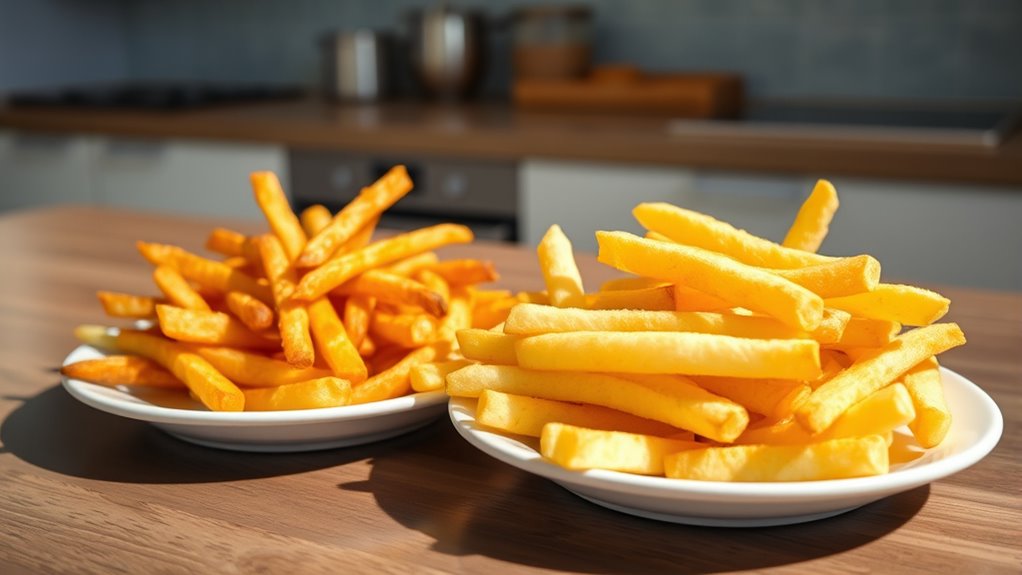
Several scientific studies have compared acrylamide levels in air-fried and traditionally fried fries, revealing notable differences. These studies show that baking potato varieties influences acrylamide formation, with some varieties producing less acrylamide regardless of cooking method. Air frying generally results in lower acrylamide levels compared to deep frying, but the extent varies depending on the type of potato used. Seasoning effects also play a role; certain seasonings, like rosemary or thyme, can inhibit acrylamide formation, while others may have minimal impact. The research indicates that choosing specific potato varieties and mindful seasoning can help reduce acrylamide levels in air-fried fries. Additionally, cooking temperature and time are crucial factors that significantly influence acrylamide formation during frying processes. Overall, these studies suggest that air frying, combined with strategic ingredient choices, can lower acrylamide exposure.

Emeril Lagasse Extra Large French Door Air Fryer Toaster Oven Combo, 24 Cooking Functions and Digital Controls, 7 Accessories Included, Stainless Steel Finish, 26QT Capacity
A VERSATILE AIR FRYER AND MULTI-COOKER COMBO: Elevates practically any meal, from air frying quick after-school snacks to...
As an affiliate, we earn on qualifying purchases.
Factors Influencing Acrylamide Development During Cooking
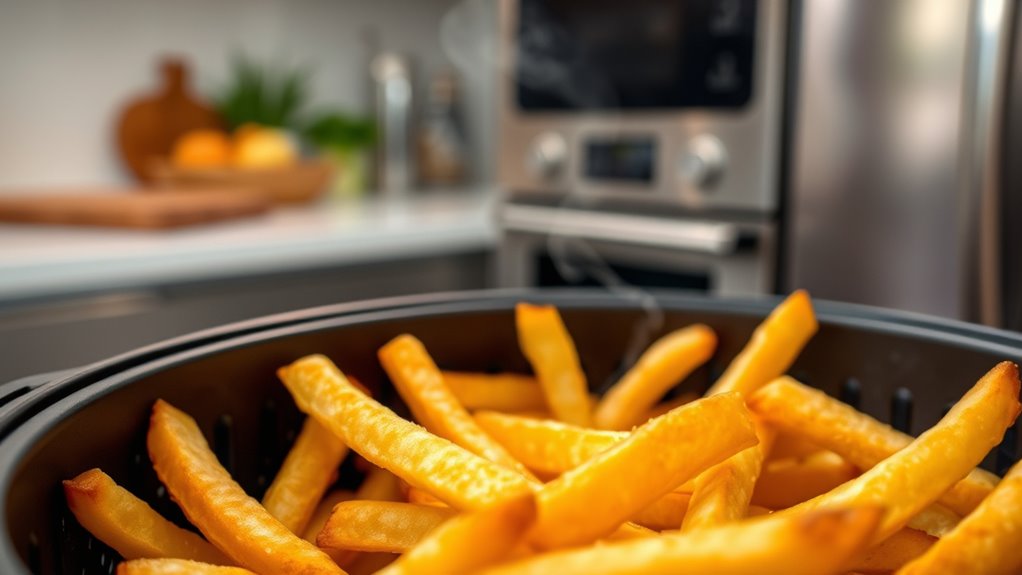
The temperature at which you cook has a big effect on acrylamide formation, with higher heat generally increasing levels. Your food’s ingredients and moisture content also play a role in how much acrylamide develops during cooking. Additionally, the way you prepare and process your food influences the extent of acrylamide creation. For example, certain beach town experiences can involve cooking methods that impact acrylamide levels in foods.
Cooking Temperature Impact
Cooking temperature plays a crucial role in the formation of acrylamide during air frying, as higher temperatures accelerate chemical reactions that produce this compound. To reduce acrylamide, keep your air fryer at moderate temperatures. Lower temperatures can help preserve flavor enhancement and texture improvement without increasing health risks. Additionally, understanding celebrity lifestyle insights can offer tips on healthier cooking habits and modern kitchen trends. Consider these points: – Use lower temperatures for softer, crispy textures – Avoid exceeding 350°F to reduce acrylamide formation – Adjust cooking times accordingly to prevent overcooking – Pre-soaking potatoes can help lessen acrylamide – Maintaining consistent temperature ensures even cooking and safer results
Food Composition Effects
Food composition considerably influences how much acrylamide forms during air frying. For example, seasoning variations can either increase or decrease acrylamide levels, depending on ingredients like sugars or amino acids present. Using certain seasonings with high sugar content can promote Maillard reactions, leading to more acrylamide formation. Additionally, the type of frying oil matters; oils with different fatty acid profiles can affect heat transfer and browning. Choosing oils that resist oxidation and produce less smoke might also reduce acrylamide formation. Recognizing these factors helps you control acrylamide levels in your air-fried foods. Adjusting seasonings and selecting appropriate oils can make a significant difference in the safety and healthfulness of your fries without sacrificing flavor or texture. Understanding how food composition influences chemical reactions during cooking can empower you to make healthier choices.
Preparation Method Role
Since the method you use to prepare your food directly impacts acrylamide formation, understanding these factors is essential for health-conscious frying. Your choice of preparation influences acrylamide levels through various elements, such as seasoning effects and frying oil. For example, high-temperature methods like traditional frying or air frying can increase acrylamide, especially with starchy foods. How you season your fries matters too, as certain seasonings may contain amino acids or sugars that promote acrylamide formation. Additionally, the type of frying oil used can affect heat transfer and chemical reactions. Using oils with higher smoke points or healthier profiles may reduce acrylamide risks. Moreover, temperature control during cooking plays a crucial role in minimizing harmful compounds. To lower your exposure, consider cooking at lower temperatures, controlling cooking time, and choosing appropriate seasoning and oil options.
Practical Tips to Minimize Acrylamide in Your Homemade Fries
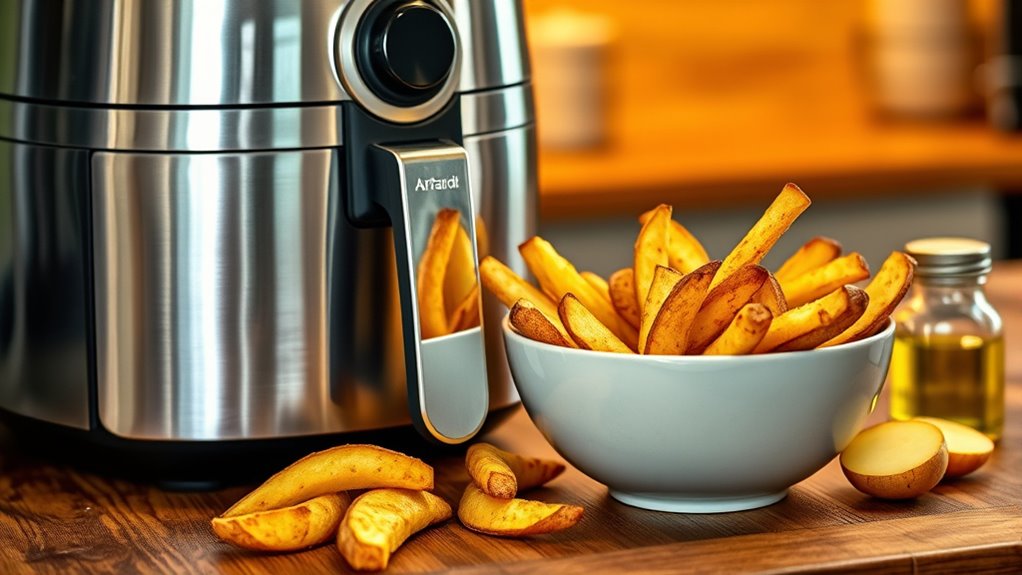
To reduce acrylamide formation when making homemade fries, it’s important to choose the right potatoes and preparation methods. Use fresh, firm potatoes like Russets or Yukon Golds, which develop less acrylamide. Soaking cut fries in cold water for 30 minutes helps remove excess sugars, lowering acrylamide risk without sacrificing flavor. Avoid overcooking by frying or baking at lower temperatures and for shorter times; this preserves texture and prevents browning. Season your fries after cooking to enhance flavor instead of relying on browning. Thinner cuts cook faster and reduce acrylamide formation while maintaining a satisfying texture. These simple tips help you enjoy crispy, flavorful fries with minimized health risks, making your homemade snack both delicious and safer.
Making Informed Choices for a Healthier Snack
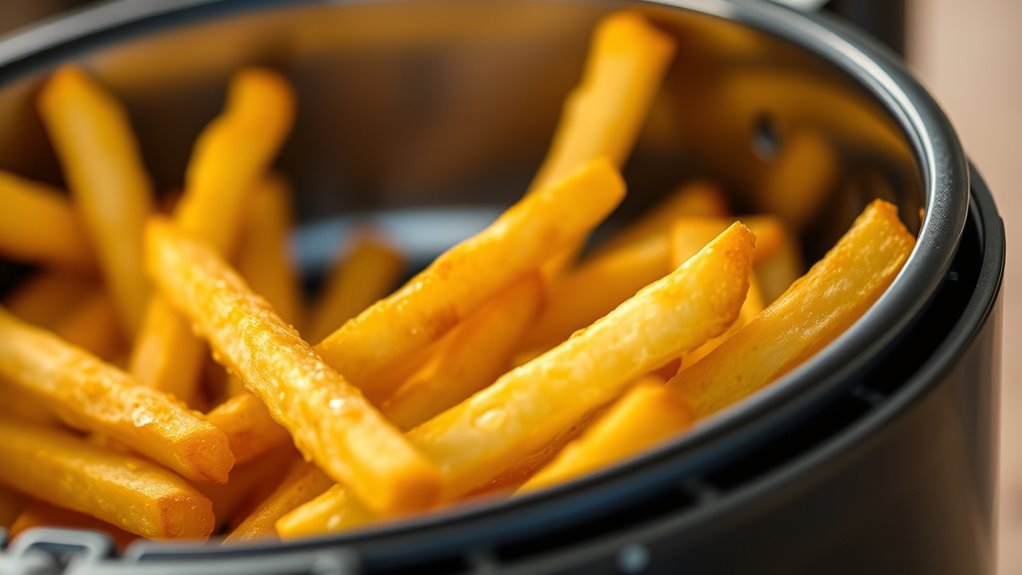
Choosing healthier snack options starts with being aware of how preparation methods impact nutrient levels. To make smarter choices, consider how snack flavor can be preserved or enhanced through cooking techniques that reduce harmful compounds like acrylamide. Embracing culinary traditions that favor baking, steaming, or air frying can help you enjoy familiar flavors without sacrificing health. Focus on ingredients and methods that align with your wellness goals. Additionally, understanding cooking techniques can help you select methods that minimize harmful compounds and promote better health. Here are some tips to guide you:
- Opt for air frying over deep-frying to decrease acrylamide formation
- Incorporate herbs and spices to boost snack flavor naturally
- Choose whole, minimally processed ingredients
- Experiment with traditional cooking styles that emphasize gentle heat
- Read labels and cooking instructions to make informed decisions
Making these choices supports your health while honoring culinary traditions.
Frequently Asked Questions
Does the Type of Potato Affect Acrylamide Formation in Fries?
You might wonder if potato varieties affect acrylamide formation in fries. Different potato types, like Russet or Yukon Gold, have varying sugar and amino acid levels, influencing acrylamide production during cooking. Cooking methods also matter; higher temperatures increase acrylamide, regardless of potato type. Choosing low-sugar potato varieties and using gentler cooking methods can help reduce acrylamide levels, making your fries safer and healthier to enjoy.
How Does Frying Temperature Influence Acrylamide Levels?
Frying temperature considerably impacts acrylamide levels because higher temperatures accelerate chemical reactions that produce this compound. When you fry your fries at elevated temperatures, you increase the risk of forming more acrylamide, especially when the potatoes turn golden or darker. To reduce these levels, keep frying temperatures lower and avoid overcooking. Managing temperature effects helps you minimize harmful chemical reactions while still enjoying crispy fries.
Can Pre-Soaking Potatoes Reduce Acrylamide Before Air Frying?
Think of pre-soaking potatoes as washing away shadows before the dawn. It can reduce acrylamide by leaching out sugars that form harmful compounds during frying. Choose potato varieties with lower sugar content and use appropriate frying oils to further diminish risks. While pre-soaking isn’t a foolproof shield, it acts like a gentle tide, helping to lower acrylamide levels before you air fry, making your fries safer and tastier.
Are There Specific Seasonings That Impact Acrylamide Development?
You might wonder if seasoning impact affects acrylamide development. Certain seasonings, like rosemary or garlic, can influence browning and flavor enhancement, potentially reducing acrylamide formation. Using acidic seasonings, such as lemon or vinegar, may also help lower acrylamide levels. So, choosing specific seasonings not only boosts flavor but could contribute to safer fries by limiting harmful compounds. Experiment with herbs and acids to enjoy tastier, healthier snacks.
Is There a Significant Difference in Acrylamide Levels Between Homemade and Store-Bought Fries?
You might think store-bought fries are more consistent, but homemade ones often have lower acrylamide levels. It all depends on potato variety and fry thickness—thinner cuts and certain varieties develop more acrylamide when cooked. Ironically, your homemade batch can be safer, as you control the cooking process. So, if you’re aiming for lower acrylamide, pay attention to those details rather than relying solely on store-bought options.
Conclusion
By choosing air frying over traditional methods, you’re gently steering clear of the storm of acrylamide lurking in your fries. Think of it as guiding your snack through a calmer, safer river, reducing harmful chemical buildup along the way. With mindful choices, you’re not just savoring crispy potatoes—you’re steering your health ship clear of turbulent waters. So, embrace air frying as your trusty compass toward a tastier, safer journey in your kitchen.