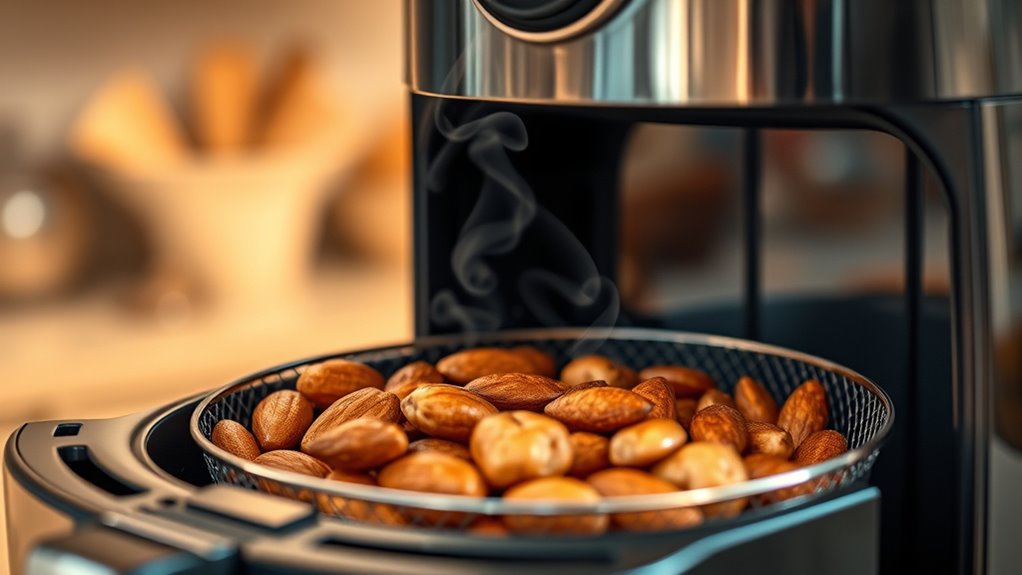

Air frying can’t reliably reduce or eliminate allergenic compounds in nuts because heat alters proteins differently, and some allergens remain stable even after cooking. While high temperatures can break down certain proteins, many allergenic proteins resist heat and stay active. Using an air fryer isn’t a guaranteed way to make nuts safe for allergy sufferers. If you’re interested, you’ll learn more about how different cooking methods affect nut allergens and safe handling practices.
Key Takeaways
- Air frying may partially denature allergenic proteins but does not guarantee complete reduction of allergenic compounds.
- High temperatures can break down some nut proteins, but heat-stable allergens may remain unaffected.
- Proper handling, such as washing and pre-treating nuts, is more effective than air frying alone for allergen reduction.
- Air frying’s rapid, circulating heat offers some potential for allergen modification but has limited reliability.
- Complete allergen elimination requires comprehensive measures; air frying alone is insufficient for safe allergen removal.
Understanding Nut Allergens and Their Impact
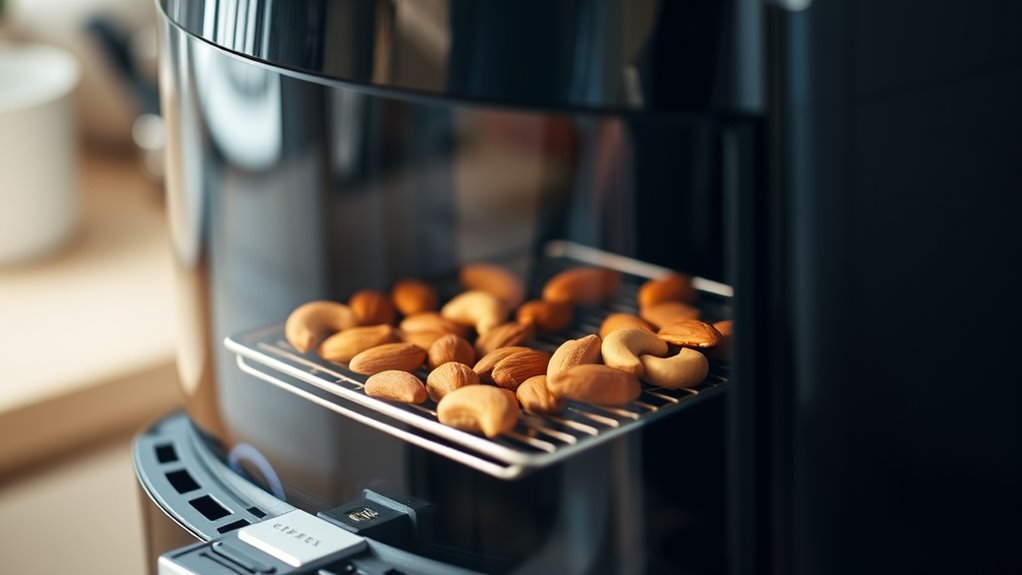
Have you ever wondered how nut allergens can affect your health? Nut allergenicity varies among individuals, with some experiencing severe reactions. These allergens are proteins that trigger the immune system, making allergy management vital for those sensitive to nuts. Understanding how nut proteins behave helps you recognize potential risks, especially when preparing or eating foods containing nuts. Air frying can influence nut allergenicity by altering protein structures, but it doesn’t eliminate allergens entirely. For allergy management, it’s essential to be aware of cross-contact and contamination risks in kitchen environments. Knowing the impact of nut allergens empowers you to make safer choices, whether avoiding nuts altogether or implementing strict handling protocols. Proper handling and thorough cleaning are crucial to prevent cross-contact in kitchens. Ultimately, understanding nut allergenicity helps you protect your health and manage nut allergies effectively.
The Process of Air Frying and Its Effect on Food Components
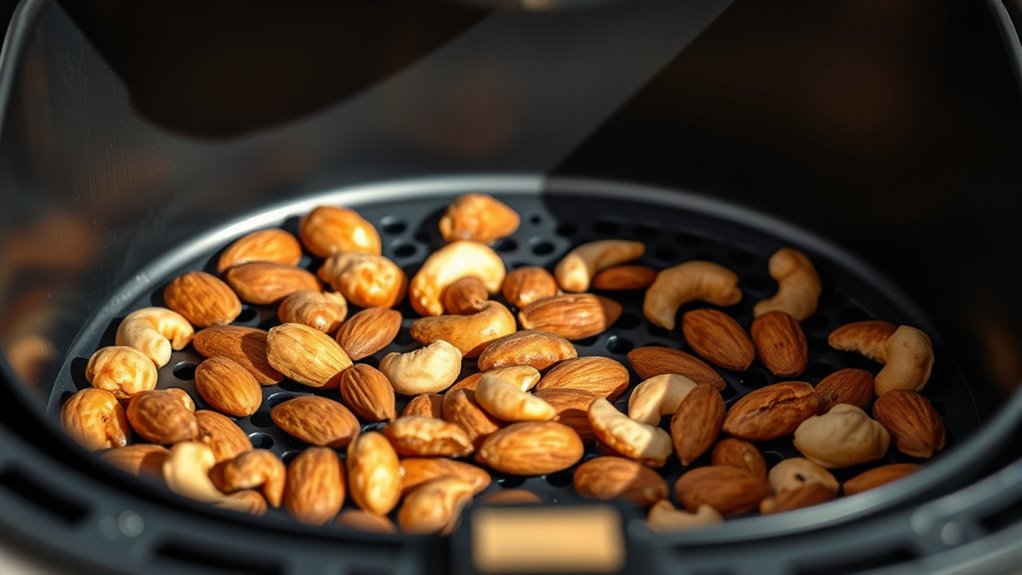
Air frying works by circulating hot air around food at high speeds, creating a crispy exterior similar to traditional frying but with less oil. This rapid circulation promotes flavor enhancement by evenly cooking and developing a richer taste without excessive oil. The process reduces cooking time compared to conventional methods, allowing you to prepare nuts quickly while maintaining their texture. Air frying’s high temperatures can alter food components, potentially influencing allergenic compounds, but it mainly focuses on crisping and flavor development. The quick cooking process helps preserve nutrients better than longer methods, though some heat-sensitive elements may still change. Additionally, using appropriate preparation techniques can help minimize allergenicity. Overall, air frying offers an efficient way to cook nuts with improved flavor and shorter cooking times, setting the stage for further exploration of its impact on allergenic proteins.
Scientific Evidence on Heat Treatment and Allergenic Proteins
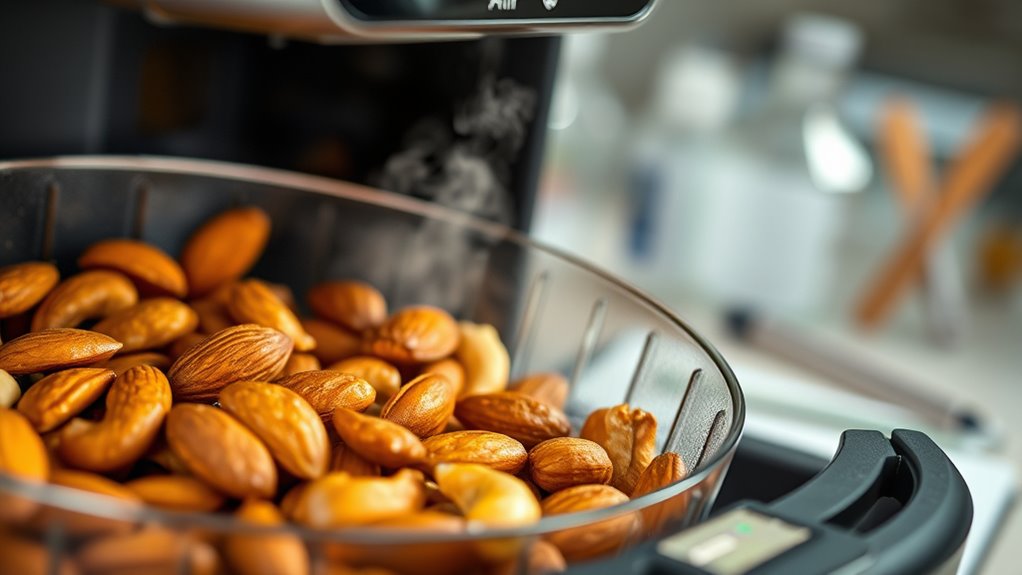
Research shows that heat treatment can particularly influence the structure and allergenic potential of proteins in nuts. Different alternative heat sources, like roasting, boiling, or air frying, can alter allergen stability by denaturing proteins or changing their conformation. These changes may reduce or sometimes increase allergenic reactions, depending on the method and duration of heat application. For example, high temperatures can break down certain allergenic proteins, making them less recognizable to your immune system. However, some proteins remain stable despite heat, maintaining their allergenic properties. Scientific evidence indicates that the impact of heat treatment on allergenic proteins varies, highlighting the significance of understanding how different methods affect allergen stability. This knowledge is essential for evaluating how various heat treatments, including air frying, might influence nut allergenicity. Additionally, water exposure during processing can also modify protein structures and allergenic outcomes.
Comparing Air Frying to Traditional Roasting Methods

While both air frying and traditional roasting are popular methods for preparing nuts, they differ markedly in how they apply heat and influence allergenic proteins. Air frying uses rapid, circulating hot air, which often results in quicker cooking times and more uniform heat distribution. This can help preserve the nuts’ natural flavor and offer better flavor preservation overall. Traditional roasting, typically done in an oven, involves slower, steady heat that can deepen flavor but might cause uneven heating. When it comes to texture enhancement, air frying tends to produce crispier nuts with less oil, maintaining a fresh crunch. In contrast, oven roasting can sometimes result in a drier texture or uneven browning. Both methods impact flavor and texture uniquely, influencing how you enjoy your nuts. Additionally, the precise temperature control in air frying can help minimize the formation of allergenic compounds, making it potentially a safer option for sensitive individuals.
Potential Benefits and Limitations of Air Frying for Allergic Reduction
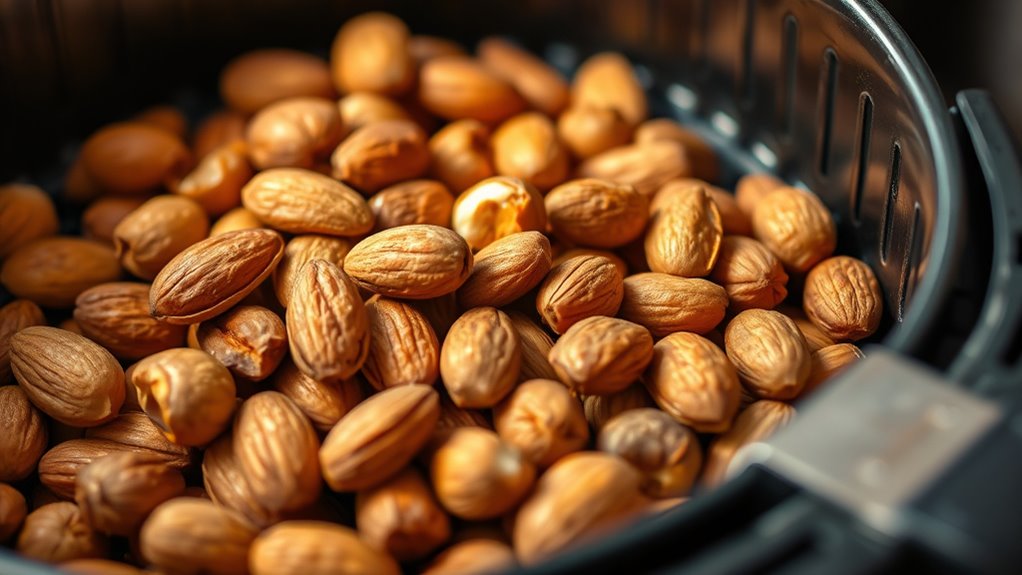
Air frying can help reduce some allergenic proteins in nuts, potentially lowering allergy risks. It also retains more nutrients compared to traditional methods, which might benefit your health. However, there are limitations to take into account, such as how effective air frying truly is in allergen reduction and whether it alters nutrient levels considerably.
Reduction of Allergenic Proteins
Air frying has the potential to reduce allergenic proteins in nuts by applying high heat quickly, which may break down these proteins and lessen their ability to trigger allergic reactions. This process, known as nut protein modification, could make nuts safer for some individuals with allergies. However, the extent of protein alteration depends on factors like temperature and duration. While air frying might decrease the allergenic potential, it doesn’t guarantee complete elimination, so allergen labeling remains essential. You should still rely on proper labeling and avoid cross-contamination, as some allergenic proteins might persist despite heat treatment. Understanding these limitations helps you make safer choices while considering air frying as a possible method to reduce allergenic proteins in nuts.
Impact on Nutrient Retention
Using air frying to reduce allergenic proteins in nuts can help preserve their nutritional value better than some traditional methods. Air frying maintains more of the nuts’ natural nutrients because it uses less oil and gentler heat, which helps retain vitamins and minerals. Additionally, the process supports flavor preservation, keeping the nuts tasting fresh and rich. You’ll also notice improved texture enhancement, as air frying can make nuts crunchier without overcooking or drying them out. This method offers a balanced approach, reducing allergens while maintaining key nutrients and sensory qualities. However, it’s important to monitor cooking times carefully to prevent nutrient loss from prolonged heat exposure. Incorporating the right vacuums for pet hair can assist in cleaning up any residues after handling nuts, ensuring a tidy kitchen environment. Overall, air frying provides a promising way to enjoy healthier, flavorful nuts with preserved nutritional benefits.
Limitations of Air Frying
While air frying can help reduce allergenic proteins in nuts, it also has limitations that may affect its effectiveness. One key issue is that air fry limitations include inconsistent heat distribution, which can hinder complete nut allergen modification. Not all allergenic compounds break down at the same temperature or exposure time, making it difficult to predict results reliably. Additionally, air frying may not reach the high temperatures needed to considerably alter certain allergenic proteins, especially in larger or denser nuts. This means some allergenic compounds could remain intact, posing risks for sensitive individuals. Furthermore, the processing methods used to modify nut allergens in commercial products are often more controlled and thorough, which air frying cannot fully replicate. While air frying offers a convenient method for allergen reduction, its limitations mean it shouldn’t replace more established processing techniques for nut allergen modification.
Practical Tips for Safe and Effective Nut Preparation
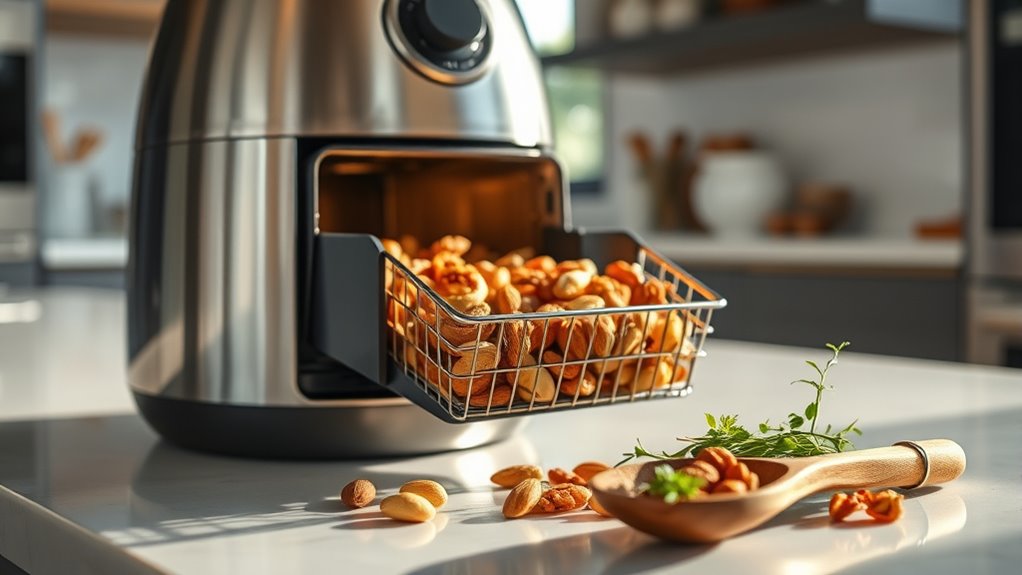
To guarantee safe and effective nut preparation when air frying, it’s essential to follow proper handling and cleaning practices. Always wash your hands and utensils thoroughly to prevent cross-contamination. Before air frying, soak or dry roast nuts to improve flavor enhancement and achieve your desired texture modification. Use a single layer in the air fryer basket to ensure even cooking and prevent overcrowding. Keep an eye on the time and temperature to avoid burning, which can compromise flavor and safety. Once finished, clean the air fryer basket and tray thoroughly to remove residual oils and allergens. Proper storage in airtight containers helps maintain freshness and reduces the risk of contamination. Incorporating sound vibrations during preparation or cooking can subtly influence cellular activity and enhance the overall quality of your nuts. By following these tips, you ensure your nuts are safe, tasty, and ready for consumption.
Frequently Asked Questions
Can Air Frying Completely Eliminate Nut Allergens?
You wonder if air frying can eliminate nut allergens. While air frying can modify some nut proteins, its effectiveness in fully reducing allergenic compounds is limited. Nut allergen modification through air frying may reduce allergenicity slightly, but it doesn’t guarantee complete elimination. You should still avoid nuts if you have a severe allergy, as air frying alone isn’t reliable for allergen removal. Always consult allergy experts for safety advice.
How Does Air Frying Compare to Boiling for Allergen Reduction?
Think of nut allergen breakdown as a delicate dance—you need the right steps. Air frying efficiency varies, often less thorough than boiling, which immerses nuts in hot water. Boiling can help reduce certain allergens more effectively by dissolving proteins. Air frying mainly crisps nuts, but might not appreciably lower allergenic compounds. So, if allergen reduction is your goal, boiling could be a better dance partner than air frying.
Are Some Nuts More Suitable for Air Frying Than Others?
Some nuts are better suited for air frying than others because their nut roasting process benefits flavor enhancement and texture. For example, almonds and cashews develop a richer flavor and crunch when air fried, making them ideal. Keep in mind that delicate nuts like walnuts may not roast as evenly. So, choose sturdier nuts for superior flavor and texture, and enjoy the quick, healthy nut roasting process with your air fryer.
Does the Duration of Air Frying Affect Allergenic Compound Levels?
You wonder if the duration of air frying impacts nut allergen denaturation. Longer air frying increases heat exposure, which can enhance air frying efficiency and potentially break down allergenic proteins more thoroughly. However, overcooking may affect texture and flavor. To maximize nut allergen denaturation without compromising quality, aim for ideal frying times that balance allergen reduction with food integrity.
What Are the Safety Considerations When Air Frying Allergenic Nuts?
When air frying allergenic nuts, you need to take into account cross-contamination risks and handling precautions. Always wash your hands and use separate utensils to avoid transferring allergens. Keep nuts separate from other foods and clean your air fryer thoroughly after use. Be aware that even small traces can cause reactions. If you’re highly sensitive, consult with an allergist before trying air frying nuts to ensure your safety.
Conclusion
While air frying offers a modern twist to nut preparation, it might not be a magic shield against allergens. You can try it to potentially reduce some allergenic compounds, but don’t rely solely on this method—think of it as your trusty sword, not a suit of armor. For now, the best approach remains thorough testing and consulting with allergy experts. Stay vigilant, brave adventurer, and keep your health shielded as you explore new culinary domains.